
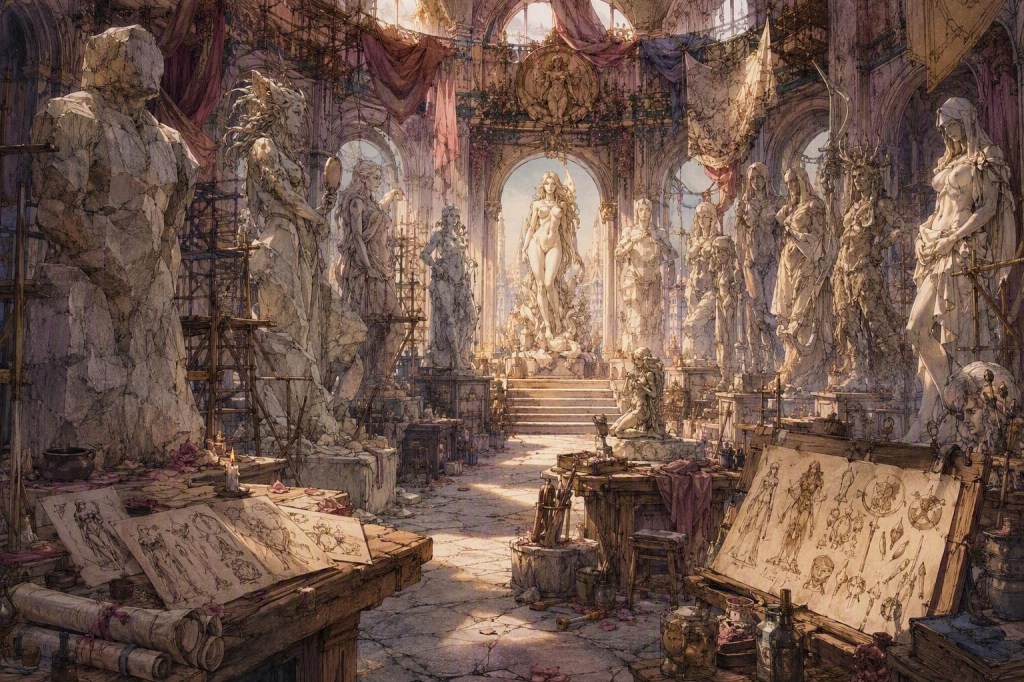
Cosmology of Erosia
How Reality Exists
Before kingdoms rose, before temples raised their first altars, and before mortals possessed words for love, grief, hunger, magic, or death, there was existence. What existed before existence is another question entirely. Some traditions claim reality began with the Three Mothers. Others insist the Mothers awakened within something older. Elemental philosophers argue that creation emerged naturally from forces that had always existed, while certain giant traditions describe the earliest ages not as a beginning at all, but as an awakening.
No surviving account agrees completely. Every culture possesses fragments. Every faith preserves a different interpretation. Every civilization that has attempted to reconstruct the earliest ages has discovered evidence that unsettles what was previously believed. The study of cosmology is therefore not the study of certainty.
It is the study of possibility. Cosmology gathers myth, theology, magical theory, archaeology, dream interpretation, ancestral memory, and the surviving testimony of beings whose lives stretch far beyond those of ordinary mortals. Even taken together, these sources rarely provide a single answer. They provide patterns.
And sometimes those patterns reveal more troubling questions.
What Is Cosmology?
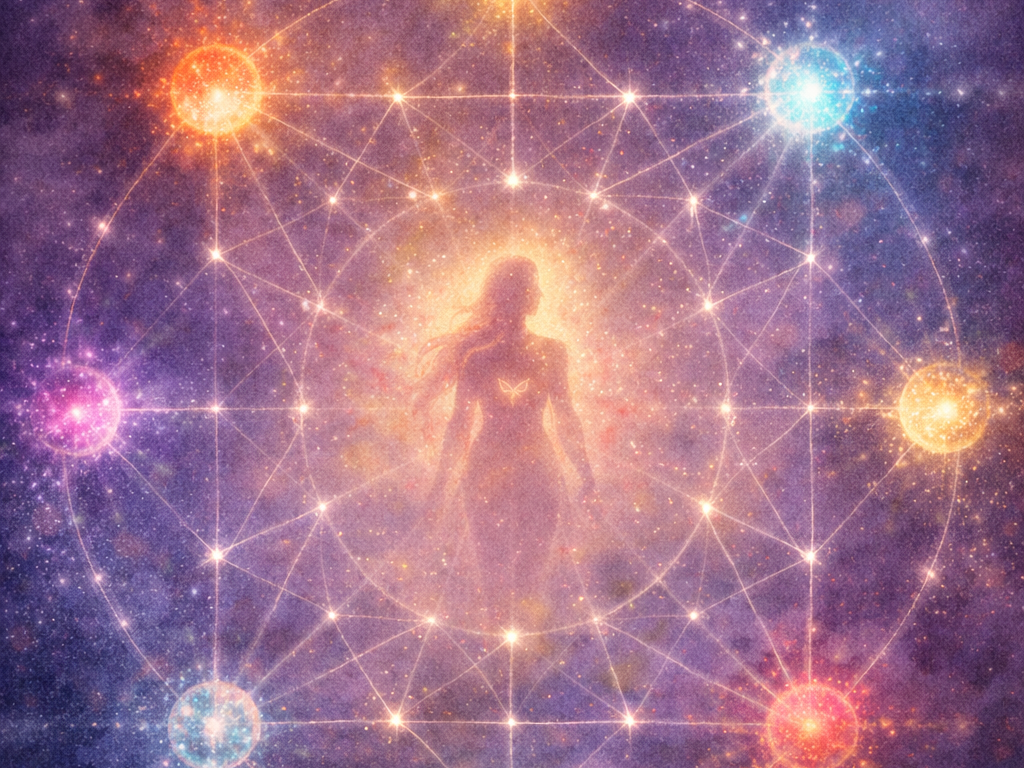
Cosmology is the study of reality beyond recorded history. It seeks to understand not only where the world came from, but how existence itself is structured and what forces continue to sustain it. Cosmologists ask questions such as:
- How was the mortal world created?
- What existed before the gods?
- Where did the gods themselves come from?
- What is the Veil, and why does it exist?
- What becomes of a soul after death?
- Why are there three moons?
- What are the Elemental Planes?
- Did the Titans shape the world, or merely inherit it?
- What role did the Giants play in the earliest civilizations?
- Why do ruins exist that appear older than any known people?
- Can reality itself change?
Unlike religion, cosmology does not require worship. Unlike history, it concerns ages for which reliable records rarely survive. Unlike magical study, it asks not merely how supernatural forces function, but why those forces exist at all.
Cosmology occupies the uncertain territory where philosophy, theology, archaeology, magic, mythology, and observation meet. For this reason, two scholars may examine the same evidence and reach entirely different conclusions. Both may even be correct.
The Shape of Reality
There is no universally accepted map of existence. Some scholars describe reality as a series of layered realms separated by metaphysical boundaries. Others imagine existence as a great root system, with worlds growing from a common source. Elemental philosophers favor models in which realms overlap and mingle, while certain religious traditions describe creation as a succession of emanations from increasingly ancient powers.
The most commonly accepted cosmological model identifies several fundamental components:
The Mortal World, where physical life exists.
The Veil, which separates ordinary existence from realities beyond immediate mortal perception.
The Elemental Planes, where the primal forces of Earth, Water, Fire, and Air exist in forms far purer than they do within the mortal world.
Divine and spiritual realities, whose exact nature remains deeply contested.
These should not necessarily be imagined as places stacked one atop another. Distance has strange meaning beyond the mortal world. Two realms may be cosmologically adjacent yet physically unreachable. A sacred grove may stand closer to another reality than a mountain only a mile away. Dreams may cross boundaries that armies cannot. Reality appears to possess geography of its own. Mortals have simply never mapped it completely.
The First Mysteries
The Three Mothers
The oldest known creation traditions speak of three Mothers. Their names, where names are preserved at all, vary dramatically between cultures. Some traditions portray them as women. Others describe them as vast cosmic beings, principles of existence, or forces given symbolic form by later storytellers. Their relationship to creation is equally uncertain. One tradition teaches that the Mothers existed before all things and gave birth to reality. Another claims they discovered a formless existence and brought order to it. Some describe them as creators of life but not of the cosmos itself. Others believe the Three Mothers are merely mortal interpretations of forces so ancient that no living mind can comprehend their true nature. Despite these disagreements, references to a triadic origin appear with remarkable consistency across cultures that otherwise share little history.
Three creators.
Three voices.
Three beginnings.
Three witnesses.
Whether this repetition reflects a common historical truth or simply the tendency of mortals to recognize familiar patterns remains unresolved. The greatest mystery surrounding the Mothers is not what they created. It is what became of them. No universally accepted tradition describes their death. No reliable account records their departure. And no known divine court claims authority over them.
Some theologians believe they withdrew from creation after its beginning. Some believe they became part of reality itself. Others quietly suggest that the Mothers never left at all.
Velyssara and the First Divine Age
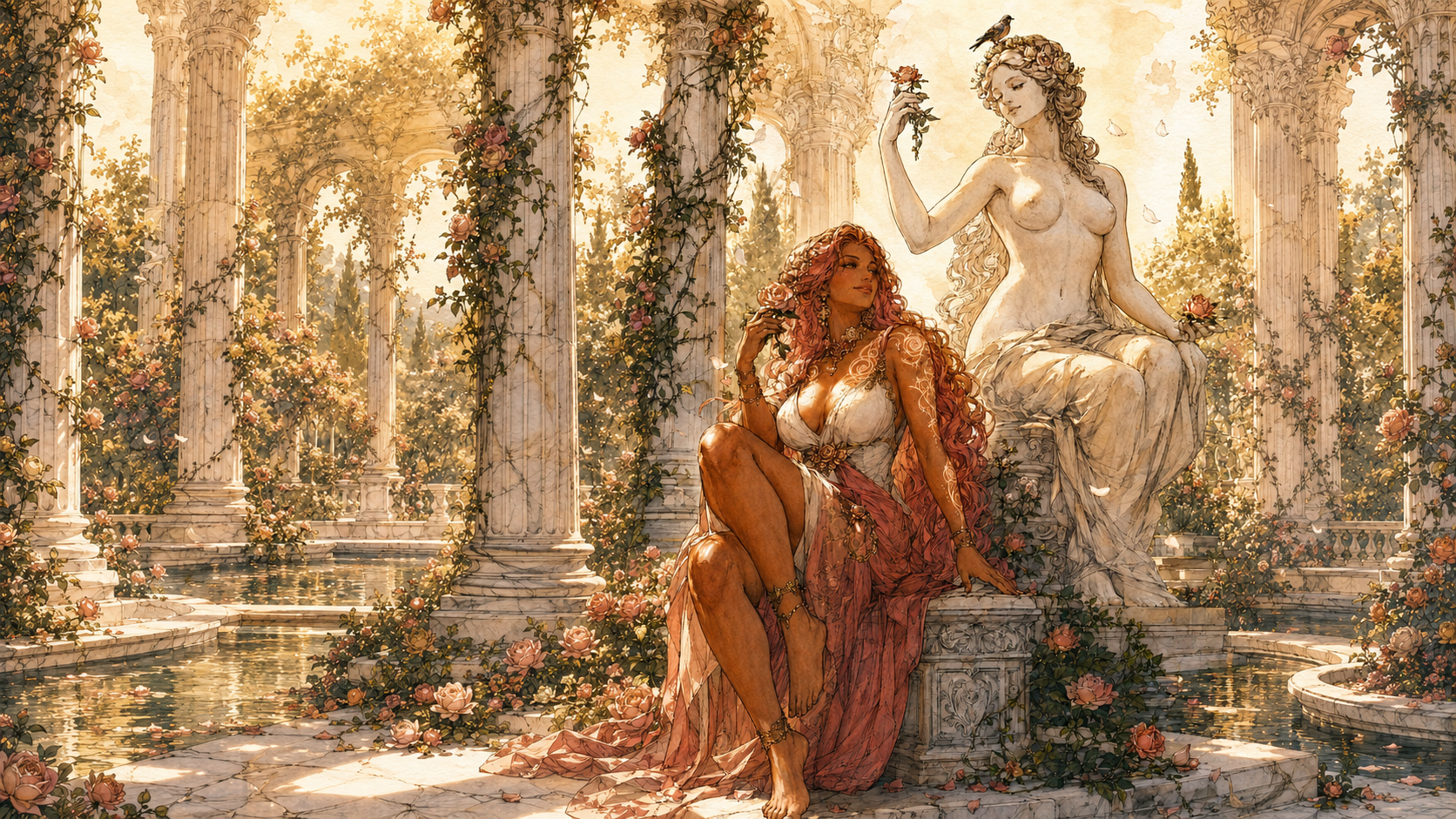
Among Erosian traditions, Velyssara occupies a unique position between the mysteries of creation and the later age of recognizable divinity. She is worshiped as the Goddess of Lust, Sex, and Life, yet cosmological traditions often describe these not merely as mortal experiences but as fundamental acts of continuation.
Life desires. Life reaches outward. Life reproduces, changes, adapts, joins, divides, and becomes something new.
For this reason, some theologians interpret Velyssara not simply as a goddess governing life, but as the principle through which creation learned to continue itself. In several traditions, she follows directly after the Three Mothers. Whether this means she was their daughter, creation, inheritor, chosen vessel, or simply the first divinity recognizable to later peoples remains debated. Some traditions place Velyssara at the beginning of the divine lineage. Others place her beside the earliest cosmic beings. Still others insist that assigning generations to such entities is a mortal habit imposed upon events that did not occur in ordinary time.
Whatever the truth, Velyssara represents an important cosmological threshold. Before her lies creation. After her begins proliferation.
THE THREE MOONS
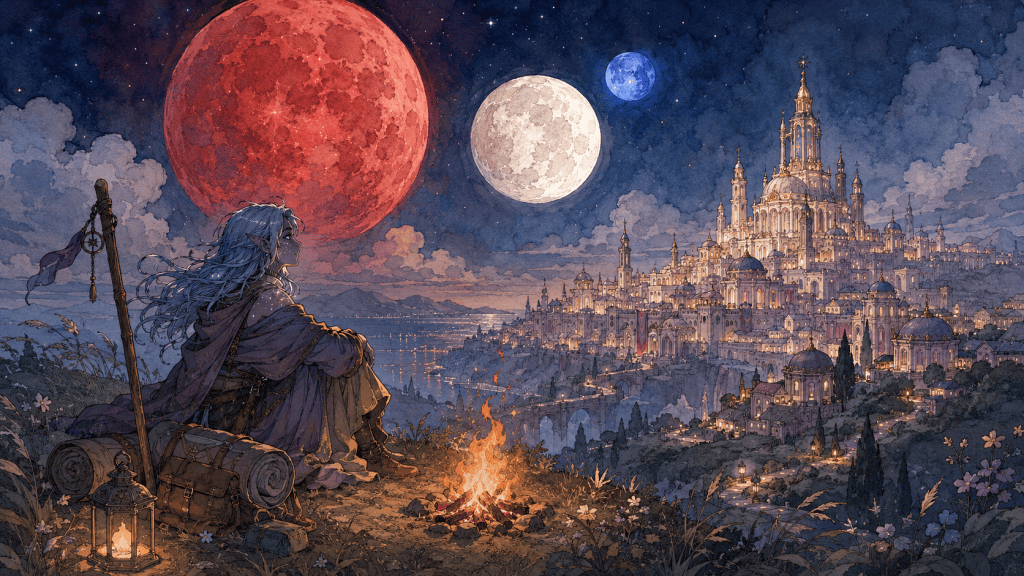
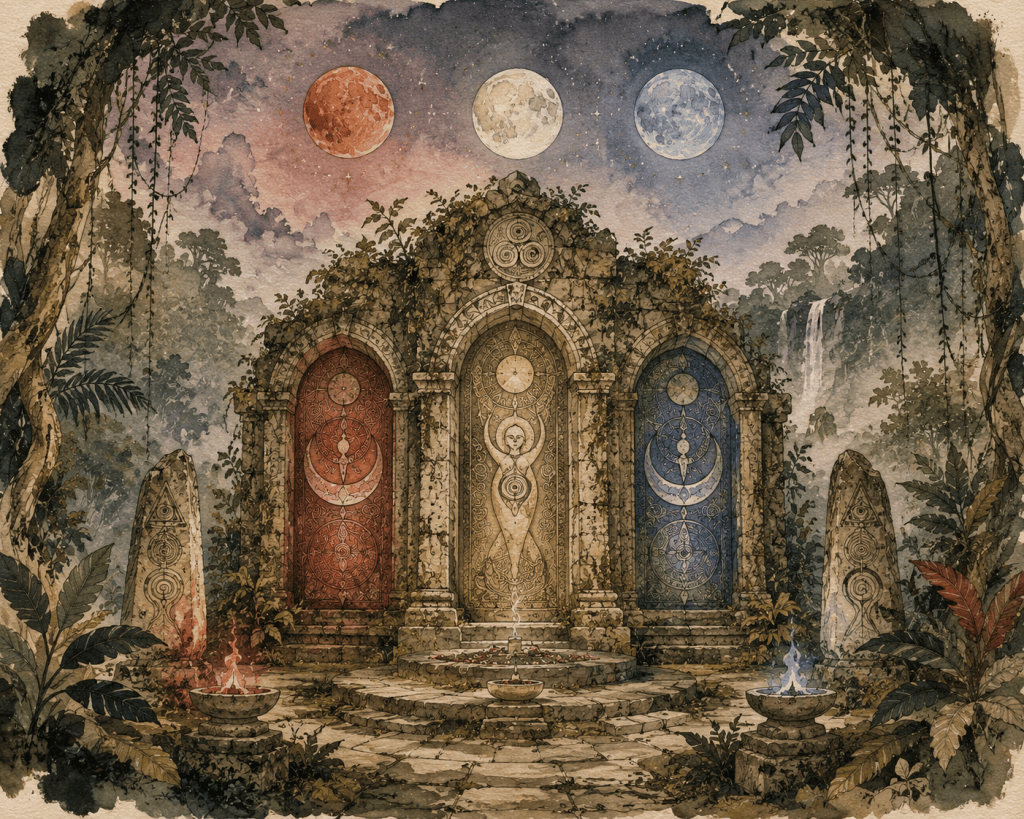
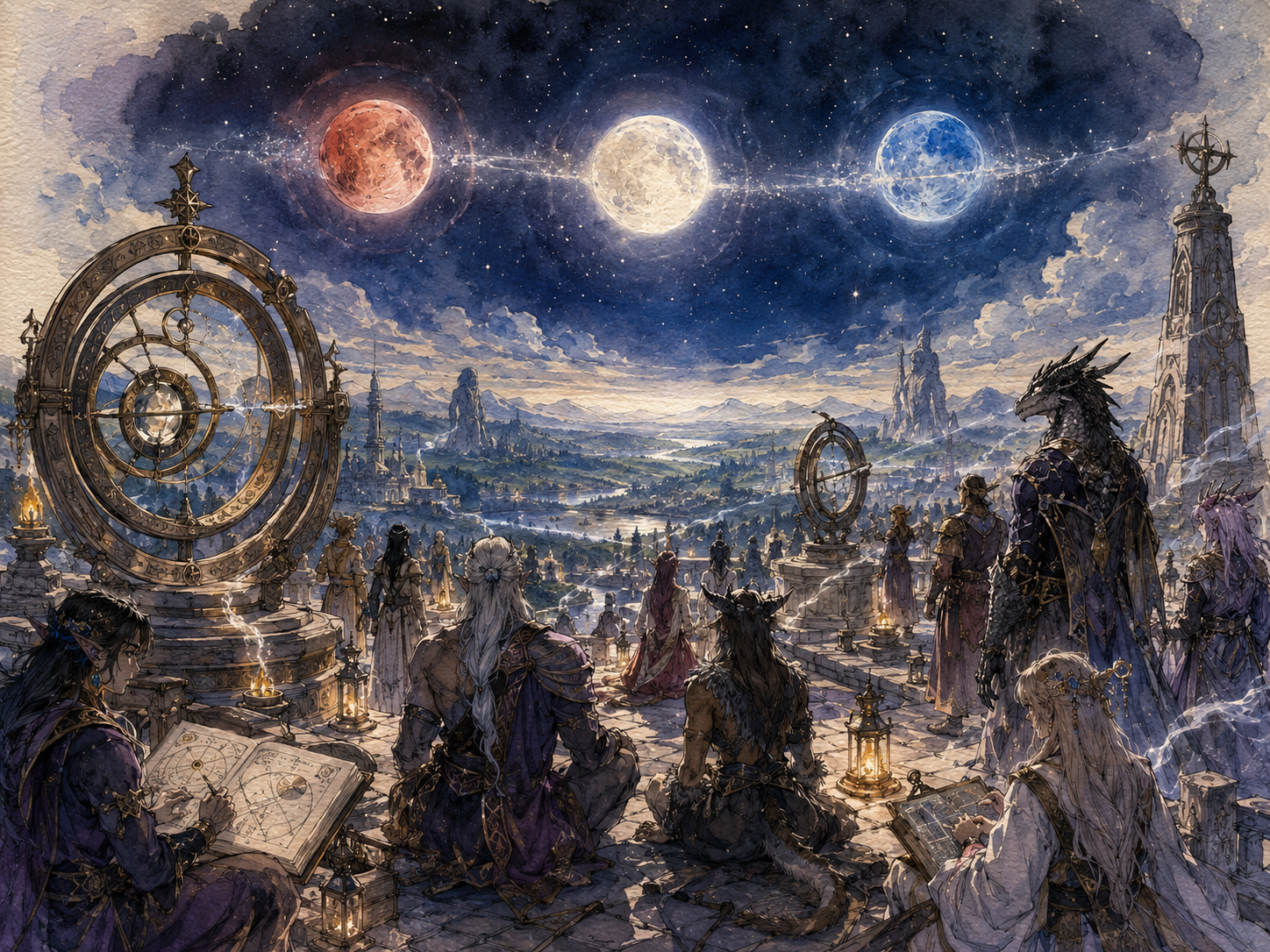
Above Erosia travel three moons: The Red Moon. The White Moon. The Blue Moon.
They are among the most ordinary sights in the night sky and among the least understood objects in existence. Every civilization knows them. Every civilization has stories about them. Very few stories agree.
The moons influence tides, navigation, migration, fertility traditions, magical practice, dream interpretation, religious calendars, and countless regional customs. Their phases have been studied for thousands of years, yet their deeper nature remains uncertain.
Some scholars insist they are physical celestial bodies. Others believe they are partly metaphysical. Certain traditions regard them as witnesses placed in the heavens during creation. Others claim they are remnants of something broken.
Some believe they regulate forces moving between realms. Many simply accept that the moons have always existed. The moons do not move as a single body. Their phases differ. Their paths overlap and separate. Rare configurations may become objects of prophecy or fear, though scholars frequently disagree about whether these events possess inherent significance or whether mortals merely assign meaning to them afterward.
Perhaps the most remarkable fact about the moons is their universality. Wherever mortal peoples have traveled, they have looked upward and seen the same three lights. The cultures beneath them change. The moons remain.
THE VEIL
The Boundary Between Realities
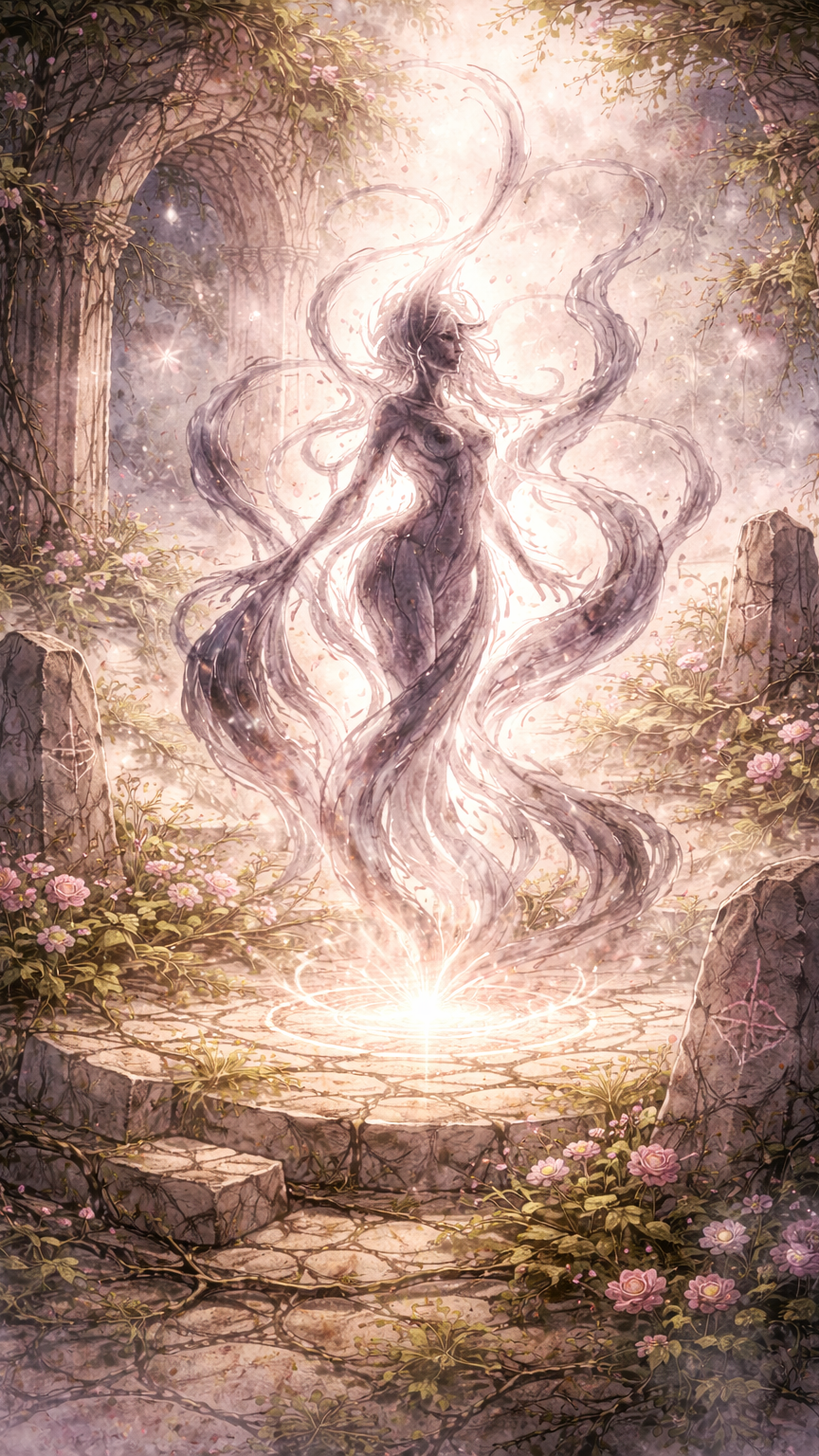
Few cosmological concepts are as important—or as poorly understood—as the Veil. The Veil is most commonly described as the boundary between mortal existence and the greater realities surrounding it. Yet the word boundary may itself be misleading. The Veil does not appear to function like a wall. It behaves more like a threshold. Souls may cross it. Dreams may touch it. Magic may disturb it. Divine influence may pass through it.
Certain creatures appear capable of perceiving or navigating it in ways ordinary mortals cannot. Some places seem naturally closer to it than others. The Veil therefore appears less like a barrier designed to prevent passage and more like a structure governing how passage occurs.
Thin Places
Across Erosia, there are locations where the Veil is believed to grow unusually thin. These places may occur around ancient ruins, sacred springs, deep forests, forgotten battlefields, elemental disturbances, places of mass death, or sites associated with intense divine activity. Not every thin place is dangerous.
Some are peaceful. Some produce vivid dreams. Some strengthen magic. Some cause memories to surface that do not belong to those experiencing them. Others allow strange beings or phenomena to cross briefly into the mortal world. Scholars disagree on whether thin places are weaknesses in the Veil or simply places where its natural structure becomes easier to perceive.
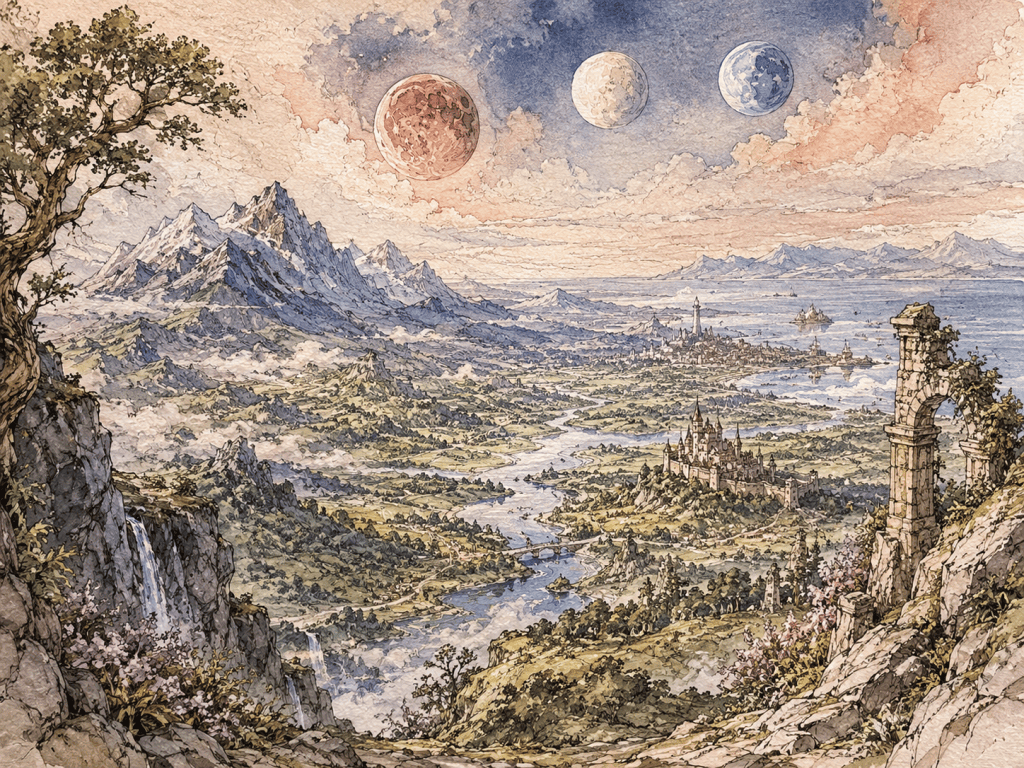
Is the Veil Alive?
One of the oldest cosmological debates concerns whether the Veil possesses awareness. There is no definitive evidence that it does. There is equally little evidence that it does not. The Veil sometimes appears to resist certain forms of intrusion. It may close around magical disturbances, alter after catastrophic events, or behave differently around powerful divine or primordial forces. Some theologians interpret this as intentional action.
Others argue that a river redirects around an obstacle without possessing consciousness. The question remains open.
THE ELEMENTAL SOVEREIGNS
The Four Sovereigns
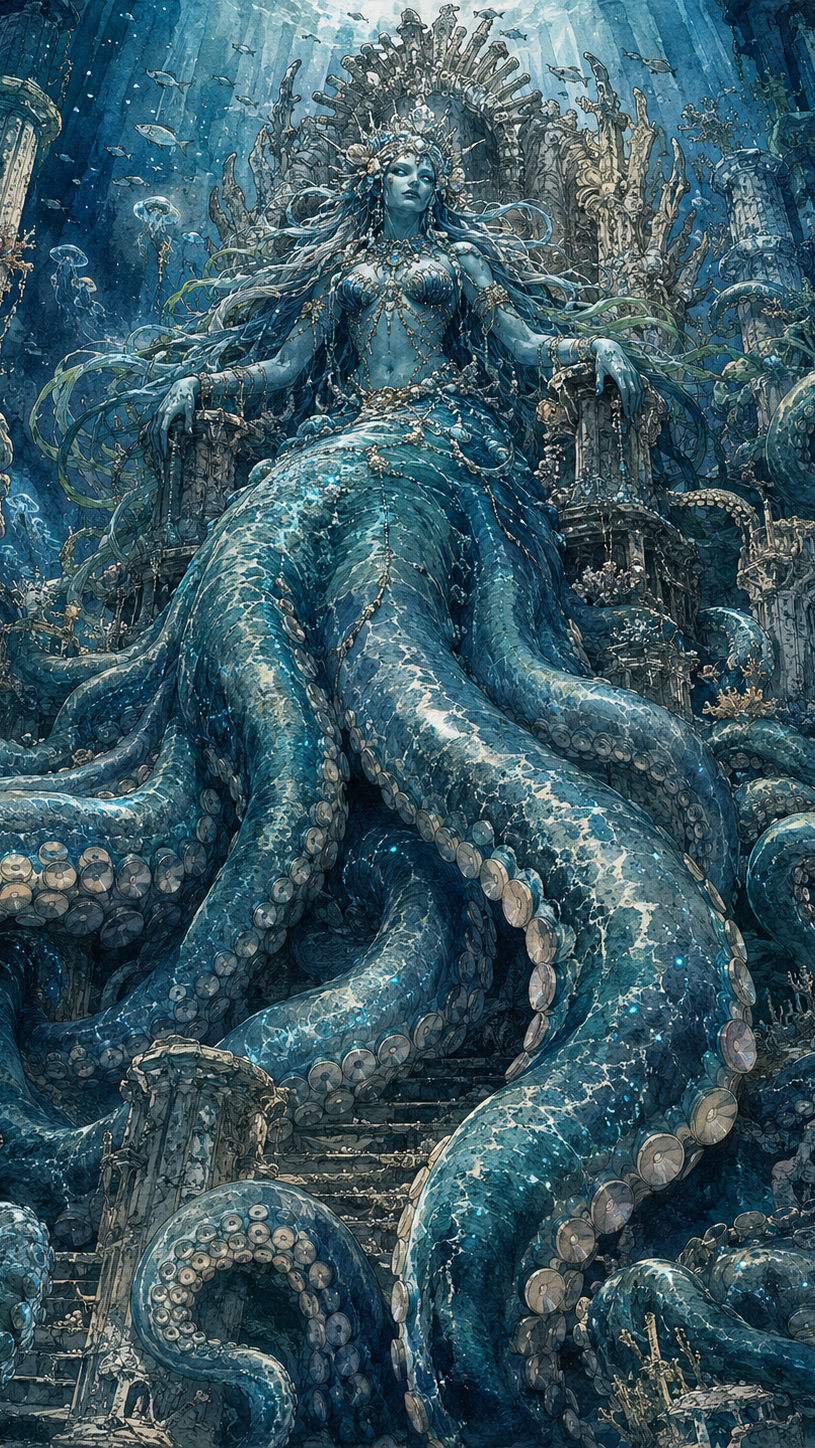
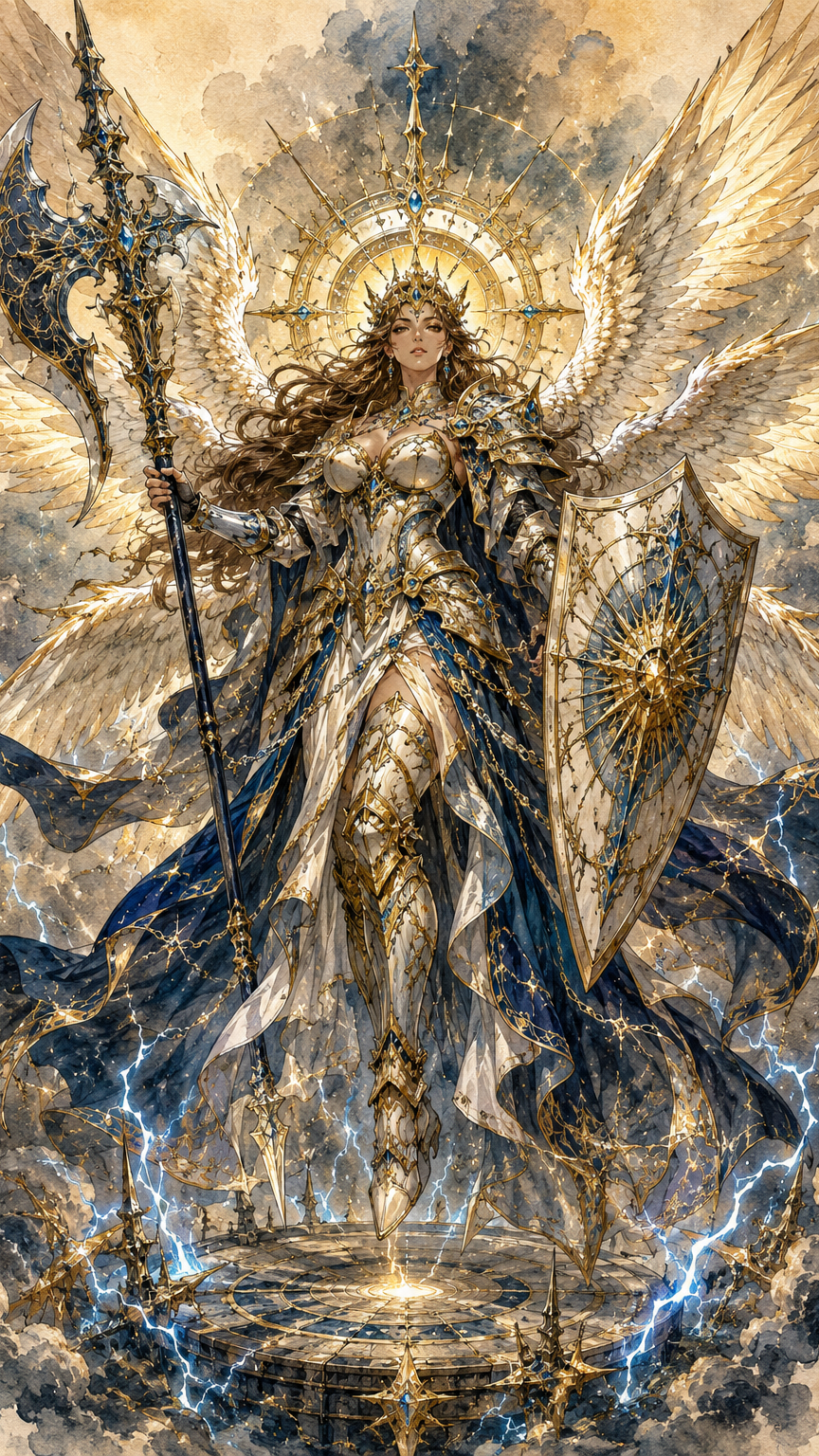
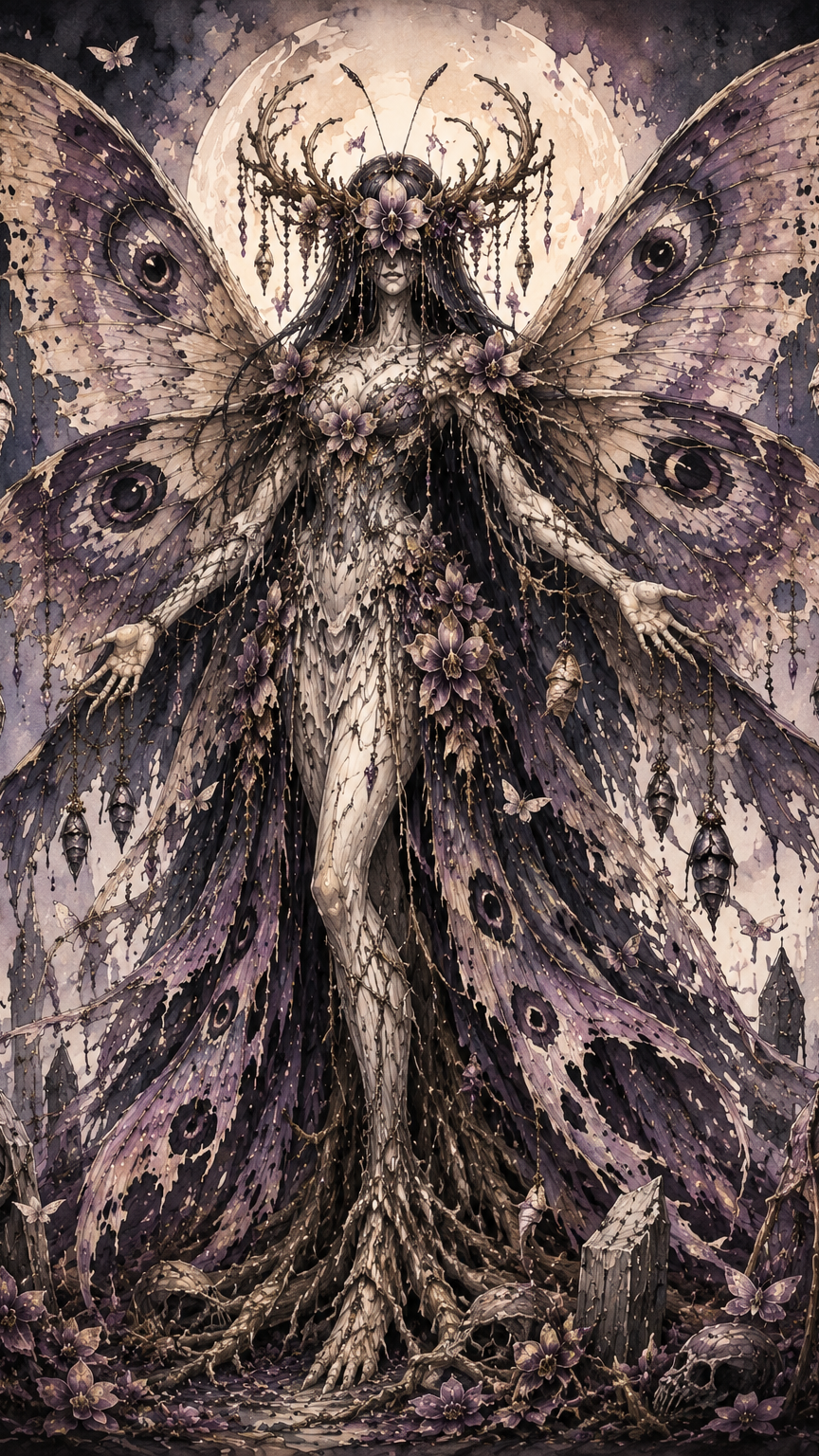
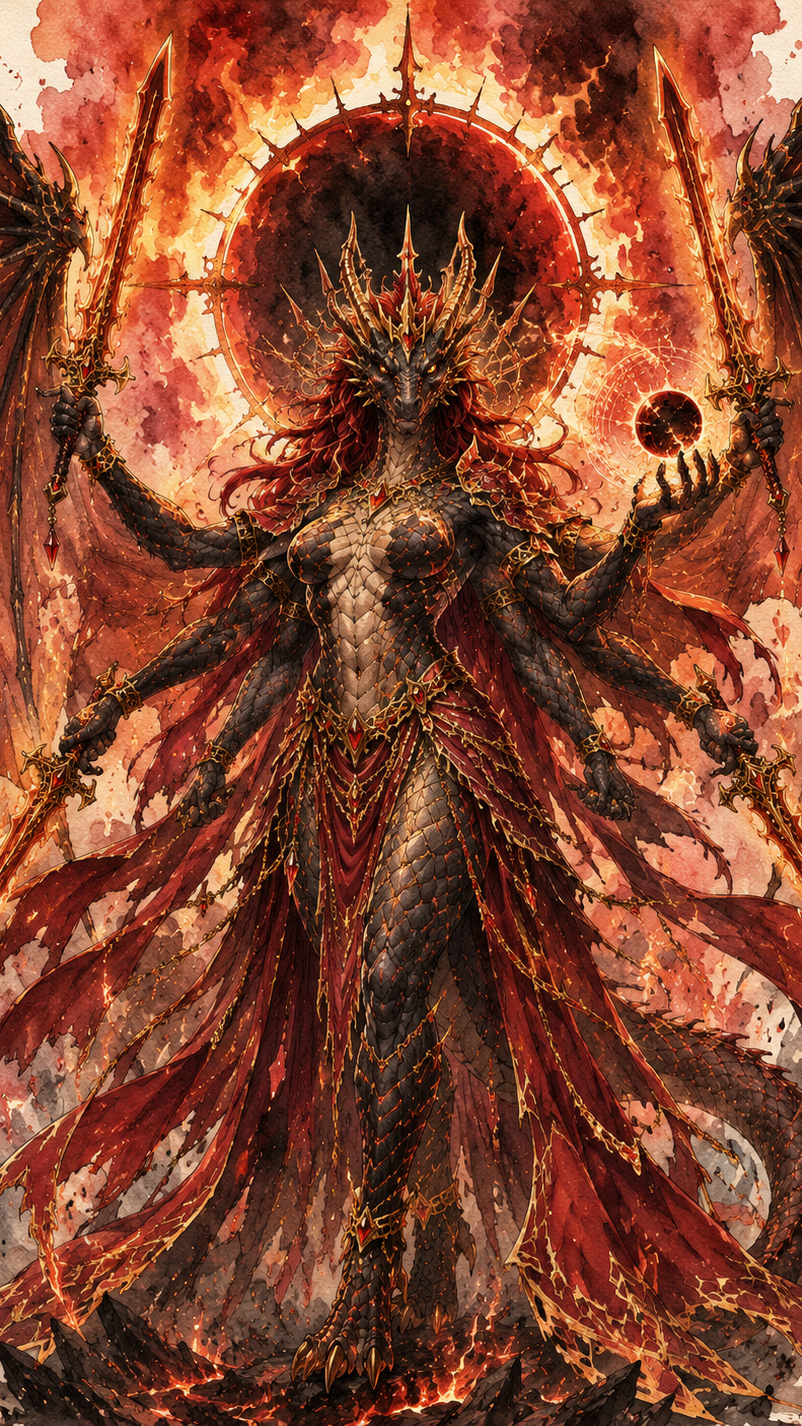
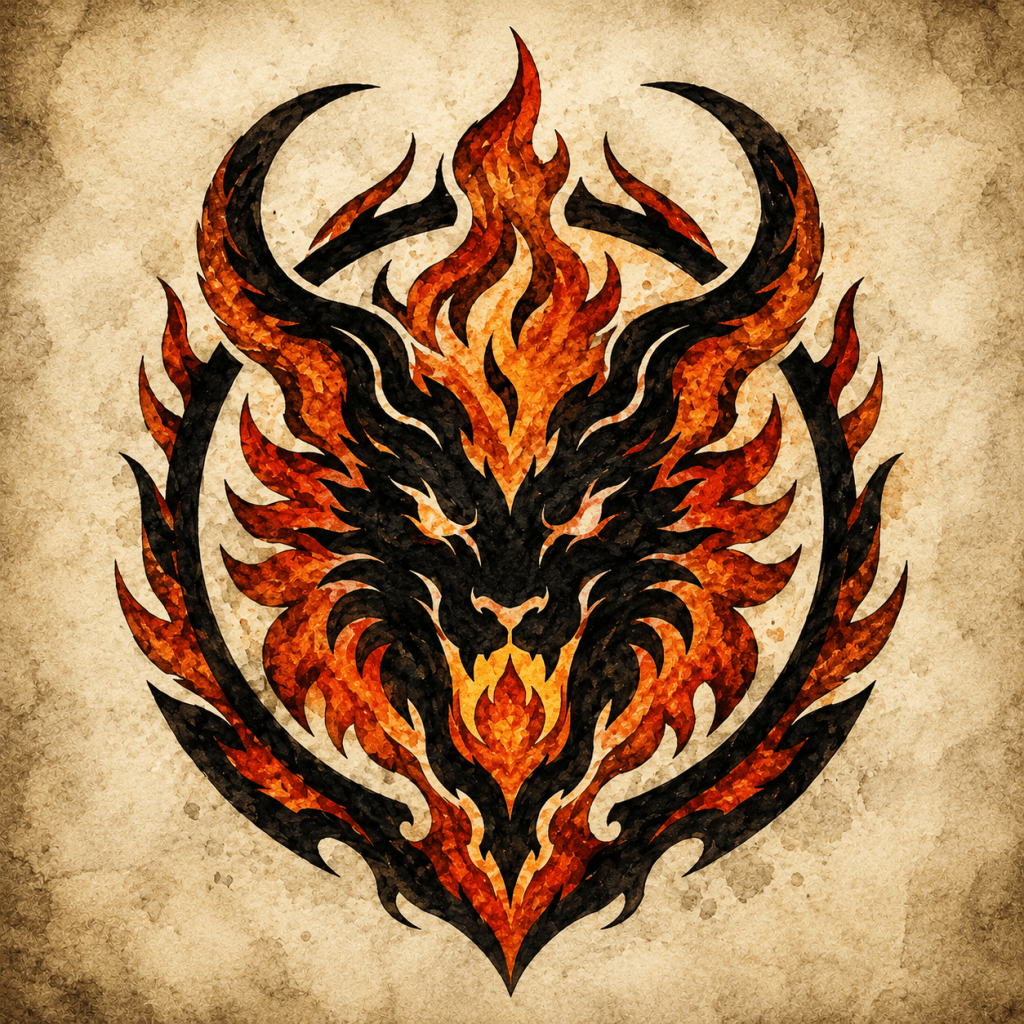
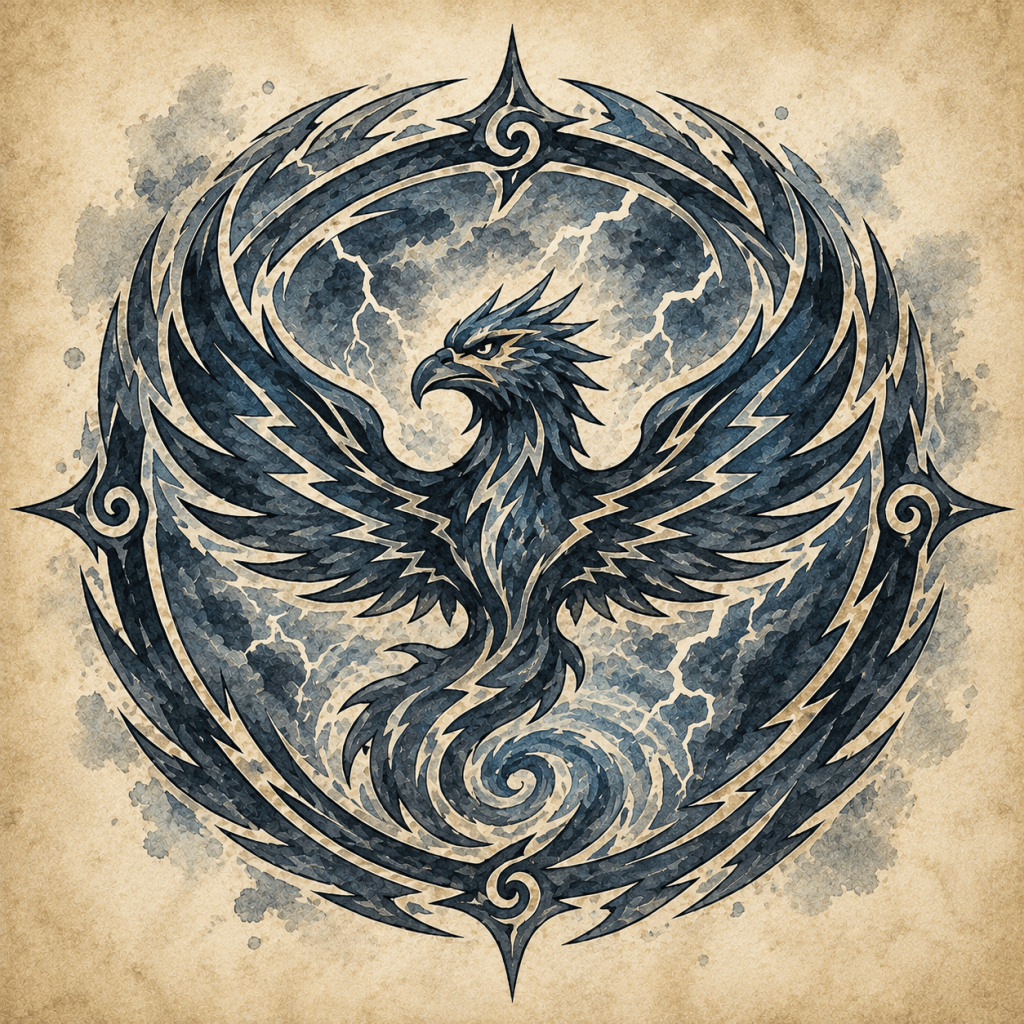
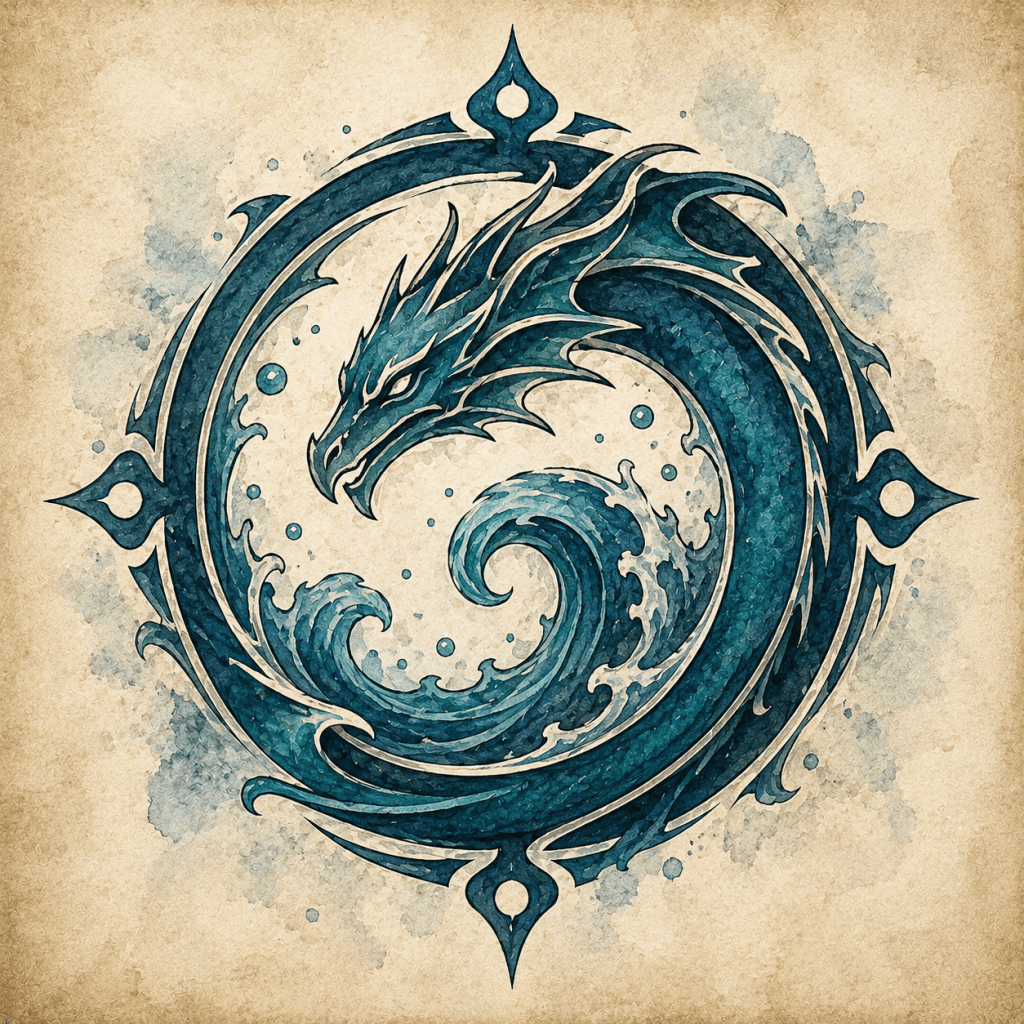
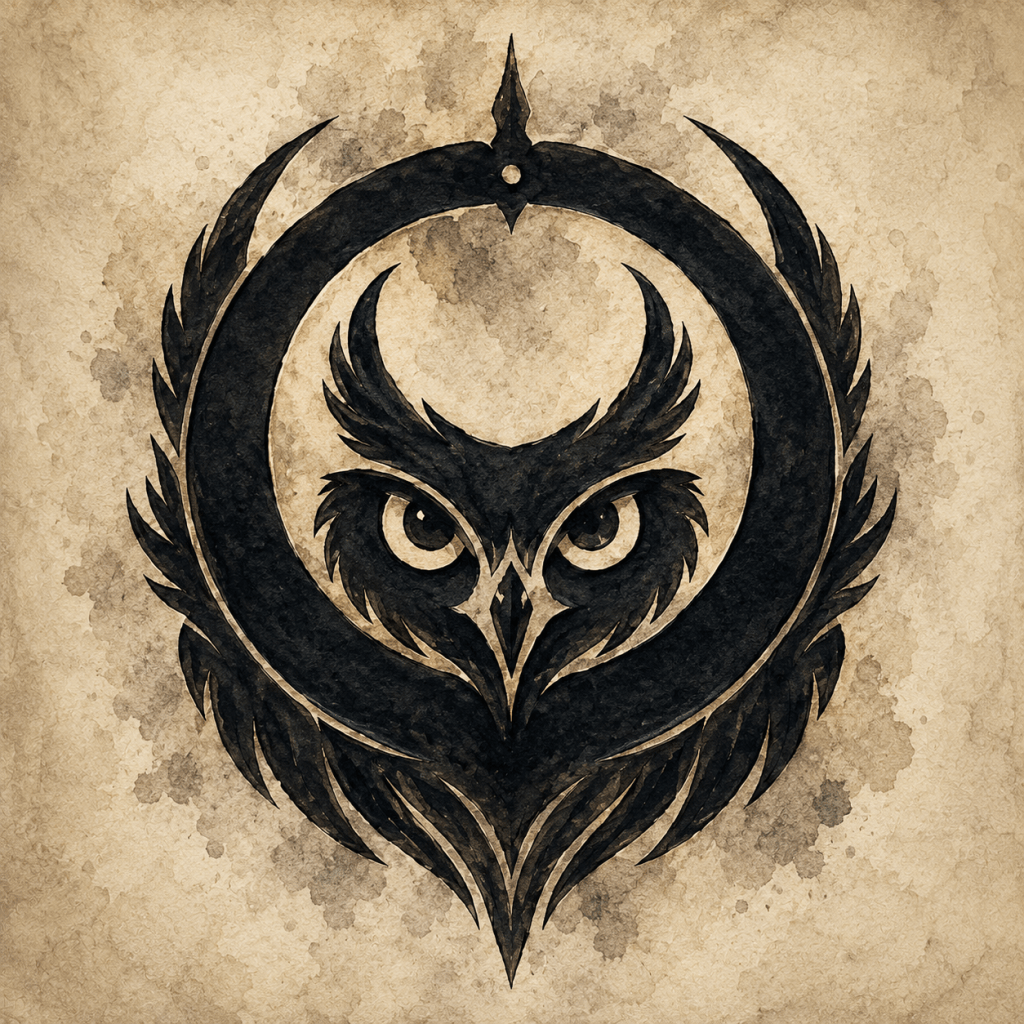
Beyond the divine courts stand four beings traditionally called the Elemental Sovereigns.
They embody: Water | Air | Earth | Fire Unlike most gods, the Sovereigns are not primarily understood through morality, culture, desire, profession, or philosophy.
They represent forces. A fire burns whether it is praised or cursed. Water nourishes and drowns without contradiction. Earth supports cities and buries them. Air carries breath, storms, seeds, voices, and destruction.
The Sovereigns are commonly understood in much the same way. They are not simply rulers of elements. They are manifestations of elemental existence itself.
The Elemental Planes
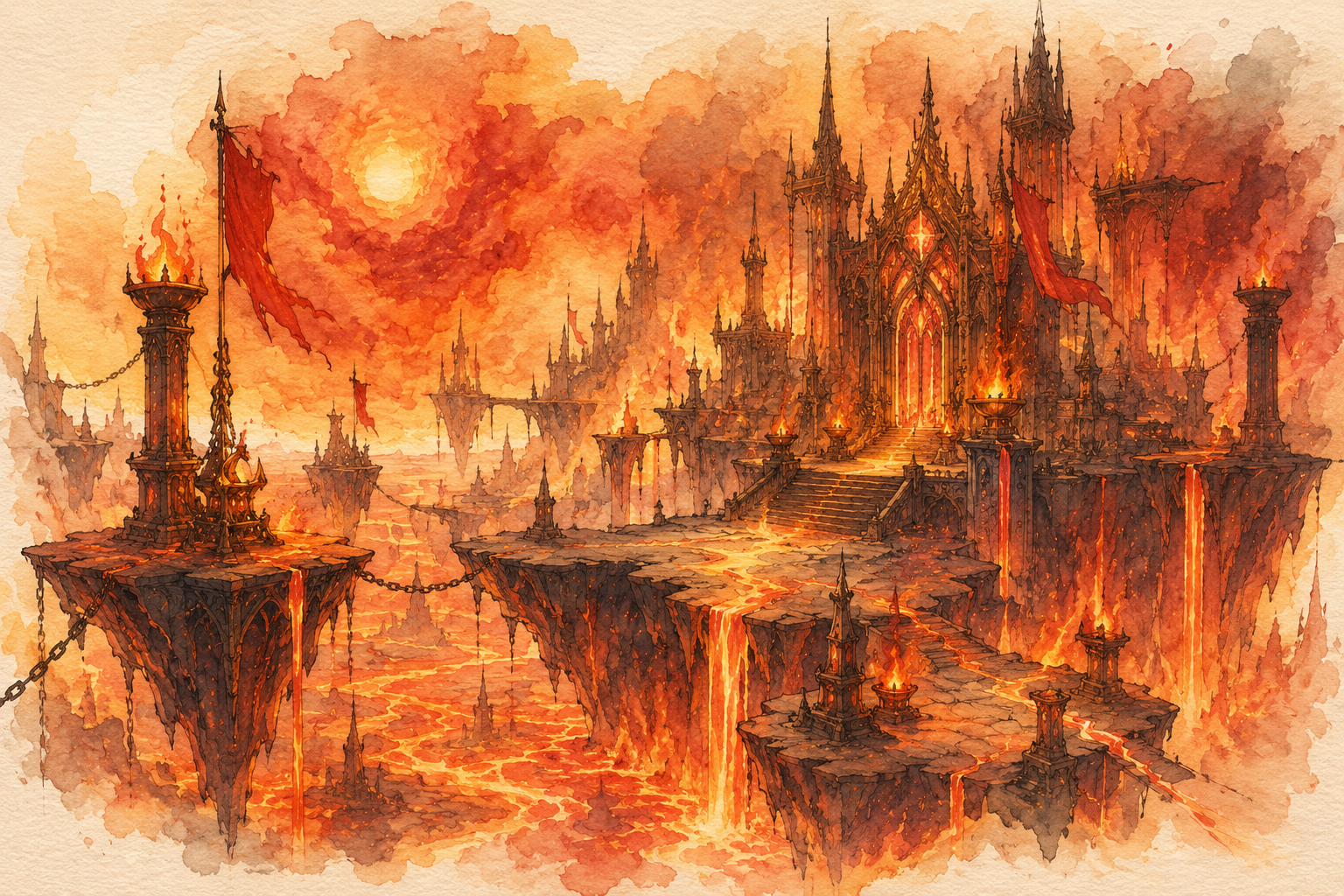
The Elemental Planes are realms in which the fundamental forces of creation exist with far greater purity than within the mortal world. The Plane of Fire is not merely a place containing fire. Fire is among the principles through which the realm itself exists. The same is said of Earth, Water, and Air.
Mortal matter appears to contain all four forces in varying relationships, leading some cosmologists to argue that the mortal world formed where the elemental realms intersected. Other traditions reverse the idea. They claim the Elemental Planes separated from an earlier unified reality. Under this interpretation, mortal existence is not the product of elemental combination. It is what remains of their original unity. Neither theory has been conclusively proven.
Sovereign Worship
The Sovereigns may receive reverence, offerings, or organized devotion, but such practices differ greatly from ordinary divine worship. A sailor may honor Water without expecting affection from it. A smith may invoke Fire without believing Fire cares about the forge. A farmer may thank Earth while fearing its tremors. For many followers, Sovereign devotion is less about pleasing a personality and more about recognizing a fundamental relationship between mortal life and the forces that sustain it.
THE PRIMORDIAL TITANS
Beings of the Earliest Ages
The Titans belong to an era so ancient that even the oldest surviving civilizations remembered them primarily through myth. They are associated with tremendous primordial forces and with periods when the boundaries between the physical, elemental, and cosmic worlds may have been far less stable than they are today.
Stories describe Titans walking across continents, reshaping landscapes, awakening storms, splitting mountains, disturbing seas, and leaving traces that endured long after their disappearance. Whether these accounts are literal remains debated. The scale of certain geological formations has occasionally encouraged scholars to reconsider.
Titans and Sovereigns
The relationship between Titans and Sovereigns is one of the great disputes of cosmological scholarship. Some traditions claim the Titans preceded the Sovereigns. Others teach that the Sovereigns created them. Certain myths describe Titans as instruments through which the Sovereigns shaped the physical world.
Other accounts portray them as rivals whose struggles created mountains, seas, storms, and other features of the mortal realm. It is possible that none of these traditions describe a simple historical sequence. Primordial beings may not experience time as mortals do. An event described as a birth in one tradition may be described as an awakening in another. Both may preserve different interpretations of the same cosmic transformation.
The Legacy of the Titans
Whatever their origin, the Titans appear to have left permanent marks upon reality. Certain forms of ancient magic are believed to derive from primordial forces associated with them. Unusual geological formations are sometimes attributed to their movements.
Ancient ruins occasionally contain imagery resembling beings later cultures identified as Titans. Whether the Titans are dead, sleeping, transformed, imprisoned, dispersed, or simply absent remains unknown. Cosmologists tend to avoid declaring primordial beings extinct. History has punished that confidence before.
SOULS
What Is a Soul?
Nearly every culture in Erosia accepts that living beings possess something more than flesh. What that something actually is remains deeply contested. The soul has been described as memory. Identity. Vital essence. Divine breath. A spark of creation. A fragment of the Veil. A pattern capable of surviving the body. Magical observation appears to confirm that some aspect of a person can persist after physical death. What this proves is considerably less certain.
Where Souls Come From
The origin of souls is among the oldest unanswered questions. Some faiths teach that souls are created individually. Others believe they originate from a greater spiritual source and temporarily inhabit mortal bodies. Certain traditions describe souls as fragments of divine or primordial essence. Others believe life naturally generates them. Reincarnation traditions often suggest that at least some souls have lived before. Whether every soul is reborn—or whether rebirth occurs only under certain conditions—is fiercely debated.
Death
Death marks the separation of mortal life from its physical body. What follows is far less certain. Reports of spirits, ancestral visitations, resurrection, prophetic dreams, and magical communication suggest that death does not immediately destroy the self. Yet these phenomena vary dramatically. Some spirits retain clear personalities. Others appear to possess only fragments of memory. Some dead seem unreachable. Others return repeatedly. These inconsistencies have produced countless competing theories.
Rebirth
Belief in rebirth appears throughout Erosia in remarkably diverse forms. Some cultures believe souls return repeatedly until they achieve particular spiritual understanding. Others see reincarnation as a natural cycle without judgment or destination. Some families preserve traditions of ancestral return. Certain mystics claim memories of previous lives. Proof remains elusive. Yet the recurrence of such traditions across unrelated peoples continues to interest scholars.
Can a Soul Be Destroyed?
Most religions insist that true annihilation of the soul is either impossible or extraordinarily difficult. Magical scholars are less certain. There are accounts of forces capable of damaging, dividing, consuming, binding, or altering souls. Whether these acts destroy the soul itself or merely change its ability to manifest remains unknown. The distinction matters deeply. Few subjects inspire greater fear among cosmologists.
THE CREATION OF THE WORLD
No Single Creation Story
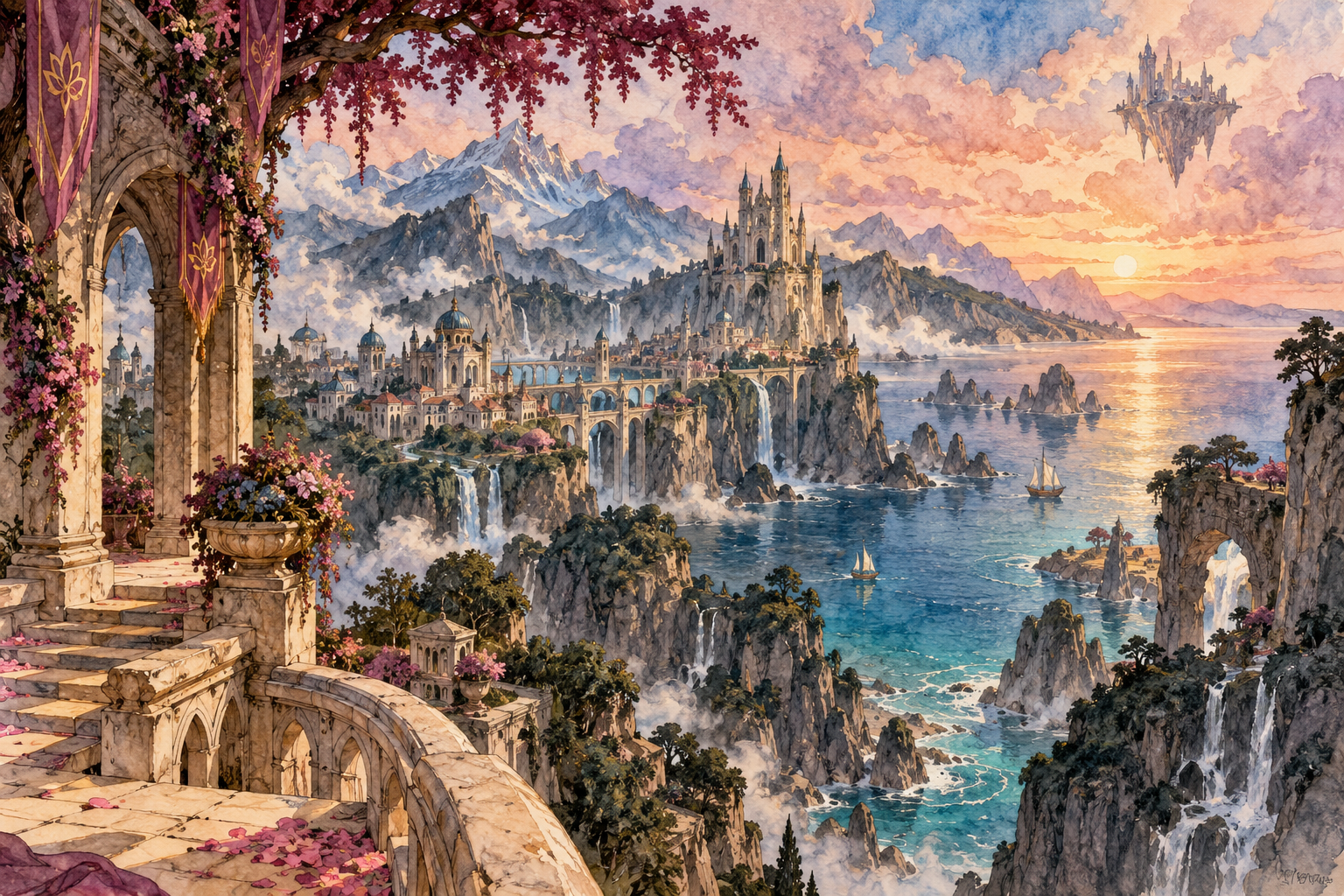
Almost every culture possesses an account of how the world began. Few agree. Some claim the Three Mothers shaped it. Others credit the Sovereigns. Some say the Titans formed mountains and seas from primordial matter. Certain traditions teach that Velyssara awakened life upon an already existing world.
Giant myths frequently emphasize construction, ordering, and cultivation rather than creation from nothing. It is possible that these stories describe different stages of the same process. Creation may not have been a single event. The world may have been formed, altered, inhabited, destroyed, rebuilt, and transformed many times before recorded history began.
The Ancient Civilization
Across Erosia lie ruins that appear older than the civilizations currently occupying the land. Some stand openly beneath the sky. Others lie buried beneath cities. Some exist within mountains, beneath forests, below oceans, or deep underground. Their architecture varies enough that scholars dispute whether they belong to a single culture. Yet strange similarities recur. Construction techniques. Geometric patterns. Magical principles. Materials difficult to reproduce. Symbols whose meanings remain unknown. No surviving people confidently claim descent from these builders.
Their name has been lost. Their language remains only partially understood. Their disappearance appears to have been catastrophic—or deliberate. Most unsettling of all, some sites seem to have been abandoned as though their inhabitants expected to return.
What Happened to Them?
There are many theories. War. Magical catastrophe. Elemental upheaval. Divine intervention. Plague. Transformation. Migration beyond the Veil. Self-destruction.
Some scholars believe the civilization did not vanish at all. Instead, they argue, later peoples may descend from survivors whose identities changed so completely that the connection was forgotten. No theory explains every ruin. Perhaps there was never one civilization to explain.
THE GIANTS
The First Builders
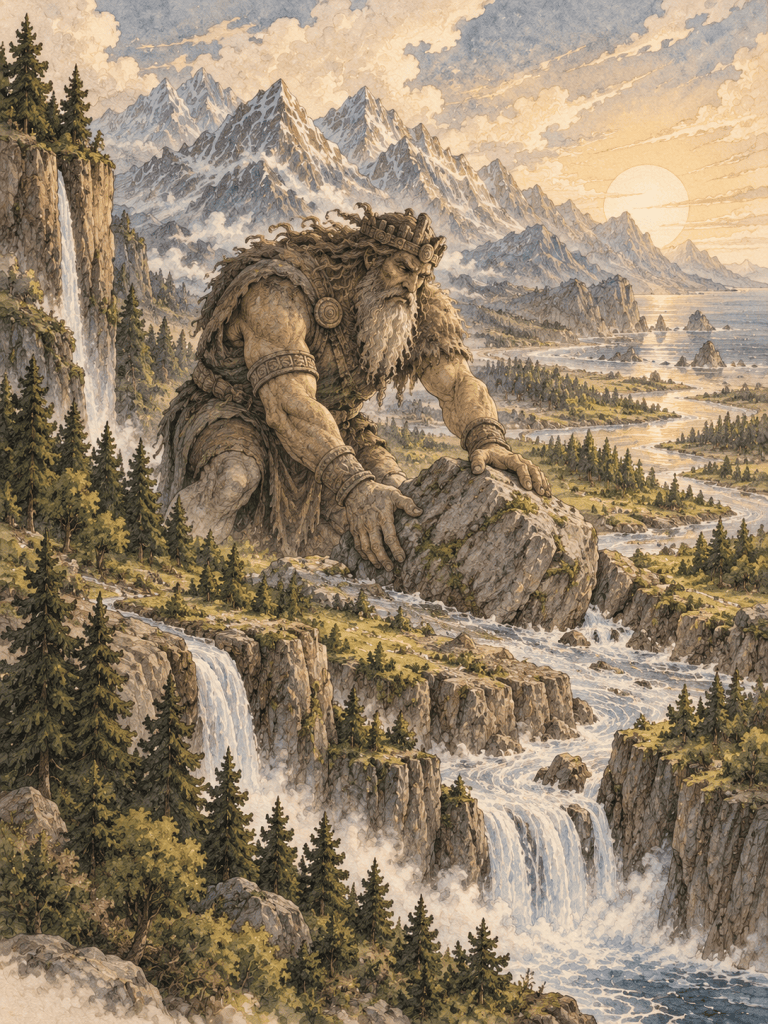
The Giants occupy a unique place between cosmology and history. Unlike the Three Mothers, Sovereigns, and Titans, Giants are remembered not only as mythic beings but as peoples who built, taught, traveled, ruled, cultivated, and created. Many traditions describe them as the first great architects of the mortal world. Roads crossed impossible terrain. Cities were raised from enormous stones. Rivers were redirected. Mountain passes were carved.
Great halls were constructed in locations where later civilizations struggle merely to survive. Whether every ancient megastructure attributed to Giants was actually built by them remains uncertain. As with many things, mortals tend to credit the oldest known people whenever they encounter something even older.
Giants as Teachers
Numerous cultures preserve stories in which Giants taught younger peoples.
- Agriculture.
- Stonecraft.
- Navigation.
- Astronomy.
- Metalworking.
- Magic.
- Law.
- Architecture.
Not every story describes benevolent teachers. Some portray Giants as rulers. Others as conquerors. Some as protectors. Some as beings whose scale and lifespan made them indifferent to the concerns of smaller peoples. The surviving traditions strongly suggest that Giants played an enormous role in shaping early civilization. Exactly what that role was remains disputed.
THE AGE OF BUILDERS
The Age of Builders is the name modern scholars give to the enormous span of semi-mythic history between primordial creation and reliably recorded civilization. It may not have been a single age. It may have lasted tens of thousands of years. During this period, the mortal world appears to have undergone enormous transformation. Settlements became cities. Roads crossed wilderness. Agriculture reshaped landscapes. Magical traditions developed. Great works of architecture appeared. Early peoples spread into new regions.
Cultures rose, merged, fragmented, and disappeared. Giants occupy the center of many surviving stories from this period, but evidence suggests they were not alone. Other peoples existed. Some may survive today under different names. Others left only ruins. The deeper archaeologists dig, the more crowded early history becomes.
GODS AND COSMOLOGY
Gods Are Not the Beginning
One of the most important distinctions in Erosian cosmology is that divinity does not necessarily mean primacy. The gods are powerful. They shape cultures, answer prayers, establish sacred traditions, grant blessings, and exert influence throughout mortal life. But most cosmological traditions do not place the recognizable divine courts at the beginning of existence.
Something came before them. The Mothers. Velyssara. The Titans. The Sovereigns. Perhaps other beings whose names have been lost. This creates an uncomfortable theological truth. The gods themselves inhabit a universe they may not have created.
What Makes a God?
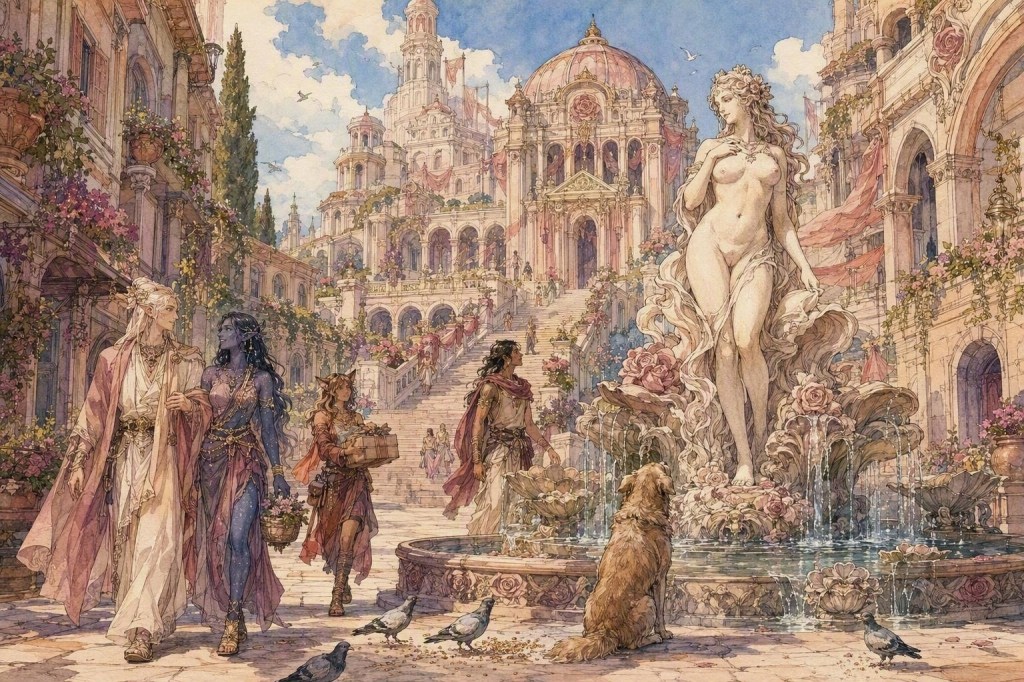
There is no universally accepted answer. Some theologians believe gods are fundamentally distinct from all other beings. Others argue that divinity is a state that can emerge through power, worship, cosmic purpose, or transformation. Some gods appear closely associated with mortal experiences.
- Beauty.
- Desire.
- Devotion.
- Longing.
- Art.
- Hunting.
- Submission.
- Abundance.
Others embody principles far more difficult to categorize. Whether worship creates gods, strengthens them, awakens them, or merely allows mortals to perceive beings that already exist remains one of theology’s most contentious questions.
COSMIC TIME
Mortals experience time as progression. Past. Present. Future.
Cosmologists are increasingly uncertain that all of reality behaves the same way. Dreams sometimes appear to contain memories of events that have not happened. Prophecy complicates ordinary ideas of causality.Ancient magical sites occasionally preserve moments with unnatural clarity. Certain entities appear capable of remembering ages for which no mortal history exists.
These phenomena have led some scholars to suggest that time itself may be part of the mortal world’s structure rather than an absolute law governing all realities. If true, the earliest cosmic events may not have occurred before creation in the ordinary sense. They may exist outside the sequence mortals call history. This possibility makes any definitive chronology of creation deeply unreliable.
WHAT COSMOLOGISTS ACTUALLY KNOW
For all the uncertainty surrounding creation, several conclusions are accepted by most serious scholars. Reality is older than recorded civilization. The mortal world is not the only form of existence. The Elemental Planes are real. The Veil exists. Souls persist in some form beyond bodily death. The Three Moons exert measurable influence upon the world. Beings of tremendous antiquity existed before modern civilization. Ruins survive from peoples whose identities have been lost. Magic interacts with structures far deeper than ordinary physical reality. Beyond these points, certainty diminishes rapidly. That uncertainty is not considered a failure of cosmology. It is the reason cosmology exists.
Cosmology might appear to concern questions too ancient to affect ordinary life. Nothing could be further from the truth. Every magical tradition ultimately depends upon assumptions about how reality functions. Every resurrection raises questions about the soul. Every divine miracle raises questions about the nature of gods. Every elemental manifestation echoes the Sovereigns. Every ancient ruin may contain evidence capable of rewriting history. Every dream that crosses the Veil challenges the limits of mortal understanding. And every night, three moons rise above a world that still does not know why they are there.
Cosmology is not merely the study of the past. It is the study of the rules beneath existence. And those rules are not yet fully understood.
A Final Truth
The oldest lesson of cosmology is simple: The farther one travels into the past, the less singular truth becomes.
Perhaps reality began with the Three Mothers. Perhaps the Mothers themselves emerged from something older. Perhaps Velyssara transformed creation by giving life the power to desire, reproduce, and continue. Perhaps the Titans shaped the world. Perhaps the Sovereigns supplied the forces from which it was formed.
Perhaps the Giants inherited a world built by civilizations already forgotten. Perhaps every one of these stories preserves part of the same truth. Perhaps none of them do. Erosia is old. Older than its kingdoms. Older than its gods’ temples.
Older than the names mortals have given the mountains and seas. Beneath every answer waits another question. And somewhere beneath those questions lies the truth of how reality came to be. Whether mortals were ever meant to discover it is another mystery entirely.
 Whispers of Erosia
You must be logged in to post a comment.