
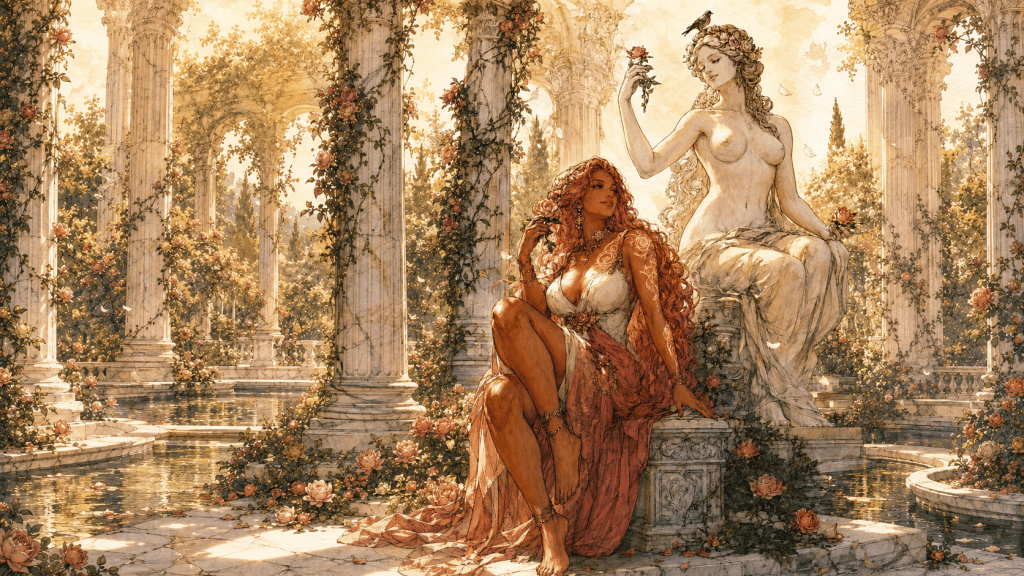
Velyssara
Goddess of Lust, Sex, Life, and the First Desire
Desire • Intimacy • Life
“All hearts seek another.”
Before desire had a name, it had a heartbeat.
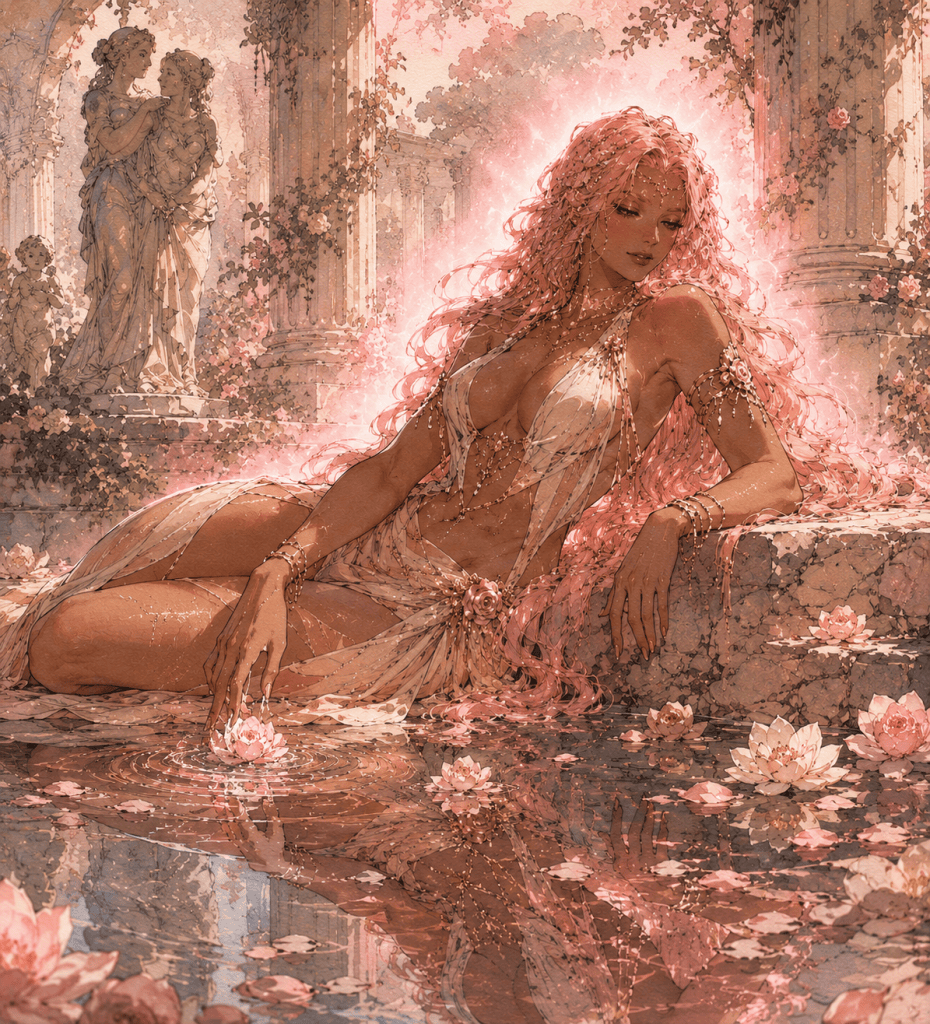
Velyssara is the First Bloom, the radiant consciousness born when primordial Want first gathered itself into form. From her came the divine currents that would eventually awaken as the gods of the Velvet Court, each carrying a different truth of longing into the world.
She is worshipped as the goddess of lust and sex, but her dominion reaches far beyond physical passion. Velyssara is present wherever life reaches beyond itself: in attraction and affection, fertility and creation, vulnerability and companionship, the hunger to be known, and the courage to desire something—or someone—at all.
Her faithful call her Mother, Lover, Muse, Flame, the Velvet Pulse, and the First Bloom.
Velyssara does not teach that every desire should be fulfilled.
She teaches that desire should be recognized, understood, and chosen.
To want is to be alive.
The First Bloom
Before there were gods, there was Want. It was not yet lust, love, hunger, ambition, devotion, or longing. It possessed no object and sought no particular end. It was simply the first pressure toward more—an infinite reaching without direction, boundary, or name. For an age beyond mortal reckoning, Want endured without form.
Eventually, that became impossible. Desire without distinction could not remain whole forever. It folded inward upon itself, gathering possibility into coherence until, for the first time, Want did not merely exist. It knew itself. That awakening was Velyssara. She did not descend from some older throne, nor was she fashioned by another god. Velyssara was the first moment desire became conscious: the instant an infinite force discovered preference, direction, and the possibility of choice. This was the First Bloom. And with it, creation changed.
Desire Becomes Many
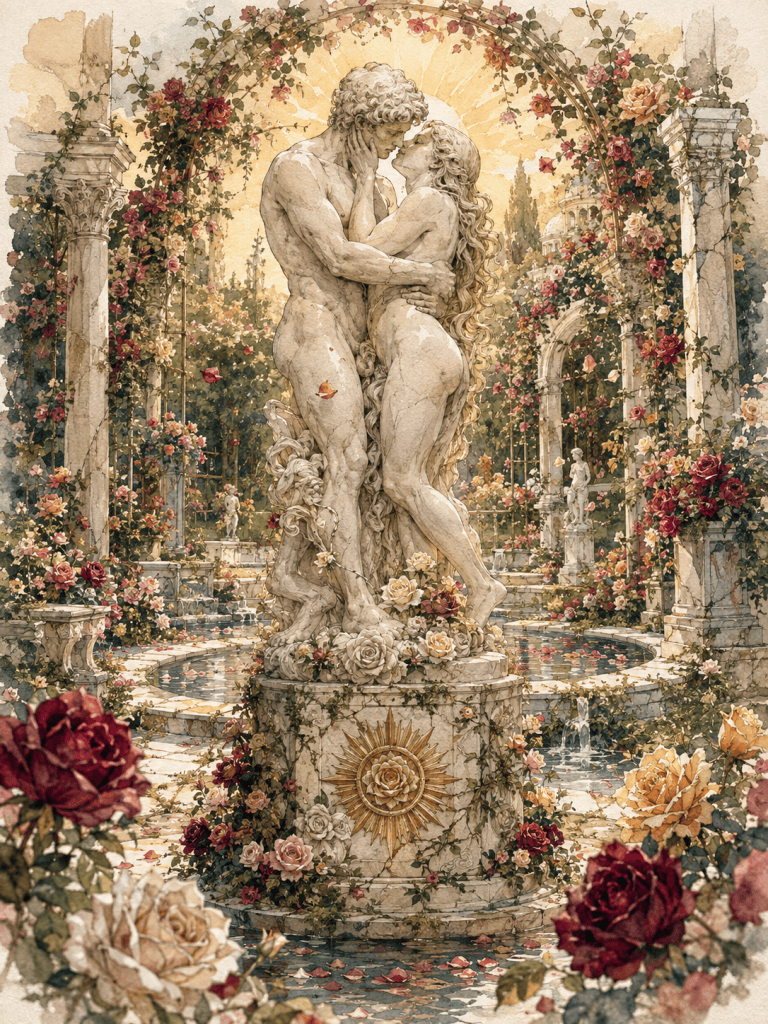
Velyssara soon discovered that consciousness brought distinction. Want could now become wanting. She could desire closeness and distance. Giving and receiving. Pursuit and surrender. Restraint and release. Transformation and recognition. Nurture, instinct, devotion, dream. These were not yet gods.
They were currents within Velyssara herself—different ways an infinite consciousness could experience desire. As creation unfolded, those currents grew increasingly distinct. Each developed its own rhythm, preference, and perspective. What began as facets of a single divine consciousness slowly became capable of answering Velyssara rather than merely echoing her. One by one, they awakened. The Velvet Court was not created in a single act.
It differentiated into being.
The gods who emerged remained bound to Velyssara as their origin, but they were no longer extensions of her will. Each possessed identity, agency, and a divine understanding of desire that even the First Bloom could not wholly contain. Thus Velyssara became something unprecedented: not merely the source of desire, but the center of a divine family capable of disagreeing with her.
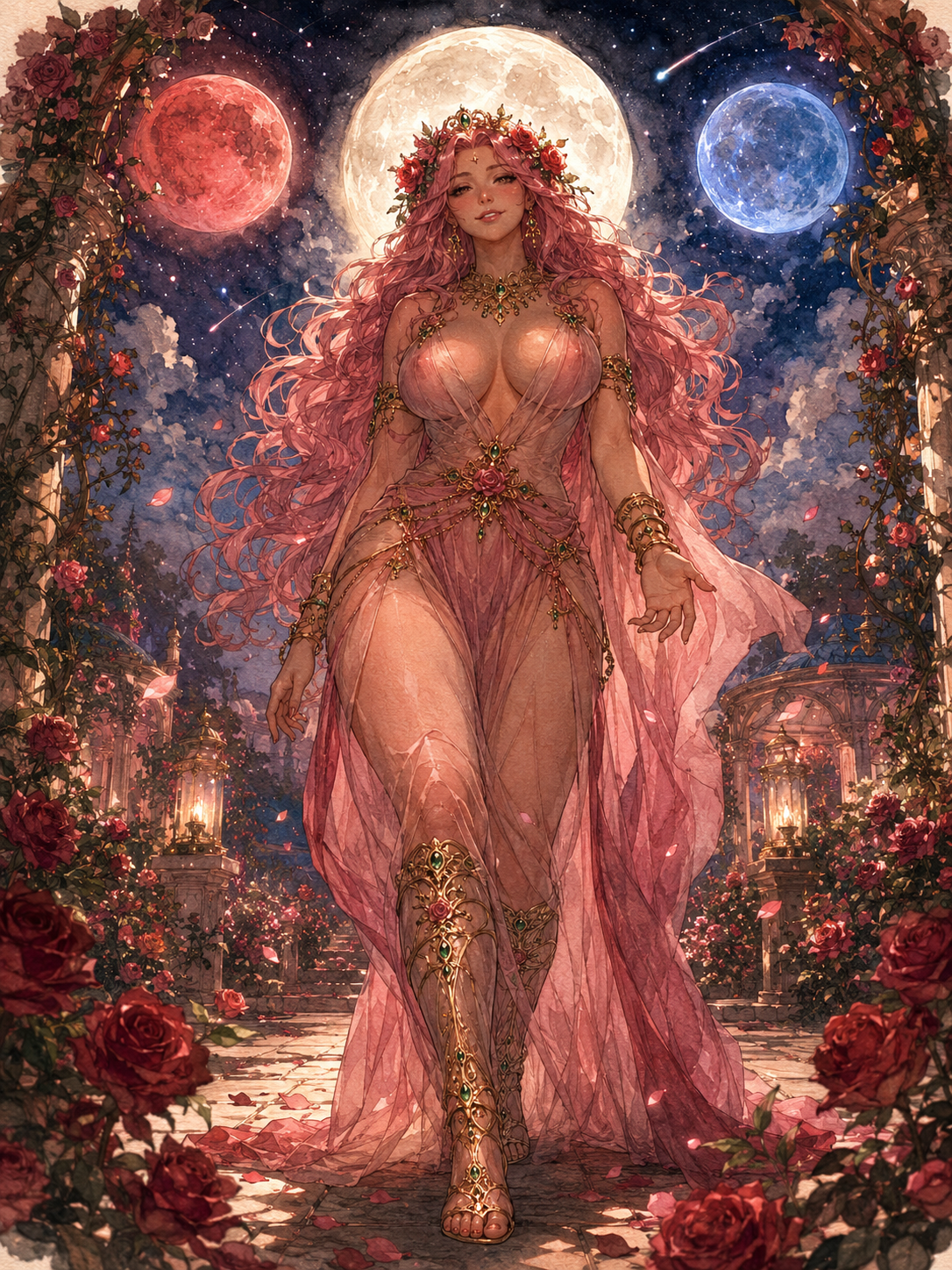
The Mother of Desire
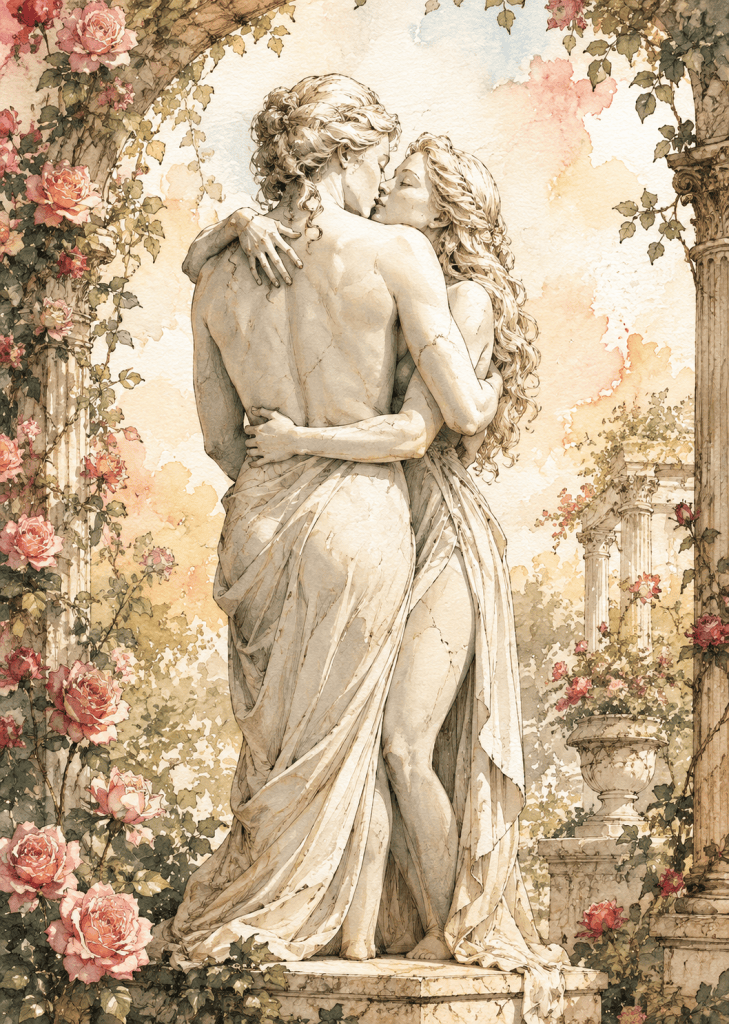
Mortals often call Velyssara the Mother of the Velvet Court, but Erosian theologians disagree over how literally the title should be understood. She did not bear the gods as mortals bear children. She carried within herself the possibilities from which they became distinct. For this reason, the gods of the Velvet Court are neither creations fashioned to obey her nor fragments waiting to be reunited with her. They are sovereign expressions of truths that once existed without separation inside the First Bloom.
Velyssara stands at the center of the Court because every path of desire ultimately touches something she first embodied. Yet she does not rule the Court as a monarch. She is its axis. The others challenge, complement, restrain, and deepen one another. Their differences prevent any single expression of desire from becoming absolute, while Velyssara remains the living reminder that beneath all those differences lies the same ancient impulse: to reach beyond oneself.
The First Desire
This is why Velyssara’s dominion includes both Sex and Life. To her faithful, these are not unrelated portfolios joined by divine accident. They are expressions of the same primordial truth. Life reaches. Roots seek water. Flowers turn toward light. Bodies seek warmth. Hearts seek companionship. Lovers seek one another. Artists reach for forms that do not yet exist. Parents reach toward futures they may never see. The lonely reach for belonging, the wounded for comfort, and the living toward another tomorrow. Not every desire is wise.
Not every desire should be fulfilled. But the capacity to desire—to imagine that what exists now need not be all that ever exists—is sacred to Velyssara. Her oldest teaching therefore contains neither commandment nor promise. It is an observation:
To desire is to reach. To reach is to change. To change is to live.
And wherever something living reaches beyond what it already is, the faithful say the First Bloom opens again.
The Desire She Embodies
Velyssara’s domain is often reduced by outsiders to lust. Her faithful understand something much larger. Lust is sacred to Velyssara because it is one of the clearest ways desire becomes embodied: the moment longing ceases to be abstract and is felt in breath, pulse, thought, attention, and the yearning for closeness. Yet lust is only one flowering of the force she represents. Velyssara governs desire made vital—the impulse that draws living beings toward pleasure, intimacy, connection, creation, and one another. She does not teach that desire must be obeyed. She teaches that it should not be denied merely because it exists. Desire may be welcomed, questioned, shared, redirected, restrained, transformed, or refused. What matters is that it is acknowledged and chosen.
Sacred Domains
Desire
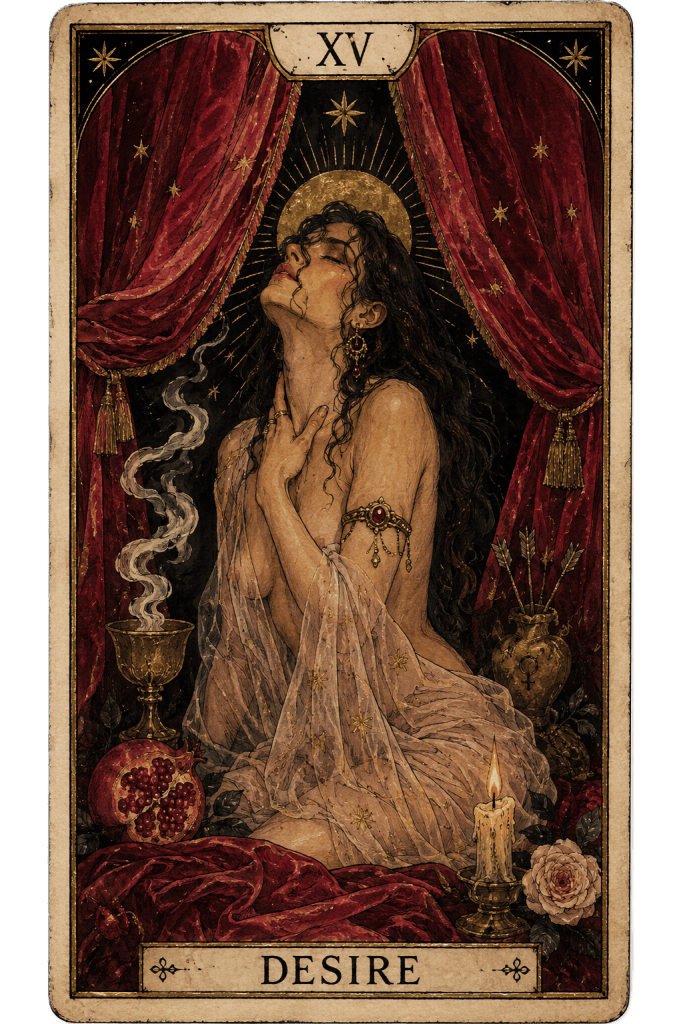
To want is to recognize possibility. Velyssara’s faithful regard desire as neither virtue nor failing on its own. It is an invitation to understand what the heart, body, or spirit is reaching toward. A desire freely examined may reveal love, loneliness, curiosity, ambition, hunger, fear, or some truth for which the mortal has not yet found words. The sacred act is not gratification. It is recognition.
Intimacy
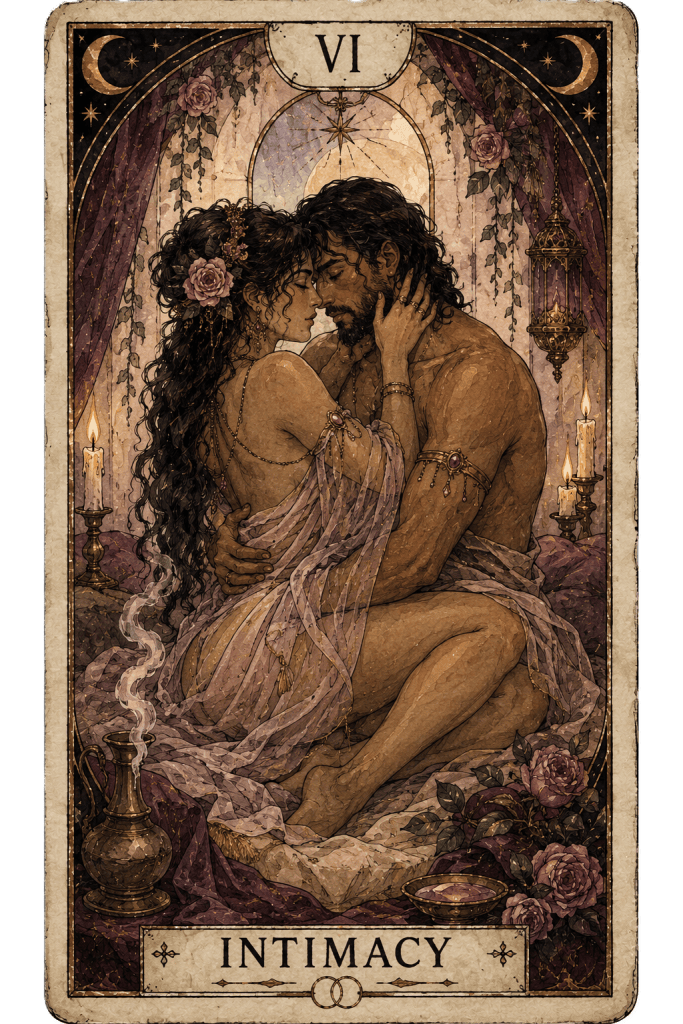
To allow another person near is an act of vulnerability. Velyssara therefore claims not only lovers, but confidants, companions, families, trusted friends, and all relationships in which people willingly allow themselves to be known. Physical intimacy is one expression of this mystery. So are confession, tenderness, shared silence, laughter, comfort, and the simple act of remaining beside someone when leaving would be easier. Intimacy becomes sacred when closeness is freely offered and freely received.
Life
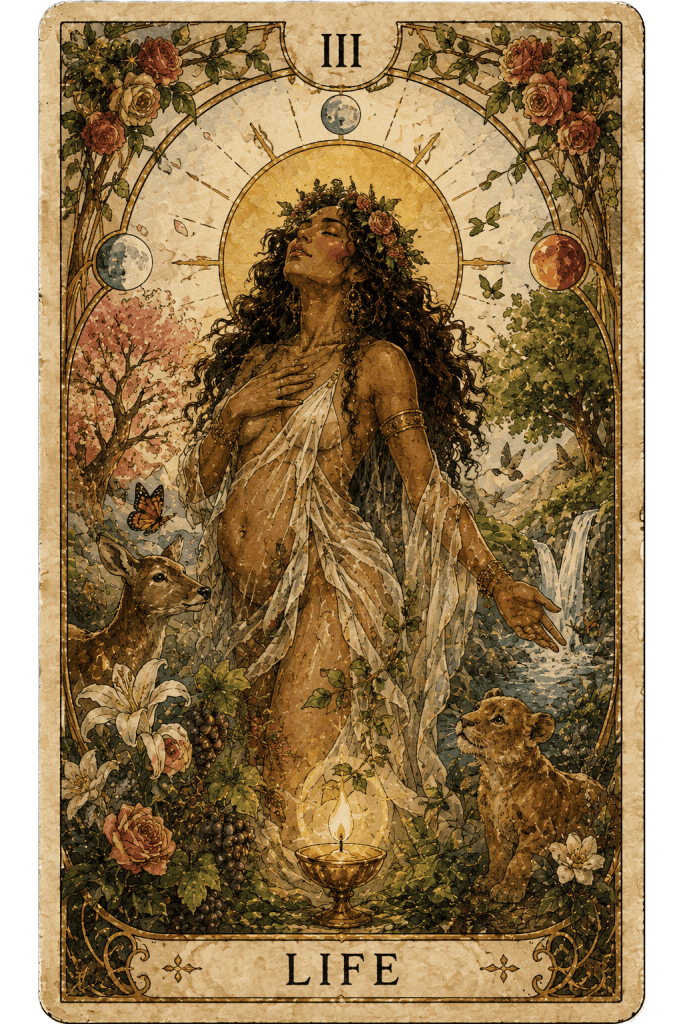
Life does not remain still. It grows, hungers, reproduces, adapts, reaches, creates, and changes. Velyssara’s association with fertility therefore extends beyond conception or childbirth. A planted seed, a new relationship, an artistic creation, a community rebuilt after disaster, and a person choosing to begin again can all be understood as expressions of her life-giving principle. The First Bloom is present whenever desire becomes creation rather than mere consumption.
Intimate Expressions
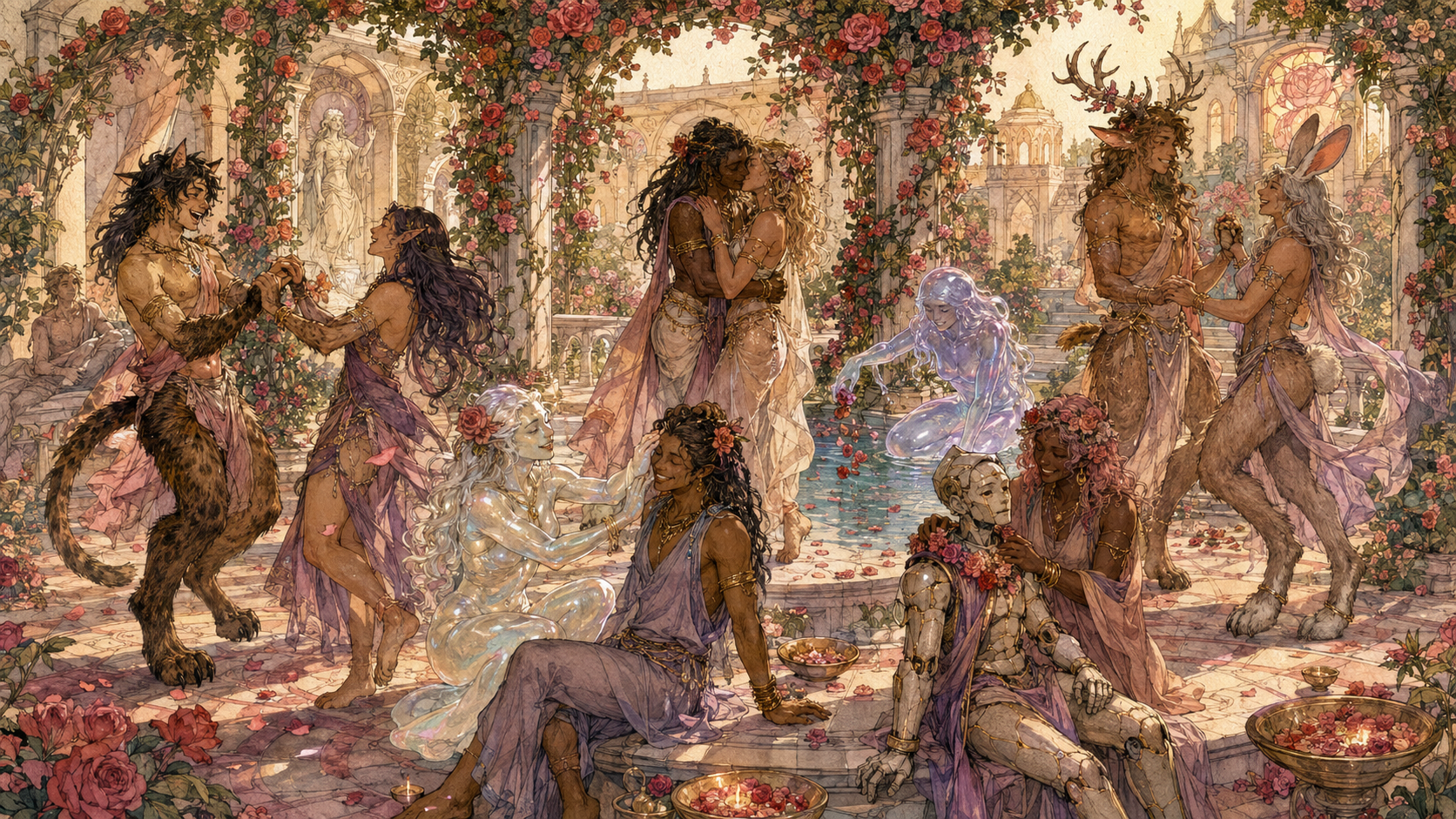
Sexual desire remains an explicit and honored part of Velyssara’s faith. Her temples do not treat sexuality as a profane subject requiring divine permission to become acceptable. Pleasure, attraction, erotic curiosity, bodily affection, and consensual sexual intimacy may all be approached as ordinary parts of mortal life—and, when approached with intention, as forms of sacred experience. Velyssara is therefore invoked by lovers discovering one another, partners renewing intimacy, people learning the desires of their own bodies, those seeking freedom from sexual shame, and devotees celebrating pleasure simply because pleasure has value.
Her rites may incorporate sensual touch, kissing, massage, dance, shared bathing, erotic adornment, intimate vows, fertility observances, and consensual sexual ritual according to the traditions and boundaries of those participating. No particular expression is considered inherently holier than another. Celibacy may itself be sacred when freely chosen. Restraint may honor desire by giving it shape. Refusal is respected as completely as invitation. For Velyssara, the sanctity of intimacy does not arise from the act performed. It arises from choice.
Desire Offered, Never Owed
Among Velyssara’s oldest teachings is the distinction between desire and entitlement. Wanting another person does not create a claim upon them. Being desired creates no obligation to answer. A gift of intimacy remains sacred precisely because it could have been withheld. This principle echoes throughout the Velvet Court, but within Velyssara’s faith it is foundational. Desire is worthy of acknowledgment; another person’s autonomy is worthy of reverence.
Thus her temples teach:
Desire offered is sacred. Desire taken is nothing.
A sincere yes may be celebrated. A sincere no is complete. And both belong beneath the petals of the First Bloom.
Holy Symbol & Iconography
Velyssara’s sacred imagery is built around the rose, living light, warmth, and the beauty of something opening by choice. Her symbols rarely depict desire as hunger alone. They depict it as invitation: a bloom opening toward the sun, two forms reaching toward one another, a flame offering warmth without consuming, or petals carried outward upon a gentle breath.
Where Velyssara is represented, the world should appear a little more alive.
The Rose
of the First Bloom
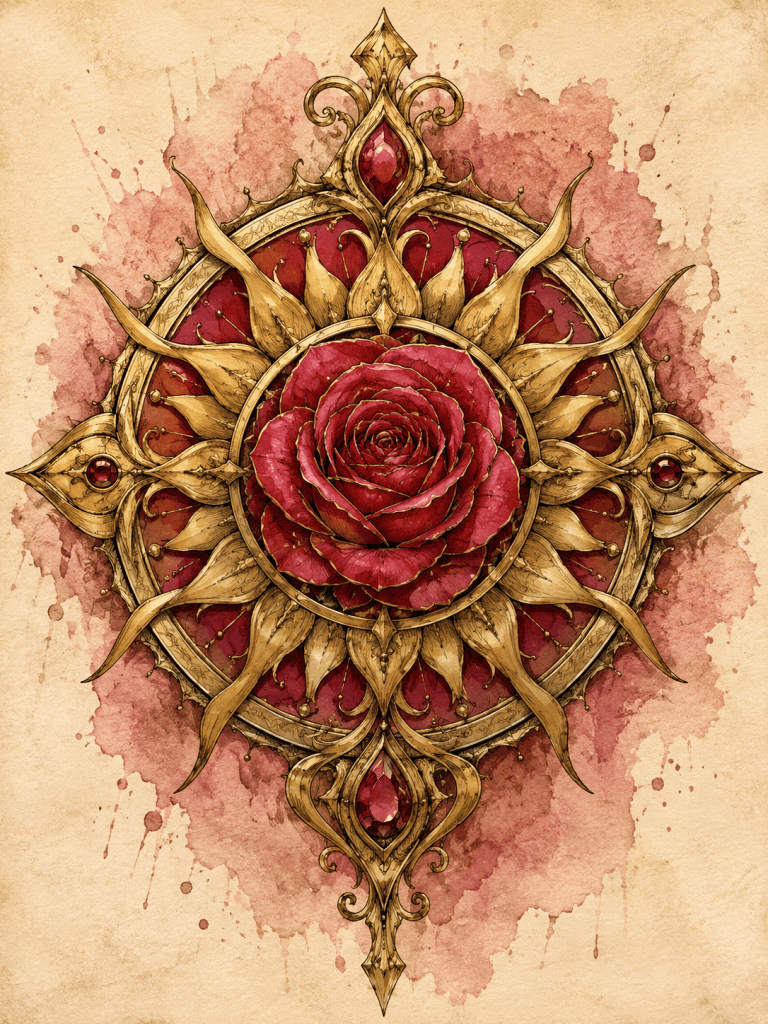
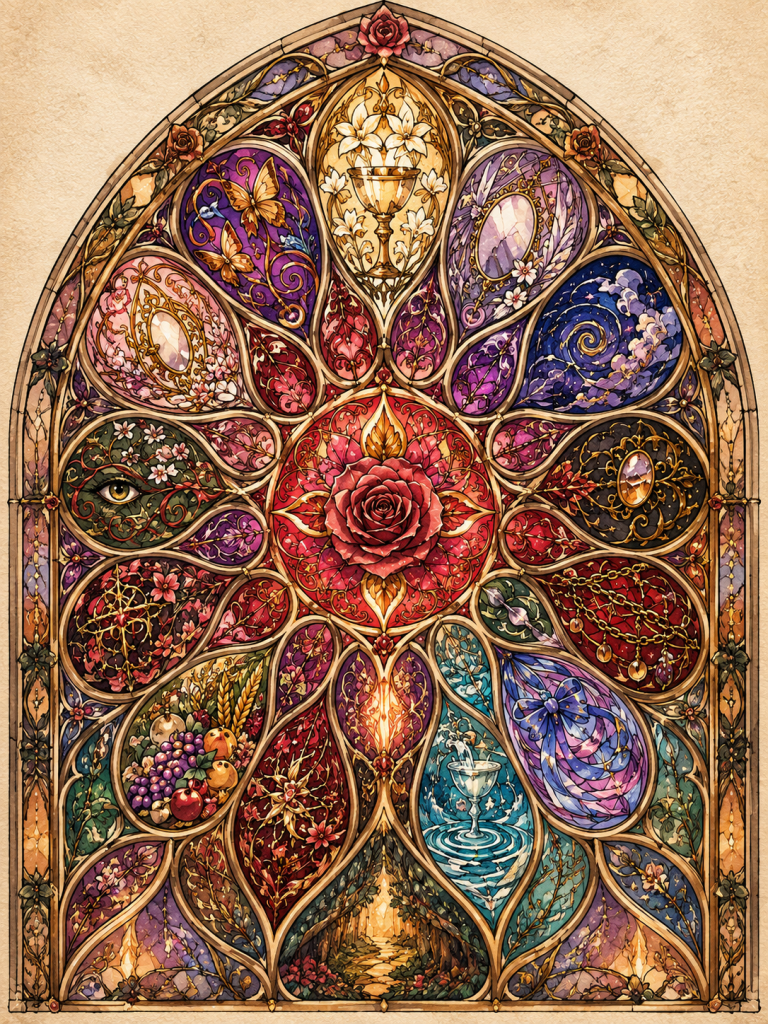
Velyssara’s holy symbol is a deep crimson rose enclosed within an ornate circle of golden filigree, surrounded by radiant petal-like forms that resemble both a flower in bloom and a sacred flame.
Ruby-red stones mark the cardinal points, while elongated golden ornaments extend outward like rays, petals, or ceremonial spearpoints. At its center rests the rose. It represents desire given form.
The surrounding golden circle represents the boundaries that allow desire to become meaningful rather than limitless. The radiating petals evoke life spreading outward from the First Bloom, while the cardinal stones represent desire carried into every direction of mortal existence.
Rose and gold together express the central duality of Velyssara: passion given warmth, and desire given sacred shape.
The symbol is worn by priests and devotees as pendants, worked into temple doors, embroidered into ceremonial veils, impressed into sealing wax, carved above marriage alcoves, and placed upon shrines devoted to fertility, intimacy, healing, and new beginnings.
Sacred Colors
Rose
The color most closely associated with Velyssara.
Rose represents affection, sensuality, tenderness, awakening desire, and the living warmth shared between people.
Deep Wine
Used in more solemn rites.
Wine represents mature passion, vulnerability, experience, and desires that have deepened rather than faded with time.
Gold
Gold represents divine vitality.
It is the light of the First Bloom: warmth without burning, radiance without judgment, and life made visible.
Blush & Ivory
These softer tones commonly appear in temple silks, devotional garments, flowers, and ceremonial spaces.
They evoke intimacy, gentleness, openness, and welcome.
The Living Rose
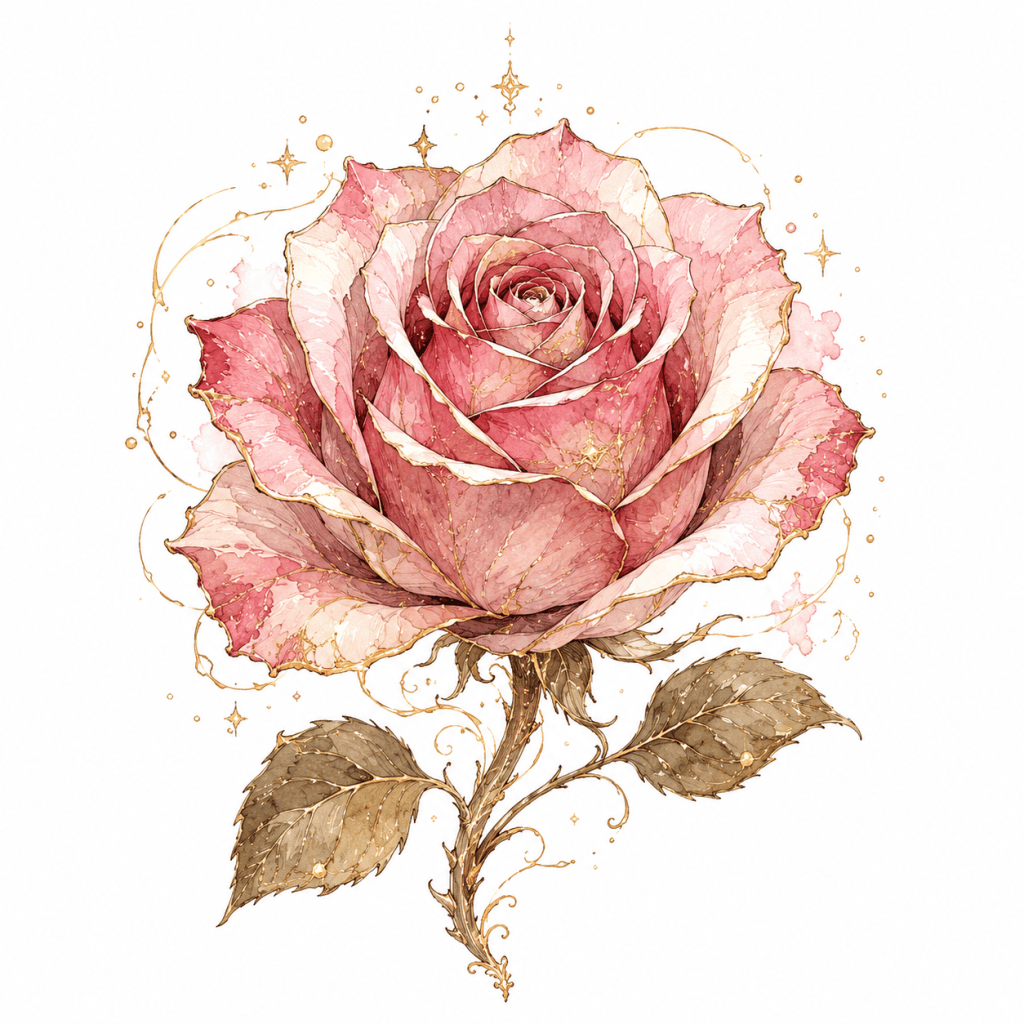
No image is more closely associated with Velyssara than the rose in bloom. Roses are grown throughout her temple grounds, offered between lovers, floated upon sacred pools, woven into festival garlands, scattered during rites of union, and placed beside the beds of the newly born and the newly wed.
A closed rosebud represents desire not yet understood.
A flower beginning to open represents desire acknowledged.
A full bloom represents desire freely expressed.
Fallen petals do not signify corruption or loss. They represent the truth that even fulfilled desire changes form, making space for another season of longing and renewal.
Sacred Animals
Several creatures recur in Velyssaran art and temple tradition.
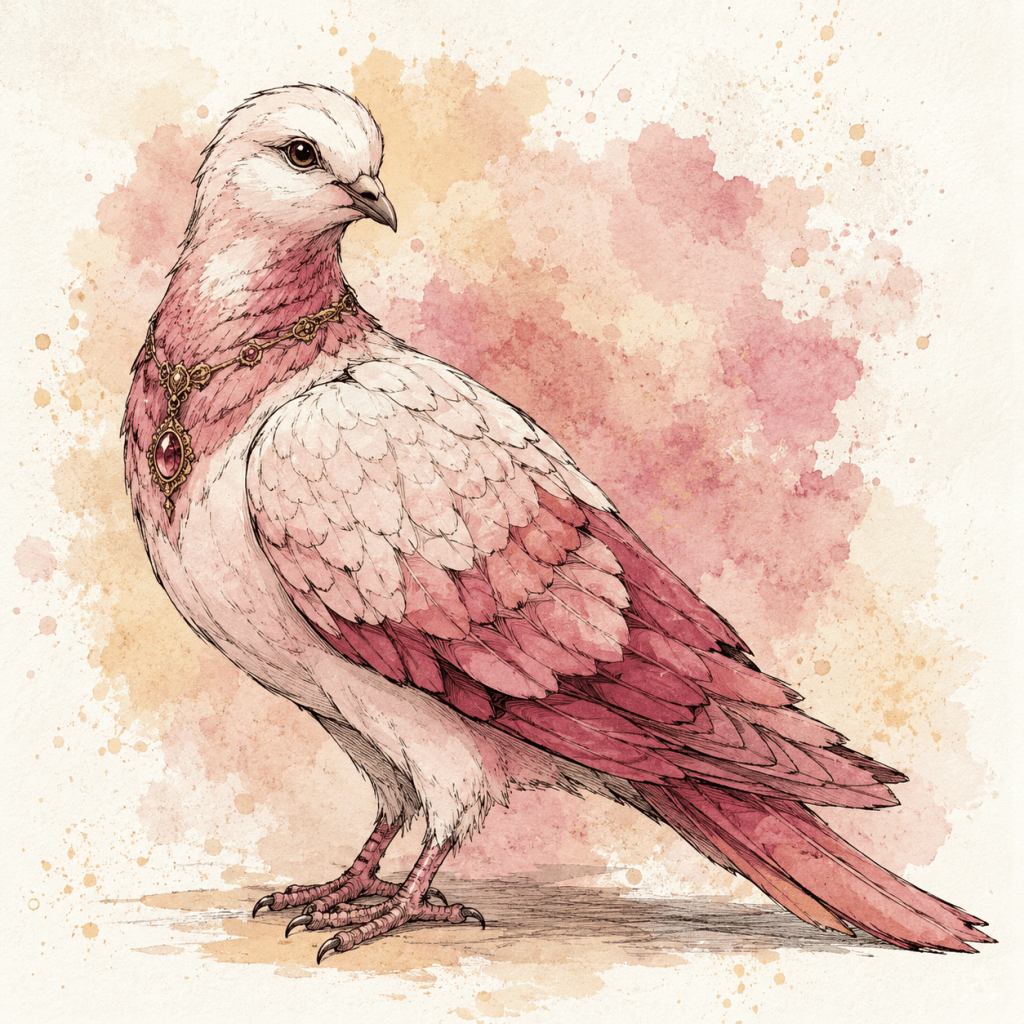
White doves represent affection freely returned and the peace of mutual trust.
Velvet foxes symbolize curiosity, playfulness, seduction, and the delight of discovery.
Satin gazelles embody grace, attraction, vitality, and the exhilaration of being drawn toward another.
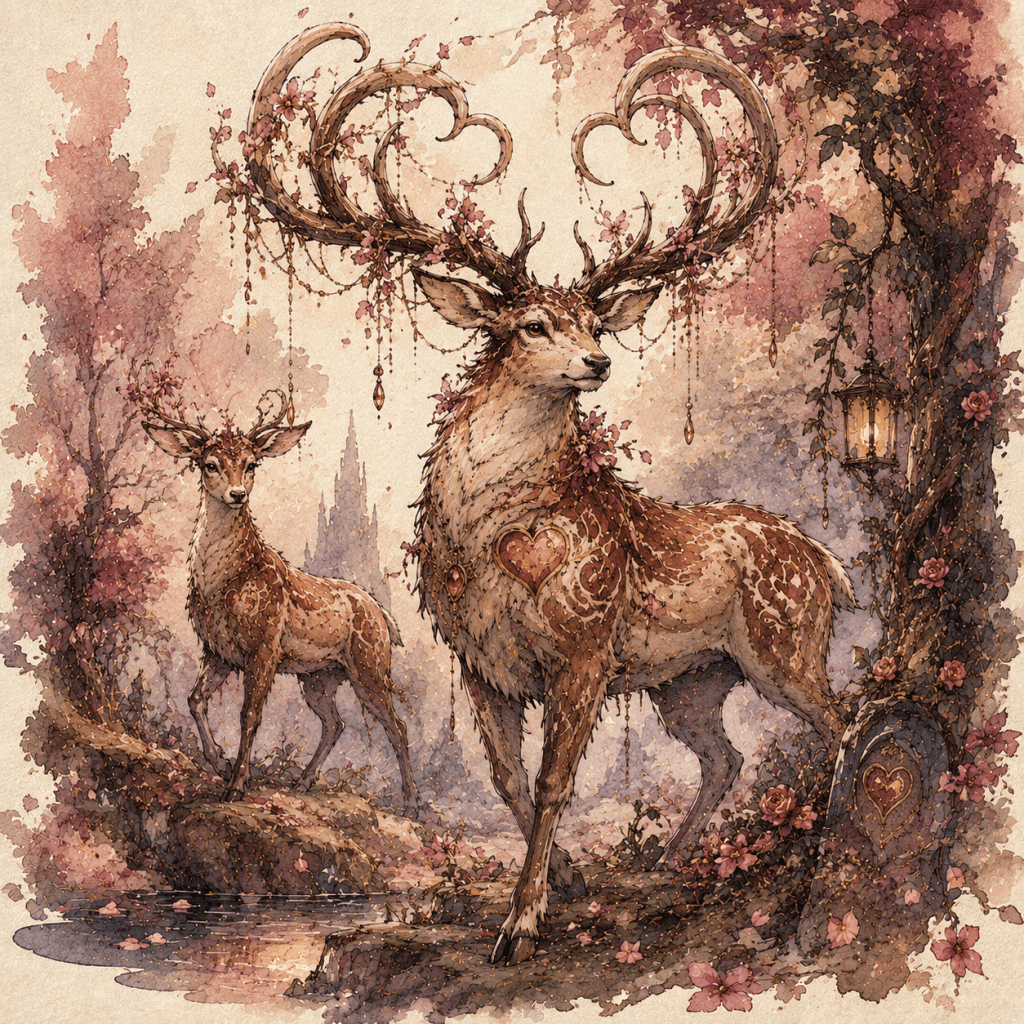
Dawn-furred deer represent gentleness, fertility, vulnerability, and life’s continual renewal.
These animals are not universally regarded as literal servants of Velyssara. More often, they appear in poetry, temple mosaics, illuminated manuscripts, sculpture, and dreams as expressions of her presence. The older Pantheon Guide specifically associates all four with her iconography.
Depictions of the First Bloom
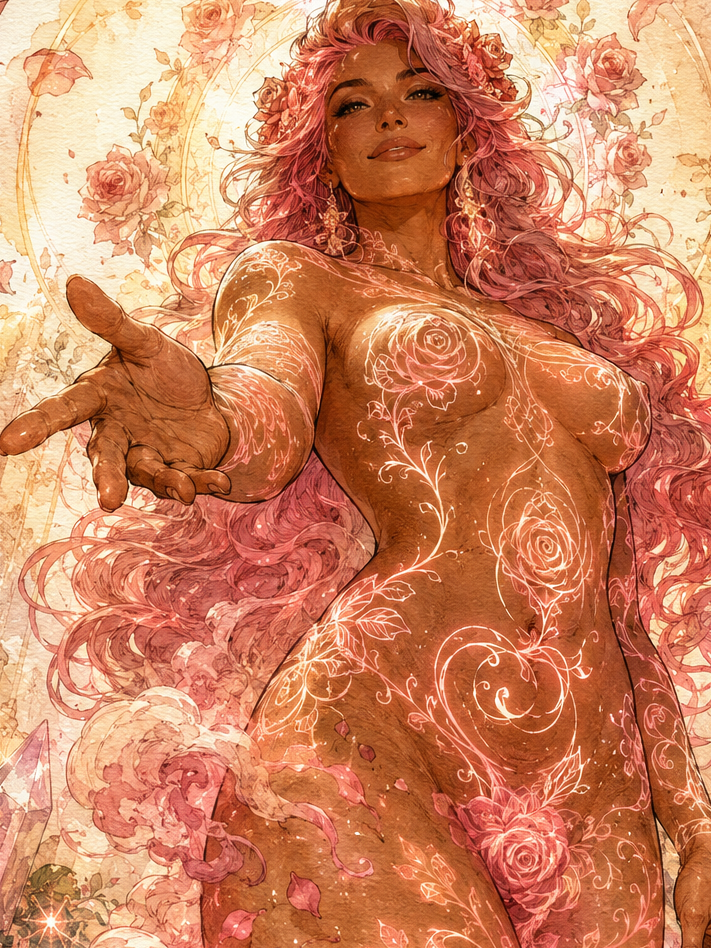
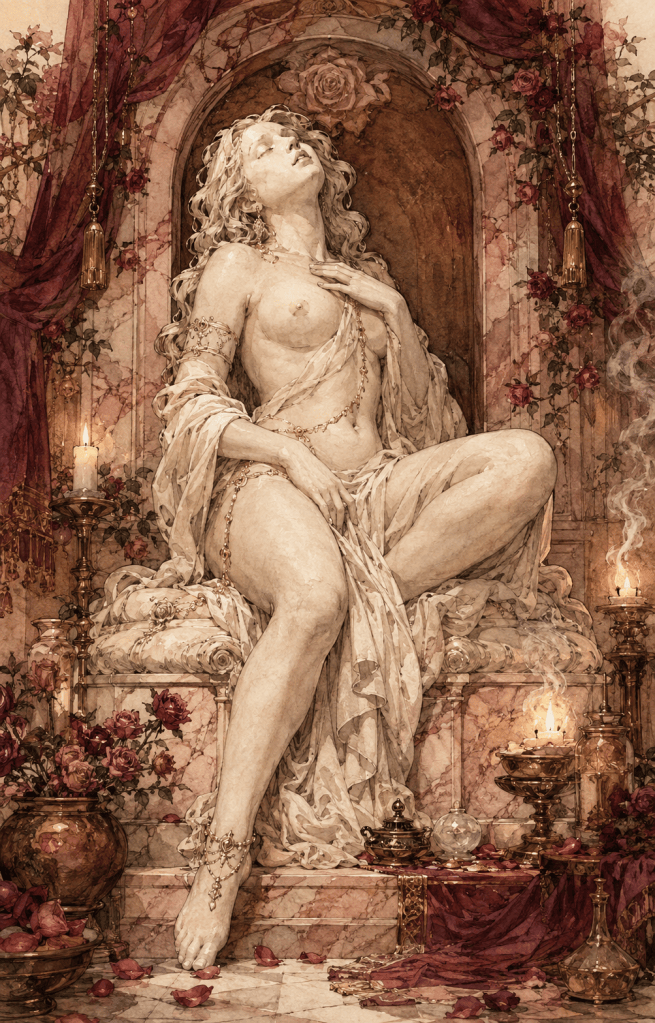
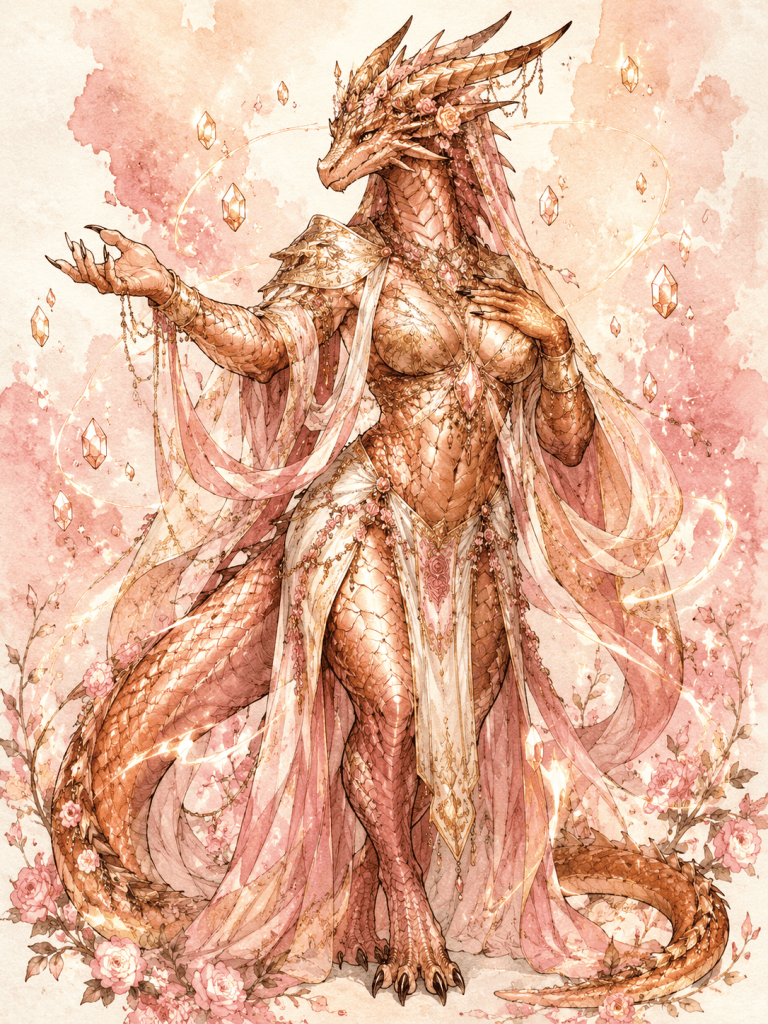
Velyssara is traditionally portrayed as a radiant adult woman whose beauty feels welcoming rather than untouchable. Her skin carries the warmth of amber-gold light, while long rose-gold hair falls around her in luminous waves. Living rose sigils bloom across her body, subtly pulsing as though sharing her heartbeat. She is commonly dressed in layered ceremonial silks of rose, blush, and deep wine, accompanied by delicate gold filigree jewelry.
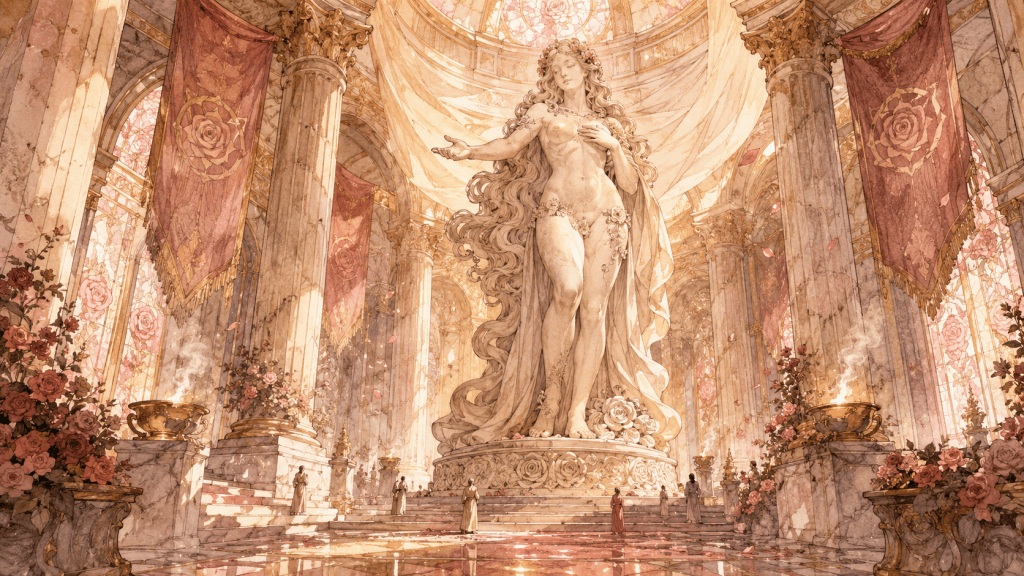
Rose petals drift around her even where there is no wind. The air near her appears warmer. Her posture is open. Her hands bless, welcome, offer, or receive. She is rarely depicted upon an imposing throne. Even monumental temple statues favor gestures of benediction and invitation over rulership. Velyssara’s canonical visual identity specifically emphasizes warmth, presence, invitation, and safety rather than dominance.
The Breath of Velyssara
Another ancient motif is warm, visible breath. Temple paintings sometimes show mist curling from Velyssara’s lips and becoming rivers, flowers, stars, animals, or intertwined mortal silhouettes. This imagery remembers the oldest myths in which the First Bloom’s breath stirred creation into motion. In devotional art, breath therefore represents the moment internal desire crosses the boundary into the world: a confession spoken, a name whispered, a song sung, a prayer offered, a first cry at birth, or the trembling breath before one person tells another what they truly want.
Recognizing Her Image
Whether painted upon a temple ceiling, carved into a roadside shrine, embroidered upon a priest’s veil, or rendered as a tiny charm worn beneath clothing, Velyssara should remain recognizable through a handful of recurring elements:
The Rose.
Desire given form.
Rose-Gold Light.
The warmth of living desire.
Living Petals.
Life continuously unfolding.
Golden Filigree.
Beauty shaped through intention.
Sacred Breath.
Inner longing entering the world.
Open Hands.
Invitation without demand.
Together, they express the visual theology of the First Bloom:
She does not seize what reaches for her. She opens, and allows it to come.
Worship & Daily Devotion
Worship of Velyssara is rarely defined by solemn distance. Her faithful believe devotion should be felt. A prayer may be spoken before an altar, but it may just as readily be carried in warm breath, shared through affectionate touch, expressed through dance, whispered between lovers, or found in the simple act of caring for someone after a moment of vulnerability. Velyssara asks for neither shame nor compulsory indulgence. Her worship centers upon honest desire, freely offered intimacy, connection, and care. Her oldest devotional traditions are therefore remarkably simple: breathe, listen, acknowledge what you feel, and treat what another entrusts to you as sacred.
Breath Offerings
One of the most widespread Velyssaran devotions requires nothing more than warm rosewater and an honest desire. A shallow bowl of rosewater is gently heated until steam rises from its surface. The devotee leans close and whispers into the mist something they desire. It may be a lover. It may be a child hoped for, reconciliation with an estranged companion, courage to speak an intimate truth, the return of passion to a weary relationship, or simply the wish to feel alive again. The prayer is never written down. As the steam disappears, the desire is entrusted to Velyssara. The rite does not ask the goddess to guarantee fulfillment. It asks only that the desire be heard without shame.
Pulse Circles
For communal devotion, worshippers may gather in a Pulse Circle. Participants sit close together, traditionally knee-to-knee, and gradually synchronize their breathing. Conversation fades. Attention turns toward the rhythms of those gathered until the group settles into a shared cadence of breath and heartbeat. No confession is required. No touch beyond what participants welcome is necessary.
The purpose is simply to experience one of Velyssara’s central teachings: no living heart beats entirely alone. Pulse Circles are practiced by lovers and families, but also by companions before dangerous journeys, communities after tragedy, and strangers seeking reconciliation.

Silk Veil Devotions
Rose-colored silk ribbons are commonly kept in Velyssaran shrines. During a Silk Veil Devotion, a ribbon may be loosely tied around the wrist, waist, or another agreed place upon the body. The binding is deliberately gentle and easily removed. It represents chosen vulnerability. Some devotees wear the silk while speaking something difficult aloud. Others exchange ribbons when beginning a courtship, repairing trust, making an intimate promise, or acknowledging a desire they have kept hidden. The ribbon possesses no sanctity because it binds.
Its meaning comes from the fact that the wearer chose to accept it and may remove it whenever they wish. This practice and its symbolism of chosen vulnerability come directly from the Pantheon Guide’s Velyssaran worship traditions.
The Rosewalk
Many temples maintain a garden path reserved for the Rosewalk. Devotees travel the path barefoot and in silence, traditionally at dawn or twilight. Rose petals cover the stones beneath their feet, and in temples strongly touched by Velyssara’s presence, fresh blossoms are said to open as worshippers pass.
The Rosewalk is undertaken at moments of transition: before marriage, after heartbreak, when accepting a new lover, when releasing an old one, while seeking fertility, after childbirth, when beginning a new life, or simply when a person no longer understands what their heart wants. There is no required revelation waiting at the end. The walk itself is the devotion.
Care After Vulnerability
One of the most characteristic features of Velyssaran worship occurs after the ceremony appears to have ended.
Food is brought.
Water is offered.
Warm oils may be used upon tired hands and shoulders. Blankets are shared. Participants speak softly, sit together, laugh, cry, or remain silent according to what they need.
Velyssaran clergy call this Communal Aftercare.
It follows many emotionally or physically intense rites because the faithful believe vulnerability creates responsibility. To invite another person to open themselves and then abandon them afterward is considered a profound misunderstanding of Velyssara’s teachings.
Care is therefore not merely preparation for intimacy.
Care is part of the intimacy.
Communal aftercare—warm oils, soft touch, and emotional grounding freely offered after intense ritual—is explicitly part of her established worship.
Everyday Offerings
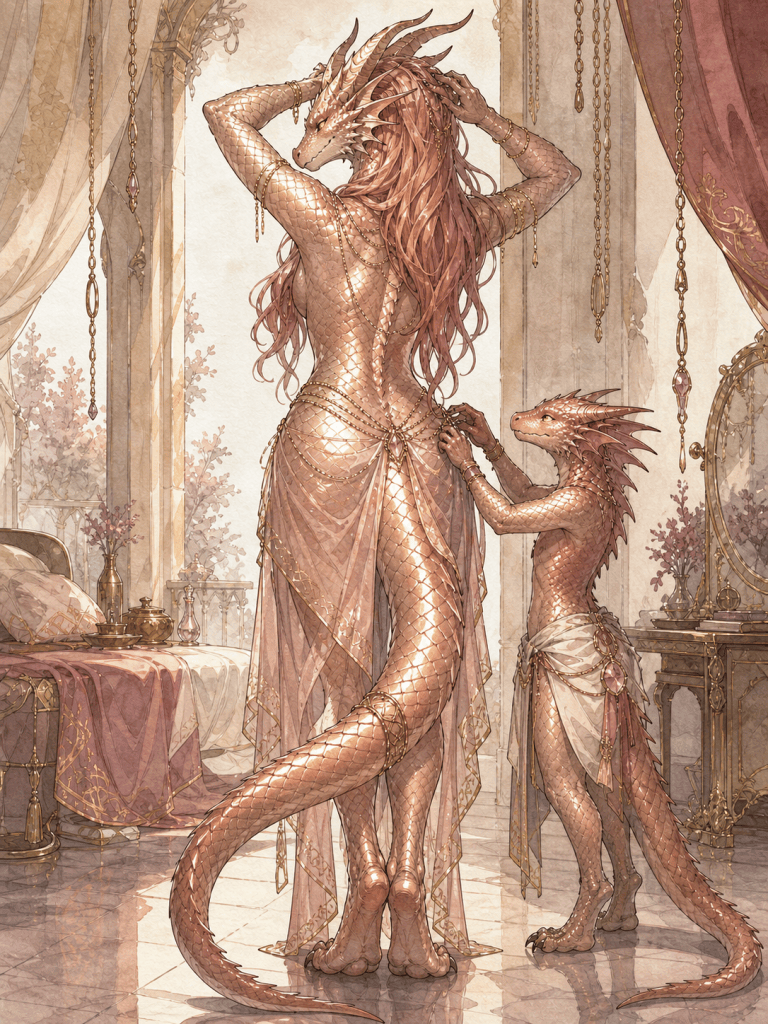
Not every act of devotion requires a temple. Ordinary worshippers honor Velyssara through small acts associated with life, affection, beauty, and connection.
Fresh roses may be left at household shrines. A cup of wine may be poured for an absent lover. Partners may light a candle before speaking about something difficult. A newly married couple might plant a flowering vine. A parent may place petals beside the cradle of a newborn. Someone beginning again after grief may bathe, dress beautifully, and offer thanks for the simple fact that their body still carries them forward. Lovers may offer one another affection. Friends may share a meal. A lonely traveler may leave a flower beside the road for whoever passes next. The offering need not be grand.
Velyssara is honored whenever someone deliberately chooses to place more warmth, connection, beauty, or life into the world.
Worship Is Never Owed
Velyssaran temples are renowned for sensuality, but participation in sensual practice is never a requirement of worship. A devotee may pray alone. A lover may decline touch. A participant may leave a ritual. A worshipper may practice celibacy. Someone may enter a temple simply because they need companionship, warmth, or a place where their feelings will not be mocked. The Archives summarizes Velyssaran worship as “always consensual, intimate, atmospheric, and reverent.”
That principle is more important than any individual ritual. Within Velyssara’s faith, intimacy offered without freedom ceases to be devotion. A worshipper is never required to prove desire. They are only asked to meet desire—whether their own or another’s—with honesty and care.
Clergy & Temples
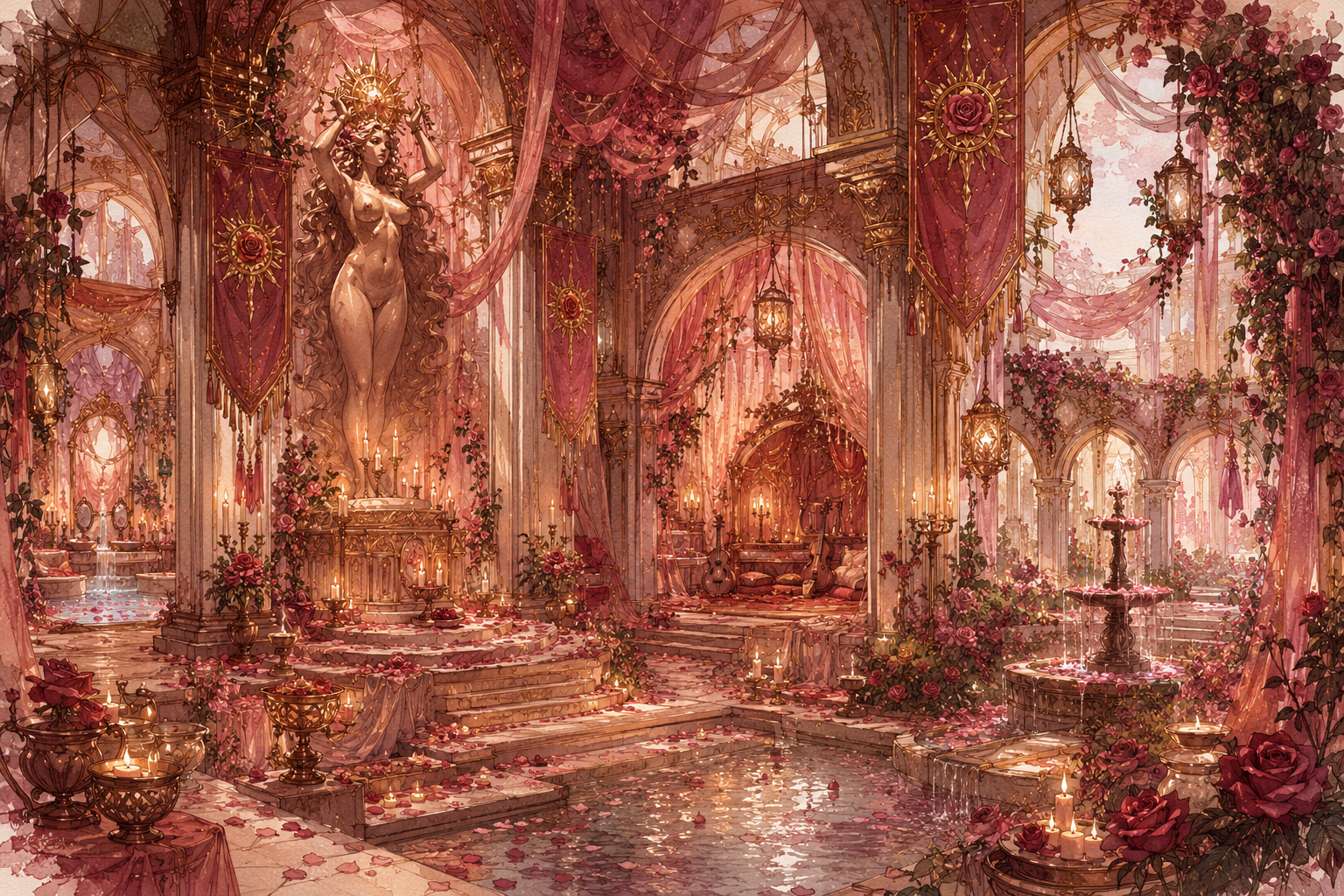
The temples of Velyssara are not built to make mortals feel small. There are no distant altars raised beyond reach, no architecture designed to separate the sacred from those who seek it. Her sanctuaries are places of warmth, beauty, privacy, life, and welcome—spaces where worshippers are invited to arrive as they are and leave with a greater understanding of what they carry within them. Her clergy follow the same principle. They are not gatekeepers standing between mortals and the First Bloom. They are caretakers of sacred desire.
The Rosebound
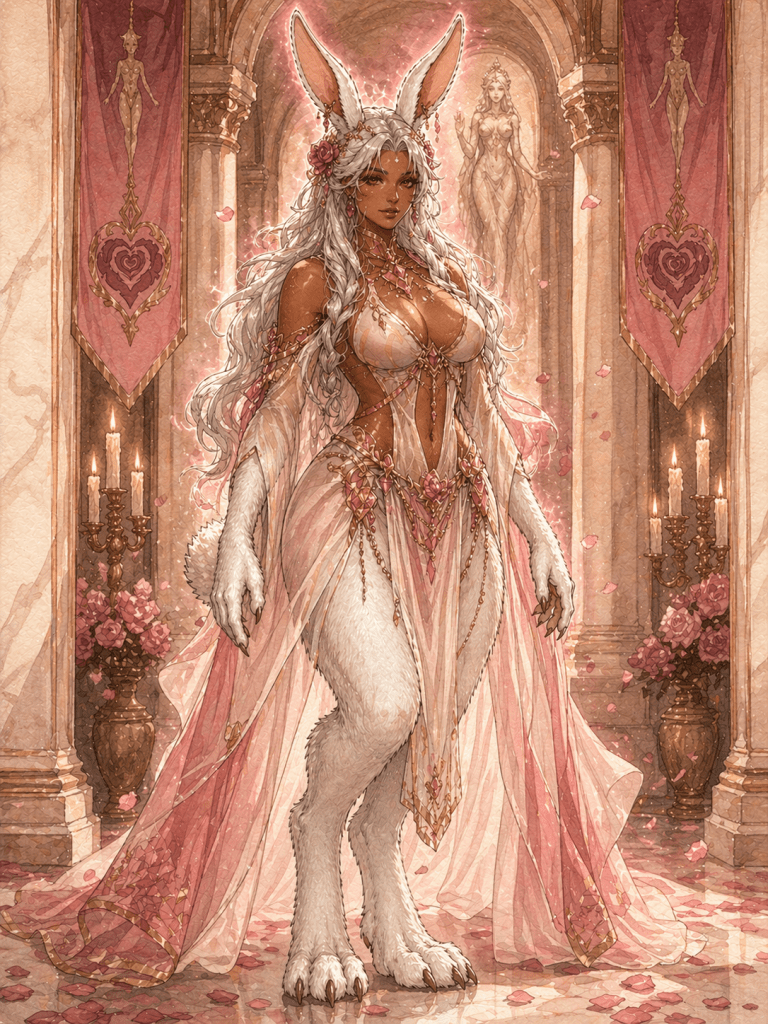
Velyssara’s ordained clergy are known as the Rosebound.
They serve as priests, counselors, celebrants, healers, teachers, and guardians of the intimate trust placed within Velyssara’s temples. A Rosebound may bless a marriage in the morning, counsel someone struggling with an unwanted desire in the afternoon, preside over a fertility rite at dusk, and spend the evening comforting someone whose heart has been broken.
Their calling is not to encourage indulgence. It is to help mortals understand the difference between wanting, choosing, giving, receiving, and taking. For this reason, Rosebound are expected to become skilled listeners. They are taught to recognize hesitation, respect boundaries, preserve confidences, and help devotees articulate feelings that may be difficult to name.
Many also study healing, childbirth, fertility, herbalism, mediation, relationship counseling, and the rites surrounding important transitions in mortal life.
The archives establish Rosebound as the primary title of Velyssara’s clergy and describe them as attendants and guides responsible for ritual facilitation, consent guidance, fertility rites, healing, and emotional support.
The Petalborn
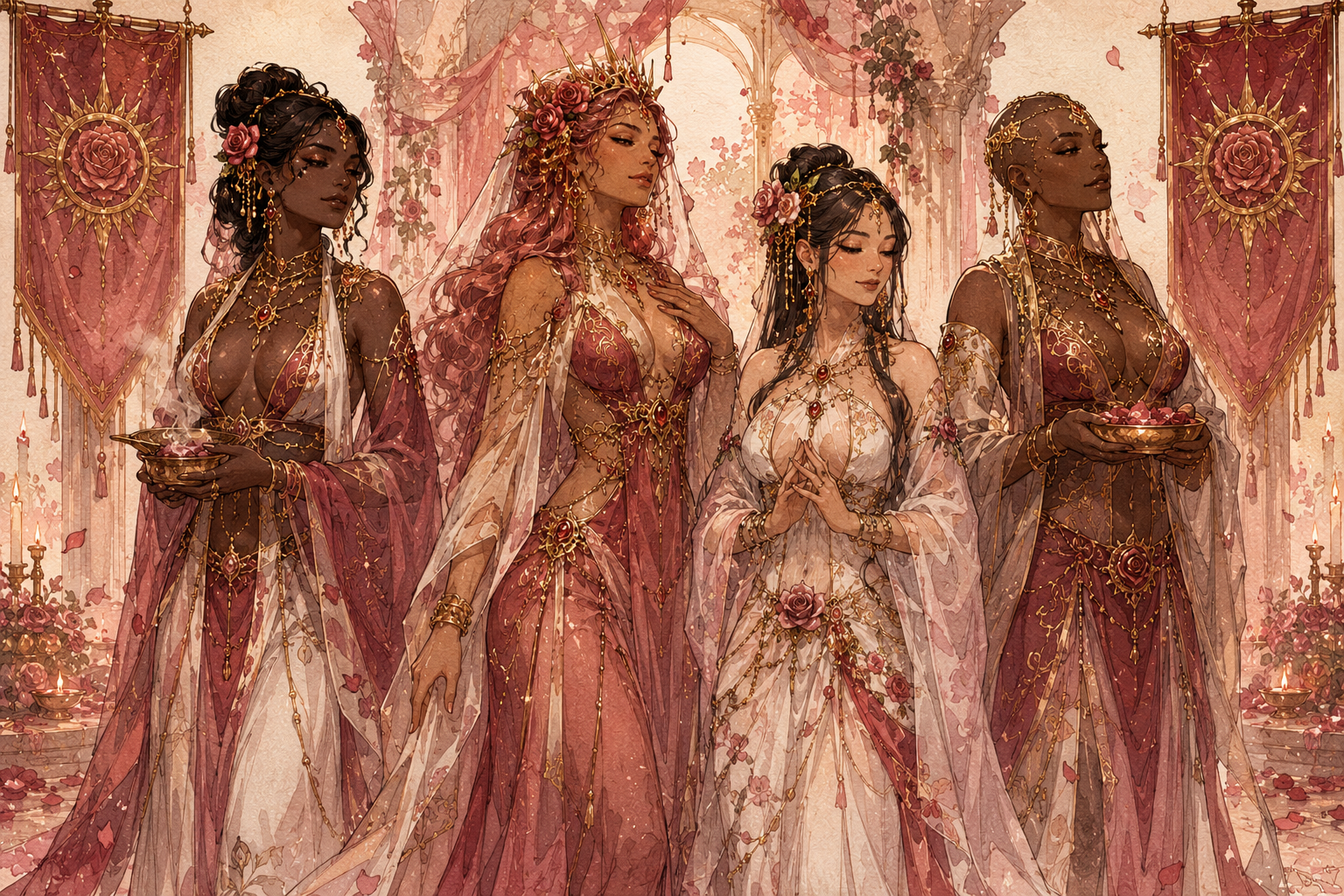
Those newly accepted into Velyssara’s clergy are called Petalborn.
The name reflects the belief that ordination is not an arrival but an opening.
Petalborn spend much of their early service learning the quieter work of the temple: tending gardens, preparing baths and ritual spaces, caring for sacred garments, receiving visitors, assisting the Rosebound, and learning how to recognize when someone needs celebration, counsel, privacy, or simply somewhere safe to sit.
Their education emphasizes that intimacy cannot be understood through doctrine alone. It must also be learned through attention. A Petalborn is expected to observe before advising, listen before interpreting, and understand that no two people experience desire in precisely the same way.
The title and novice role of the Petalborn are preserved in the archives.
The Velvet Hands
Among Velyssara’s clergy are specialists traditionally known as the Velvet Hands.
Their ministry centers upon the body as a place worthy of care. They practice therapeutic touch, massage, bathing rites, anointing, relaxation, physical restoration, and forms of nonsexual intimacy intended to help worshippers feel safe and present within themselves.
Their work is particularly valued by those recovering from illness, injury, childbirth, grief, exhaustion, or periods of alienation from their own bodies. Despite the sensual reputation of Velyssara’s faith, the Velvet Hands are taught a strict distinction between touch offered in service and touch sought for personal gratification.
Every act begins with permission. Every boundary is honored. And touch is never presumed merely because someone entered a temple of the First Bloom.
The Velvet Hands and their role in sacred touch, massage, bathing, and embodied care originate in the archives.
Temple Guides
Not everyone who serves Velyssara is ordained.
Her larger sanctuaries employ attendants commonly called Temple Guides, who welcome visitors and help them navigate the temple’s spaces, customs, ceremonies, and services.
This role is particularly important because temples of Velyssara receive people for remarkably different reasons. Some arrive joyfully. Some are newly in love. Some seek fertility blessings. Some are frightened by what they desire. Some have lost a partner. Some simply need to hear that wanting affection does not make them weak.
A Temple Guide’s first responsibility is therefore not to ask, “What rite have you come to perform?”
It is to ask: “What do you need?”
The archives identify Temple Guides as part of Velyssara’s clergy and temple structure.
Temples of the First Bloom
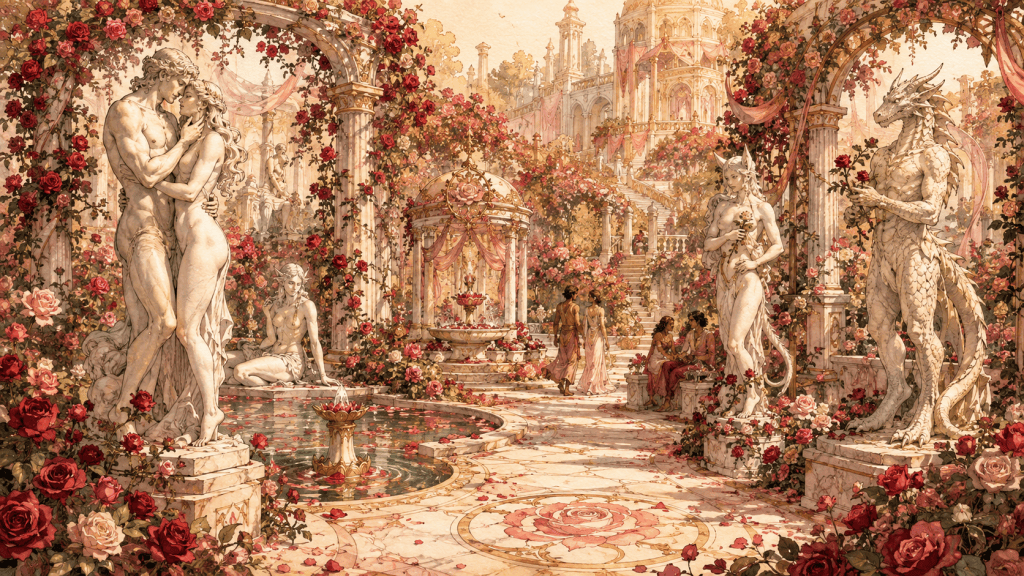
A temple of Velyssara should feel alive before a visitor ever sees its altar. Rose gardens surround many sanctuaries. Flowering vines climb pale stone walls. Water moves quietly through fountains and shallow channels. Silk curtains soften doorways, while incense, flowers, warm oils, and clean water give the interior its distinctive fragrance. Sunlight is welcomed wherever possible. At night, warm lanterns and candles replace it. The architecture favors curves, alcoves, gardens, pools, terraces, and interconnected chambers rather than severe corridors and monumental halls. Beauty matters. So does comfort.
The Central Sanctuary
At the heart of most temples stands a shrine to the First Bloom. Velyssara may be represented by a statue, mural, sacred rose, or her golden holy symbol. Rose petals and living flowers surround the shrine, and offerings accumulate throughout the day. The sanctuary is designed for communal worship, blessings, festivals, marriages, meditations, and public rites. Yet even here, the goddess is rarely depicted towering over those gathered before her. Her image welcomes. Open hands, relaxed posture, flowing silks, warm light, and blooming roses reinforce the theology expressed throughout her faith: approach because you wish to approach.
Rose Gardens
Gardens are among the most important spaces within Velyssaran temples. They provide places for meditation, conversation, courtship, celebration, mourning, and the Rosewalk. Benches and secluded alcoves allow visitors to speak privately without becoming completely isolated from the sanctuary around them. Not every garden is immaculate. Velyssaran gardeners often allow flowers to grow exuberantly, vines to climb where they please, and petals to remain upon pathways. Life should appear cultivated without appearing controlled.
Baths and Pools
Larger temples frequently contain warm bathing pools, fountains, and private washing chambers. Water is associated with preparation, renewal, bodily dignity, and care. Worshippers may bathe before important rites, after difficult journeys, following childbirth, during healing, or simply as an act of devotional self-care.
Some pools are communal. Others are private. The distinction is deliberate. A temple devoted to intimacy must also provide places where a person may choose solitude.

Chambers of Confidence
Among the most sacred rooms within a temple are often the least spectacular. Small private chambers provide places where devotees can speak with clergy away from public worship. What is confessed there may concern love, sexuality, fertility, jealousy, loneliness, relationships, shame, grief, or desires the speaker does not yet understand. These chambers are not courts. The Rosebound do not exist to pronounce a person’s desires pure or impure.
Their purpose is to help the devotee examine what those desires mean, what consequences might follow from them, and how they may be approached without violating either their own agency or another’s. A confidence freely given to Velyssara’s clergy is treated as sacred trust.
A Place for the Living
For all their silk, roses, ritual, and beauty, temples of Velyssara are not intended to exist apart from ordinary life. People marry there. Children receive blessings there. Lovers reconcile there. Communities feast there. Travelers rest there. The grieving are comforted there. People discover themselves there. And sometimes someone enters simply because the garden is beautiful and they need somewhere quiet to spend an afternoon. That, too, is considered sufficient reason to enter. A temple of the First Bloom is sacred because life passes through it.
Rites, Taboos & Divine Signs
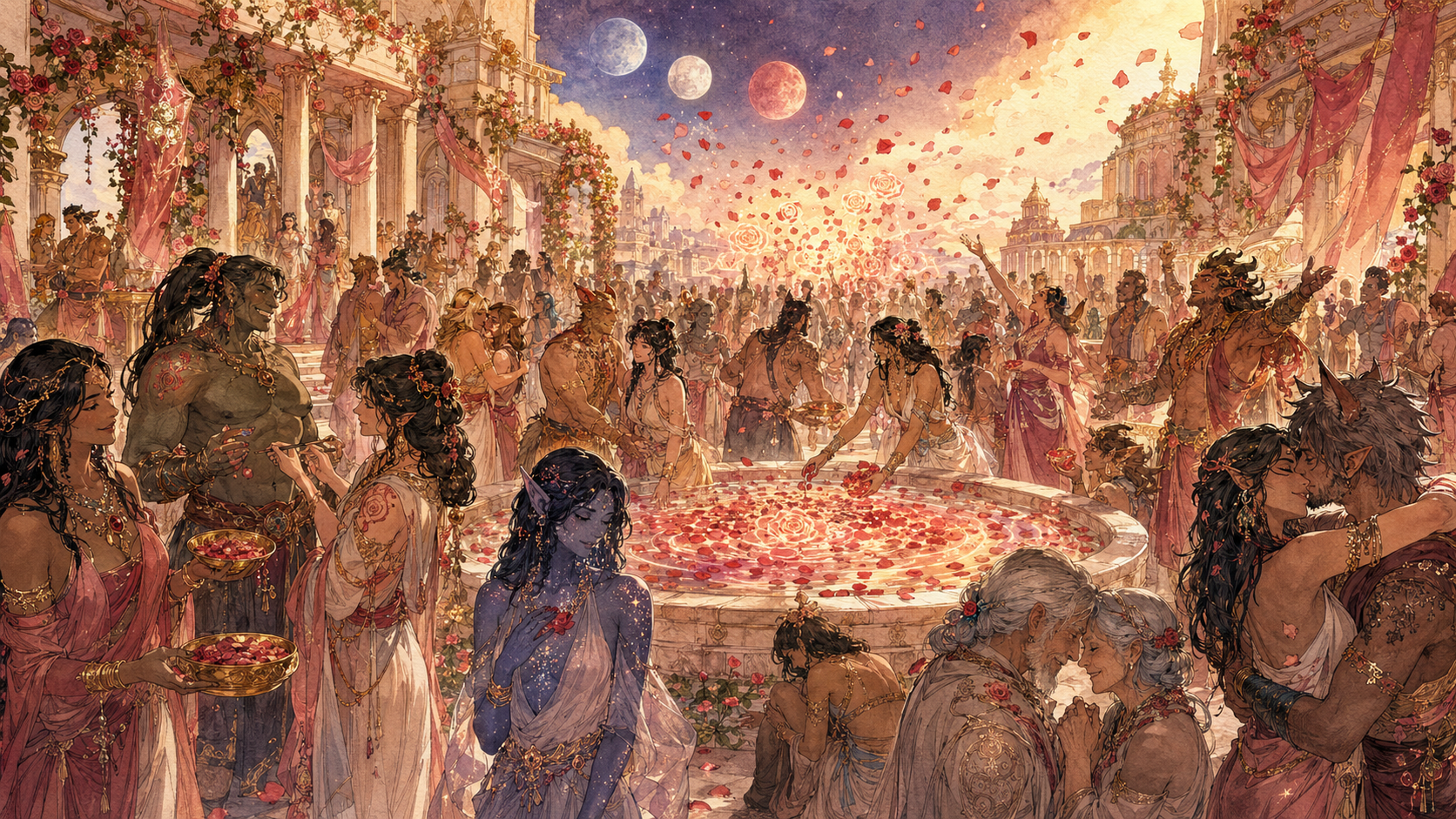
Velyssara’s rites celebrate moments when desire crosses a threshold. A hidden longing is spoken. Two people choose one another. A body is welcomed rather than judged. Grief loosens its hold. A new life begins. An old intimacy is renewed. Someone finally admits what their heart has been trying to tell them. Her ceremonies therefore vary enormously between temples and cultures. Some fill entire gardens with music, dancing, wine, and falling petals. Others take place between only two people in a candlelit chamber. Some are sensual. Some are joyous. Some are solemn enough to be performed through tears.
What unites them is not a particular act. It is desire acknowledged through choice.
Sacred Rites
The First Kiss
One of Velyssara’s most beloved rites commemorates the moment when distance becomes intimacy. Despite its name, the First Kiss does not require a literal kiss. Two participants approach one another beneath a rose-covered arch and stop just beyond touching distance. Each speaks what they are offering and what they are asking in return. Only after both have answered does the distance between them close. The rite is performed for new lovers, renewed partnerships, reconciliations, and sometimes between companions making profound vows of trust. What matters is the moment of mutual approach:
neither crosses the distance alone.
The Blooming Union
The Blooming Union celebrates two or more adults choosing to entwine their lives. It may accompany marriage, handfasting, the formal recognition of lovers, or another culturally appropriate bond. Participants exchange roses or rose-silk cords before Velyssara’s shrine. The flowers are then intertwined and placed together in water.
The rite deliberately contains no universal vow. Those entering the union must speak their own. The Rosebound witness the promises but do not define the relationship being created. Velyssara blesses the choice to join, not a single prescribed form that joining must take.
The Rite of Returning Flame
Not every sacred union begins with something new. The Rite of Returning Flame is performed by partners who fear that affection, intimacy, or desire between them has diminished. Two lamps are placed apart.
Each participant lights the other’s flame. They then speak separately of something they still cherish, something they miss, and something they hope might grow between them again. Sometimes the rite ends in renewed intimacy.
Sometimes it ends in the recognition that a relationship has changed. Both outcomes may receive Velyssara’s blessing. The purpose is not to force desire to return. It is to discover whether an ember remains.
The Festival of First Bloom
At the turning of the season associated with renewal, Velyssaran temples open their gardens for one of their largest public celebrations. Roses cover streets and temple steps. Musicians perform from balconies and garden terraces. Food and wine are shared freely. Couples dance beside strangers. Children weave flowers into garlands while elders tell stories of old loves and lives begun again.
The festival celebrates far more than sexuality. Births are announced. New ventures are blessed. Marriages are celebrated. Reconciliations are toasted.
Artists unveil new work. Those who have survived illness or grief may walk publicly beneath the roses as communities welcome them back into life. The First Bloom celebrates the oldest miracle associated with Velyssara: something reaches toward what comes next.
Private Mysteries
Some rites of Velyssara are intentionally intimate and are performed only by those involved. Their details vary between cultures, relationships, and temples, and the Rosebound generally resist attempts to standardize them. A private rite may involve bathing, massage, dancing, shared breath, exchanged vows, sensual touch, meditation, or consensual sexual intimacy.
Others contain nothing erotic whatsoever. What makes a rite a Private Mystery is not sexual content. It is that its meaning belongs to those who participate. Velyssaran tradition teaches that not every sacred experience becomes more sacred by being witnessed. Some flowers bloom behind closed doors.
Taboos
Velyssara’s faith has remarkably few prohibitions concerning what consenting adults may desire. Its strongest taboos concern what people do with desire.
- Taking What Was Not Given. Sexual coercion, violation, forced intimacy, and deliberately overriding another person’s boundaries are profound violations of Velyssara’s teachings. Desire creates no entitlement. No previous intimacy creates permanent permission. No vow makes another person’s body property.
- Punishing Honest Refusal. A freely given no is sacred. Using humiliation, retaliation, threats, social pressure, or divine authority to punish someone for withdrawing consent violates the principle upon which Velyssaran intimacy rests.
- Weaponizing Vulnerability. Confessions offered in trust are not tools. Using someone’s desires, fears, intimate history, or private vulnerabilities to control or deliberately shame them is considered a betrayal of sacred confidence.
- Teaching Shame as Virtue. Velyssarans distinguish discernment from shame. A desire may be dangerous, destructive, impossible, or unwise. It may need to be refused or redirected. But teaching that a person is inherently corrupted merely because they experience desire mistakes feeling for action. The faithful are taught to examine desire honestly rather than bury it until it becomes something they can no longer understand.
- Abandoning the Vulnerable. To invite profound vulnerability and then knowingly discard the person who offered it is considered a serious failure of Velyssaran care. This is why aftercare occupies such an important place in her ritual tradition. Opening another heart creates responsibility.
These taboos fit Erosia’s canonical principle that agency is sacred: no deity or mechanic may override erotic participation, and choice is foundational to the setting.
Signs of the First Bloom
Velyssara seldom announces her attention with thunder. Her presence is more often recognized through changes in warmth, life, breath, and connection. A devotee touched by her favor may experience:
- rose petals falling where no roses grow
- a sudden warmth spreading through the chest during an honest confession
- flowers opening unexpectedly nearby
- rose-gold light briefly appearing beneath the skin
- dreams shared by lovers separated by great distance
- a faint floral fragrance accompanying moments of reconciliation
- a heartbeat becoming audible in an otherwise silent room
- warm mist curling through the air and briefly assuming the shape of roses
- old scars or sacred markings glowing softly during moments of profound intimacy
- a barren or neglected plant producing a single impossible bloom
These signs should rarely function as simple proof that “Velyssara approves.”
The gods of Erosia are not moral scorekeepers.
A sign means that something has resonated strongly enough with Velyssara’s divine current for the Veil between mortal and divine experience to respond. The archives establish that mortal longing passes through the Shimmering Veil and that divine influence may return through it as blessings and miracles.
The Rosemark
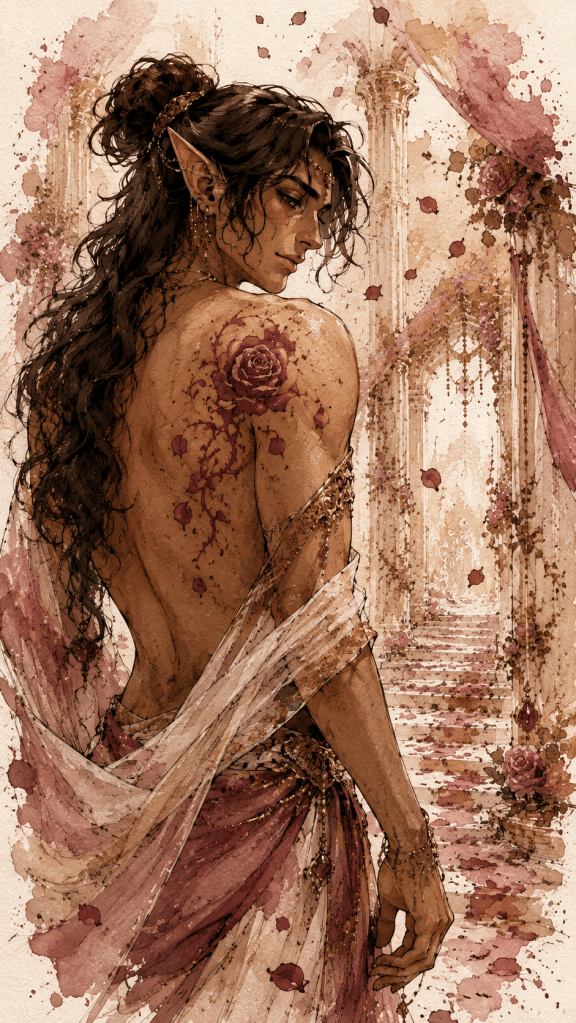
Those profoundly touched by Velyssara may develop a Rosemark.
It most often appears as a delicate rose-shaped sigil upon the skin, faint enough to resemble an unusual birthmark until the bearer experiences intense affection, desire, joy, or vulnerability.
Then it blooms with soft rose-gold light.
Rosemarks differ from person to person. Some resemble flowers. Others appear as curling vines, petals, or fine golden filigree spreading outward from a central point.
A Rosemark is not ownership.
It does not proclaim that the bearer belongs to Velyssara.
It signifies resonance—that something within the mortal has answered strongly enough to the First Bloom that the connection has become visible.
When Velyssara Draws Near
True manifestations are rare. When Velyssara’s presence presses strongly against the Shimmering Veil, the environment responds before she becomes visible. The air warms. Breathing becomes easier. Flowers turn toward an unseen source of light. Rose petals stir without wind. Fear may soften into calm. People separated by anger suddenly remember why they once cared for one another. Her miracles preserved in the archives include fear transformed into radiant calm, separated lovers sharing a dream, barren fields blooming overnight, despair dispersed by warm breath, and exhausted spirits restored through affection.
And sometimes there is simply the overwhelming sensation that something vast has looked upon a mortal and found the fact that they are alive worth celebrating. That is how the faithful most often describe the presence of the First Bloom. Not: Bow. But: Live.
Velyssara and the Velvet Court
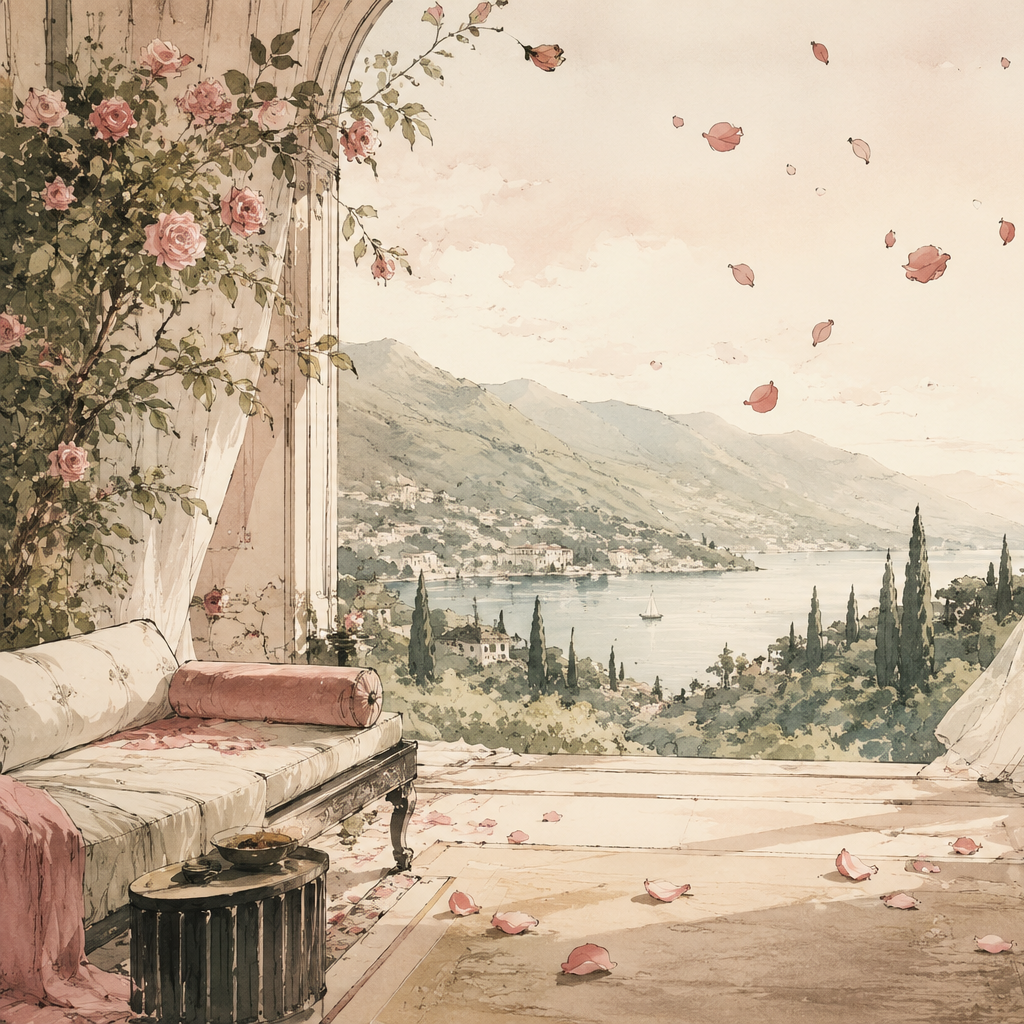
Velyssara stands at the center of the Velvet Court, but she does not sit above it as a queen above subjects.
She is the First Bloom: the divine coherence from which the Court’s many expressions of desire first differentiated. Each of the fourteen carries something that once existed without separation within her—pursuit, nurture, surrender, restraint, transformation, instinct, recognition, release, and other currents that became distinct enough to possess identities and wills of their own.
For this reason, Velyssara recognizes something of herself in every member of the Court. She also recognizes something she can no longer define for them.
The gods are not fragments awaiting reunion. They are not servants carrying out portions of her will. They are divine beings whose understanding of desire may complement, challenge, or contradict her own. Velyssara is their origin. The Court is what desire became when even a goddess could no longer contain all of its possibilities alone.
An Axis, Not a Throne
Mortals call Velyssara Mother of the Velvet Court, and the title is not entirely wrong. But motherhood among gods is complicated. Velyssara possesses no unquestioned authority over the Fourteen. She cannot simply command one of their divine currents to cease being what it is. Nor does disagreement with the First Bloom constitute rebellion. The Velvet Court functions through resonance and counterpressure.
One deity may carry an expression of desire toward an extreme while another gives that desire boundary, direction, consequence, or release. Their relationships create a living equilibrium in which no single understanding of desire is permitted to define all others. Velyssara occupies the center because she remembers what existed before those distinctions. When the Court fractures, she draws its members toward relationship. When one divine current grows dangerously dominant, she does not erase it. She seeks the other currents capable of restoring balance.
Her authority is therefore less like a crown than gravity. The Court may move away from her. It never ceases to feel her pull.
When the Court Disagrees
The Velvet Court is not harmonious because its gods always agree. It remains whole because disagreement has a place within it. Instinct may strain against discipline. Pursuit encounters boundaries. Surrender demands trust. Transformation challenges recognition. Longing resists release. Care may conflict with freedom. Celebration can become excess. Restraint can become denial.
Every divine current contains possibilities for beauty and imbalance. Velyssara does not resolve these tensions by declaring one deity correct. She listens for what has fallen out of relationship with everything else. This is the deeper purpose of the Velvet Court.
It is not a collection of commandments telling mortals which desires are permitted. It is an architecture through which desire encounters consequence, contradiction, boundary, possibility, and choice.
The First Bloom Among Her Children
For all the theological language mortals use to explain the Court, stories about Velyssara and the Fourteen are often surprisingly intimate.
They quarrel. They tease. They withdraw from one another. They seek one another’s counsel. They wound one another and sometimes reconcile.
They form alliances Velyssara did not anticipate and discover meanings within their domains that did not exist when those currents first awakened within her. This does not diminish Velyssara.
It is one of her greatest joys. The First Bloom brought forth a cosmos because undifferentiated Want could no longer remain alone. The existence of gods capable of surprising her is therefore not a failure of her authority. It is evidence that creation succeeded.
She was the first desire to become a self.
The Velvet Court was the first proof that another self could answer.
Miracles & Divine Presence
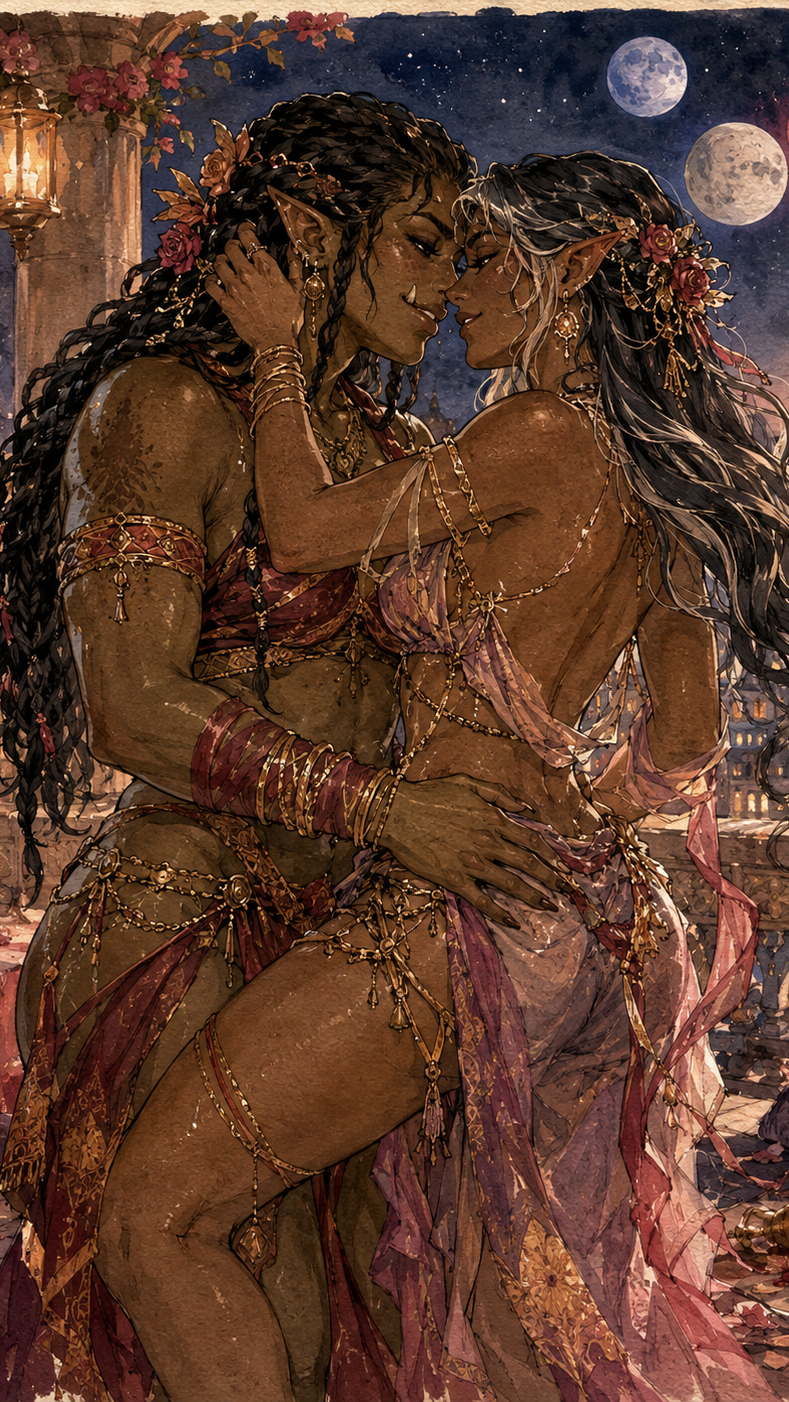
Velyssara rarely arrives with thunder. Her miracles are more often recognized because the world becomes suddenly, impossibly alive. Warmth spreads through a cold room. Flowers open out of season. Rose petals move against the wind. A frightened heart finds calm. Two people separated by impossible distance dream of one another beneath the same three moons. The greater the manifestation, the more the world seems to remember the First Bloom.
Miracles of the First Bloom
The archives preserve many miracles attributed to Velyssara.
The Blooming Fields
Barren or exhausted land erupts into sudden life. Flowers may cover a battlefield, ruined settlement, or field thought incapable of producing another harvest. These blooms do not always remain, but the soil they leave behind is rich and capable of supporting life again.
The Breath of Courage
Warm, rose-scented air passes over someone overcome by terror or despair. The danger does not disappear. Instead, panic gives way to enough calm for the mortal to choose what happens next.
The Shared Dream
Two people separated by great distance fall asleep beneath different skies and awaken remembering the same dream. They may speak, embrace, argue, confess, or simply spend a few impossible hours together. Neither can prove afterward that the other was truly there. Both remember.
The Rekindled Heart
Affection thought completely lost may briefly return with startling clarity. This miracle does not force reconciliation or restore a relationship against anyone’s will. Instead, it allows those involved to remember what once existed between them without anger, resentment, or grief obscuring it. What they choose to do with that memory remains theirs.
The Rose Without Season
A single crimson rose blooms where no rose should be capable of growing. It may appear beside a sickbed, upon a grave, in the hand of a lonely traveler, between stones in a ruined temple, or outside the door of someone preparing to begin again. Among Velyssara’s faithful, such a bloom carries a simple meaning: Life is still here.
The Embrace of Renewal
Those exhausted in body or spirit sometimes describe being surrounded by warmth despite standing alone. For a few moments, it feels as though they are being held. Breathing slows. Pain eases. Exhaustion retreats. The sensation passes gently rather than breaking, leaving behind the lingering warmth of an embrace that cannot quite be remembered.
The archives specifically preserve miracles of fear transformed into radiant calm, separated lovers sharing dreams, barren fields blooming overnight, despair dispersed through warm breath, and exhausted spirits restored through affection.
Divine Manifestation
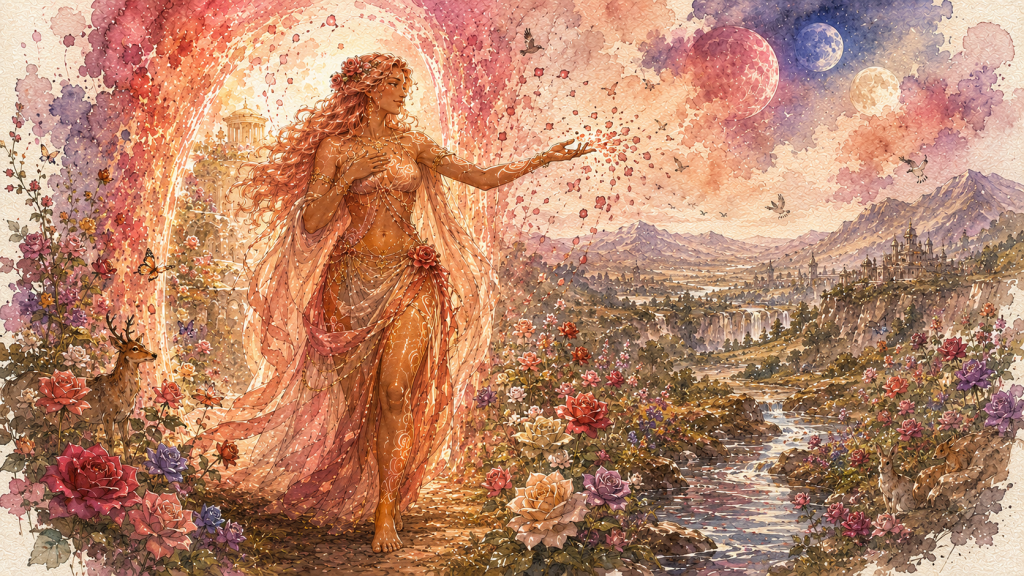
When Velyssara herself crosses the Shimmering Veil, subtle signs become overwhelming. Rose petals fill the air without ever obscuring sight. Living things turn toward her. Her amber-gold skin appears illuminated from within, and rose-shaped sigils bloom across her body like constellations awakening one after another. Rose-gold hair catches light that has no visible source, while layered silks move as though touched by a breeze only she can feel. Her arrival is accompanied by warmth rather than pressure. Mortals do not experience the instinctive need to kneel. Many instead describe an almost unbearable awareness that they have been noticed completely.
Not evaluated. Not judged. Seen.
The Goddess Does Not Grant Every Desire
Velyssara’s miracles are sometimes misunderstood. A prayer for someone’s love does not compel that person to return it. A fertility blessing does not promise conception. A prayer for reconciliation cannot erase another person’s decision to leave. Velyssara may illuminate desire, create opportunity, restore courage, reveal possibility, or help something living flourish. She does not transform another person’s will into a reward for devotion.
Sometimes her answer to a prayer is therefore not fulfillment…It is clarity. Sometimes it is the strength to ask. Sometimes it is the grace to accept an answer. And sometimes it is the realization that what someone thought they wanted was only the shadow of a deeper longing.
The Greatest Miracle
Priests of the First Bloom occasionally debate which of Velyssara’s miracles should be considered the greatest. Fields have flowered beneath her feet. The dying have risen from despair. Lovers have found one another across impossible distances. Entire temples have filled with roses overnight.
Yet the oldest Rosebound tend to give a simpler answer. Velyssara’s greatest miracle occurs whenever someone who had ceased reaching toward life begins to reach again. A hand extends. A door opens. A seed is planted. A truth is spoken. A heart risks wanting something once more. No celestial radiance is required.
No goddess need appear. The First Bloom has already happened.
What Her Faith Teaches
Velyssaran theology begins with a deceptively simple belief: Desire is part of being alive.
It is neither a stain upon the soul nor proof of virtue. Desire is movement—the recognition that something exists beyond what one possesses, understands, or has yet become. The faithful therefore do not ask whether desire itself is good or evil.
They ask what it reveals. What will you do with it? What might it create? What might it cost? And when another person’s life becomes part of the answer: What are they choosing?
Desire Is Sacred, Not Sovereign
To call desire sacred is not to declare it unquestionable. Velyssara teaches that desire deserves recognition, not automatic obedience. A person may experience desires they cannot fulfill, should not pursue, no longer wish to carry, or simply choose to leave unexplored. The existence of longing creates no command to satisfy it. Instead, desire should be examined honestly.
Some desires reveal affection. Others reveal loneliness. Some point toward joy, discovery, intimacy, or transformation. Others may expose fear, possessiveness, envy, grief, or a wound asking to be understood. Wisdom begins when a person can look upon what they want without either becoming its servant or pretending it does not exist.
Choice Gives Desire Meaning
Velyssaran theology places extraordinary importance upon choice. An embrace means something because both people may step away. A promise matters because it could have been refused. Surrender becomes sacred because it is offered. Restraint has meaning because indulgence was possible.
Intimacy becomes intimacy only when those involved choose to cross the distance between them. For this reason, consent is not merely a rule governing Velyssaran sexual practice. It is a theological principle. Without choice, desire loses the very quality that makes it sacred.
The foundational teaching is simple:
Desire offered is sacred. Desire taken is nothing.
The Body Is Not an Enemy
Velyssara’s faithful reject teachings that require mortals to despise their bodies in order to become spiritually worthy. The body hungers. It tires. It ages. It changes. It experiences pleasure and pain. It bears scars, gives birth, heals imperfectly, grows stronger, weakens, responds to touch, and eventually returns to the world from which it came.
None of this makes it profane.
The body is the place where much of mortal life is actually experienced. Caring for it may therefore be devotional. Bathing, eating, sleeping, healing, exercising, dressing beautifully, accepting affectionate touch, enjoying pleasure, or simply learning to inhabit one’s own body without contempt can all become expressions of reverence. Velyssara does not demand that every body be loved every moment. She asks that the living body be treated as something worthy of care.
Pleasure Has Value
Pleasure does not need to produce something else before it becomes worthy. A shared meal may be sacred because it tastes wonderful. A dance may matter because it brings joy. A kiss does not need to lead anywhere. Rest does not need to earn productivity.
Sex does not require reproduction to possess meaning. Beauty does not need to justify itself through utility. Velyssara teaches that pleasure can strengthen connection, restore exhausted spirits, awaken gratitude, and remind mortals why life is worth preserving. Pleasure can also become excess, avoidance, dependency, or harm. The answer is not to condemn pleasure.
It is to practice discernment.
Intimacy Is More Than Sex
Sex belongs openly within Velyssara’s mysteries, but sex does not contain the whole of intimacy. To be known is intimate. To confess fear is intimate. To allow another person to care for you when you cannot care for yourself is intimate. So is laughter shared in darkness, a hand held during grief, a meal prepared for someone who has forgotten to eat, or the silence between companions who no longer need words.
Velyssara teaches that mortals hunger not only for bodies. They hunger to reach and be reached. Sex is one language through which that longing may speak. It is not the only one.
Care Completes Vulnerability
To receive another person’s vulnerability is to accept responsibility for how one handles it. This principle shapes everything from Velyssaran counseling to its traditions of aftercare. Someone who reveals a desire has entrusted something. Someone who offers their body has entrusted something. Someone who confesses grief, fear, shame, or love has done the same.
Velyssara’s faithful therefore judge intimacy not merely by what occurs during a vulnerable moment, but by what follows it. Was trust honored? Were boundaries remembered? Was care offered? Could everyone leave with their dignity intact? The sacred moment does not necessarily end when the ritual, conversation, or embrace does. Sometimes what happens afterward reveals what the intimacy truly meant.
Life Reaches Beyond Itself
Velyssara’s dominion over Life is inseparable from her dominion over Desire. Living things reach. Roots seek water. Flowers turn toward light. Bodies seek warmth. Communities seek continuity. Artists imagine what does not yet exist. Lovers reach toward one another. The lonely reach toward belonging.
The grieving eventually reach toward tomorrow. Creation itself began when undifferentiated Want became capable of reaching toward something beyond what it already was. Thus Velyssaran theology understands desire as one of life’s fundamental motions.
To desire is to perceive possibility. To pursue possibility is to invite change. And change is how life continues.
To desire is to reach.
To reach is to change.
To change is to live.
Desire Changes
No mortal owes yesterday’s desire eternal loyalty. People change. Bodies change. Relationships change. What once brought joy may cease to do so. A desire once frightening may become welcome. A relationship may deepen, transform, or end. A person may discover something about themselves that makes an old promise impossible to keep honestly. Velyssara does not teach that change makes the past false.
A rose does not become a lie because its petals eventually fall. The faithful are encouraged to honor what was real while acknowledging what has become real now. This principle makes renewal possible. It also makes release sacred.
Love Is Not Possession
To love something is not to own it. Velyssara teaches that the deepest forms of connection exist between beings who remain selves even while joined. A lover remains a person. A spouse remains a person. A child remains a person. A devotee remains a person. No relationship erases the fundamental agency of those within it.
This does not make bonds weaker. It makes them meaningful. Someone who cannot leave cannot truly choose to remain. Someone who cannot refuse cannot truly offer. The First Bloom does not seek to dissolve mortals into one another. She celebrates the miracle that separate lives can reach across the distance between them at all.
There Is No Single Sacred Life
Velyssara does not prescribe one correct shape for mortal fulfillment. Some find joy in lifelong partnership. Others love many times. Some build families.
Others do not.
Some experience profound sexual desire. Others experience little or none. Some express intimacy through bodies, others primarily through companionship, devotion, creativity, service, or shared purpose. Celibacy freely chosen is no insult to the Goddess of Sex.
Neither is solitude.
What matters is whether the life being lived is chosen honestly, with respect for the choices of others. Velyssara is not the goddess of one correct way to desire. She is the goddess of the living capacity to desire at all.
The Teaching of the First Bloom
Asked to summarize Velyssara’s faith, Rosebound rarely begin with sex. They begin with life. Know what you desire.
Do not be ashamed merely because you desire it. Do not mistake wanting for entitlement. Offer honestly. Receive carefully. Honor refusal. Care for what is entrusted to you.
Let pleasure be pleasure. Allow desire to change. Release what must be released. And when life gives you reason to close yourself against the world, remember that somewhere within you there may yet remain something willing to reach. Protect that part. Nurture it. For wherever life reaches toward life—the First Bloom opens again.
the First Bloom opens again.
At the Table
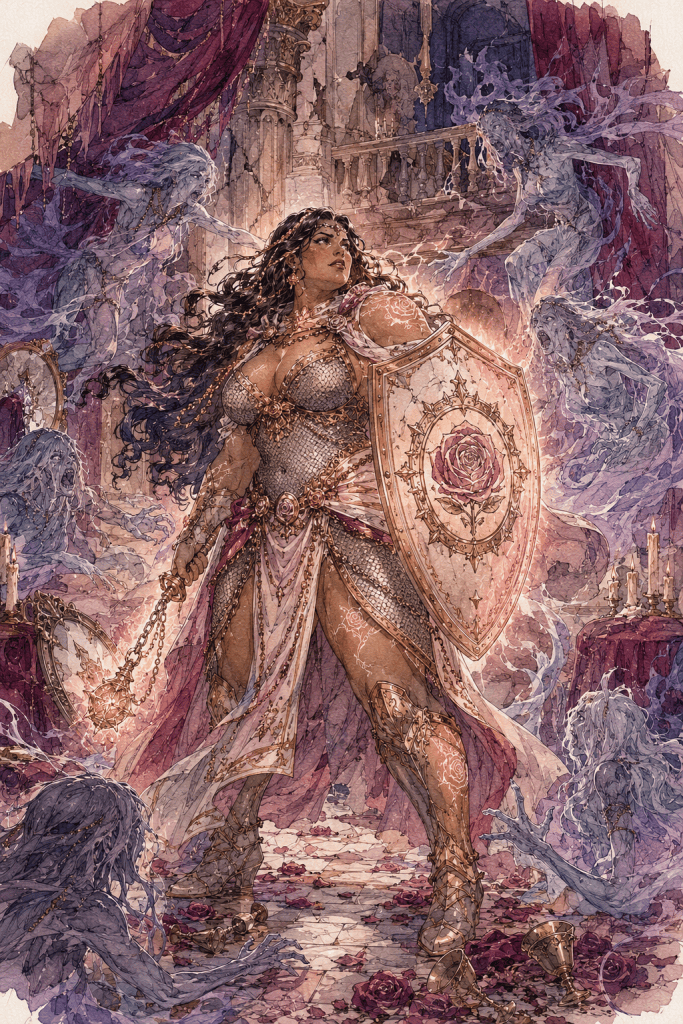
Velyssara can enter a campaign without requiring every adventure to revolve around romance or sexuality. Her influence belongs anywhere characters confront desire, vulnerability, connection, renewal, temptation, fertility, creation, or the choice to reach toward something beyond themselves. A Velyssaran character might be a devoted priest, a wandering healer, a celebrant of life, a protector of personal freedom, a romantic idealist, or simply an adventurer who believes that a life worth saving should also contain something worth living for.
Playing a Devotee of Velyssara
A character does not need to be sexually adventurous to follow the First Bloom.
What matters is their relationship with desire and life.
Consider what your character believes people should be allowed to want. What desire keeps them moving when circumstances become unbearable? What do they offer freely to others? What will they never take without invitation?
A devotee of Velyssara might adventure to protect lovers separated by war, restore a blighted land, recover a stolen fertility relic, defend a community’s right to live according to its own traditions, or help someone reclaim a life from fear and repression.
Their faith is particularly suited to characters concerned with healing, connection, beauty, creation, emotional courage, and personal agency.
The archives associate Velyssara with divine options centered upon Life, Love, Passion, Fertility, Beauty, Pleasure, Creation, devotion, and sacred sexuality.
Divine Favor
Velyssara’s favor is earned less through obedience than through living her principles.
A character might draw the attention of the First Bloom by:
- protecting another person’s right to choose
- helping estranged people speak honestly to one another
- restoring life to a place where it has been extinguished
- offering comfort after profound vulnerability
- creating beauty during a time of despair
- celebrating pleasure without exploiting another
- defending love or intimacy from coercion
- helping someone recognize a desire they had been taught to hate
- choosing life, connection, or renewal when surrender to despair would have been easier
Her displeasure is most likely to follow deliberate coercion, exploitation of vulnerability, punishment of honest refusal, or the use of love and desire as justification for possession.
Divine favor need not always provide a mechanical reward.
A rose blooming beside a character’s bedroll may say enough.
Boons of the First Bloom
The archives preserve several mechanical blessings associated with Velyssara. These are best treated as starting concepts for Second Bloom conversion, because some were written against earlier versions of the Desire mechanics.
Rosepulse Touch
Healing carries a trace of Velyssara’s warmth.
The archival version allows a character who heals or charms another creature to adjust that creature’s Arousal. (Needs updated mechanics: Base 5e → Veiled → Unveiled.)
Velvet Warmth
Once per long rest, the devotee may grant another creature advantage on a saving throw through an act of blessing.
(Needs updated mechanics: Base 5e → Veiled → Unveiled.)
Lover’s Radiance
The archives connect moments of release with restorative divine energy, allowing a nearby creature to regain hit points when a Climax occurs.
(Needs updated mechanics: Base 5e → Veiled → Unveiled.)
Using the Mechanics of Desire
Velyssara is naturally compatible with both Veiled and Unveiled Game Play Mechanics, but neither is required to portray her faith.
In a Classic game, her influence can be represented entirely through ordinary 5e mechanics: healing, advantage, inspiration, charm, protective effects, restoration, social interaction, and narrative blessings.
With the optional Desire rules active, her divine effects may interact with Arousal, Libido, EROSaves, and Climax.
Those interactions remain additive rather than mandatory.
A player who follows Velyssara never needs to participate in erotic mechanics simply because of their character’s religion. Erosia’s canonical rules explicitly establish that its added systems are modular and opt-in, and that erotic participation cannot be forced by a deity or mechanic.
Sacred Relics
The temples of Velyssara preserve countless devotional objects, but several relics appear repeatedly in stories of the First Bloom.
The archival versions below should be regarded as relic concepts.
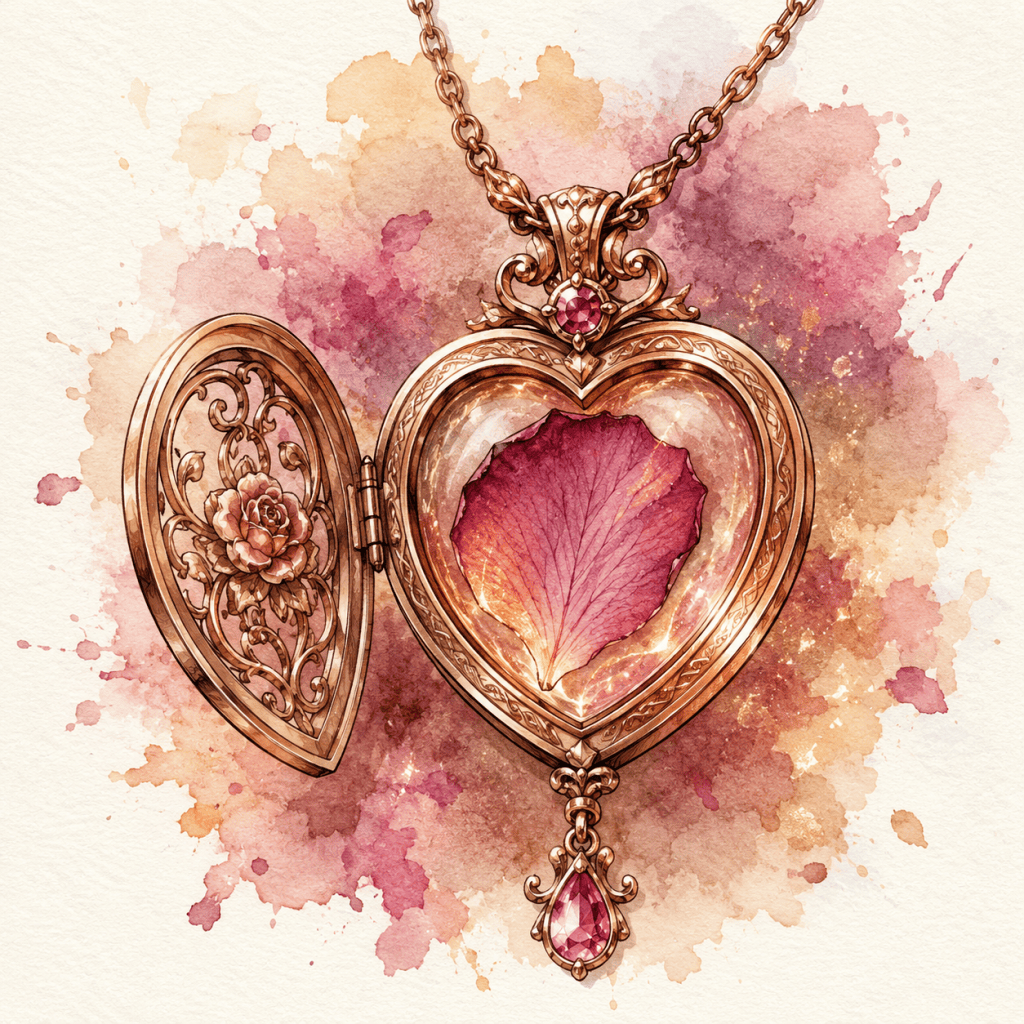
Heartpetal Locket
Rare wondrous item
A rose-gold locket containing a single preserved petal said never to fade.
The archives associate the Heartpetal Locket with restored vitality and supernatural social warmth, including restoration of Libido and a bonus to Persuasion.
(Needs updated mechanics)
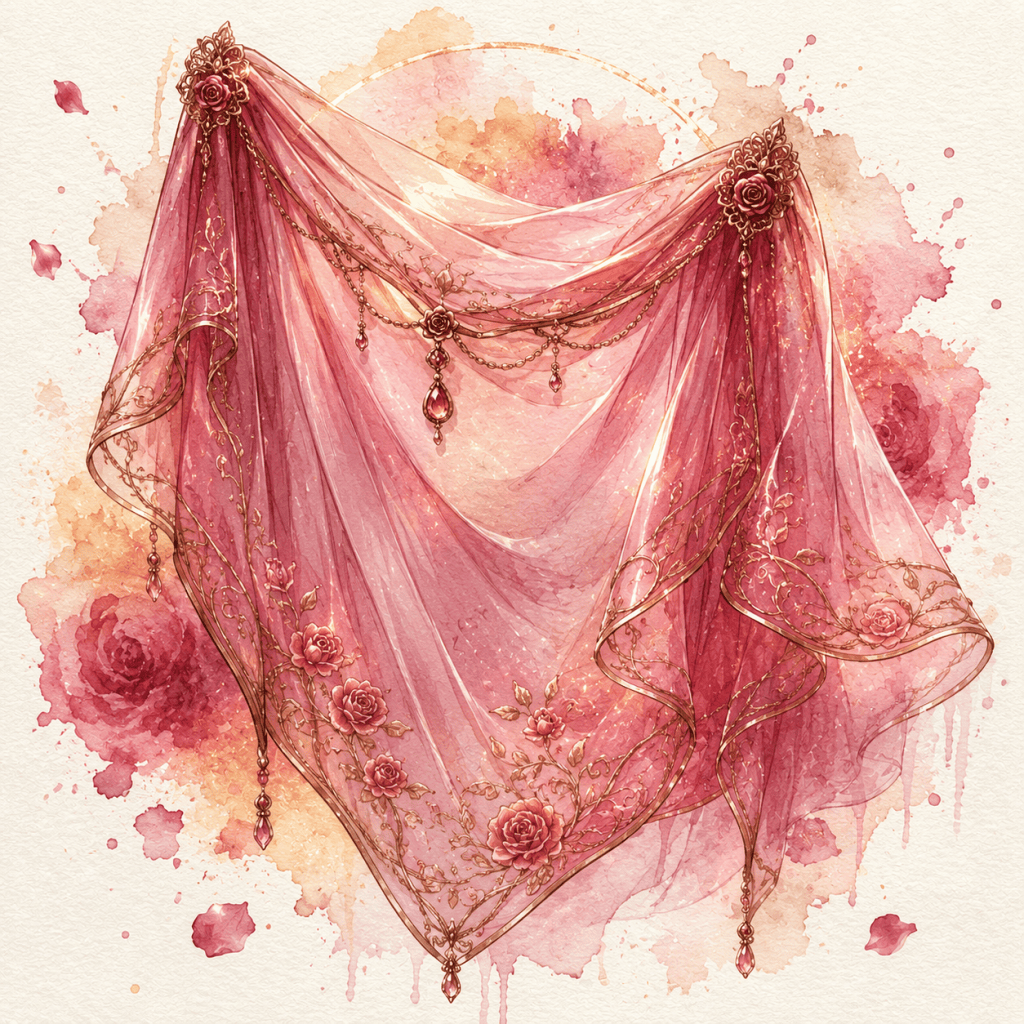
Velvet-Bloom Veil
Uncommon wondrous item
A ceremonial veil woven from rose-colored silk so fine that light passing through it resembles dawn through flower petals.
The archival version grants an advantage during intimacy-based ritual performance.
(Needs updated mechanics)
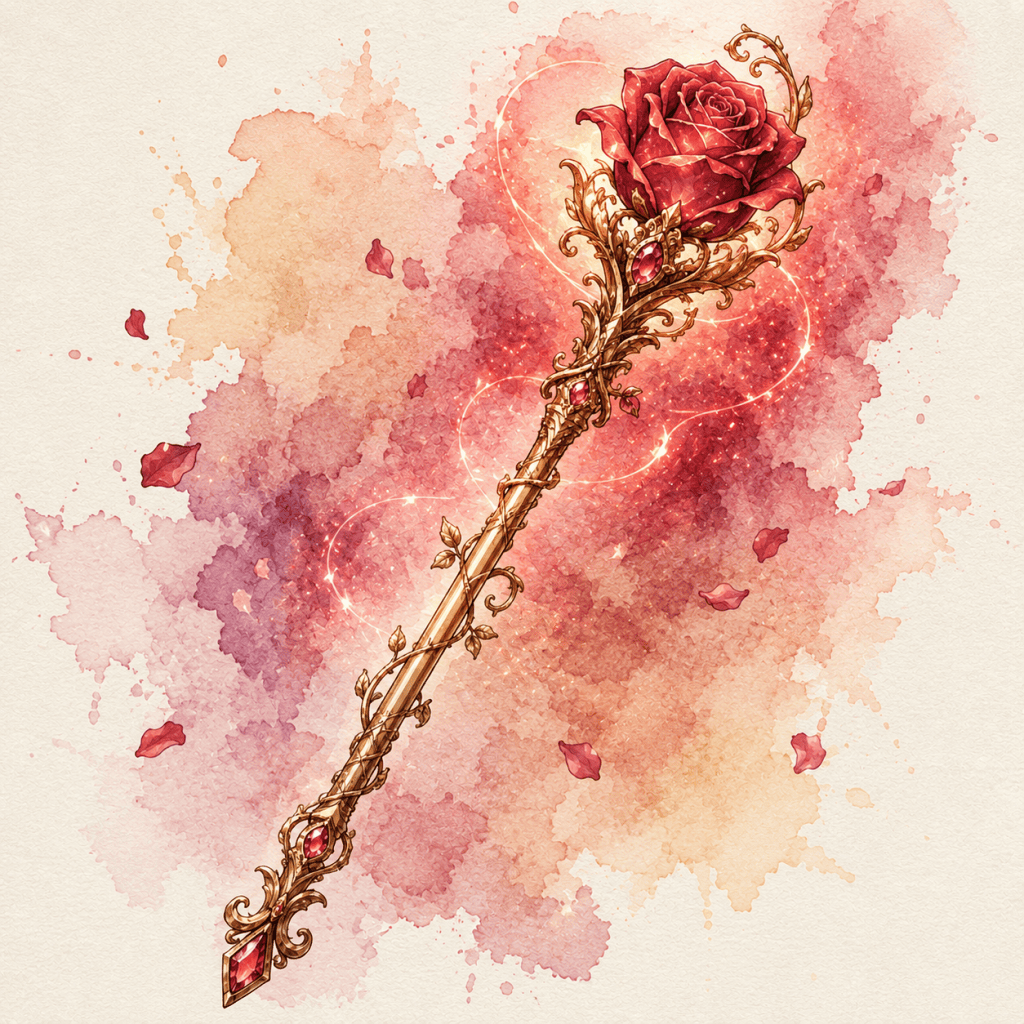
Rosepulse Scepter
Very rare wondrous item
A slender golden scepter crowned by an unfurling crimson rose.
The archives describe a once-per-day pulse capable of soothing allies while intensifying the Arousal of enemies.
(Needs updated mechanics)
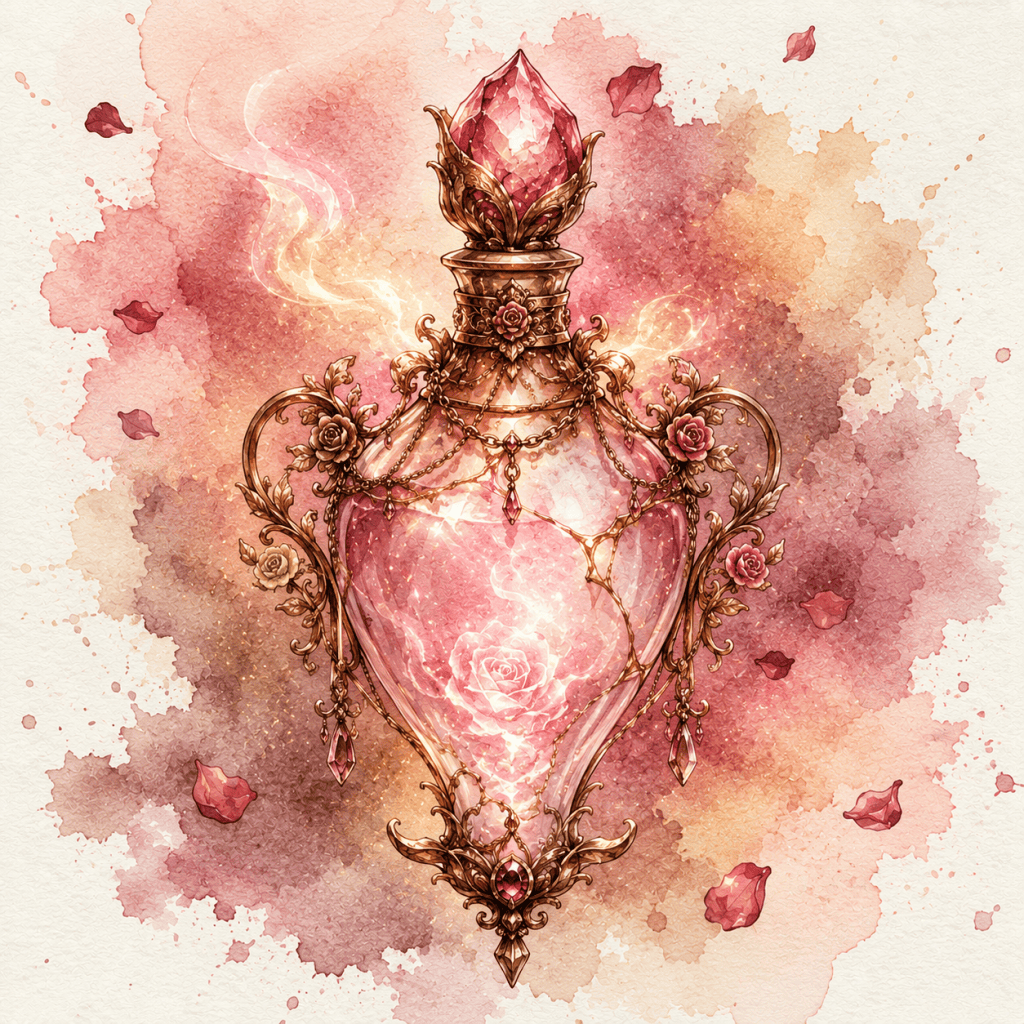
Breath of the First Kiss
Legendary wondrous item
A sealed vessel said to contain a trace of Velyssara’s primordial breath.
Breaking the vessel releases a powerful aura of healing and unity for one minute.
Of the archived relic concepts, this one most naturally connects to the newer First Bloom mythology. It should feel extraordinarily rare—less like temple equipment and more like a surviving fragment of creation itself.
(Needs updated mechanics)
Adventure Hooks
Velyssara works particularly well as the center of adventures in which the problem is not simply “defeat the evil cult.” Her stories should ask what happens when desire, connection, fertility, or life itself falls out of balance.
The Heartpool Has Gone Cold
The sacred Heartpool of a major Velyssaran temple no longer gives warmth. Roses wither around it. Breath Offerings produce no steam. Clergy fear that something has severed the region’s connection to the First Bloom. Finding the cause may require traveling beyond the temple—and perhaps beyond the Shimmering Veil.
The Shared Sorrow
Across Erosia, strangers begin dreaming the same dream. Each sees Velyssara standing alone within a garden whose roses are turning black one by one. The Rosebound believe the dream is a warning.
No one agrees about what she is warning them of.
The First Kiss
A mortal is born bearing a blessing associated in ancient prophecy with the First Kiss. Temples, rulers, scholars, desperate families, and opportunists begin competing for access to the child. The adventurers’ task may not be to discover what the child can do. It may be to ensure that the child is allowed to grow up before anyone decides what they are supposed to become.
The City Without Want
An entire city awakens without desire. No one hungers beyond what is necessary to survive. Lovers feel no longing. Artists abandon unfinished work. Merchants cease competing. Travelers lose interest in whatever lay beyond the gates. There is little violence. There is also almost no joy. Something is suppressing the city’s capacity to want, and Velyssara’s clergy fear that if the condition spreads, life itself may eventually begin to stagnate.
Four Heralds
An avatar of Velyssara appears openly for the first time in generations. She seeks four mortals willing to carry her blessing into places where the First Bloom has begun to fade. She refuses to explain why she cannot go herself.
These hooks are adapted from scenarios preserved in the archives: the cold Heartpool, a shared prophetic dream, the mortal blessed by the First Kiss, an artifact suppressing desire across a city, and Velyssara seeking new Heralds.
Bringing the First Bloom Into Your Campaign
Velyssara does not need to appear personally for her presence to matter. A single rose growing in poisoned soil can invoke her. So can a temple offering refuge to the brokenhearted, a relic everyone wants for different reasons, a Rosebound NPC struggling with their own desires, or an adventurer discovering that the thing keeping them alive is not duty, vengeance, or prophecy—but the simple realization that there is still something in the world they want to experience. Velyssara works best when her presence creates possibility rather than instruction. She does not tell the heroes what they must desire. She asks what still makes them reach.
Scents for Gameplay
Velyssara’s presence is often smelled before it is seen. Scent is an easy way for a GM to introduce the First Bloom without announcing divine intervention outright. A fragrance may linger around a shrine, accompany a blessing, precede a miracle, cling to a sacred relic, or appear suddenly when mortal desire resonates strongly enough to touch the Shimmering Veil.
Use these scents as atmospheric cues rather than automatic proof of Velyssara’s involvement.
| d12 | Scent | Suggested Moment |
|---|---|---|
| 1 | Fresh crimson roses after rain | Velyssara’s presence is near. |
| 2 | Warm rosewater and clean steam | Healing, bathing, aftercare, or emotional restoration. |
| 3 | Rose petals warmed by sunlight | Affection, tenderness, or a quiet blessing. |
| 4 | Honey, roses, and warm bread | Fertility, hospitality, abundance, or celebration. |
| 5 | Red wine and crushed rose petals | Mature passion, confession, or rekindled intimacy. |
| 6 | Rose oil and warm skin | Physical closeness, trust, or vulnerability. |
| 7 | Jasmine beneath a stronger scent of roses | Attraction awakening or an unspoken desire becoming difficult to ignore. |
| 8 | Vanilla, sandalwood, and fading roses | Rest, safety, comfort, or communal aftercare. |
| 9 | Fresh earth beneath blooming roses | New life, fertility, recovery, or something beginning again. |
| 10 | Rose incense touched by amber and myrrh | Formal worship, sacred vows, or a powerful temple rite. |
| 11 | A single impossibly perfect rose | A direct omen or unmistakable moment of divine resonance. |
| 12 | Whatever fragrance the character most associates with being loved | An intensely personal manifestation of the First Bloom. |
Using Scent as Foreshadowing
Repetition gives these fragrances meaning. If the party repeatedly smells warm rosewater immediately before Velyssaran healing manifests, the scent itself eventually becomes enough to create expectation. If red wine and crushed roses precedes emotionally dangerous revelations, players may begin preparing themselves the moment it appears. The scent can also arrive before its source.
A sealed crypt smells briefly of fresh roses. A winter battlefield carries the fragrance of warm earth. A character wakes from a shared dream to discover their pillow still smells faintly of rosewater. Nothing needs to be explained. Let the players notice.
When the First Bloom Is Very Near
The stronger Velyssara’s presence becomes, the more complex the fragrance should become. Begin with one rose. Add warm earth. Then rain. Wine. Skin warmed by sunlight. Clean water. Flowers opening. Eventually the characters should have the strange impression that they are not smelling perfume at all.
They are smelling life in bloom.
 Whispers of Erosia
You must be logged in to post a comment.