
Today marks one of the largest milestones in the development of Whispers of Erosia. The entire Playable Races section of the website is now complete, bringing together forty-five race and lineage pages across six major categories. What began as a small collection of concepts has gradually evolved into one of the largest and most detailed portions of the project, providing players with an expansive roster of cultures, ancestries, and identities through which to explore the world of Erosia.

The completion of this section represents far more than the addition of character options. From the earliest planning stages, the goal was never simply to create a list of fantasy races. Each people of Erosia was designed to occupy a distinct place within the world’s history, mythology, and cultural landscape. Their appearances, traditions, values, and stories were developed alongside the cosmology itself, allowing the races of Erosia to feel like inhabitants of a shared world rather than isolated concepts gathered into a rulebook.
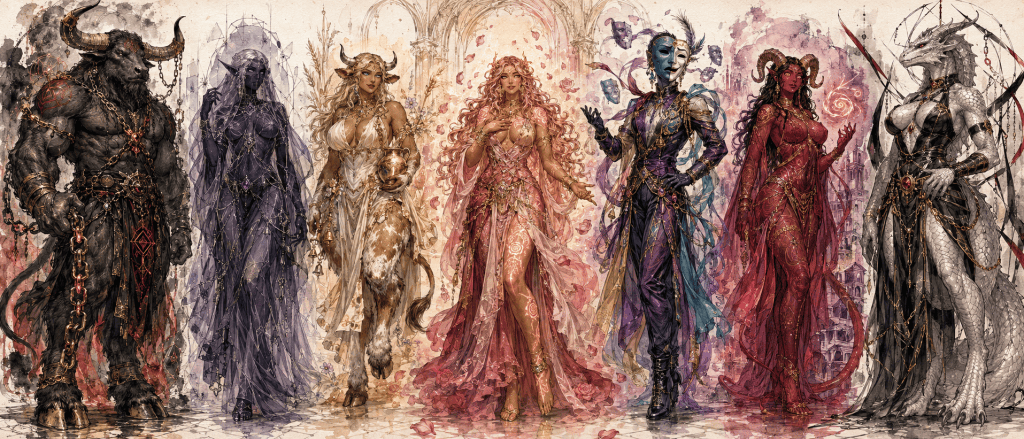
The finished roster now spans six major categories: Child of the Veil, Forged & Altered, Fur & Feather, Mortal Races, Shadow, Grace, Dragon & Giant, and Tide, Root & Element. Together, these categories encompass forty-five individual race and lineage pages, making the race section one of the largest completed components of the website to date.

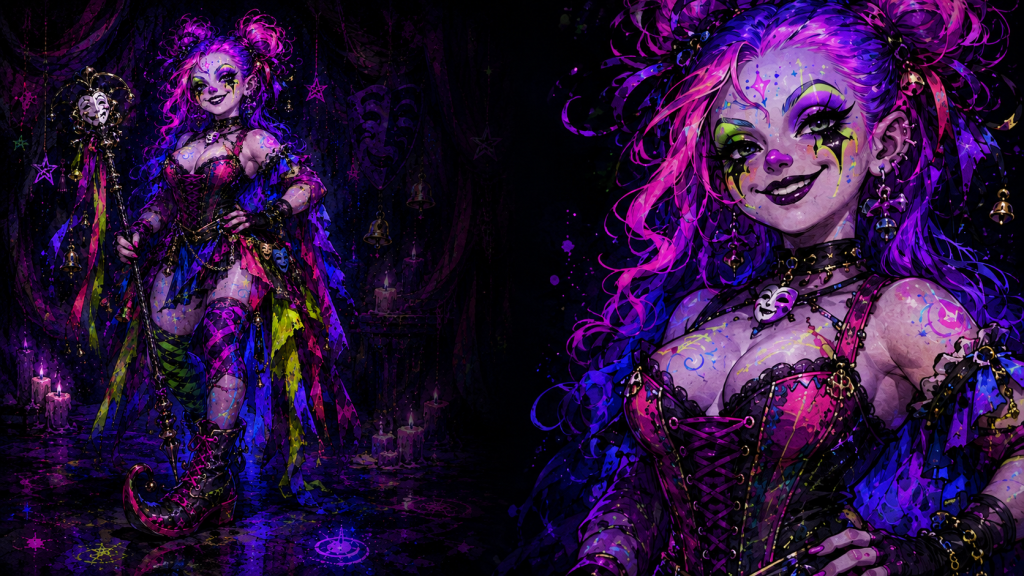
The Child of the Veil races helped establish the foundational tone of Erosia. Dreamborn, Greenward, Luminari, Umbrel, and Veilkin embody the influence of the Veil itself, expressing themes of mystery, transformation, wonder, and the unseen forces that shape the world. Their development helped define many of the visual and thematic standards that would later influence the rest of the project.

Forged & Altered introduced some of the setting’s most unusual peoples. Fleshforged, Heartstone, Gelkin, and Sparkin challenged traditional fantasy assumptions about identity, creation, and transformation. Over time, these races grew from interesting concepts into fully realized cultures with their own philosophies, aesthetics, and histories. In many ways, this category became a testing ground for some of the setting’s most ambitious ideas.

Fur & Feather ultimately became one of the largest undertakings in the entire race project. The Avian peoples and the various Beastkin lineages required extensive visual development, cultural refinement, and artistic standardization. Establishing clear anatomy rules, cultural identities, and race-specific visual language became a major focus of development, resulting in some of the strongest and most recognizable race identities currently present within the setting.

The Mortal Races provided an equally important foundation. Bloodoath, Hearthkin, Oathbound, Silkborn, and Stonebound represent many of the societies, traditions, and communities that form the backbone of everyday life throughout Erosia. While they may appear less exotic than some of the world’s more fantastical peoples, they remain central to understanding the cultures and civilizations that define the setting.

The Shadow, Grace, Dragon & Giant category expanded considerably during development. What initially appeared to be a handful of races evolved into two substantial lineage families in the form of the Dracari and the Colossi. The seven Dracari lineages and seven Colossi lineages each developed their own visual identities, cultural distinctions, and thematic foundations, transforming them from simple ancestry variations into major peoples within the world. Alongside Bloomtouched, Graceborn, and Hollow-Souled, this category now represents one of the most expansive portions of the playable race roster.

Finally, Tide, Root & Element brought the race project to its conclusion. The addition of the Nacreans, Orchidians, and Tideborn completed the final major race category and officially closed the playable race roadmap established for the core website. Each of these peoples introduced new themes tied to nature, growth, the sea, and elemental influence, helping round out the diversity of the setting’s playable cultures.
Looking back, the completion of the race section represents hundreds of hours of writing, editing, illustration planning, visual development, and worldbuilding. It required the creation of race reference sheets, adventurer showcases, hero illustrations, cultural frameworks, naming conventions, visual doctrines, and countless revisions. The result is a roster of playable peoples that feels interconnected, diverse, and uniquely Erosian.
With the Playable Races section now complete, development focus can begin shifting toward the next major pillars of the project. Cosmology, worldbuilding, pantheon expansion, adventures, and bestiary content all remain ahead. The Three Mothers, the Three Moons, the Veil, the Titans, the Four Sovereigns, and the deeper history of the world still await exploration, while new adventures and creatures will continue expanding opportunities for play.

Completing the race section is not the end of the journey, but it is a moment worth celebrating. Forty-five race and lineage pages now stand as a testament to how far the project has come. The peoples of Erosia have arrived, and for the first time, the full breadth of the setting’s playable cultures can be explored in one place. The world itself is still growing, but its inhabitants are finally here.
— DM Martin
Whispers of Erosia
Velvet Veil Press

 Whispers of Erosia
Leave a comment