
Dev Blog: Why the Dracari Exist
There are some ideas that stay with you for years.
For me, one of those ideas was the Draconians of Dragonlance.
As a kid, I was fascinated by them. They were dragon people before dragon people became common in fantasy gaming. They looked powerful, dangerous, and unforgettable. But beneath that fascination was something else: discomfort.
Their origin haunted me.
The idea that mortal kingdoms would steal the eggs of good dragons, poison them, corrupt them, and twist them into soldiers felt deeply wrong. It was effective storytelling precisely because it was so cruel. An army born not from choice, but from violation. Not from life, but from theft.
Years later, when Dragonborn became playable in D&D, I loved the concept of adventuring as a dragon-descended hero. Yet even then, many versions of their lore carried echoes of that same discomfort. Depending on the setting, Dragonborn often existed because dragons, demons, gods, or empires had manipulated dragon eggs to create a race for war.
Again and again, dragons became something transformed by force rather than by choice.
And eventually I found myself asking a different question.
What would happen if dragons chose?
A World Built Upon Desire
Whispers of Erosia is a setting built around desire.
Not merely physical desire, but curiosity.
Longing.
Wonder.
The yearning to experience life in all its forms.
When I began designing the Dracari, I stopped thinking about dragons as ancient monsters and started thinking about them as ancient beings capable of wanting something more.
Imagine a dragon who has lived for centuries.
Perhaps millennia. A creature of immense power, vast knowledge, and nearly limitless lifespan. What could such a being possibly desire?
In Erosia, the answer is simple: Life.
Not existence. Life.
To taste food before hunger fades forever. To laugh with friends whose lives burn bright and brief. To sing songs that will someday be forgotten. To fall in love knowing it might end. To experience mortality itself. Because part of what makes life beautiful is that it does not last forever.
Crossing the Veil
In Erosian mythology, some dragons willingly crossed the Veil.
They surrendered a portion of their draconic immortality and cosmic power in exchange for something they had never truly possessed:
A mortal perspective. The transformation was not a punishment. Not a curse. Not a corruption. It was an act of devotion to experience itself. From those dragons came the first Dracari.
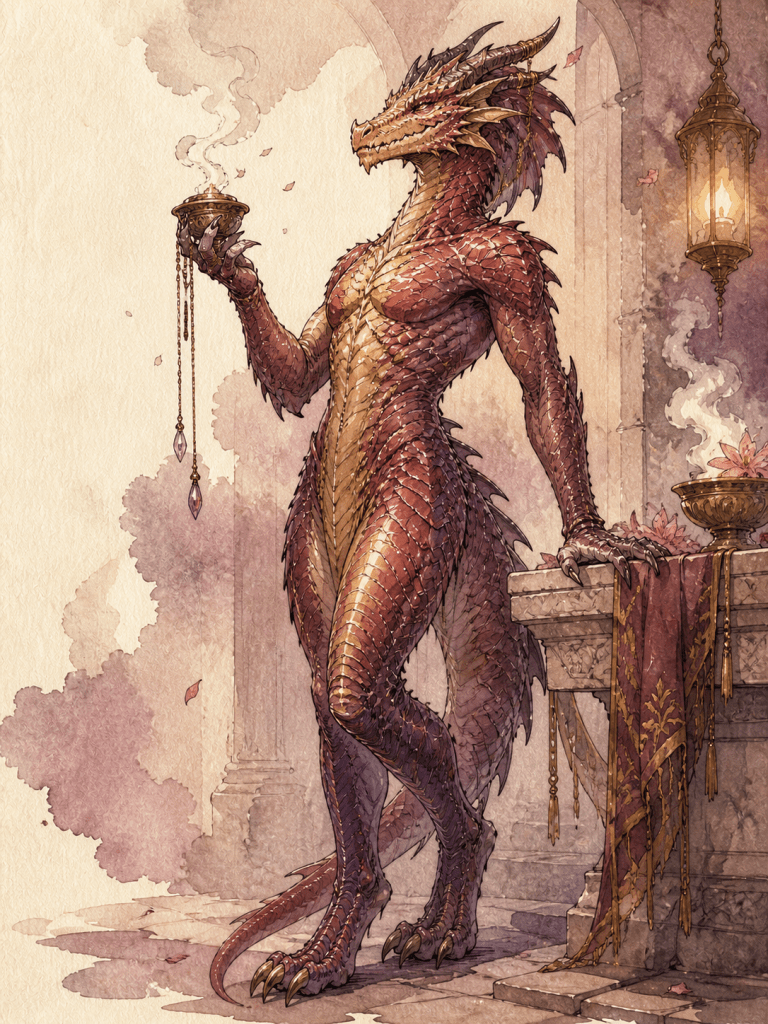
They retained the scales, horns, tails, and draconic features of their ancestors, but their hearts beat to a mortal rhythm. They became capable of building families, communities, cultures, and lives measured not in ages, but in generations.
For perhaps the first time, dragons became participants in the story of the world rather than observers of it.
A Legacy of Love Instead of War
The Dracari share a familiar silhouette with the Dragonborn many players already know. But their story is fundamentally different. Their existence is not rooted in conquest. Not in corruption. Not in armies. The Dracari exist because dragons loved the world enough to join it.
That single change reshaped everything. Their history is one of relationships rather than domination. Their bloodlines spread through friendship, companionship, romance, marriage, and family. Their legacy became one of connection.
Across Erosia, Dracari communities emerged not as conquered territories but as places where dragon and mortal cultures intertwined, creating something entirely new.
The Bloodborn Connection
One of the most exciting consequences of this lore was the opportunity it created elsewhere in the setting.
If dragons can become mortal, what traces of that transformation remain? What happens when draconic essence mingles with mortal bloodlines? What happens when the magic of the Veil leaves echoes behind? These questions eventually helped inspire the Bloodborn.
In Erosia, the power carried within a Bloodborn lineage is not necessarily proof of direct dragon ancestry. Sometimes it is. Sometimes it is not.
Magic leaves marks. The crossing of dragons into mortality left ripples throughout the world. Those ripples continue to surface generations later through individuals whose blood awakens with ancient draconic power. Mechanically, this also helped establish a natural place for Sorcerers and other bloodline-based magic within the setting’s larger mythology.
And What About Kobolds?
One of the unexpected joys of creating the Dracari was realizing how many doors the concept opened.
If dragons willingly became mortal, what other changes accompanied that transformation?
What happened to fragments of their discarded power?
What happened to draconic servants?
What happened when draconic magic interacted with the Veil in ways nobody anticipated?
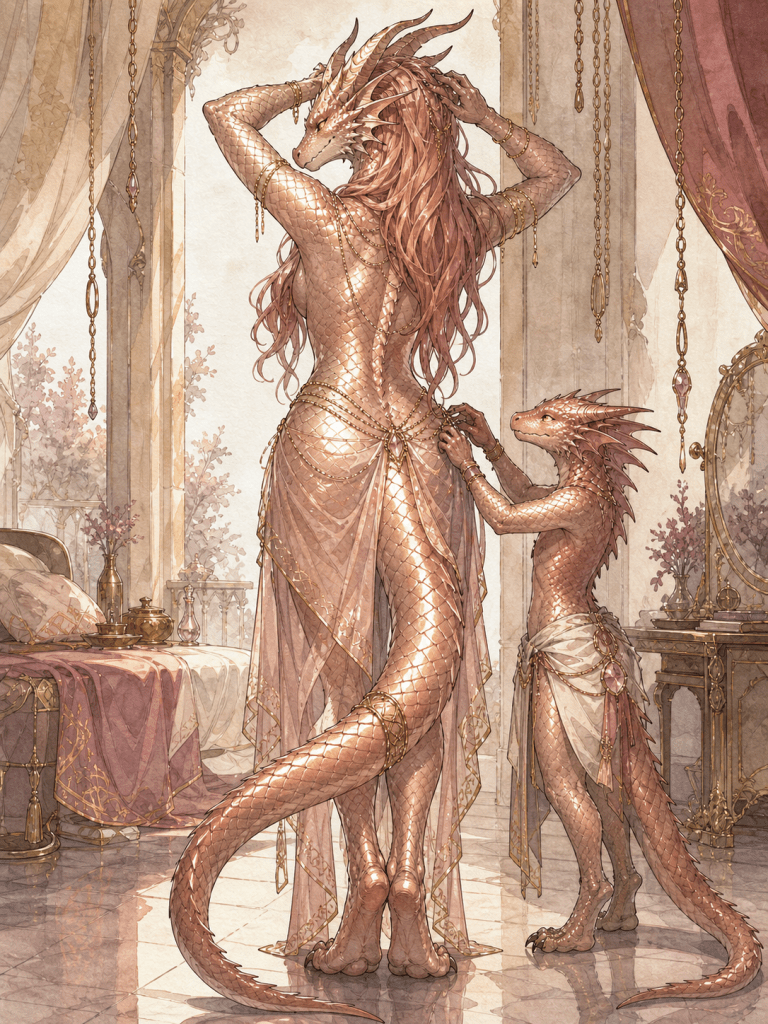
Questions like these create room for kobolds, lesser draconic kin, and entirely new draconic peoples to emerge naturally within Erosian history.
Rather than existing as accidents of war, they can become part of a larger story about transformation, adaptation, and the many forms dragonkind can take when it chooses life over isolation.
A Personal Note
The Dracari are special to me. They began as a response to something that always felt unsettling in fantasy lore: dragons being changed against their will. I wanted to create a draconic people whose story began with agency. With choice. With desire.
A people born not from corruption, but from curiosity. Not from hatred, but from love. If you’ve ever wanted to play a dragon-descended hero whose heritage is tied to wonder rather than war, then I hope the Dracari feel like home.
They are not dragons who fell. They are dragons who stepped forward. And in doing so, discovered that mortality was not a lesser existence. It was one of the greatest adventures they could ever choose.

 Whispers of Erosia
Leave a comment