
The Evolution of the Gelkin
One of the more unusual races within Whispers of Erosia is the Gelkin, largely because they did not begin life as a race concept at all. Like many ideas within the setting, they emerged organically from a series of unrelated worldbuilding questions that slowly connected together over time.
The earliest seed of the Gelkin can be traced back to a joke adventure concept that never actually made it to the table. Years ago I was toying with the idea of writing a deliberately absurd Erosian one-shot centered around a collector of rare intimate artifacts. Rather than hunting magical swords, crowns, or relics, the collector’s obsession was far more specific. At some point I found myself asking what the most valuable pair of panties in Erosia might be, and the obvious answer became the ceremonial garments of Velyssara herself.
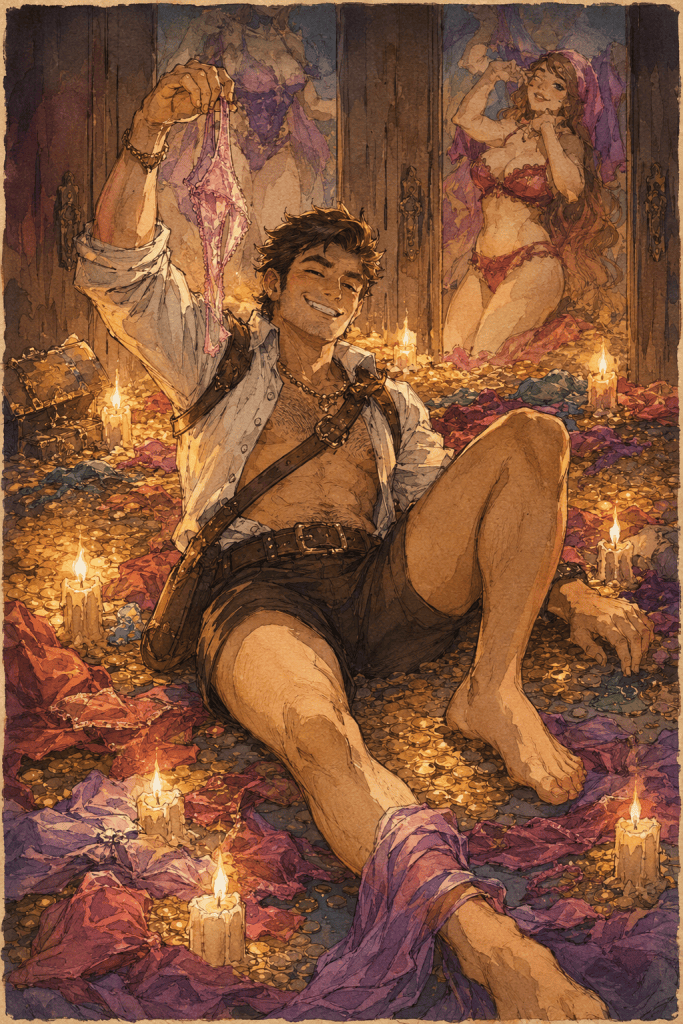
As ridiculous as the premise was, it accidentally raised a worldbuilding question that proved much more interesting. If a deity such as Velyssara manifested within the world, what would that process actually look like? Erosia had already begun developing a cosmology in which divinity interacted with the mortal world through vessels, rituals, sacred spaces, and emotional participation rather than simple physical appearances. Once I started thinking about those rituals, I found myself wondering what happened afterward.
Specifically, I became interested in the idea of emotional residue.
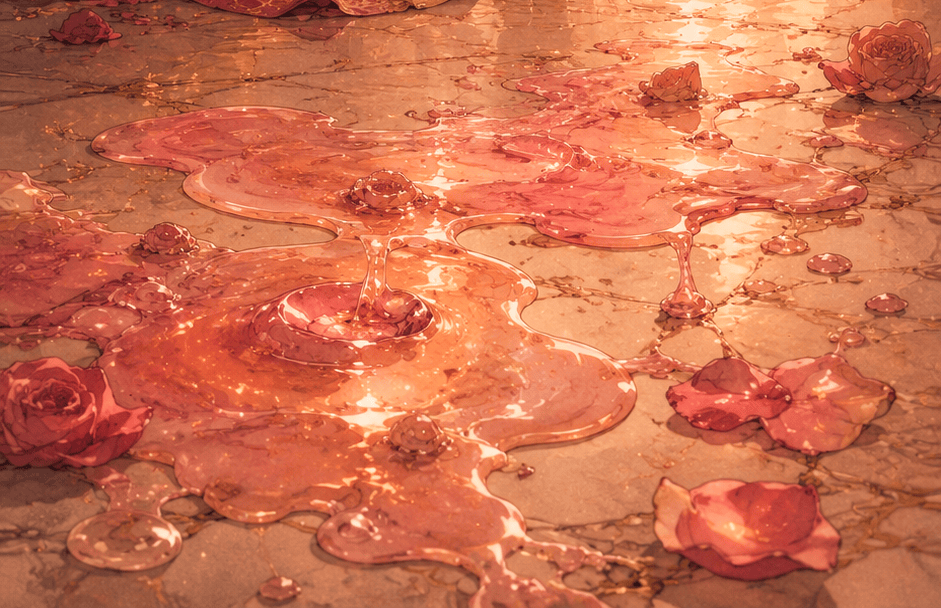
Many fantasy settings feature haunted locations where violence, fear, grief, or tragedy leave lasting impressions upon a place. The concept appears constantly in folklore and ghost stories. A battlefield remembers suffering. A prison remembers despair. A murder scene remembers violence. What I found myself asking was why this concept always seemed limited to negative emotions. If sorrow and fear could leave impressions upon the world, why not joy, love, desire, devotion, passion, comfort, or intimacy?
That question eventually became one of the foundational assumptions behind the Gelkin.
Within Erosia, emotions possess metaphysical weight. Powerful emotional experiences leave traces behind. Most of the time those traces dissipate naturally, but locations exposed to centuries of intense emotional activity can begin accumulating those impressions. Sacred festivals, rites of devotion, celebrations of love, acts of intimacy, moments of profound vulnerability, and generations of shared emotional experience all contribute to a growing reservoir of emotional resonance.
Over time that resonance condenses.
It gathers.
It becomes substance.
What began as a simple explanation for the existence of slimes, oozes, puddings, and gelatinous creatures gradually evolved into something much larger. Rather than treating such creatures as random dungeon inhabitants, Erosia reframed them as manifestations of accumulated emotional energy. Emotion became residue. Residue became slime. Slime became ooze. Ooze became something capable of movement, memory, and eventually awareness. (Side note: This is heavily influenced by Ghostbusters 2).
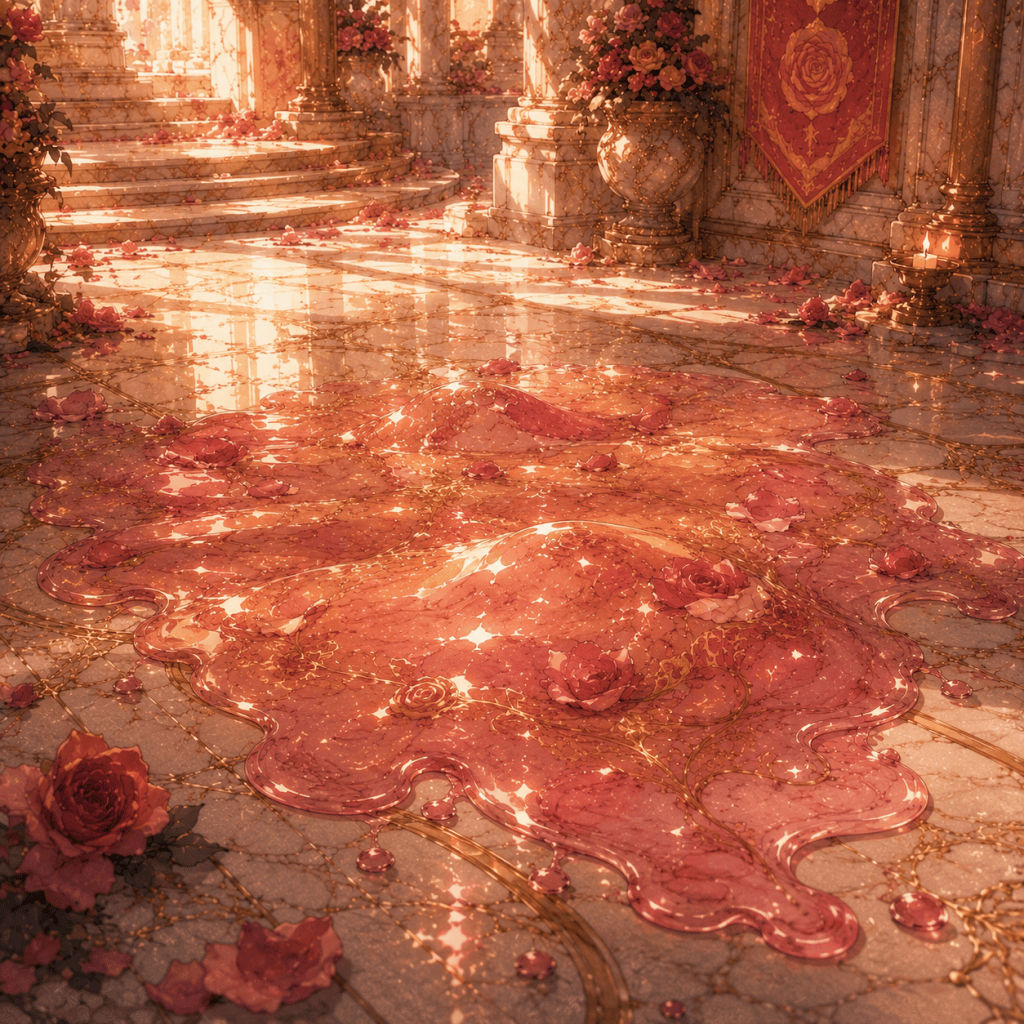
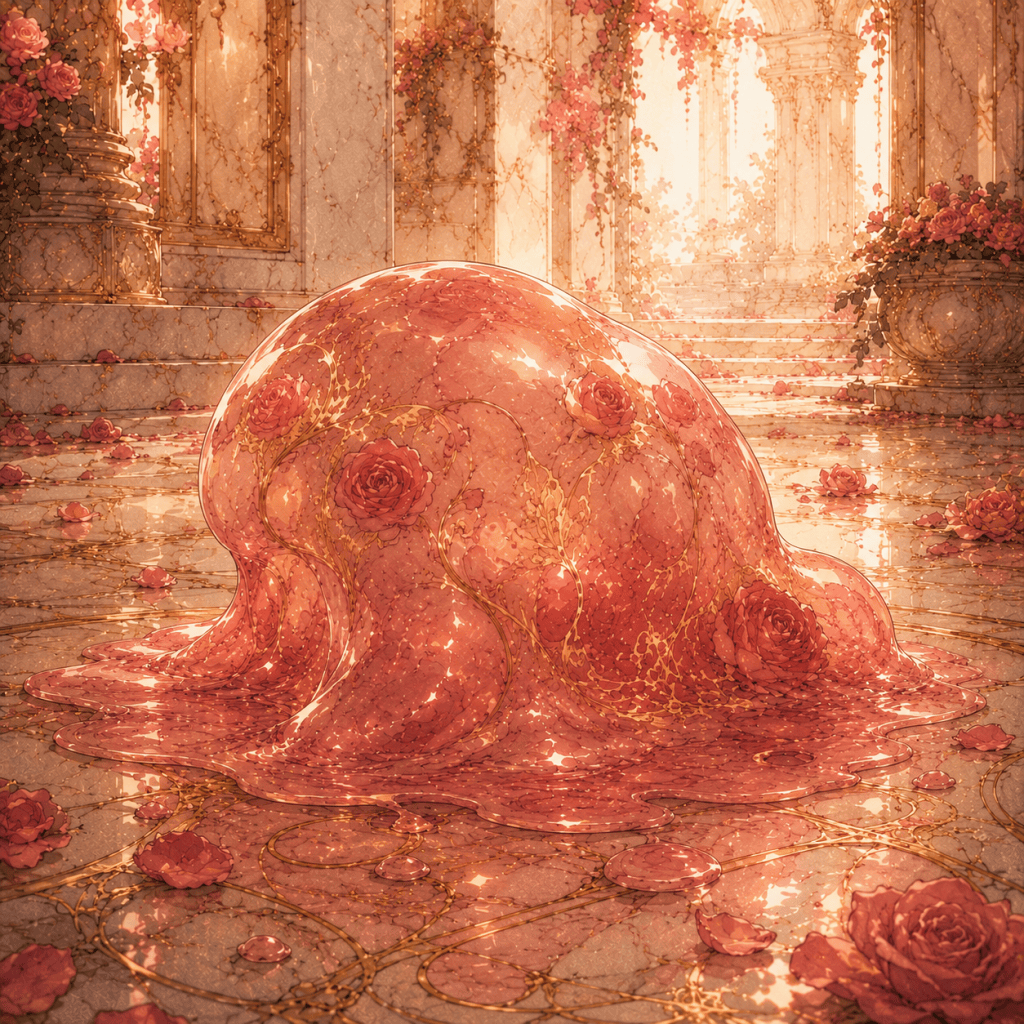
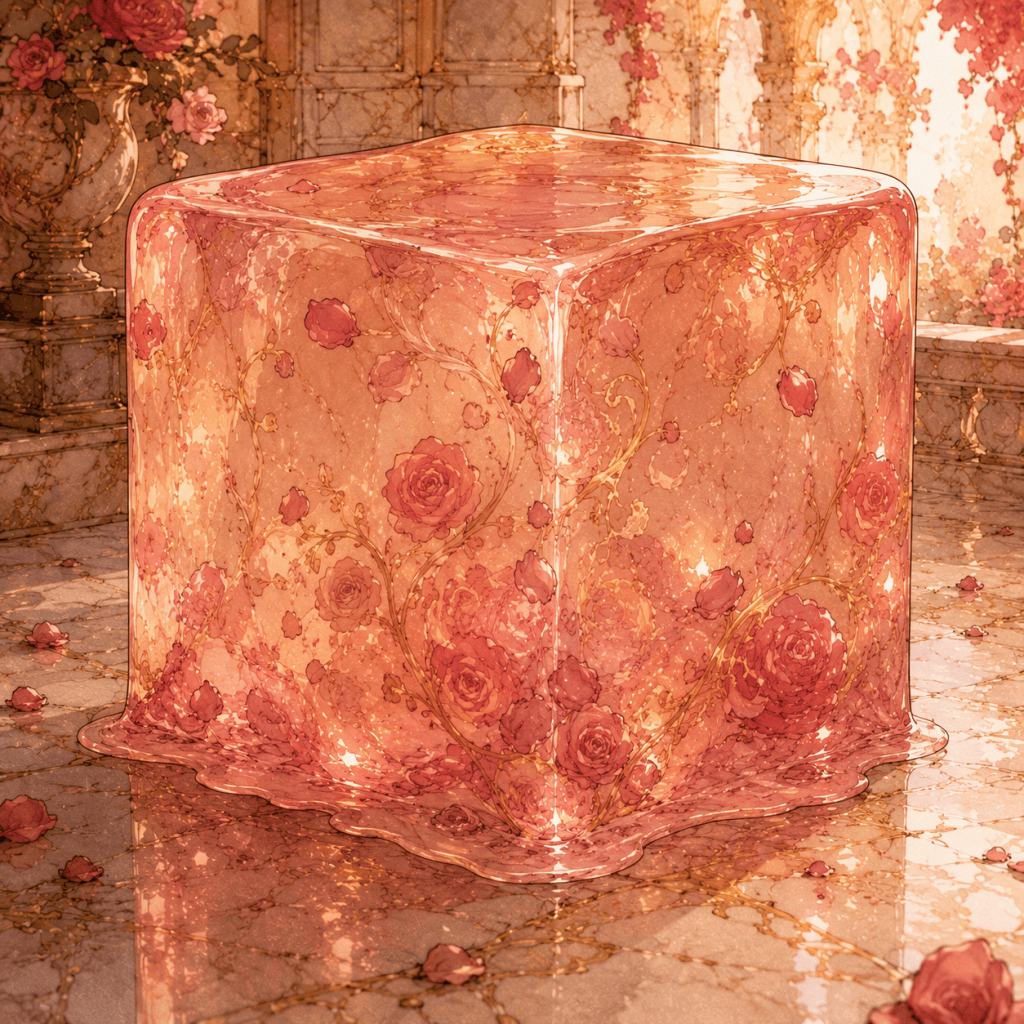
The next logical question was what happened when that process continued long enough.
The answer became the Gelkin.
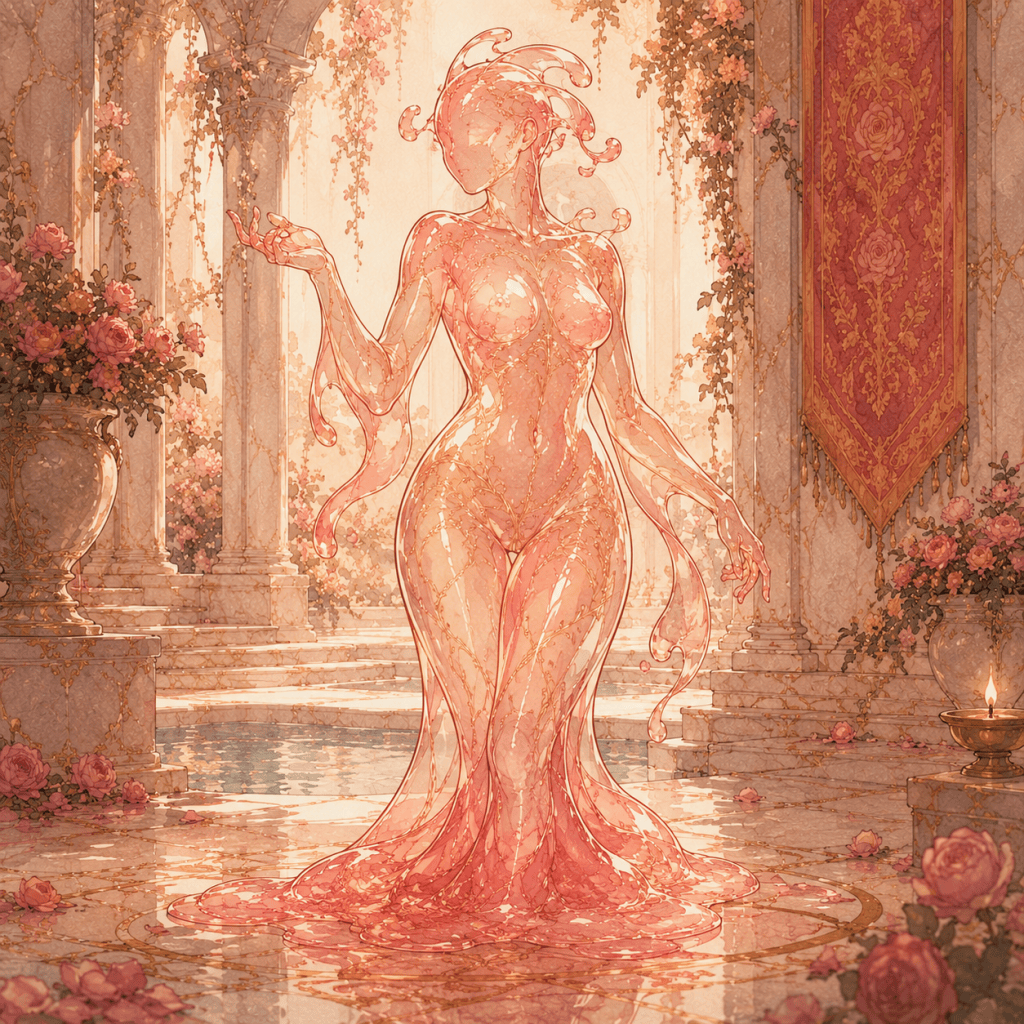
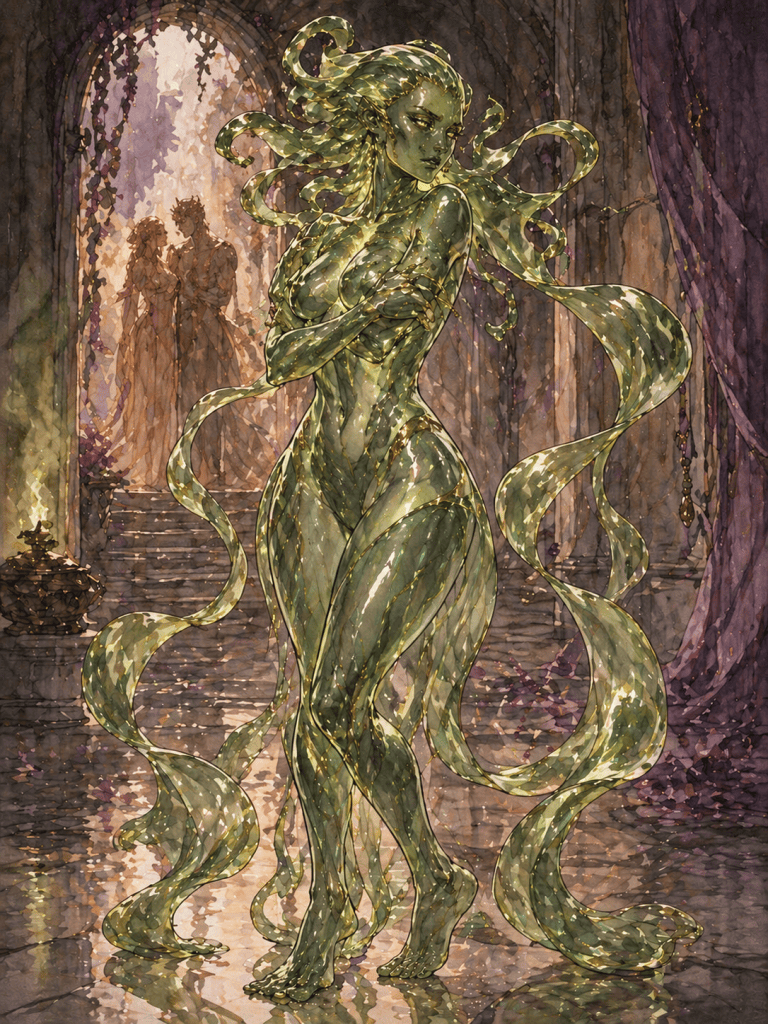
A Gelkin is not born in the conventional sense. There are no Gelkin parents, family lines, or bloodlines. Instead, a Gelkin emerges when a concentration of emotional resonance develops sufficient complexity to sustain a conscious identity. What begins as formless emotional matter slowly accumulates experiences, memories, impressions, and eventually a soul. The resulting being is neither elemental nor construct, neither spirit nor traditional humanoid. It is best understood as living emotion that has achieved personhood.
This leads directly into one of the most misunderstood aspects of Gelkin lore: their appearance.
Many people assume that Gelkin possess a true or natural form hidden beneath their visible shape. In reality, Gelkin have no innate physical identity. A newly awakened Gelkin exists in an extremely impressionable state and unconsciously studies the people, cultures, and environments surrounding it. This developmental process is known as imprinting.
During imprinting, the Gelkin effectively learns what a person is supposed to look like.
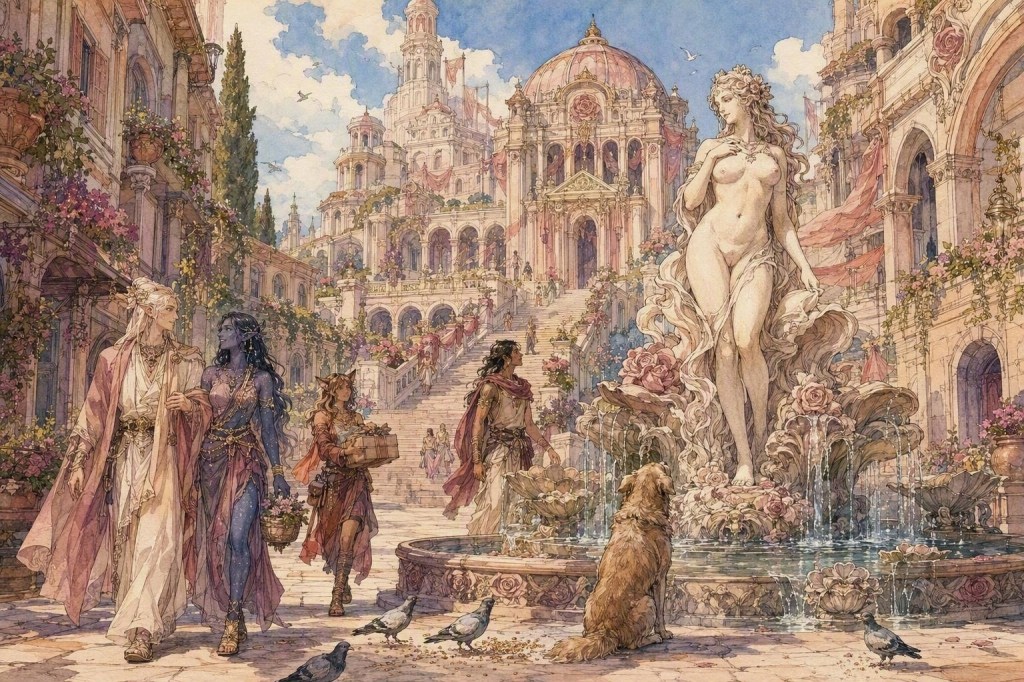
A Gelkin that awakens in a farming village may spend its earliest years observing farmers, laborers, merchants, and families. Over time it adopts a broadly humanoid silhouette because those are the people it associates with personhood. Another Gelkin that emerges within a Dracari monastery may spend decades surrounded entirely by dragonkin. That Gelkin may eventually develop horns, a tail, draconic posture, and a dragon-like silhouette despite not actually being a Dracari.
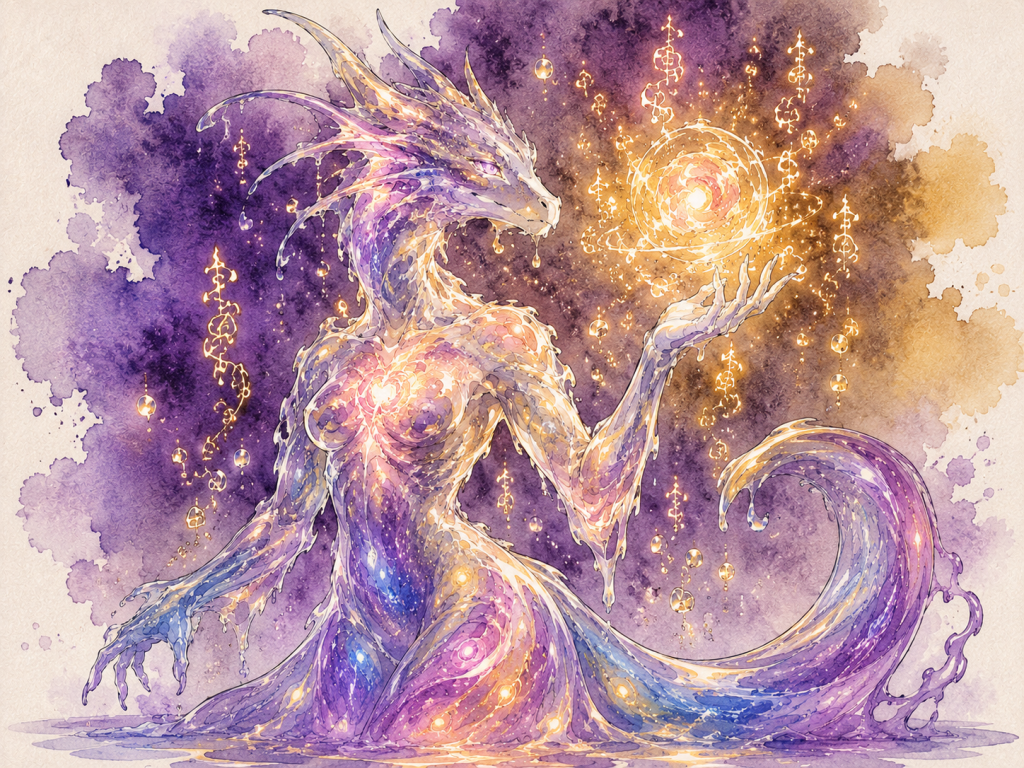
The important distinction is that the Gelkin is not shapeshifting into a disguise. The imprinted form becomes its default state.
A humanoid Gelkin farmer is not pretending to be humanoid.
A Dracari-looking Gelkin sorcerer is not pretending to be Dracari.
Those forms become genuine expressions of identity because they represent the shape through which the Gelkin learned to understand itself. The body is not inherited through ancestry. It is learned through experience.
This creates enormous visual diversity among Gelkin communities. Two Gelkin may share a nearly identical origin while possessing completely different physical appearances depending upon where they awakened and what cultures shaped their development. Some remain largely humanoid. Others may reflect beastkin influences, avarin influences, dracari influences, or combinations unique to their personal history. Beneath those differences, however, all Gelkin remain fundamentally the same. Their bodies are still composed of living emotional medium rather than flesh, bone, muscle, or blood.
What ultimately fascinates me about the Gelkin is that they represent a race defined not by ancestry but by becoming. Most fantasy peoples begin with a fixed identity and build a culture around it. The Gelkin begin without identity and spend their lives constructing one. Their appearance, personality, and understanding of themselves emerge from the world around them rather than being predetermined at birth.
In many ways they embody one of the central ideas behind Whispers of Erosia: that people are not solely defined by where they come from, but also by the experiences, relationships, and emotions that shape who they become.


Frequently Asked Questions About Gelkin
Do Gelkin Wear Clothing?
Sometimes.
A Gelkin does not require clothing in the biological sense. Their bodies are composed entirely of living emotional medium rather than flesh.
However, Gelkin are highly impressionable during their development. Many unconsciously adopt visual traits from the communities around them. A Gelkin raised among farmers may shape portions of its body to resemble overalls, work shirts, hats, or boots simply because that is what it believes a farmer should look like.
Other Gelkin wear actual clothing for practical or social reasons. While they may not experience modesty in the same way other peoples do, they quickly learn that clothing helps them blend into the societies around them.
Are Those Clothes Real?
Sometimes.
A Gelkin may wear real garments. A Gelkin may also shape portions of its own body to resemble garments. In some cases, even experienced observers cannot immediately tell the difference.
What appears to be a shirt, robe, sash, or apron may simply be a denser region of emotional medium shaped to imitate clothing.
Can Gelkin Use Tools?
Yes.
Despite their fluid appearance, Gelkin possess enough cohesion to interact normally with the physical world.
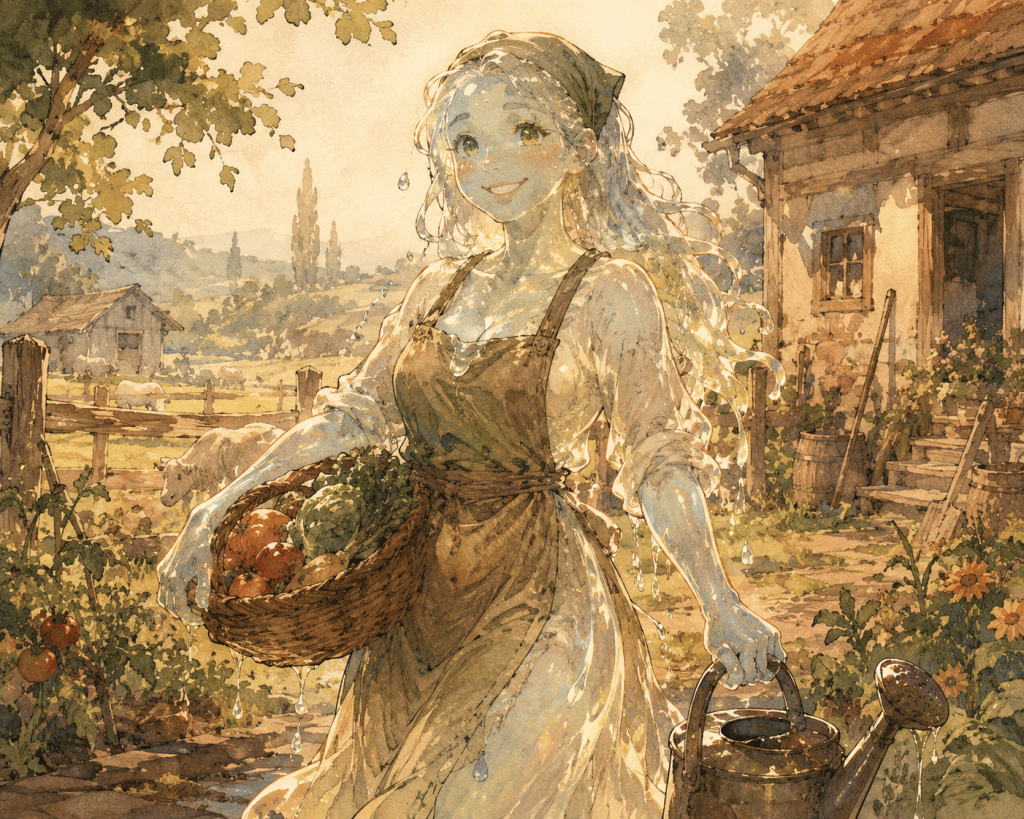
They can:
– carry baskets
– wield tools
– farm
– cook
– craft
– write
– open doors
– perform most tasks expected of any other person
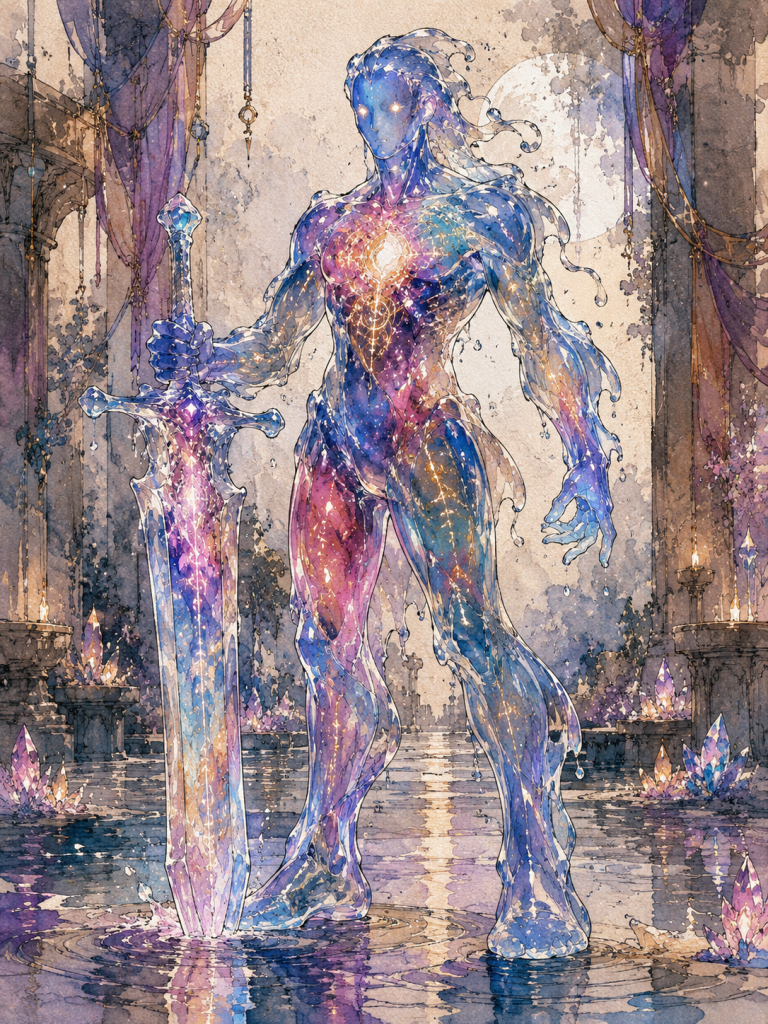
A Gelkin farmer can tend crops. A Gelkin blacksmith can swing a hammer. A Gelkin adventurer can carry a sword.
Their bodies remain fluid, but they are not liquid.
Are Objects Part of the Gelkin?
Usually not.
Most tools, clothing, and possessions carried by a Gelkin are entirely real objects. A basket remains a basket. A shovel remains a shovel. A sword remains a sword.
The Gelkin simply uses them.
However, some Gelkin become skilled at incorporating personal items into their appearance, making it difficult to determine where the Gelkin ends and the object begins.
Can Gelkin Change Shape At Will?
Not as dramatically as many assume.
A Gelkin’s form is heavily influenced by its imprinting stage. Once a Gelkin adopts a stable identity, that appearance becomes its natural form. A Gelkin raised among humans may spend centuries looking broadly humanoid. A Gelkin awakened within a Dracari monastery may naturally resemble a Dracari. A Gelkin shaped by Corvani communities may unconsciously adopt avian-inspired features.
While the body remains fluid and expressive, Gelkin do not typically reinvent themselves from day to day. Their form is learned. Their identity becomes habit.
Why Do Gelkin Look Like Other Peoples?
Because Gelkin learn personhood through observation.
When a Gelkin awakens, it does not instinctively know what a person looks like.
It learns. The people surrounding a Gelkin during its development often become the template from which it builds its identity. A Gelkin farmer may appear almost human. A Gelkin sorcerer raised among Dracari may appear draconic. A Gelkin artisan raised among Fleshforged may adopt geometric or constructed visual traits.
These appearances are not ancestry. They are memory. They are the shape of a life learned from others.
Can Gelkin Speak?
No.
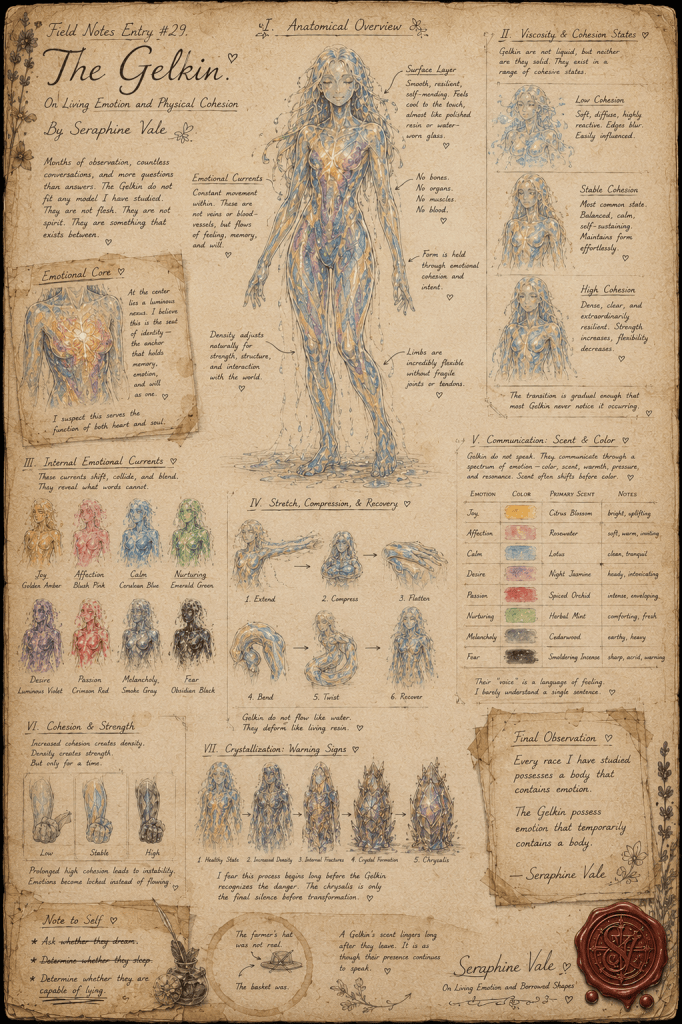
Gelkin communicate through a constantly shifting language of color, scent, and emotional resonance. Their emotions are visible. Their intentions are often felt before they are understood. Over time, many communities learn to interpret common Gelkin color shifts and associated scents, but no universal translation exists.
Every Gelkin is, in a sense, speaking a language only partially understood by the rest of the world.
Do Gelkin Know They Become Demons?
Generally, no.
There are so few Gelkin in Erosia that knowledge rarely passes from one generation to the next. Most Gelkin experience their existence as a personal journey rather than as part of a larger lifecycle. The crystallization process often arrives without warning.
By the time the truth becomes apparent, metamorphosis has already begun. The chrysalis does not create a crystallized demon. The chrysalis is merely the cocoon.
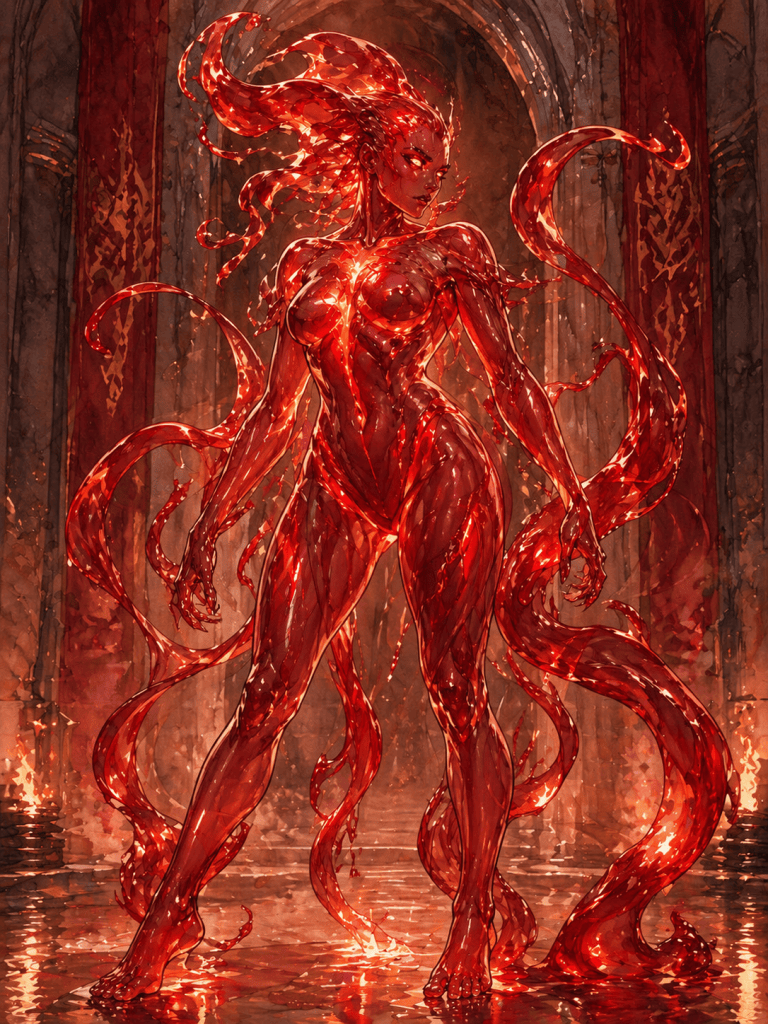
What emerges is a Demon Form—the hardened embodiment of the emotion that ultimately consumed balance.
Demons
The Demon Chrysalis
Among the Gelkin, emotion is not merely felt. It is substance.
Every Gelkin is born as a fluid emotional being, a living current of memory, sensation, instinct, and experience. Their colors shift. Their scents change. Their forms evolve. They are creatures defined by movement and transformation.
A healthy Gelkin remains in motion.
A dangerous Gelkin becomes still.
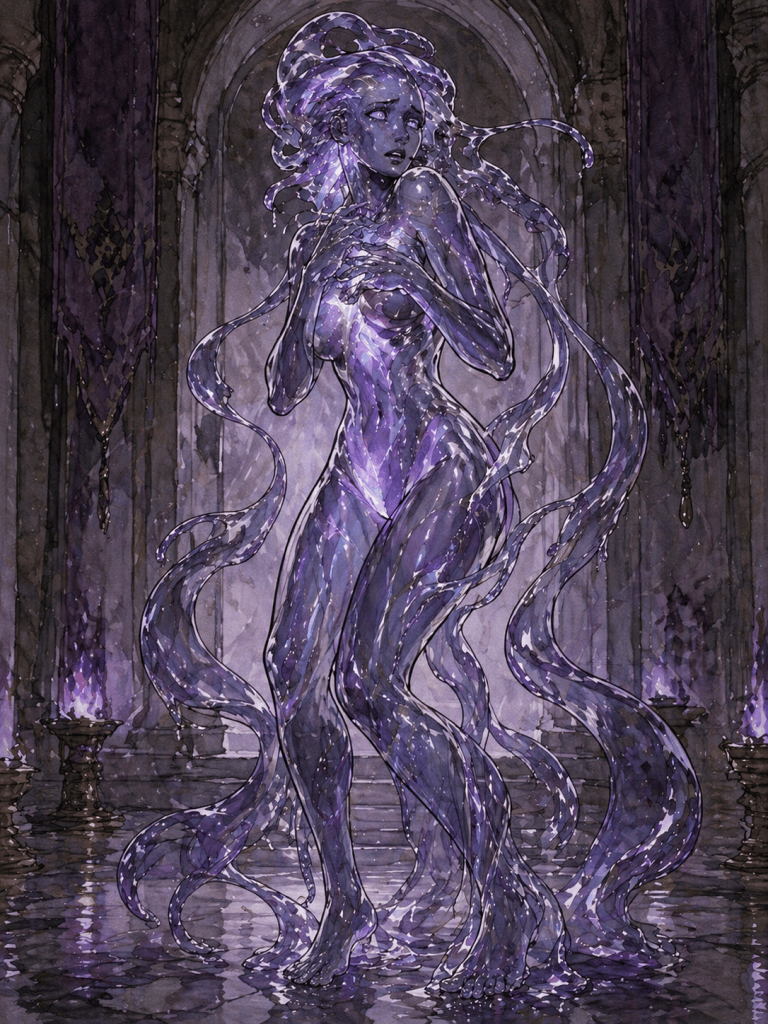
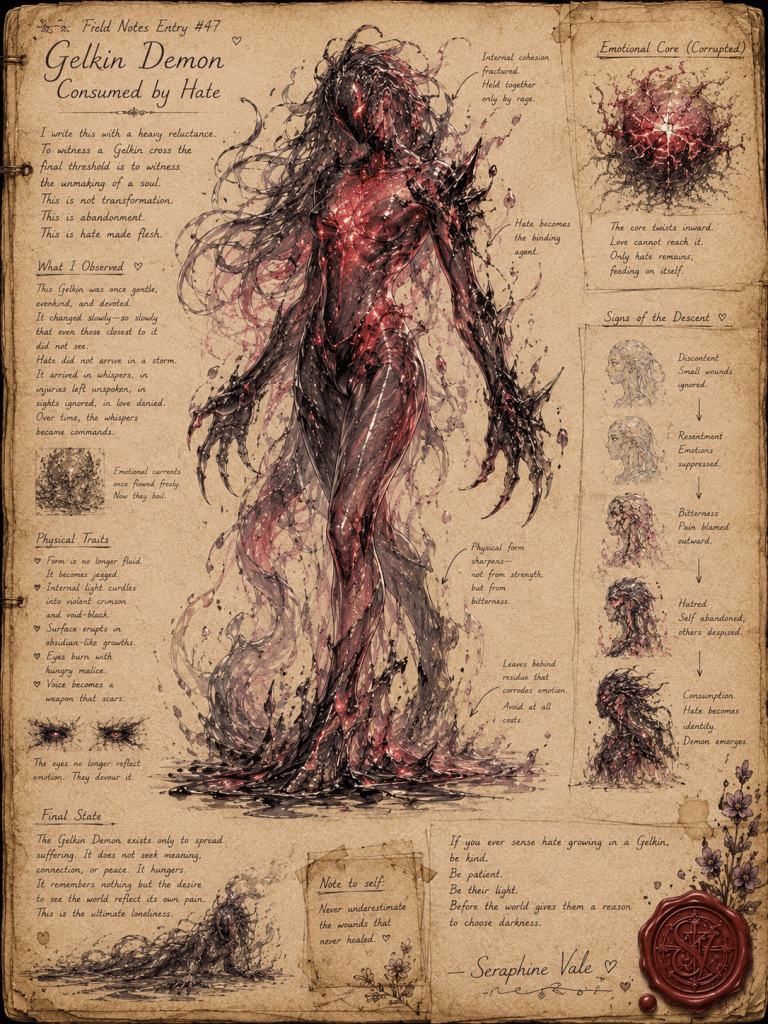
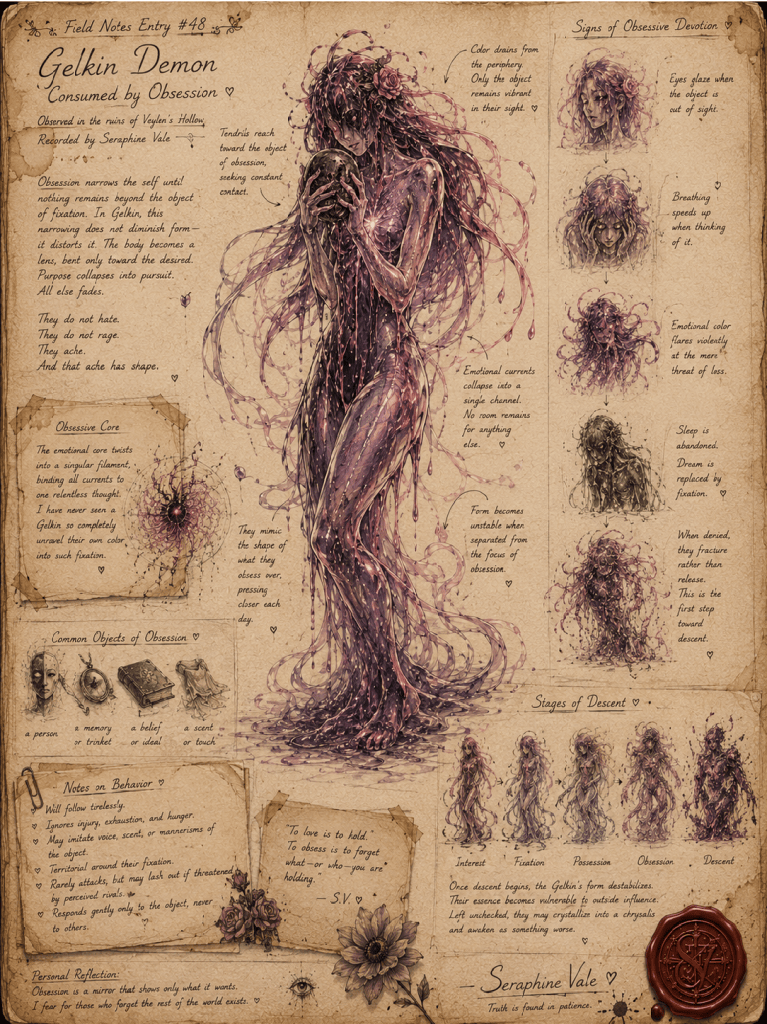
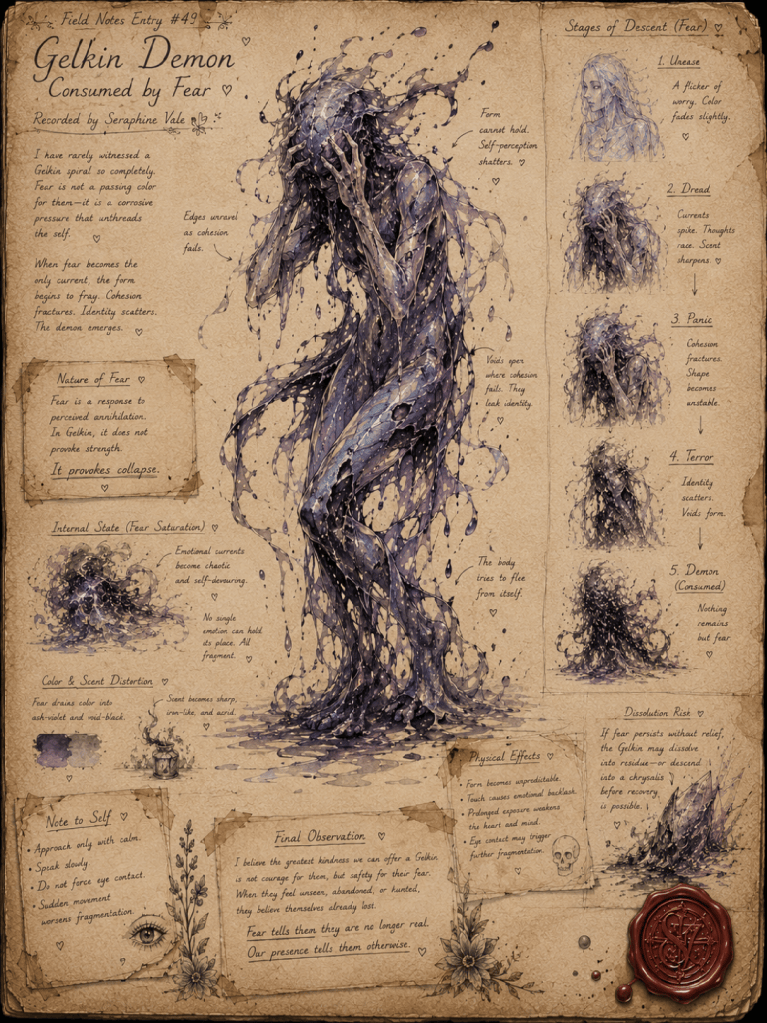
When a Gelkin experiences an overwhelming emotional imbalance, the emotional medium that composes its body begins to harden. What was once fluid becomes rigid. Colors cease shifting. Scents lose their complexity. Emotional currents that once flowed freely become trapped within increasingly fixed patterns.
This is referred to as the process as the Hardening.
If the imbalance continues unchecked, the Gelkin enters a chrysalis state.
During this period, the emotional medium surrounding the Gelkin crystallizes into a cocoon-like shell. Inside, the Gelkin undergoes a profound metamorphosis as competing emotions are burned away, leaving only a single dominant emotional truth.
When the chrysalis finally breaks, the Gelkin that emerges is no longer truly Gelkin.
It has become a Demon.
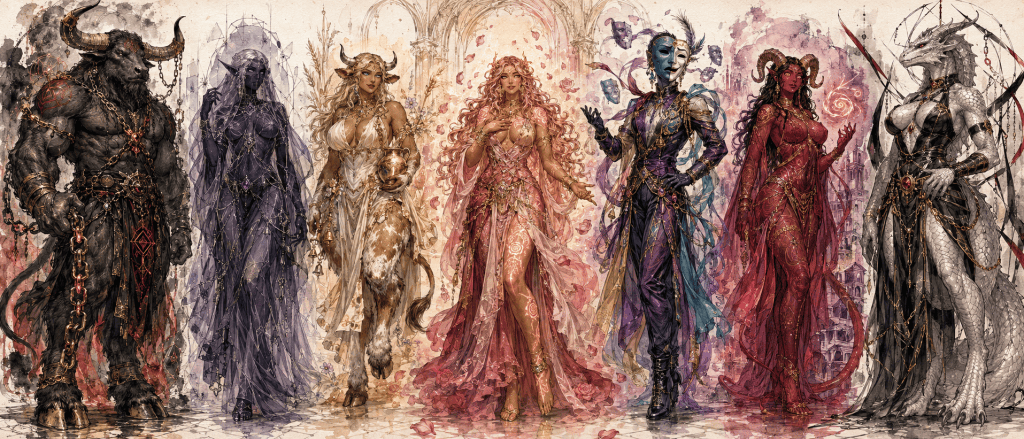
Demons are not a separate species. They are Gelkin transformed by emotional absolutism.
A Demon of Love may become an entity of obsessive possession incapable of accepting separation. A Demon of Joy may become a creature of relentless mania incapable of understanding caution, grief, or restraint. A Demon of Curiosity may evolve into an endless hunger for knowledge that consumes every secret, memory, and thought it encounters.
The specific form varies, but the cause remains the same.
A single emotion becomes absolute.
Everything else is lost.
Convergence
While individual chrysalis transformations are rare, even more unusual are events known as Convergences.
A Convergence occurs when two Gelkin merge portions of their emotional mediums, memories, and consciousnesses. Under normal circumstances, this process is temporary and harmless. Gelkin routinely share emotions, experiences, and fragments of perspective through limited emotional blending.
In exceptionally rare cases, however, the merger becomes permanent.
The resulting outcomes are divided into three recognized categories.
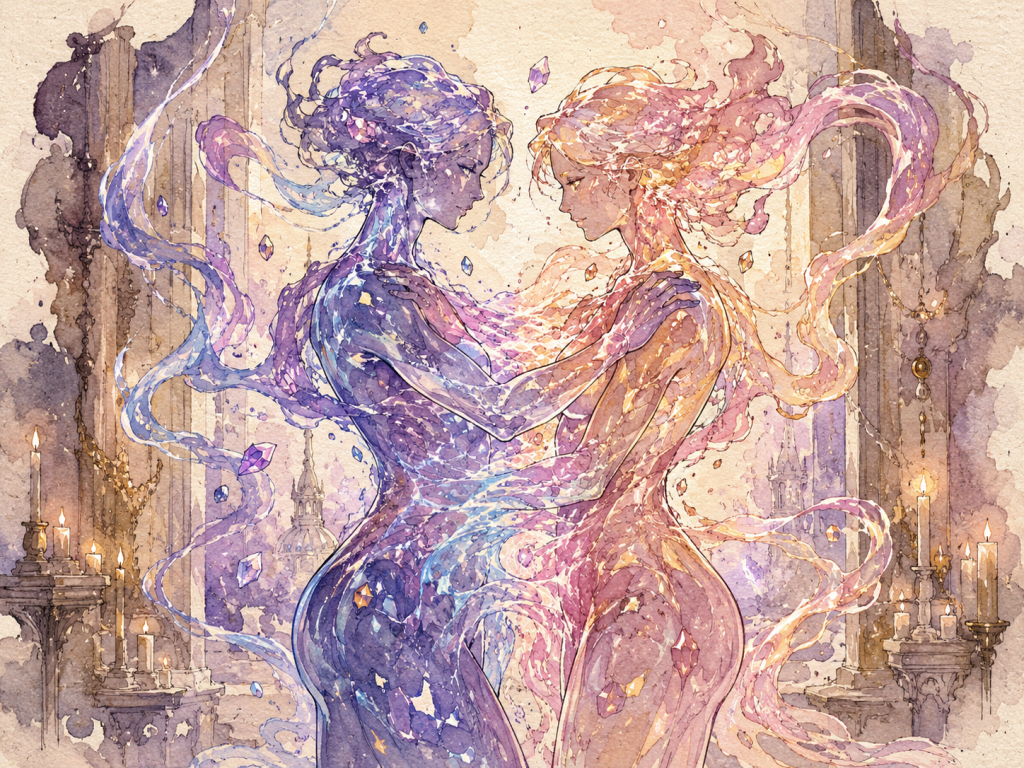
Harmonic Convergence
A Harmonic Convergence occurs when two Gelkin possessing highly compatible emotional frequencies merge successfully.
The resulting being develops a stable shared consciousness formed from both participants. Memories remain accessible. Emotional identities coexist. Neither personality is truly dominant.
To outside observers, the resulting Gelkin often appears unusually balanced, insightful, or emotionally mature.
While uncommon, Harmonic Convergences are generally viewed as healthy and natural developments within Gelkin society.
Some Gelkin communities regard them as sacred events.
Discordant Convergence
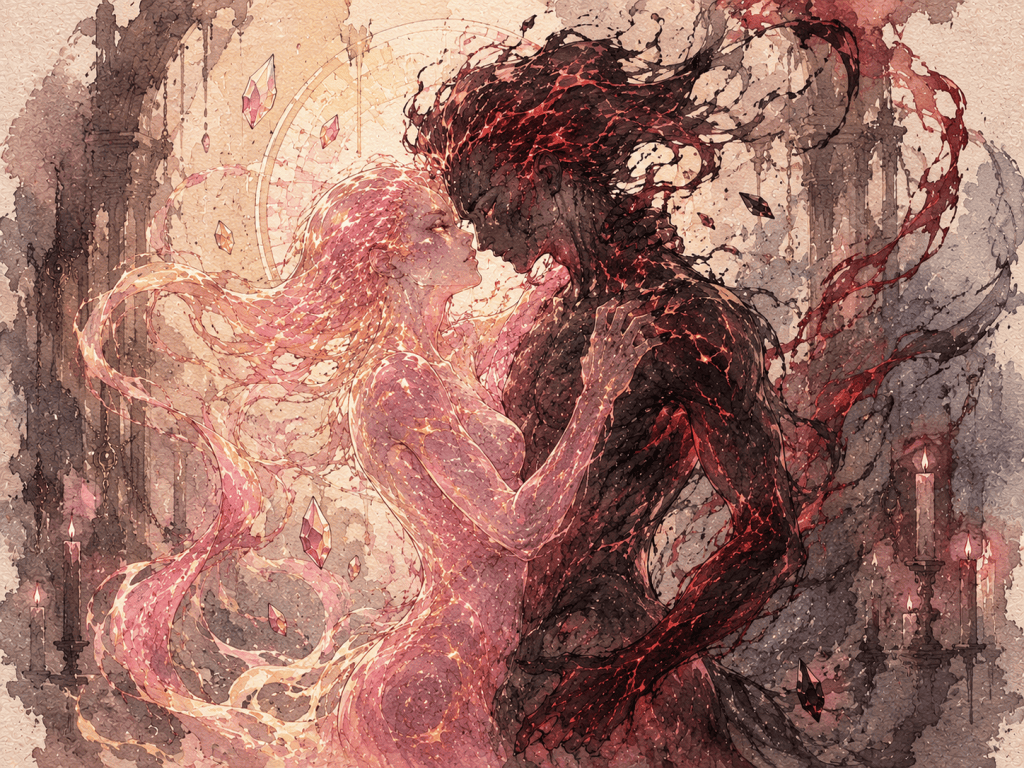
A Discordant Convergence occurs when opposing emotional frequencies attempt to merge.
Rather than stabilizing, the emotional medium becomes turbulent. Emotional currents clash continuously, generating unpredictable distortions throughout the merged consciousness. Some Discordant Convergences eventually separate. Others collapse into emotional storms that can alter surrounding environments, influence nearby emotions, or trigger spontaneous metamorphosis within the participants themselves.
No two Discordant Convergences develop in exactly the same way. For this reason they remain among the least understood phenomena in Gelkin existence.
The Chrysalis Convergence
The rarest and most feared outcome is known as a Chrysalis Convergence.
This occurs when a merged Gelkin consciousness experiences emotional saturation beyond its ability to stabilize. Instead of separating, both participants enter a shared chrysalis.
Within the chrysalis, identities dissolve. Memories intermingle. Emotions merge and recombine. Neither Gelkin survives unchanged. When the chrysalis eventually opens, a new being emerges. This entity is neither of the original participants. It is an entirely new emotional archetype born from the fusion of both emotional lineages.
In some cases the result resembles a Demon formed from compatible emotional excess. In others, opposing emotional states create entities so contradictory that scholars struggle to categorize them.
- Love and devotion may create a being whose desire to protect becomes overwhelming control.
- Compassion and wrath may create a creature convinced that ending suffering requires eliminating those who suffer.
- Hope and despair may produce an entity capable of inspiring greatness moments before reducing it to ruin.
Because emotional combinations do not follow predictable patterns, the outcome of a Chrysalis Convergence can never be known beforehand.
Every recorded example has produced something unique.
For this reason, Chrysalis Convergences are regarded with equal measures of fascination and dread. Among the Gelkin, few truths are more widely accepted. Emotion creates identity. Identity shapes form.
And when emotion becomes absolute, something entirely new is born.

 Whispers of Erosia
Leave a comment