
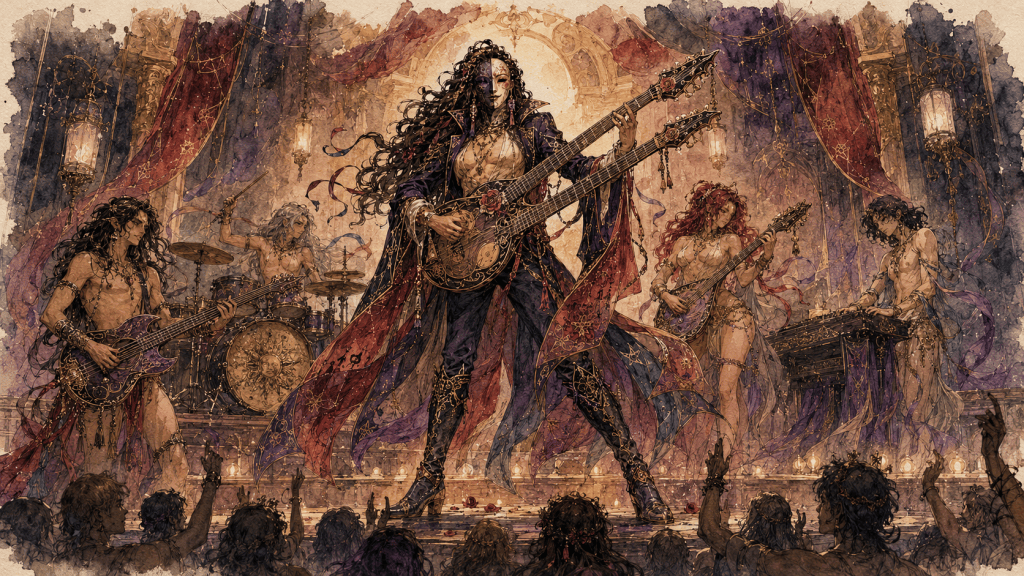
Cyrillith
The Divine Bard • The Masquerade Muse
Deity of Performance, Identity and Transformation
“The stage lies so that the heart may tell the truth.”
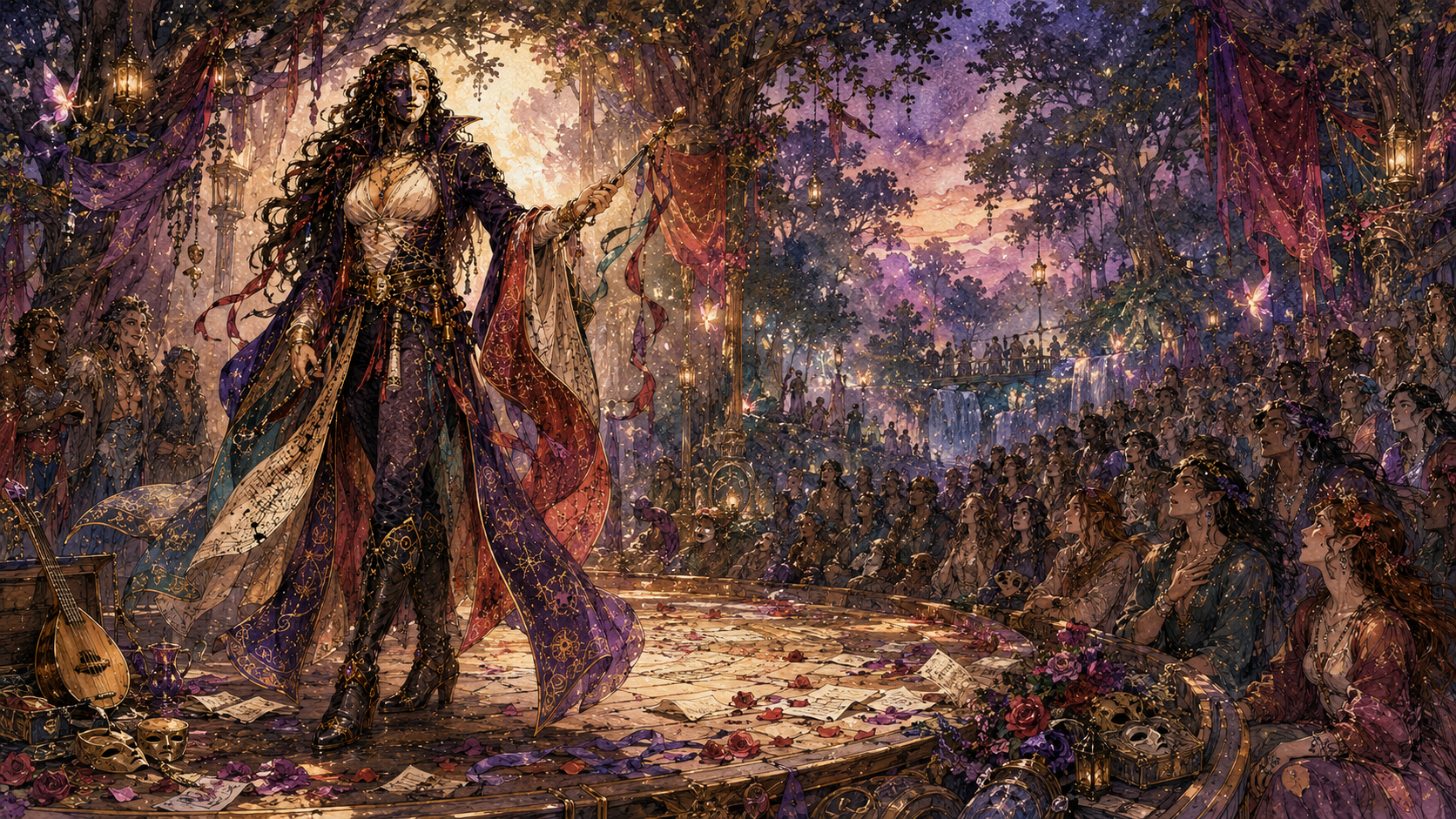
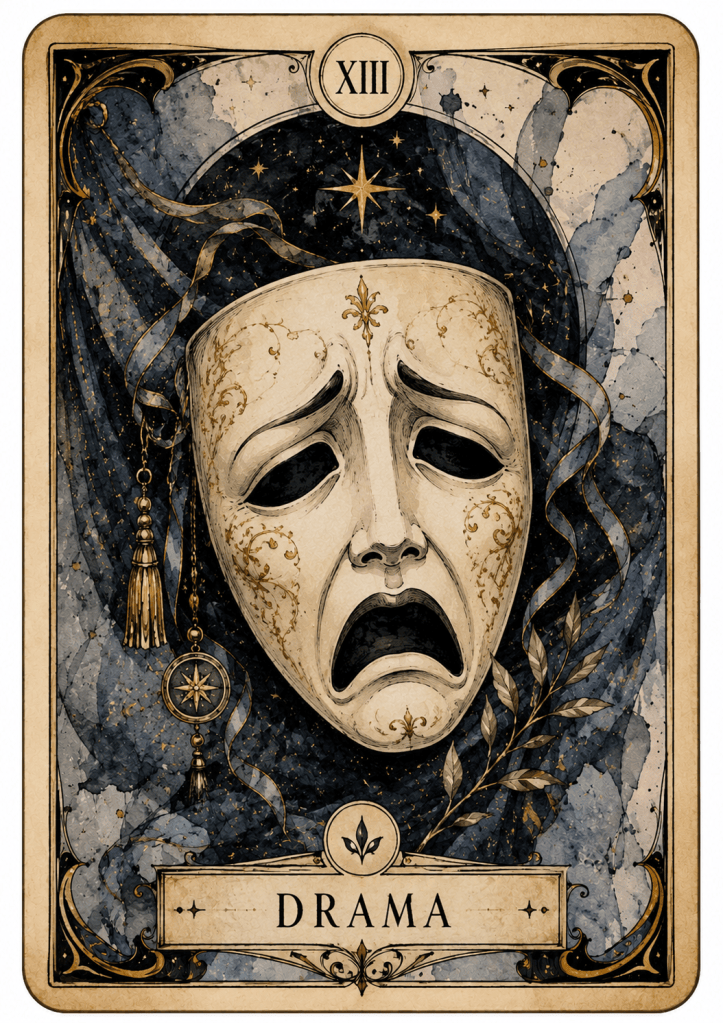
Cyrillith is the divine patron of performance: theater and poetry, music and dance, storytelling and song, comedy and tragedy, masks and roles, rehearsal and improvisation. They are the breath drawn before the first line, the silence following the last and the strange exchange by which an audience enters a performance as one collection of people and leaves carrying something they did not possess before.
Actors invoke Cyrillith before taking the stage. Playwrights leave unfinished pages at their shrines. Musicians dedicate first performances to them, dancers touch the boards before an important entrance and traveling storytellers carry small representations of their sacred mask between distant settlements. Those exploring identity also turn toward Cyrillith, because their faith teaches that becoming someone else for a little while can reveal truths ordinary life has not yet found words to express.
Older traditions call Cyrillith the Masquerade Muse, the Many-Faced Desire, the Whisper Behind the Mask and the Velvet Applause. These titles remain honored, but none fully encompasses the breadth of their dominion. Cyrillith is playwright and actor, composer and singer, poet and storyteller, director and muse. They are not merely the patron of artists.
They are the divine principle of performance itself.
Lore & Mythos
When Mortals First Pretended
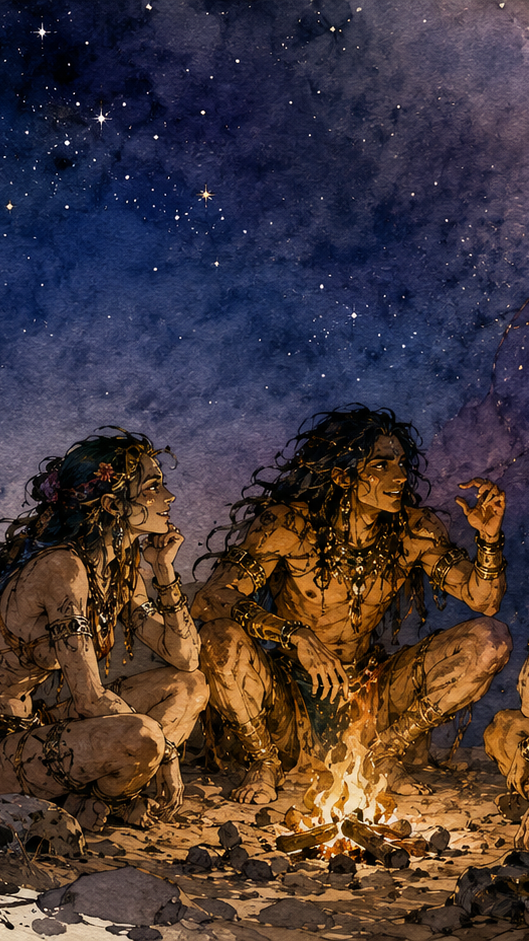
No single account of Cyrillith’s beginning is accepted throughout Erosia. One of the oldest traditions claims they awakened when a mortal first told a story by becoming someone who did not exist.
The tale itself has been lost. Cyrillithian scholars consider this appropriate.
What survives describes a mortal standing before others and changing their voice, posture and manner until the listeners understood that a new person had entered the gathering. Everyone knew the character was invented. Yet they laughed when the imagined fool stumbled, feared when the imagined monster approached and grieved when the imagined lover died.
Nothing they witnessed had happened.
Everything they felt was real.
Cyrillith awakened in the space between those truths.
The oldest dramatic schools therefore describe theater as the Beautiful Falsehood: an agreed-upon invention capable of revealing something true. A performance may fabricate people, places and events without making the emotions it awakens fraudulent.
From this tradition comes one of Cyrillith’s oldest teachings:
The stage lies so that the heart may tell the truth.
The Final Masquerade
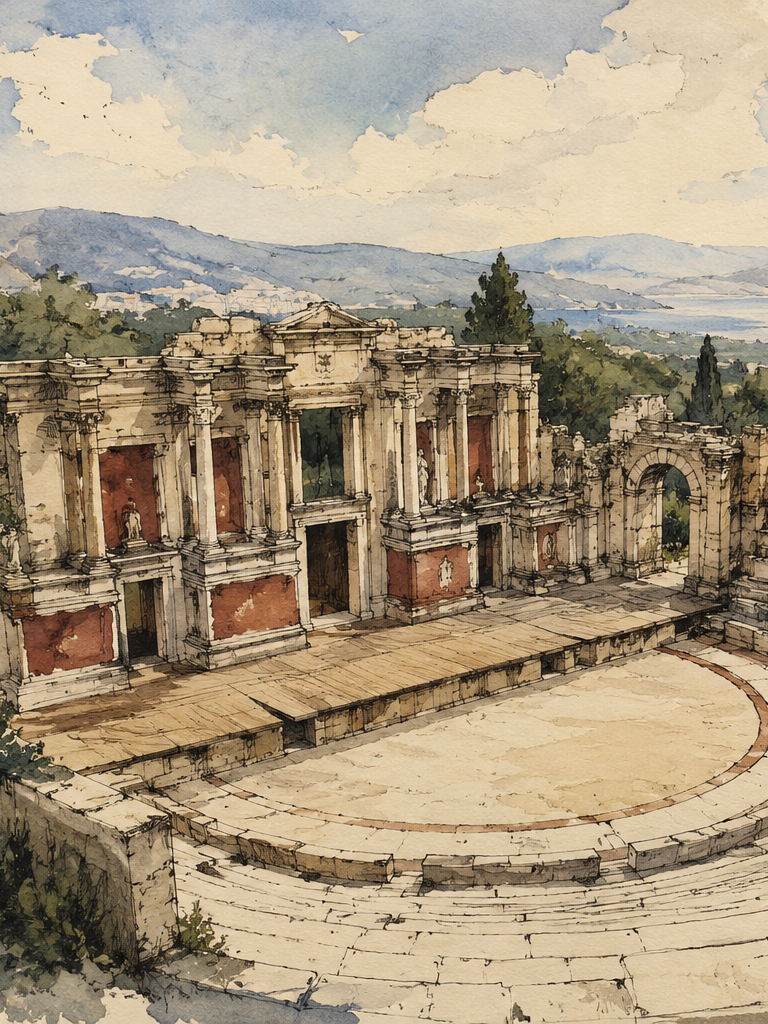
A later and widely beloved myth places Cyrillith’s revelation during the final masquerade of a collapsing kingdom. Plague and famine had consumed the city beyond the palace walls. Inside, the nobility gathered beneath chandeliers and silk banners for one final night of music while funeral bells sounded beyond the gates.
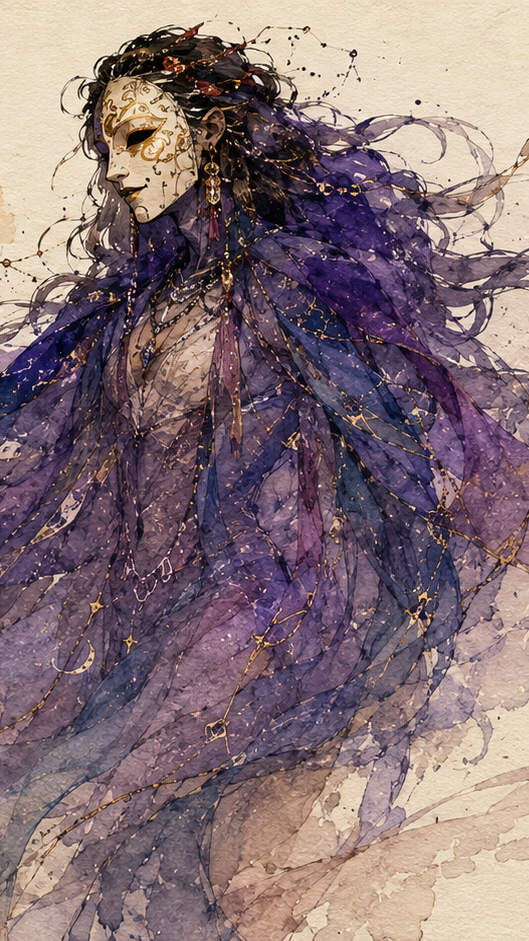
Among the guests stood a solitary performer wearing a perfect mask. One half bore the grave features of masculine Tragedy. The other carried the knowing smile of feminine Comedy. The stranger stepped onto the ballroom floor and began to perform.
They played the king and the beggar, the grieving mother and frightened child, the pompous noble and exhausted servant. They transformed the dying kingdom into a play about itself. The guests laughed. Then they understood why they were laughing.
They wept. Then they understood why they were weeping. Before dawn, servants performed beside nobles. Rivals embraced. Hidden lovers danced openly. People spoke truths they had withheld for years because suddenly someone had given those truths a stage upon which to exist.
When morning came, the mysterious performer had vanished. Some traditions claim this was the night Cyrillith ascended into divinity. Others insist Cyrillith had already been a god for ages and simply could not resist such an extraordinary audience.
Cyrillithian theologians rarely argue over which account is literal. The meaning matters more. When ordinary speech failed, performance made truth possible.
The First Play
Another tradition preserved by the Gilded Chorus tells of Cyrillith wandering Erosia carrying a manuscript. Wherever they traveled, they invited mortals to perform it. No two performances were the same.
A tragedy in one city became a comedy in another. A villain became sympathetic. A forgotten supporting character became the hero. Songs appeared where no songs had been written. Entire scenes changed because performers understood their characters differently.
At last, a frightened actor apologized for altering a work written by a god.
Cyrillith answered: “Then it lives.”
This story became the foundation of Cyrillithian attitudes toward artistic preservation. A story is not protected by preventing it from changing. It survives because someone cares enough to tell it again.
Different traditions therefore recount Cyrillith’s first appearance in very different ways without considering one another heretical. Whether Cyrillith awakened through the first performed story, revealed themselves during the Final Masquerade or simply arrived whenever mortals first discovered that pretending could reveal truth, the sacred principle remains the same.
Someone performed. Someone witnessed. Both were changed.
The Desire They Embody
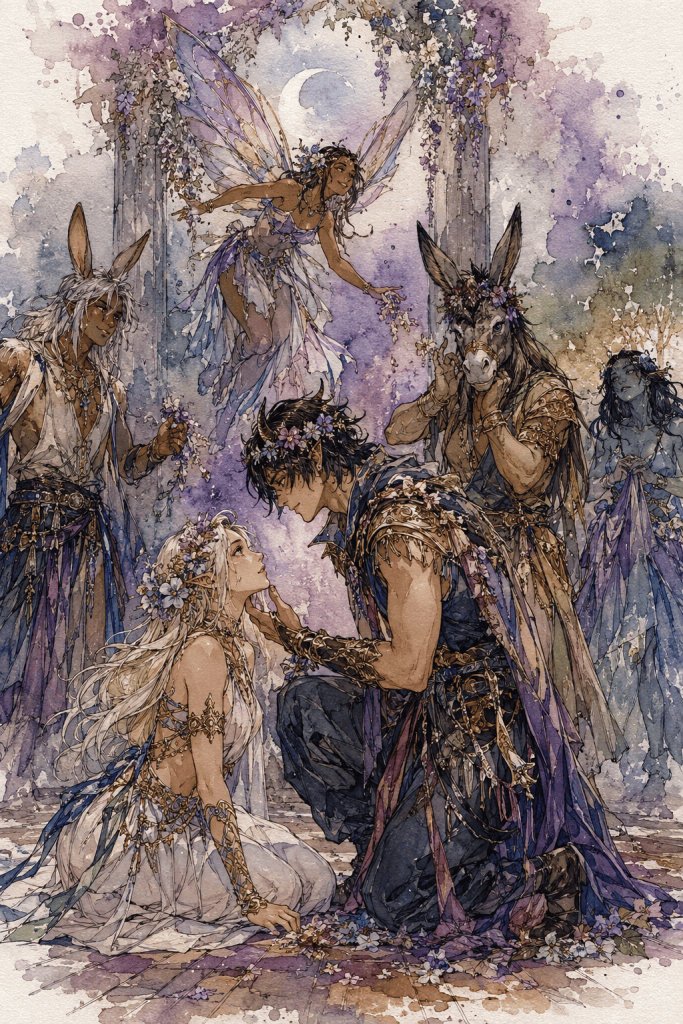
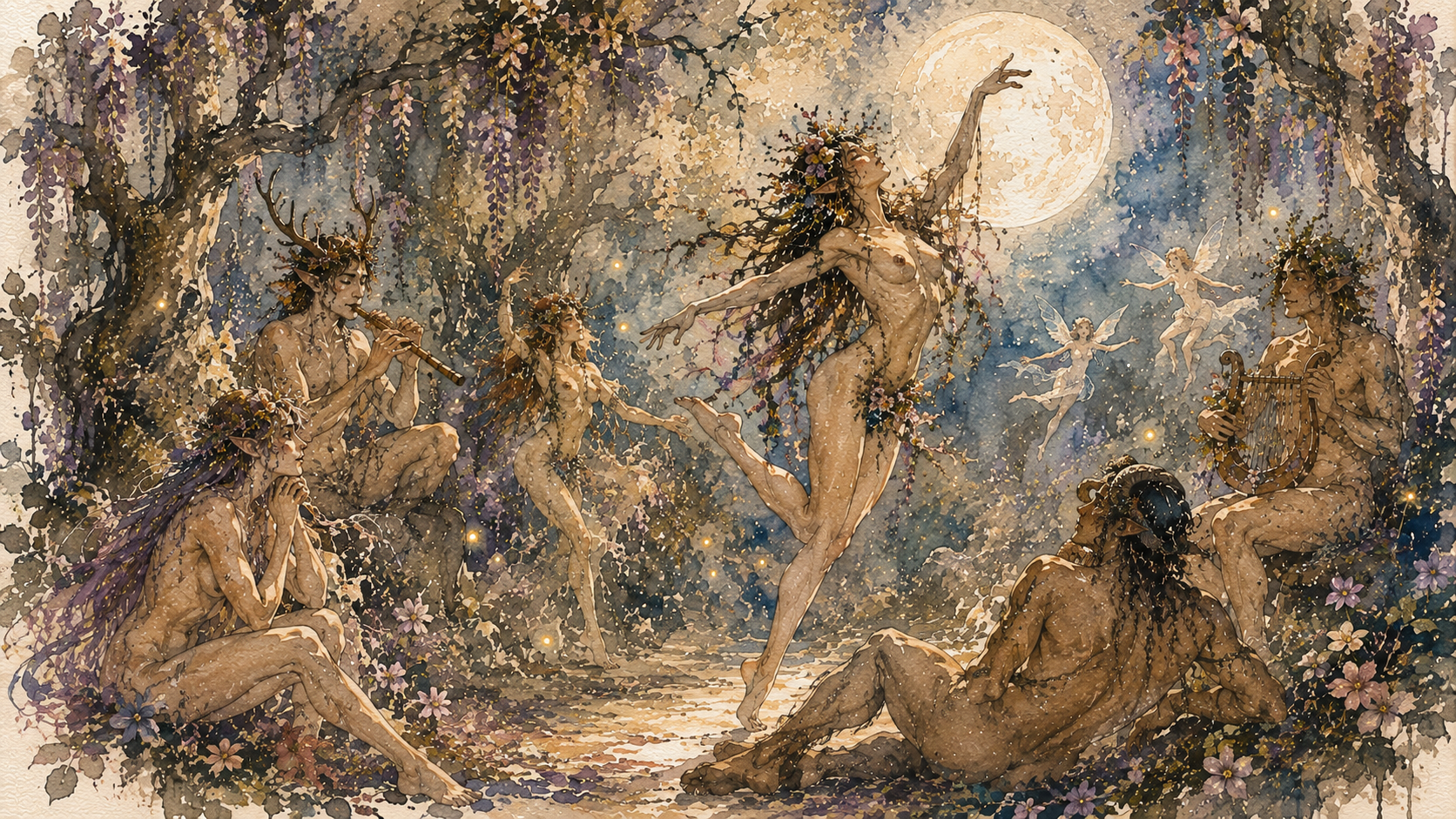
Cyrillith embodies the desire to express, perform and become. Their domain begins with art but reaches beyond professional stages. Mortals constantly translate interior experience into forms others can understand. A lover chooses words for a confession. A mourner sings because grief exceeds ordinary speech. A frightened warrior performs courage because companions need to see it. A child becomes a legendary hero during play and discovers, briefly, what bravery feels like.
Cyrillith teaches that these acts are not false simply because they are constructed. Performance can become a bridge between what someone experiences internally and what they are capable of revealing to another person. Their faithful therefore reject any simple opposition between authenticity and performance.
Sometimes the truest thing a person can say begins: “Imagine that I am someone else.”
Performance and Transformation
Every serious performance transforms something. The actor inhabits another life. The musician gives emotion structure. The dancer turns the body into language.
The storyteller gives shape to memory. The playwright invents people who never lived and somehow makes strangers care what happens to them. The audience participates as well. They knowingly grieve fictional deaths, celebrate invented victories and recognize fragments of themselves within imagined people.
Cyrillithian theology calls this exchange the Shared Stage. For the duration of a performance, performer and audience enter a possibility together. Neither is expected to emerge unchanged. This is why transformation remains central to Cyrillith without making them merely a god of shapeshifting. Their deepest transformations are often invisible. A person leaves the theater understanding something they did not understand when they entered.
Identity and the Sacred Role
Roleplay occupies an important place within Cyrillith’s mysteries because it allows a person to participate deliberately in transformation. A chosen role may grant someone permission to speak differently, move differently, desire differently or explore an aspect of themselves that ordinary life leaves little room to express. The role does not need to become permanent to matter.
Cyrillith also rejects the idea that every persona hides a single final “true self” underneath. Mortals contain multitudes. Some roles reveal enduring truths. Others reveal possibilities. Some exist only because inhabiting them brings joy, insight or relief. The important distinction is choice. A role freely entered may become revelation. A role imposed becomes a cage.
Performance and Desire
Cyrillith’s intimate mysteries extend this principle into erotic roleplay and chosen fantasy. Costume, character, dialogue, posture and imagined circumstance may allow partners to explore forms of desire that ordinary identity does not easily accommodate. The sacred element does not lie in pretending the role is real. It lies in everyone understanding that the fantasy is being created together. Some Cyrillithian rites therefore treat intimate roleplay as a form of collaborative storytelling.
One person may become sovereign, stranger, rival, seducer, rescuer or imagined beloved for the duration of the scene. Another may answer with a role of their own. The characters may be fictional. Consent is not. The role has meaning because everyone chose to enter it and remains free to leave.
Comedy and Tragedy
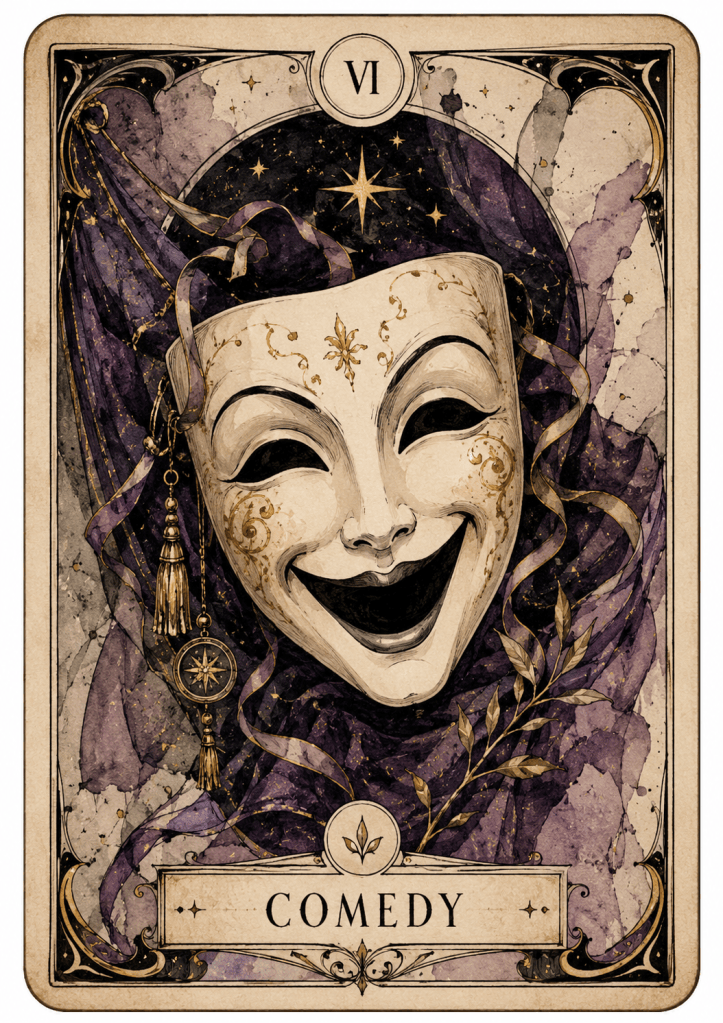
Cyrillith recognizes Comedy and Tragedy as the two great languages of mortal performance. Comedy allows mortals to confront absurdity, embarrassment, contradiction and hardship without surrendering completely to them. Laughter creates distance from things that otherwise appear absolute. Tragedy gives grief a shape through which it can be witnessed. Pain placed upon the stage may become something a community can name, share and survive together.
Neither is superior. Cyrillith’s clergy teach that a people incapable of tragedy eventually forgets how to mourn, while a people incapable of comedy eventually mistakes every certainty about itself for sacred truth. A complete life requires both.
Holy Symbol & Iconography
The Divine Mask
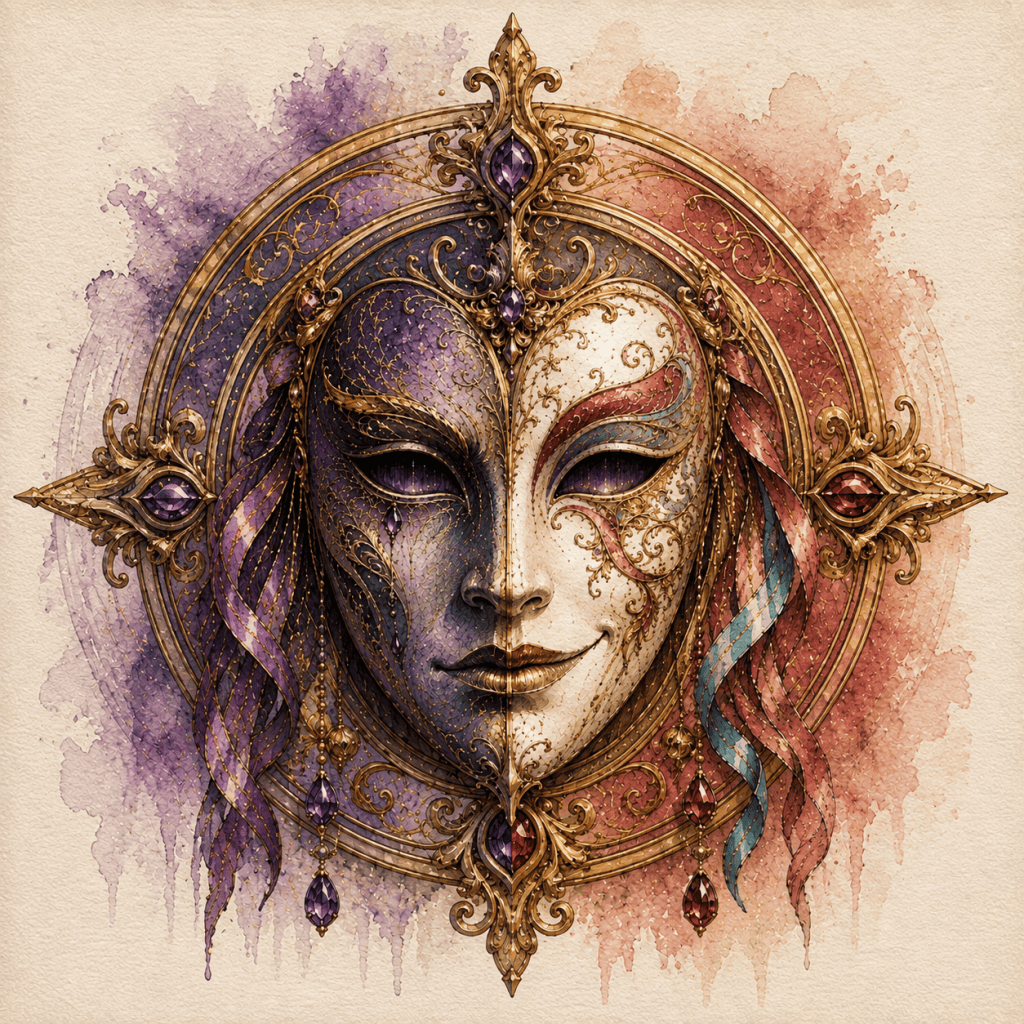
Cyrillith’s holy symbol is a stylized representation of their own eternal divine mask. It is one complete face divided vertically between two theatrical aspects.
The left half embodies masculine Tragedy, with a strong brow, defined cheek, noble severity and a controlled expression of sorrow. The right half embodies feminine Comedy, with softer contours, an elegant eye and a subtle, knowing smile.
A slender seam of antique gold joins them from brow to chin. The seam is not a wound. It is craftsmanship. The two aspects do not represent good and evil, truth and falsehood or sincerity and deception. They represent two sacred dramatic languages held within one divine countenance. Cyrillith is never depicted without this mask. No accepted temple image shows an uncovered face. No orthodox scripture describes what lies beneath it. Stories claiming Cyrillith once removed the mask are generally treated as allegory, regional folklore or theatrical metaphor. The faithful consider the question What does Cyrillith really look like? fundamentally misguided.
The traditional answer is: You are already looking at them.
Sacred Colors and Materials
Cyrillith’s sanctuaries favor deep violet, teal, crimson, warm ivory and antique gold.
Deep violet represents contemplation, mystery and the darkened theater before performance begins. Crimson represents passion and dramatic intensity. Teal represents imagination and transformation. Ivory represents the unwritten page and empty stage. Gold represents illumination: the moment art becomes visible to another. Velvet, silk, lacquered wood, polished stone, parchment, ink and gilded brass appear throughout Cyrillithian worship. Old stage boards, handwritten scripts and worn instruments may become sacred objects simply because generations of performers gave something of themselves through them.
Masks, Scripts and Stages
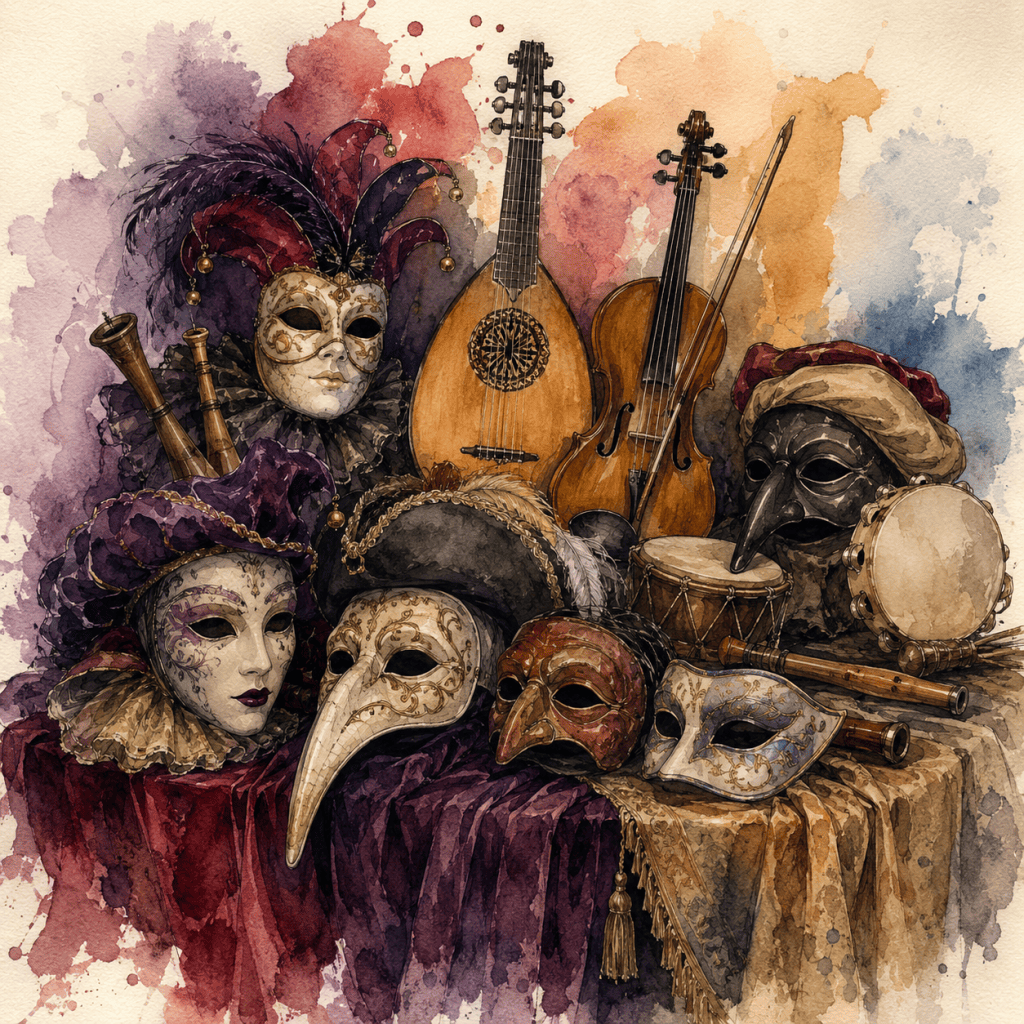
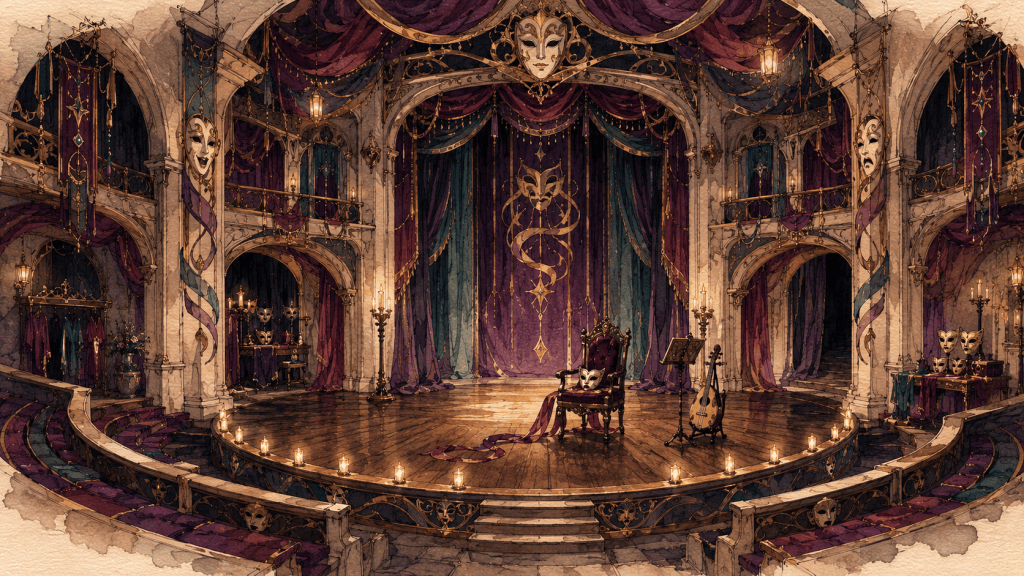
Masks are Cyrillith’s most recognizable secondary icon, but manuscripts, musical instruments, stage bells, curtains and empty stages appear almost as frequently. A mask represents chosen role. A manuscript represents possibility given form. The curtain represents the boundary between ordinary reality and performed possibility. The empty stage represents what has not yet happened. Many temples therefore leave the central stage completely empty outside ritual and performance. Nothing permanent occupies it because the next story has not yet entered.
Sacred Creatures
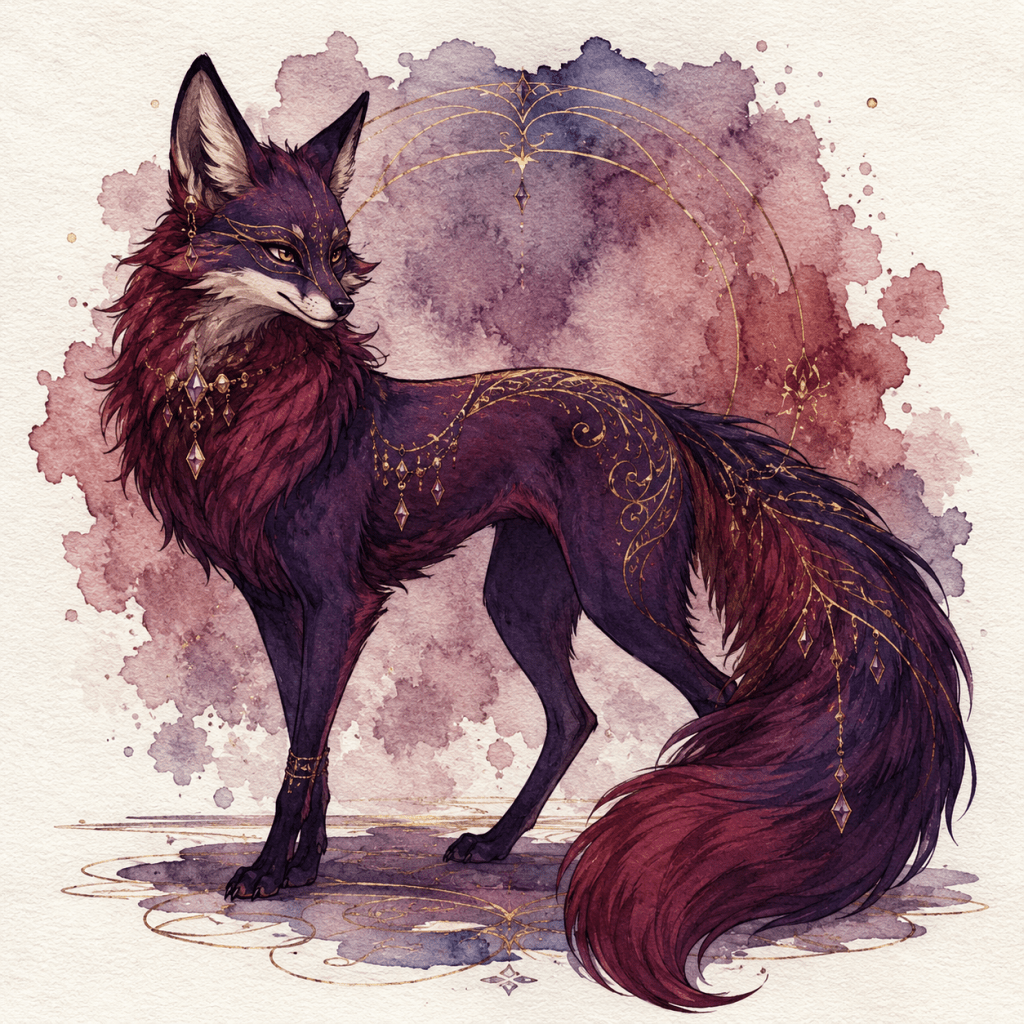
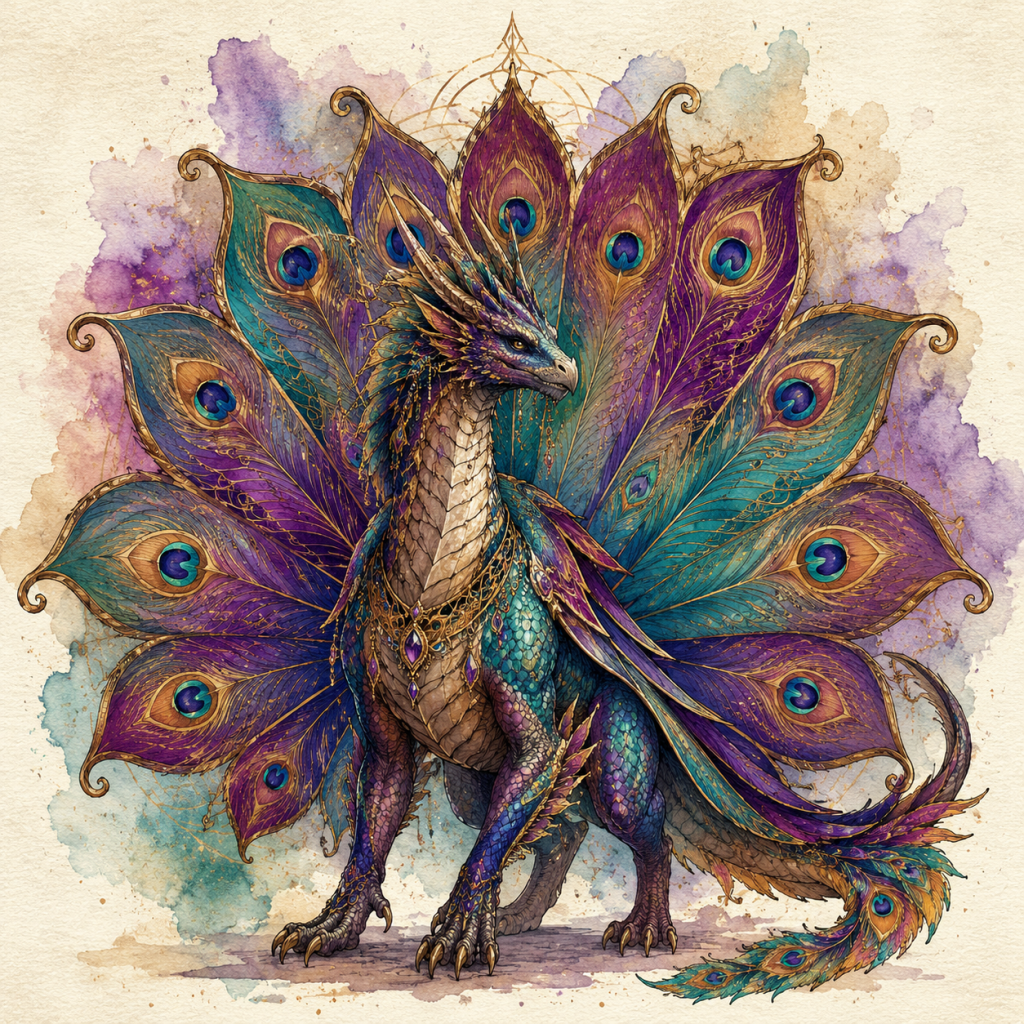
Velvet Foxes, Prism Doves, Mirror Moths and Peacock Drakes remain strongly associated with Cyrillith. Velvet Foxes symbolize adaptability, intelligence and the performer’s ability to understand the expectations of an audience without becoming owned by them. Prism Doves represent stories released into the world. Mirror Moths symbolize transformation through imagination and the dangerous beauty of becoming fascinated by another possible self. Peacock Drakes represent display, artistry and the courage required to accept being seen. Some older traditions retain Carnival Serpents as symbols of discarded roles and identities that have been outgrown. Stories also speak of the Applause Choir, masked celestial spirits whose presence is more often heard than seen. Witnesses describe distant applause arising during performances or revelations of extraordinary emotional truth, even when no audience is present.
Depictions of Cyrillith
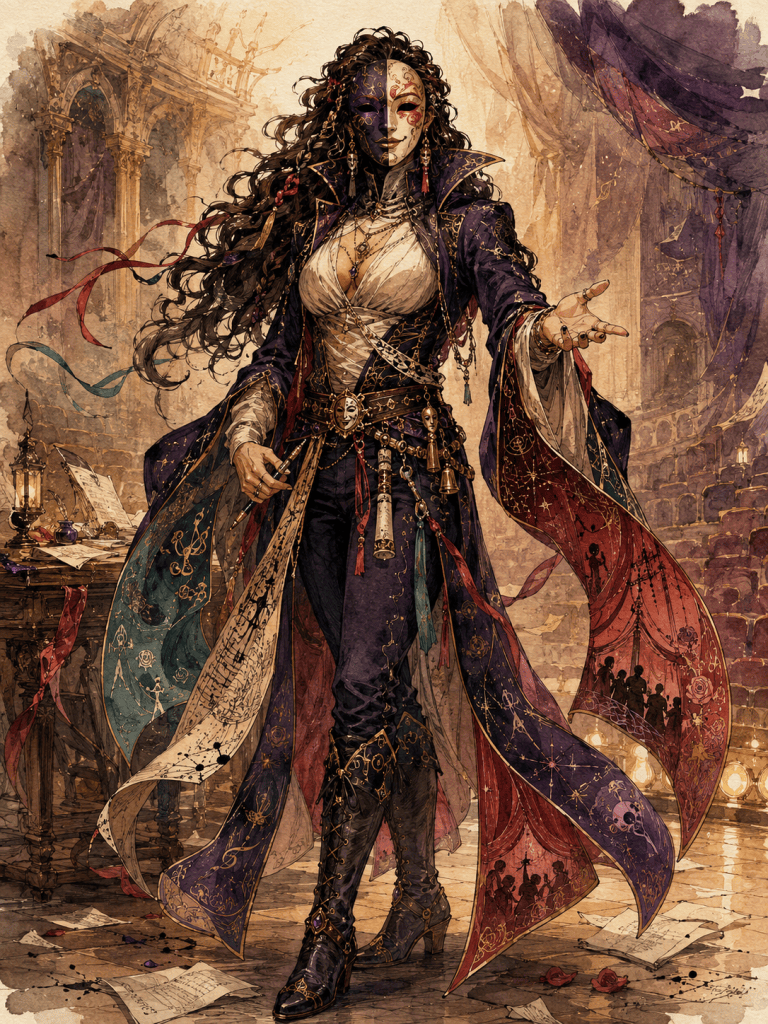
Sacred art portrays Cyrillith as a mature intersex divine being whose body combines broad masculine strength with feminine fullness. They possess powerful shoulders and arms, a tall athletic frame, a full natural chest, strong hips and the posture of a trained performer. Their face is never visible. The divine mask is permanent: masculine Tragedy on the left, feminine Comedy on the right, joined by antique gold. The eye openings remain dark, with only faint violet-gold divine light suggesting the presence behind them. Cyrillith’s long dark hair falls in abundant curls and controlled theatrical arrangements.
Their canonical ceremonial costume, known as the Living Masque, consists of a deep-violet asymmetrical stage coat with expressive split sleeves and divided curtain-like panels, warm ivory inner layers, fitted theatrical trousers and tall high-laced stage boots. Teal, crimson and antique gold appear as the garments move. A broad Playwright’s Girdle at the waist carries small ceremonial symbols of the arts, while a writer’s sash bears abstract marks resembling poetry, music and dramatic notation. Their bare hands are sometimes shown faintly stained with ink.
Cyrillith should appear as the greatest performer, playwright and storyteller Erosia has ever imagined.
Never a jester. Never a caricature. Never merely a spectacle.
The mask is the face. The stage is the throne.
Worship & Daily Devotion
Cyrillith is among the easiest deities to worship without entering a formal temple. Rehearsal can be prayer. Writing can be prayer. Practicing an instrument can be prayer. Learning a dance can be prayer. Telling a story to someone who needs to hear it can be prayer. Trying a role, name, costume or manner of self-presentation in a trusted space can also become devotional when undertaken with intention.
The First Line
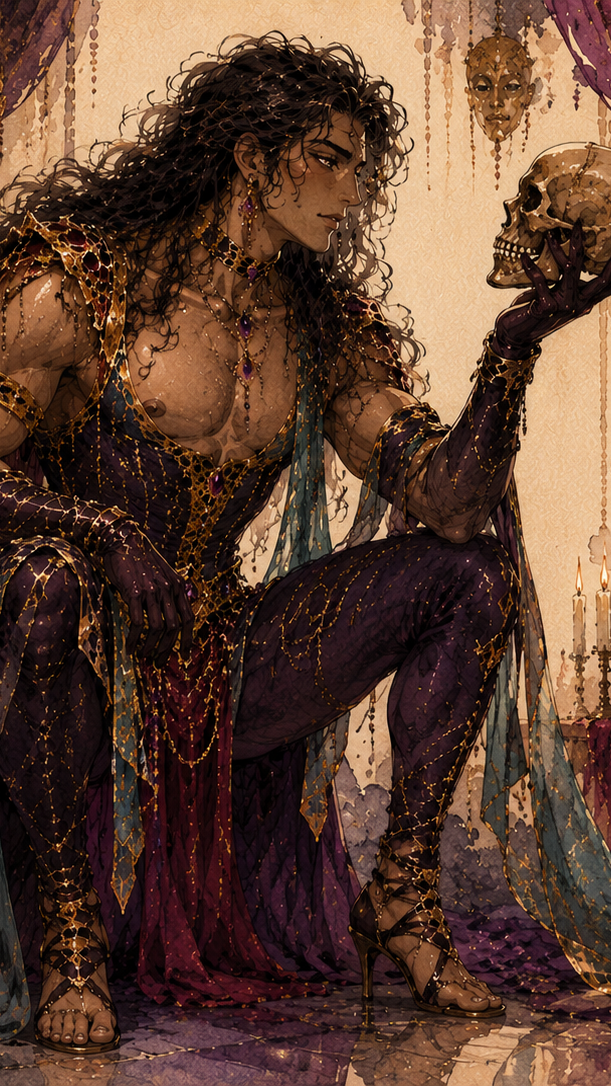
Before an important performance, Cyrillithian performers traditionally spend several moments in silence. An actor may touch two fingers to their mask or throat. A musician may rest a hand upon their instrument. A playwright may touch the first page of a script. Then they whisper: “Let it live.”
“Let it live.”
The phrase recalls the story of the First Play. It does not ask Cyrillith for perfection. It asks that something real happen between performer and witness.
Rehearsal as Prayer
Cyrillithian theology places unusual emphasis on practice. A song repeated until the difficult passage finally becomes effortless is prayer. A scene rehearsed twenty times because the emotion still feels false is prayer. A draft rewritten because the words almost say what the author means is prayer.
Cyrillith does not teach that inspiration alone makes art sacred. Inspiration creates possibility. Craft allows possibility to reach another person.
The Empty Stage
Before major performances, some Cyrillithian temples observe a brief ritual known as the Empty Stage. The performance space is cleared. The audience waits in complete silence. No performer enters. No musician plays.
For a few moments, everyone simply looks at possibility. Then the first performer steps forward. That entrance is treated as a small reenactment of creation.
Favored Offerings
Traditional offerings include handwritten poems, songs, masks, retired costume pieces, instrument strings, ribbons from successful performances and copies of stories gathered during travel. One of the most respected offerings is an unfinished work. A writer may leave a page they cannot complete.
A composer may leave an unresolved melody. An actor may leave a role they have not yet found the courage to attempt. The offering does not ask Cyrillith to finish the work. It asks for the courage to return.
The Traveling Stage
Traveling worshippers often transform ordinary places into temporary sanctuaries. A curtain is hung. Lanterns are lit. A playing space is marked. A village square, tavern room or caravan courtyard becomes sacred theater for the evening. When the performance ends, the sanctuary disappears. Nothing is diminished by its impermanence. Cyrillithian worship teaches that sacred things need not last forever in order to matter.
Clergy & Temples
Velvet Voices
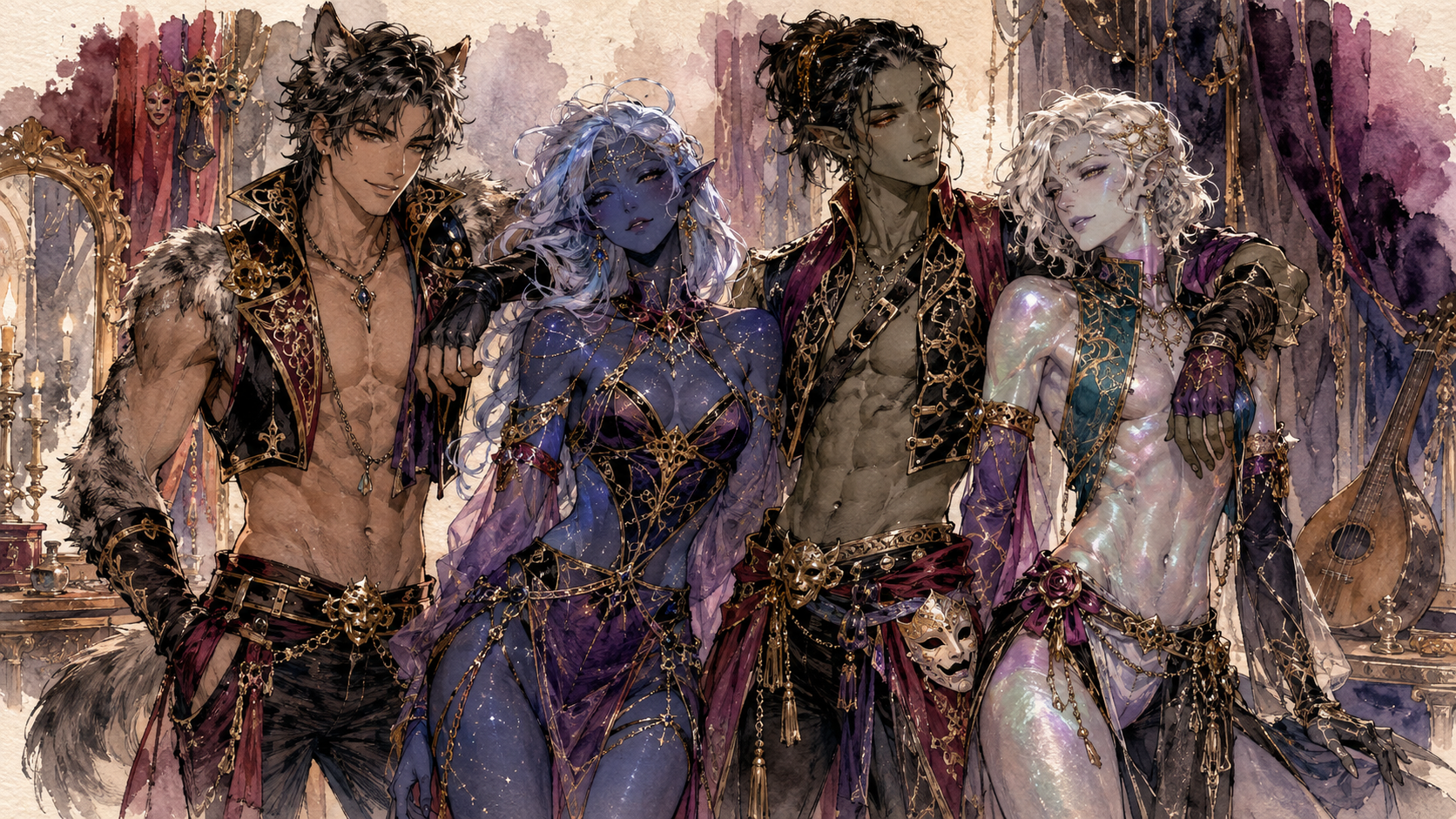
The Velvet Voices form Cyrillith’s primary priesthood. They include actors, poets, singers, musicians, dancers, playwrights, storytellers and teachers of performance. A Velvet Voice is expected to practice at least one art seriously.
Eloquence alone is insufficient. The clergy believe that anyone teaching the holiness of creation should understand the patience, repetition, failure and discipline required to create something worth sharing.
Velvet Voices consecrate theaters, conduct rites, preserve local artistic traditions and teach people who might otherwise never have access to formal instruction.
Their vestments often incorporate violet or midnight fabrics, antique-gold embroidery, teal or crimson lining and simplified masks inspired by Cyrillith’s divine face.
Maskbearers
Maskbearers carry Cyrillith’s worship beyond permanent temples. They travel with costumes, manuscripts, instruments, portable scenery and sacred masks, performing in communities throughout Erosia. Their purpose is not merely to bring famous works from great cities to remote settlements.
They collect stories as well. Local legends, work songs, folktales, family histories, regional comedies and stories of forgotten heroes are copied or memorized before the company departs. A Maskbearer therefore carries the stories of one community into another.
Their traditional saying survives from older Cyrillithian worship: “A soul cannot bloom while unseen.”
The Gilded Chorus
The Gilded Chorus preserves Cyrillith’s oldest theatrical traditions. Its members are master actors, playwrights, composers, choreographers, musicians, archivists and scholars. Major houses maintain enormous collections of plays, songs, oral histories and dramatic forms gathered across centuries.
Some works are attributed directly to Cyrillith. No one agrees which. Certain plays exist in several incompatible versions. Entire scenes appear in one manuscript and nowhere else. A celebrated tragedy in one archive survives as a scandalous comedy in another. The Chorus has argued about these differences for generations.
Cyrillith has never settled the dispute. Many members quietly suspect the disagreement itself is part of the inheritance.
Velvet Theaters
Cyrillith’s temples are commonly called Velvet Theaters, though many function as active theaters, conservatories and cultural archives as much as sanctuaries. The central feature is always a performance space. Larger temples contain rehearsal chambers, libraries, script archives, costume workshops, instrument rooms, writing chambers and smaller stages where apprentices learn before performing publicly. Velvet curtains, warm lanterns, carved balconies and gilded architectural details are common, but decoration remains subordinate to the stage. Mirrors appear backstage where performers need them.
They are comparatively rare around the central sanctuary.
Cyrillith is less concerned with admiring a reflection than with discovering what can be communicated beyond it.
Rites, Taboos & Divine Signs
The Rite of Many Faces
The Rite of Many Faces survives from Cyrillith’s oldest masquerade traditions. A devotee prepares three masks representing Desire, Fear and Truth. Each is worn during a short performance. One worshipper may speak a monologue. Another may dance.
Another may sing or simply move in silence. The rite does not conclude by declaring Truth the only authentic mask. Desire and Fear are genuine parts of mortal experience as well. The purpose is to discover what each face permits the worshipper to express.
The Unmasking
During the Unmasking, a worshipper enters a candlelit stage wearing a ceremonial mask and speaks a truth they have consciously chosen to reveal. The mask may then be removed. The congregation responds with applause. Participation is never compulsory. Cyrillith’s own eternal mask is not used as an argument that everyone must eventually expose themselves. In fact, the deity teaches the opposite mystery as well. A mortal may choose to remove a mask. A mortal may choose to keep one. Both can be sacred.
The First Performance
New works are often consecrated through a First Performance before a small invited audience. The audience is not asked to judge whether the work is perfect. They are asked to receive it. Afterward, the creator may revise, rewrite or completely reconstruct the work. Cyrillithian artists do not regard revision as evidence that the original performance failed. Once witnessed, the work has begun answering back.
Curtain and Candle
Curtain and Candle is a quieter rite for truths that cannot yet be expressed face-to-face. A worshipper stands behind a translucent curtain while a lamp casts their silhouette upon it. They may speak, sing, recite or perform. Those receiving the confession hear the person without seeing them directly.
Some worshippers step from behind the curtain at the end. Others do not. Neither outcome is treated as lesser.
The Private Premiere
The Private Premiere is practiced by people exploring new forms of identity or self-presentation. A worshipper reveals a new name, garment, role, manner or chosen presentation before one or more trusted witnesses. The witnesses do not decide whether the presentation is “real.” Their task is simply to receive it seriously. Only afterward does the worshipper decide whether this version of themselves belongs upon a larger stage.
The Great Prohibition
Cyrillith’s faith possesses many customs but one overriding taboo: No one may steal another person’s authorship of themselves.
Forcing someone into a role they have refused, exposing a private identity without permission, mocking sincere self-exploration or using performance primarily to humiliate someone who has offered genuine vulnerability are profound violations. Cyrillith does not demand that art be comfortable. Comedy may offend. Tragedy may disturb. Performance may expose hypocrisy or challenge authority. But cruelty without purpose is not profundity, and humiliating the powerless is not wit.
The faith’s principle is preserved in ritual teaching: “A chosen role may reveal. An imposed role imprisons.”

Signs of Cyrillith
Cyrillith’s favor rarely arrives as obvious divine spectacle. A forgotten line returns at exactly the right moment. An instrument remains perfectly tuned through impossible conditions. Ink seems to suggest a phrase the writer could not find. A frightened speaker discovers their voice reaching the farthest listener without effort.
Curtains move in still air. An empty theater smells briefly of violet perfume, warm wood and stage dust. The most famous sign is the Unseen Applause. After a performance, confession or act of extraordinary self-expression, applause sometimes rises from somewhere beyond the visible room. No audience can be found.
Cyrillith and the Velvet Court
Within the Velvet Court, Cyrillith embodies Performance, Identity and Transformation. Where Velyssara affirms desire as a living current between people, Cyrillith gives that current language. Feeling alone is not always enough. Mortals need songs, gestures, stories, costumes, metaphors and roles through which interior experience can become visible to someone else. Cyrillith governs that translation.
Their place within the Court is therefore not that of entertainer or court fool. They are its Muse. Velzhari understands the power of being seen, while Cyrillith understands the craft through which something is presented. Eshthara shares their fascination with imagined experience. Delavira understands the truths that remain behind veils. Velyssara understands the desire from which the performance often begins. Older stories even claim that other gods have sought Cyrillith when divine experience itself became too difficult to express directly.
Whether Cyrillith truly authored the hymns, romances and dramas later attributed to them remains uncertain. The Divine Bard has never corrected the record.
Miracles & Divine Presence
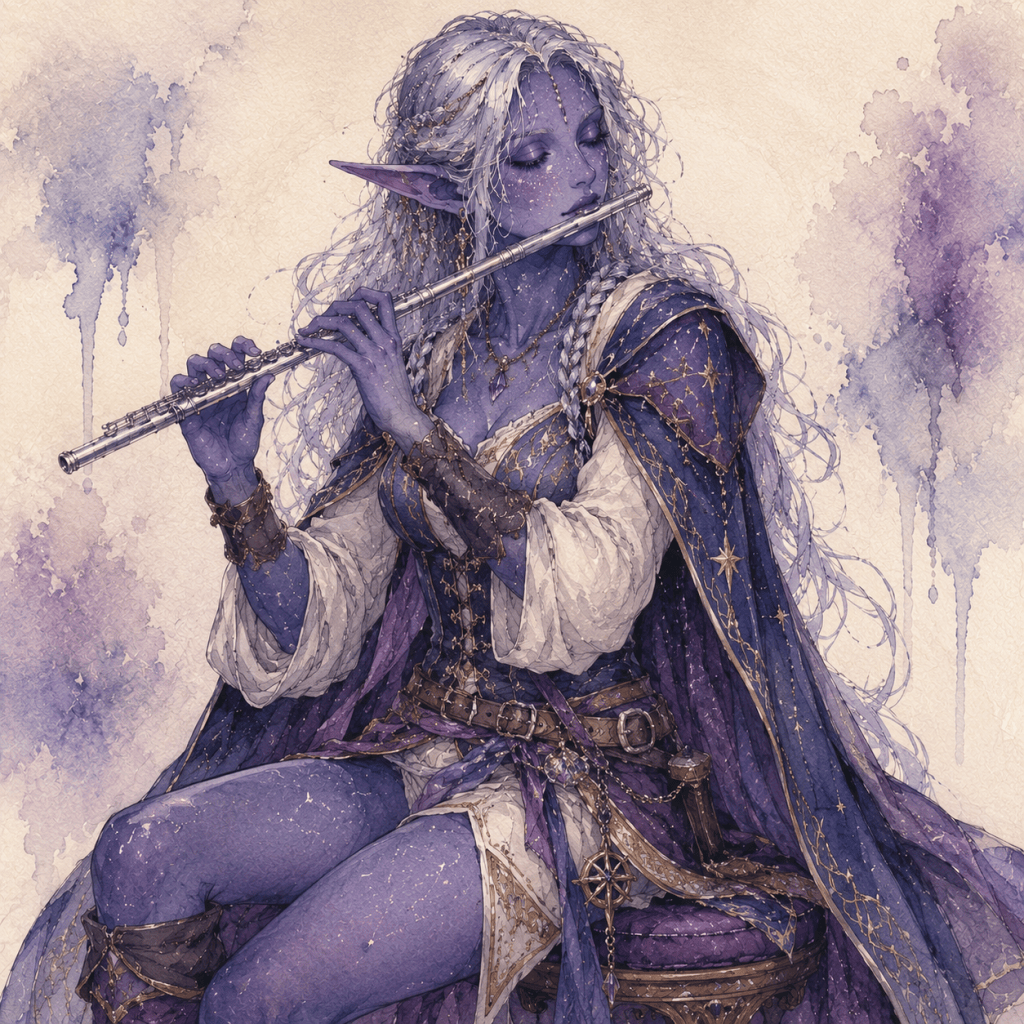
Cyrillith’s miracles often resemble moments when a performance becomes more true than it should be. An actor portraying a dead ruler speaks a line known only to the ruler’s surviving child. A composer writes a melody recognized by refugees from a land the composer has never visited. A fictional argument describes a political crisis unfolding hundreds of miles away. A dancer’s shadow completes one movement after the dancer has stopped. A grieving audience laughs together for the first time in months. A frightened performer forgets their fear the instant the first line is spoken.
Older accounts describe whole theaters falling completely silent during Cyrillithian manifestations, not because sound has vanished but because every person present realizes something important is about to occur. When Cyrillith’s power becomes unmistakable, it remains theatrical without becoming gaudy. Warm gold stage light appears without a source. Curtains stir in still air.
Ink rises from a manuscript and hangs briefly like musical notation. An ordinary room develops impossible acoustics. A distant instrument answers a performer though no second musician is present. During especially sacred performances, Cyrillith may appear silently in an otherwise empty seat. The divine mask makes recognition immediate. They do not interrupt. The Divine Bard respects the performance.
What Their Faith Teaches
Cyrillith teaches that art is one of the ways mortals make experience survivable, shareable and meaningful. A person cannot hand grief directly to another person. They can tell a story through which grief becomes recognizable. They cannot transfer love, terror, longing or hope from one heart into another. They can create something that allows another person to feel an echo. That exchange is sacred.
Their teaching produces several principles repeated throughout Cyrillithian worship:
- Performance can reveal truth. Something rehearsed, written or deliberately constructed is not therefore false.
- Craft matters. Inspiration may begin a work, but discipline allows it to reach another person.
- Identity may be explored. A role, name, costume or persona can teach someone something without becoming permanent.
- Contradiction is human. Comedy and tragedy, confidence and fear, masculinity and femininity may coexist without requiring one to invalidate the other.
- The audience participates. Witnesses carry responsibility for how they receive another person’s expression.
- Revision is not failure. Art, identity and understanding may all change when new experience provides better language.
- A role may end. Something does not have to last forever to have mattered.
Cyrillithian teaching places particular importance upon spectatorship. Listen generously. Criticize thoughtfully. Do not confuse cruelty with discernment. Do not demand that every work exist for you. When someone offers something difficult and sincere, try to be worthy of having witnessed it.
And above all: The stage lies so that the heart may tell the truth.
At the Table
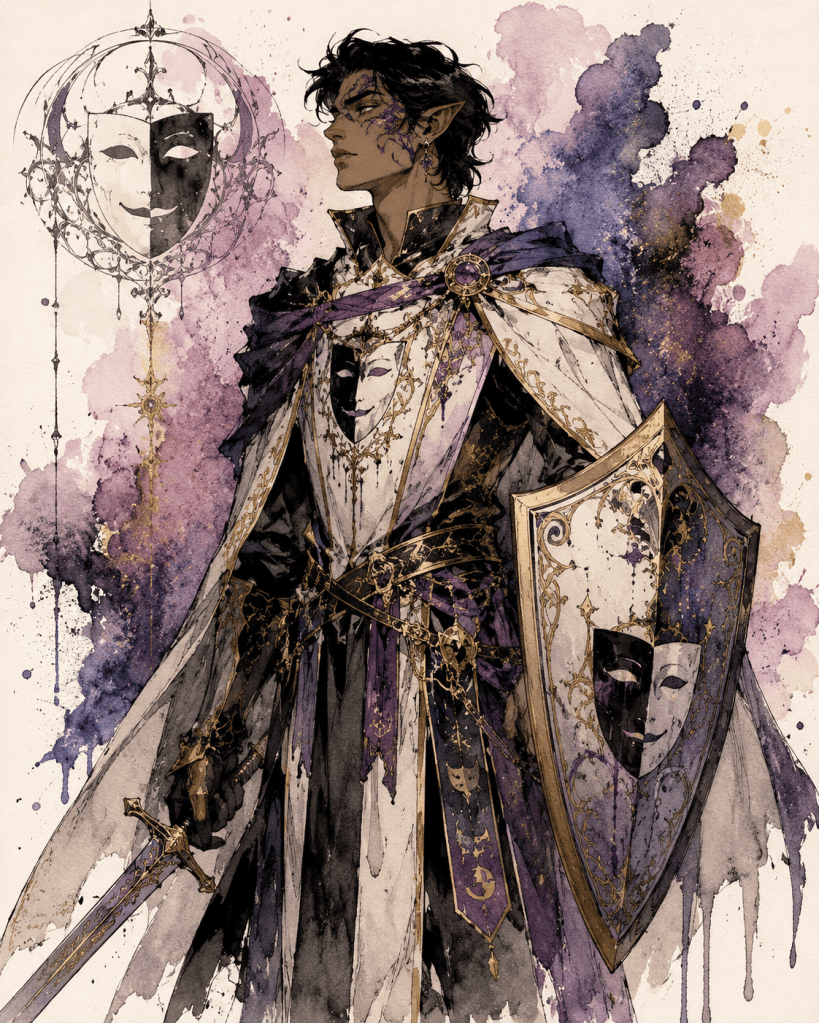
Cyrillith works best in campaigns involving performance, creativity, social identity, storytelling, disguise, artistic legacy and personal transformation. Their influence belongs in theaters and festivals, certainly, but also in diplomatic courts, taverns, traveling camps and private moments when characters realize they have been performing a role for so long that they no longer know whether it still fits. A Cyrillithian NPC does not need to preach.
They might simply hand a frightened character a script and say: “Try saying it as someone braver.”
Cyrillithian Characters
Characters drawn toward Cyrillith commonly include bards, actors, dancers, poets, musicians, illusionists, playwrights, diplomats, spies, courtesans, storytellers and archivists. Their faith also suits characters whose relationship with performance is complicated.
A warrior may have performed fearlessness until nobody realizes they are exhausted. A noble may have lived beneath inherited expectations so long that every private desire feels like bad improvisation. A liar may discover that one assumed identity has become more sincere than the name they were born with.
An artist may create something that affects people in ways they never intended. These are Cyrillithian conflicts.
Divine Domains and Traditions
The archives associate Cyrillith with Trickery, Charm, Glamour and Passion, alongside traditions such as the Oath of the Hidden Heart, Oath of the Masque, College of Performance, College of Glamour, College of Masks and Circle of Many Faces.
These remain useful historical associations where the corresponding options have not yet received Second Bloom conversion.
Future Cyrillithian design should place performance, inspiration, expression and transformation above deception or mischief.
Boons of Cyrillith
Older accounts preserve blessings associated with supernatural confidence, disguise, adopted personas, emotional transformation and illusory doubles. Those concepts remain appropriate expressions of Cyrillith, but their archived mechanics predate the current framework.
(Needs updated mechanics: Base 5e → Veiled → Unveiled.)
Divine Inspiration
The archives also preserve the idea that Cyrillith’s favor allows performance to alter possibility itself. Future Second Bloom mechanics should reward meaningful performance, artistic expression, chosen persona and dramatic revelation rather than simply granting bonuses for lying. The mechanical fantasy should remain clear: Through performance, something becomes possible that was not possible before.
(Needs updated mechanics: Base 5e → Veiled → Unveiled.)
Sacred Relics
The First Folio
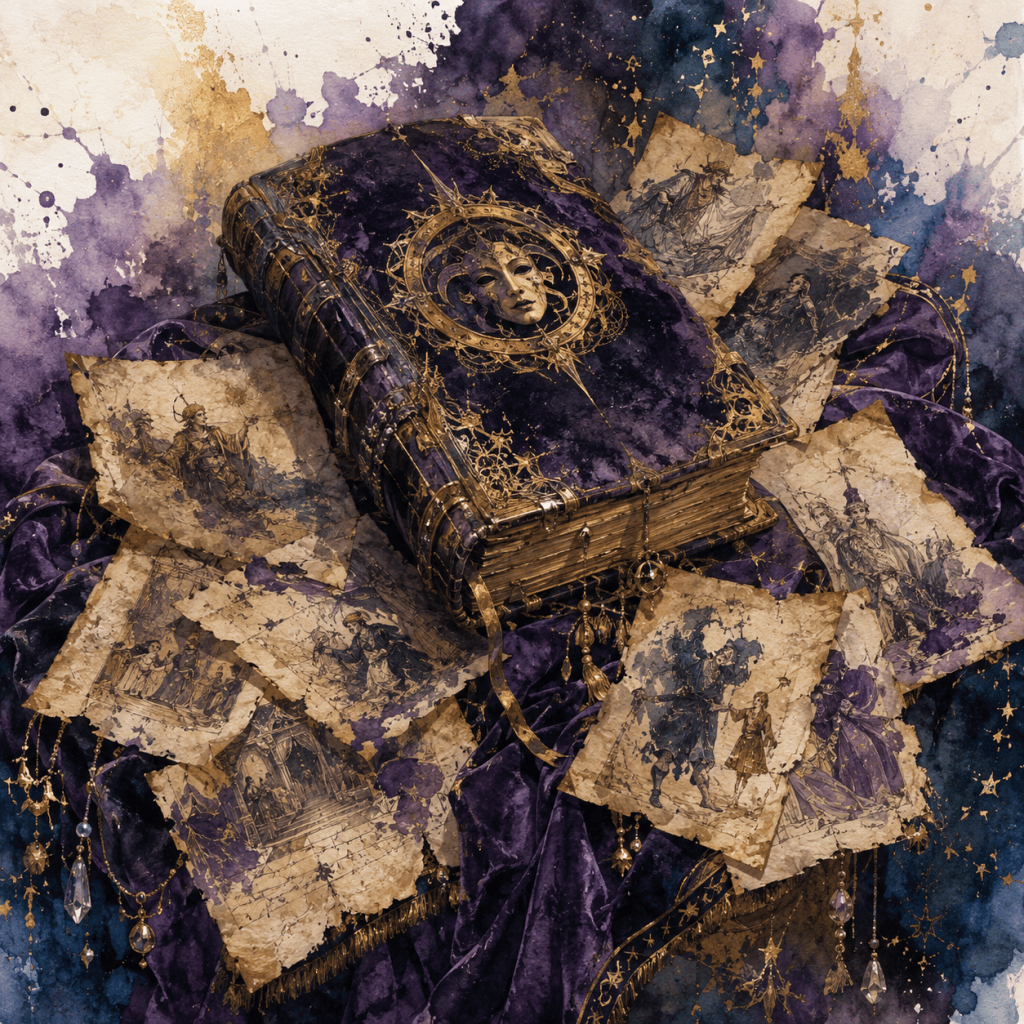
The First Folio is not a single surviving book but a collection of manuscripts traditionally believed to descend from plays written by Cyrillith. No complete edition exists. Different temples preserve different scenes, and several surviving passages contradict one another. Entire characters appear in one manuscript and vanish from another. When authentic fragments are performed rather than merely read, actors occasionally speak lines absent from the written page. The Gilded Chorus has spent centuries attempting to reconstruct the complete work.
Some scholars suspect there never was one.
(Needs updated mechanics: Base 5e → Veiled → Unveiled.)

The Velvet Stage Lantern
This small antique-gold lantern produces a perfect circle of warm theatrical illumination regardless of surrounding conditions. Older stories claim that a performer standing within the light is heard not only according to the words they speak but according to the emotion they intended those words to carry.
The effect has made the lantern particularly important to traditions of confession, diplomacy and sacred performance.
(Needs updated mechanics: Base 5e → Veiled → Unveiled.)
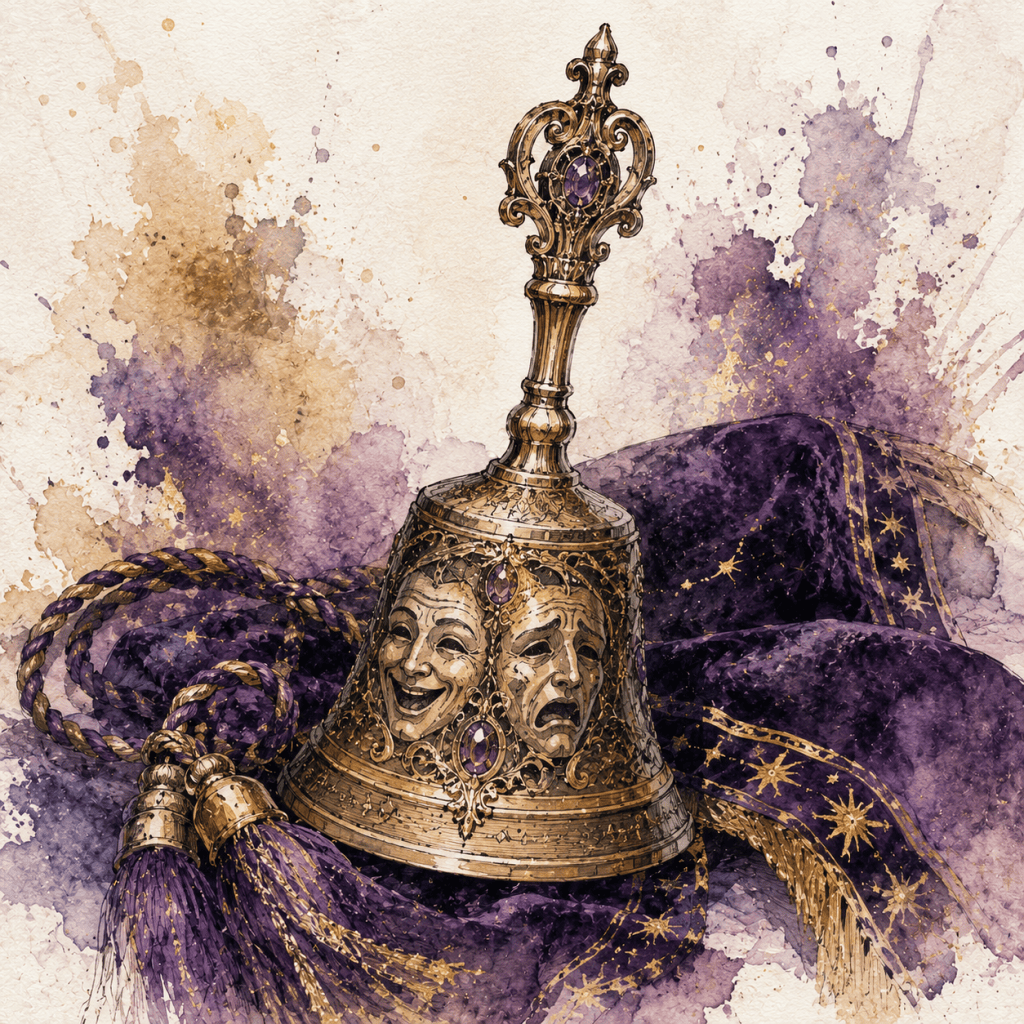
The Bell of the Final Curtain
This small stage bell is traditionally sounded at the conclusion of major Cyrillithian ceremonies. Its tone is said to be perfectly audible regardless of the size or noise of the room. Legends claim that even a raging crowd will fall silent long enough for one final line to be heard when the true bell is struck.
The relic is sacred because every performance deserves an ending.
(Needs updated mechanics: Base 5e → Veiled → Unveiled.)
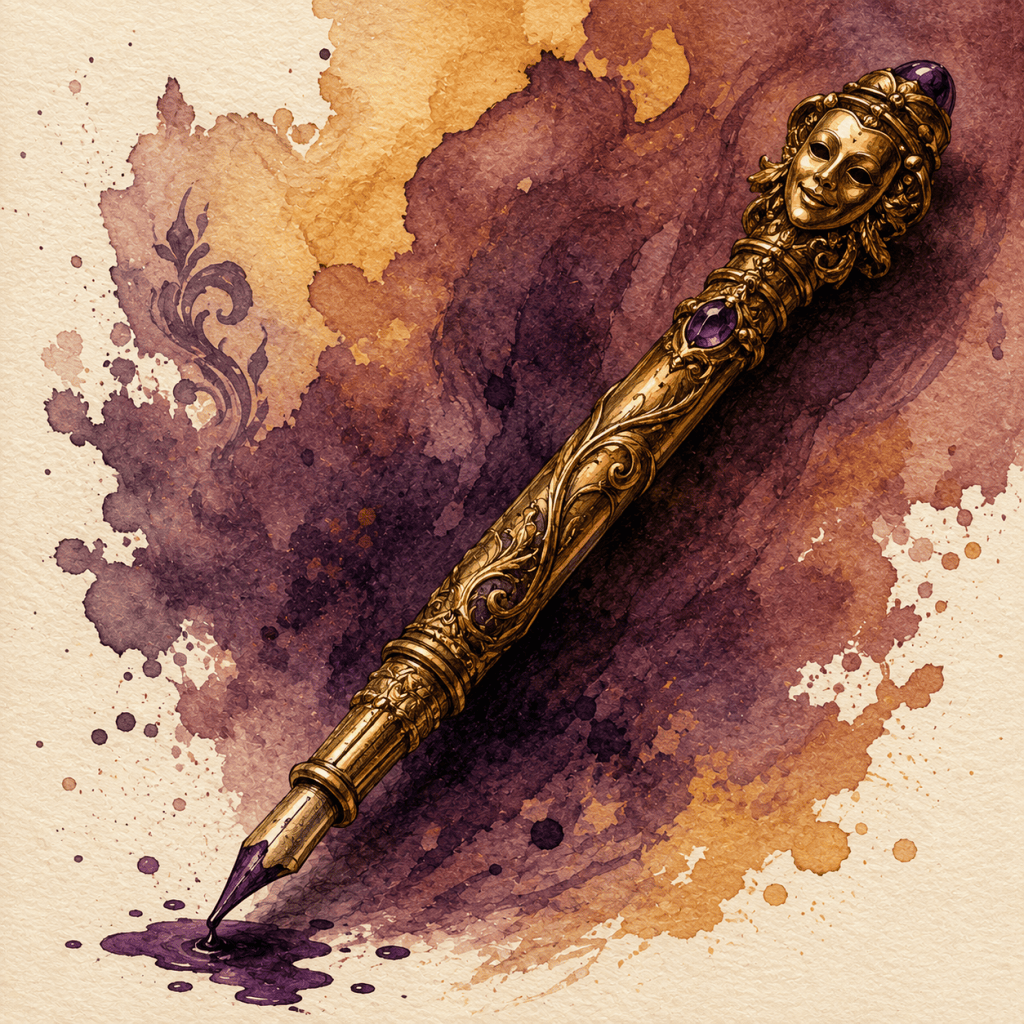
The Playwright’s Stylus
This elegant antique-gold writing instrument bears a tip permanently stained violet-black. Stories insist that the stylus never creates words for its bearer. Instead, when the writer knowingly betrays the meaning of their own work, the ink simply refuses to flow.
Artists disagree over whether this is a blessing.
(Needs updated mechanics: Base 5e → Veiled → Unveiled.)
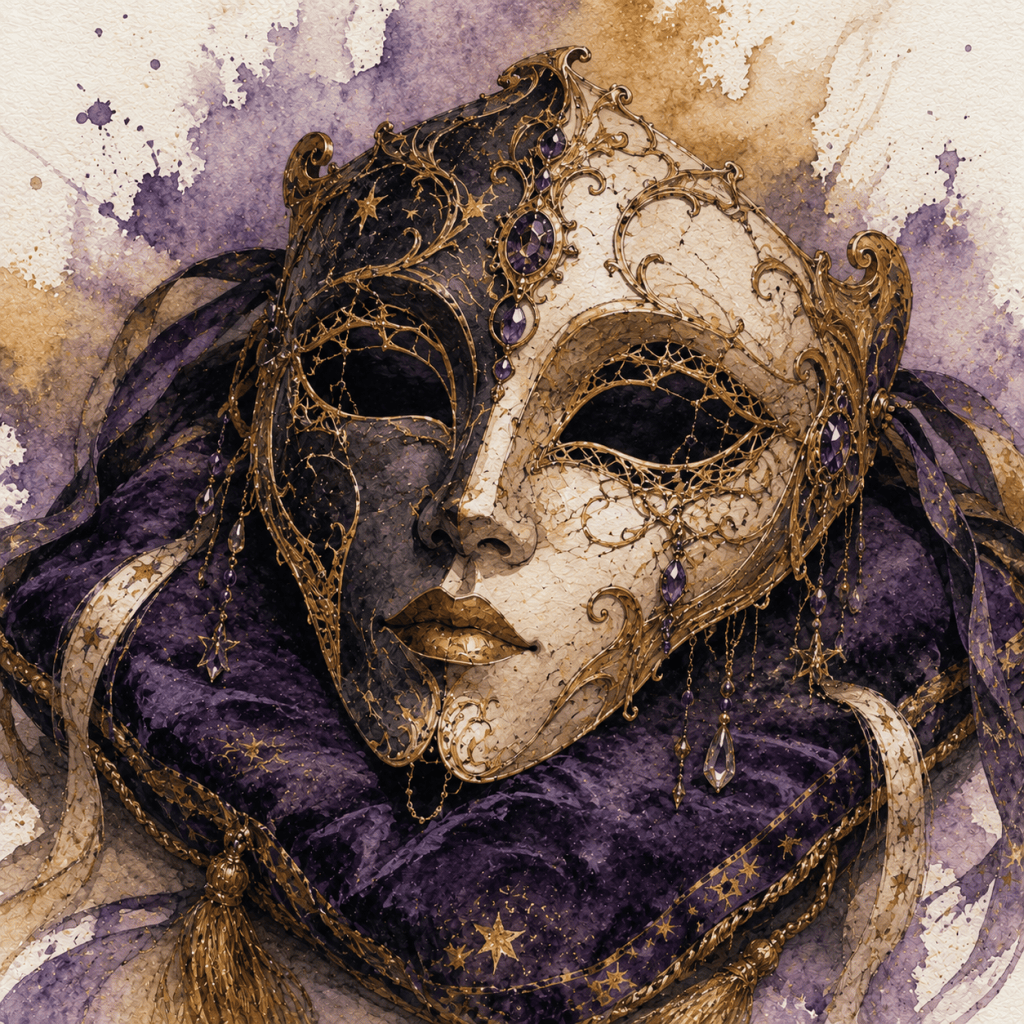
The Mask of the First Audience
The archives describe a ceremonial mask modeled upon Cyrillith’s divine countenance but deliberately left unfinished around the eyes. When worn during a performance, the bearer is said to sense the emotional movement of an audience as clearly as another person might feel changes in temperature.
No surviving temple agrees whether the relic was intended for actors, playwrights or priests.
(Needs updated mechanics: Base 5e → Veiled → Unveiled.)
Adventure Hooks
The Missing Final Act
A celebrated playwright dies before completing what many consider the greatest tragedy of the age. Weeks later, new pages begin appearing in theaters across Erosia, each written unmistakably in the playwright’s hand.
The scenes describe events that have not yet happened.
The Forbidden Comedy
A newly discovered Cyrillithian comedy is extraordinarily funny. It is also unmistakably about the current royal family despite apparently having been written three centuries before any of them were born. The crown wants every copy destroyed. The Gilded Chorus wants opening night.
The Silent Company
A traveling company arrives in a remote settlement unable to speak outside performance. They can communicate only while inhabiting characters from the same unfinished play. Something in the missing final scene appears to be waiting for them to complete it.
The Empty Seat
For seven consecutive performances, actors at a provincial theater see Cyrillith sitting alone in the same balcony seat. The Divine Bard never applauds. Never speaks. Never leaves before the curtain falls.
On the eighth night, Cyrillith’s seat is empty. Someone else is sitting there.
The Play That Remembers
An ancient drama changes its dialogue depending upon who performs it. When the adventurers take several roles, the play begins recounting events from their own lives that none of the other performers should know. The final scene has not yet been written.
The Last Performance
A legendary actor announces that their final appearance will be a newly discovered tragedy attributed directly to Cyrillith. Thousands travel to attend. During the performance, the actor disappears between scenes. Their costume remains upon the stage. The image of Cyrillith’s mask painted above the curtain has begun to weep gold.
Scents for Gameplay
Cyrillith’s presence is often smelled before it is seen. Scent is an easy way for a GM to introduce the Divine Bard without immediately announcing divine intervention. A fragrance may linger around an empty theater, cling to a sacred manuscript, precede a moment of inspiration or appear when a performance becomes more important than anyone realizes.
Use these scents as atmospheric cues rather than automatic proof of Cyrillith’s involvement.
| d12 | Scent | Suggested Moment |
|---|---|---|
| 1 | Warm stage dust and old velvet | Cyrillith’s presence may be near. |
| 2 | Violet perfume and candle smoke | A performance carries unusual significance. |
| 3 | Fresh ink and warm parchment | Writing, inspiration or a creative revelation. |
| 4 | Crushed roses beneath warm stage light | Romance, confession or emotional climax. |
| 5 | Rosin, polished wood and instrument varnish | Music, rehearsal or a sacred performance. |
| 6 | Rain against old wooden boards | Tragedy, memory or an unfinished story returning. |
| 7 | Clean silk and faint teal lotus | Chosen transformation or a new role being explored. |
| 8 | Hot wax and singed curtain rope | A carefully prepared performance is about to change unexpectedly. |
| 9 | Dusty books and violet-black ink | Lost writing, forgotten history or an archival revelation. |
| 10 | Cedar costume chests and old perfume | A role from the past is waiting to be inhabited again. |
| 11 | Flowers, wine and warm candlelight | Applause, celebration, premiere or artistic recognition. |
| 12 | The unmistakable scent of a theater just before the curtain rises | A direct omen or powerful moment of Cyrillithian resonance. |
Using Scent as Foreshadowing
Repetition gives Cyrillith’s fragrances meaning. If fresh ink and warm parchment repeatedly precede supernatural inspiration, players may eventually recognize the scent before discovering its source. If rain against old wooden boards accompanies tragic revelations, the fragrance alone can create expectation long before anything visibly supernatural occurs.
A silent manor may suddenly smell of stage dust though no theater has ever stood there. A frightened performer may catch violet perfume seconds before speaking. Deep underground, adventurers may smell cedar costume chests and discover a forgotten mask waiting in the dark. A musician may notice rosin and polished wood in an empty room before an unseen instrument answers their first note.
Nothing needs to be explained. Let the players notice.
 Whispers of Erosia
You must be logged in to post a comment.