

Rhaziel
The Divine Stalker • The Shadowed Lover
God of Pursuit, Ambition and Obsession
Pursuit • Hunt • Fixation
Hunting, ambition, competition, exploration, tracking, courtship, chosen capture and the relentless desire to close the distance between wanting and having.
“The chase matters.”
Rhaziel is the god of pursuit: the first deliberate step toward something desired, the trail followed after others have turned back and the tightening focus that transforms longing into action. He governs hunters and trackers, but also explorers crossing unmapped country, athletes pursuing mastery, investigators following evidence, rivals sharpening one another through competition and lovers whose desire becomes more intense because one chooses to run while another chooses to follow.
His most intimate mysteries are inseparable from this theology. Rhaziel is the patron of hunter-and-prey play, ritual pursuit, marked quarry, capture, pinning, chosen surrender and the erotic transformation that may follow when pursuit reaches its intended end. His faithful do not pretend the chase is merely symbolic. For some worshippers, being wanted enough to be hunted is profoundly erotic. For others, becoming the hunter awakens an equally powerful current of focus, dominance and possession consciously bounded by agreement.
The distinction upon which his entire faith turns is simple. A hunter may win the chase. They cannot win another person’s consent. Rhaziel therefore represents neither indiscriminate aggression nor the romanticization of stalking. He represents directed desire: the willingness to identify what calls to you, pursue it deliberately, read the trail accurately and recognize when the chase has reached the meaning chosen for it.
His priests preserve an older teaching in three short lines:
Desire moves. Follow it.
Attention reveals. Learn from it.
The chase matters because someone chose to run.
Lore & Mythos
When Desire First Moved
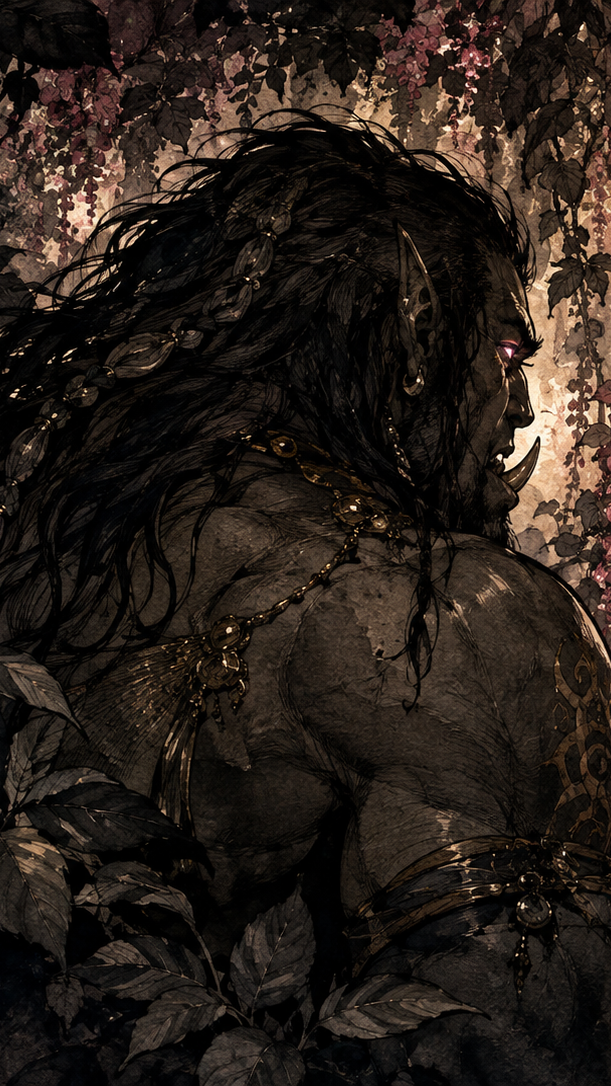
The oldest surviving Rhazielan tradition does not claim that Rhaziel was born when desire first entered creation. It says he awakened when desire first moved. Velyssara had already given the newborn world the capacity to want. Living things could hunger, long, yearn and reach emotionally toward one another. Yet the earliest desire remained like heat beneath the skin: powerful, undeniable and directionless.
Then something leaned toward what it wanted.
Something took a step.
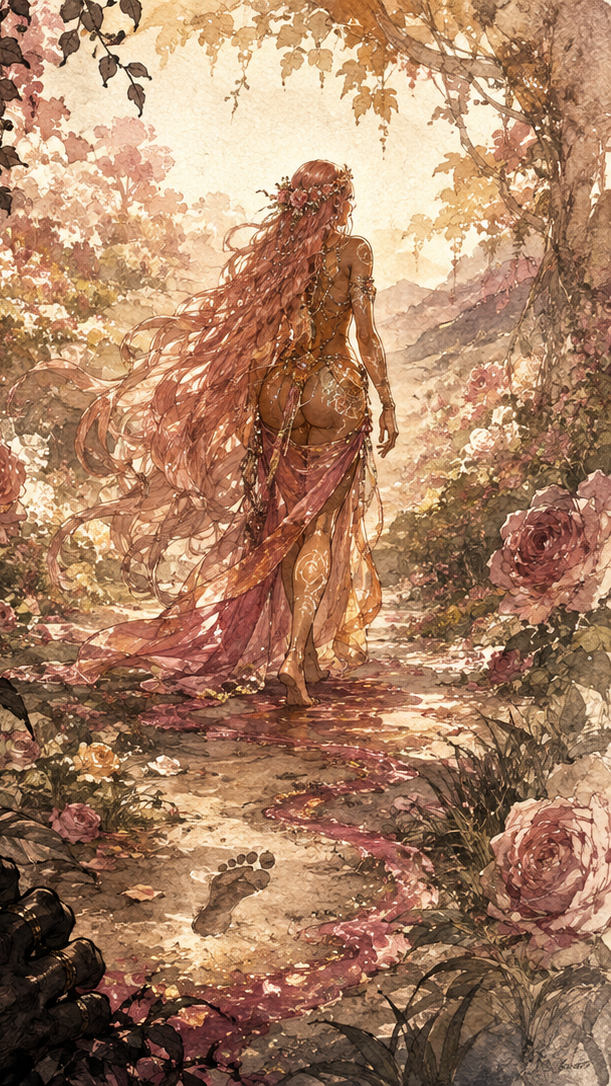
The archives describe a shadow forming at the edge of Velyssara’s first embrace. When the goddess moved, the shadow moved after her. When she crossed the first garden, it followed the impression of her feet. When she vanished beyond a hill, the shadow did not remain behind grieving the distance.
It pursued.
The shadow became Rhaziel.
Older hymns call him the ache given legs, the hunger that learned a trail and the first answer to the question: What will you do because you want?
Where Velyssara gives desire permission to exist, Rhaziel gives desire direction. This distinction remains central to his theology. Wanting alone is not yet pursuit. A longing may remain private forever. A fantasy may never become an intention. A possibility may be admired without being followed.
Rhaziel awakens in the moment someone decides:
I will go after it.

The First Quarry
One of Rhaziel’s most important myths concerns a figure whose name has disappeared from every surviving telling. Some traditions call her the First Runner. Others call him the Laughing Quarry. Several temples deliberately use no gender at all, teaching that the story concerns roles rather than bodies. Rhaziel saw the figure beneath the three moons and approached.
The quarry looked at him. Smiled. Then ran. Rhaziel followed. The pursuit crossed forests whose trees had not yet learned winter, rivers that still changed their courses each night and hills where no road had ever been walked. The quarry left signs behind deliberately: a broken branch, a footprint beside water, a strip of cloth caught where it could not possibly have caught by accident. Rhaziel understood. The chase continued.
At times the Divine Stalker came close enough for the quarry to hear his breathing. At others, entire days passed without either seeing the other. Some hymns insist the pursuit lasted one night. Others claim it lasted a hundred years.
Eventually Rhaziel cornered the quarry beneath a silver-leafed tree. He caught their wrists. Pressed them gently but unmistakably to the earth. And stopped.
The chase had been won. The quarry looked up at him and said: “Now.”
Only then did the pursuit become something else. Rhazielan theologians call this the First Claiming, although the word claiming has produced centuries of theological argument. The oldest interpretation does not mean that Rhaziel acquired ownership of the quarry. It means the quarry consciously chose what being caught would now permit. The hunt ended. The intimate rite began.
From this story comes one of Rhaziel’s central teachings: The hunter earns the capture. The quarry grants the claiming.
The Hunt of the Black Stag
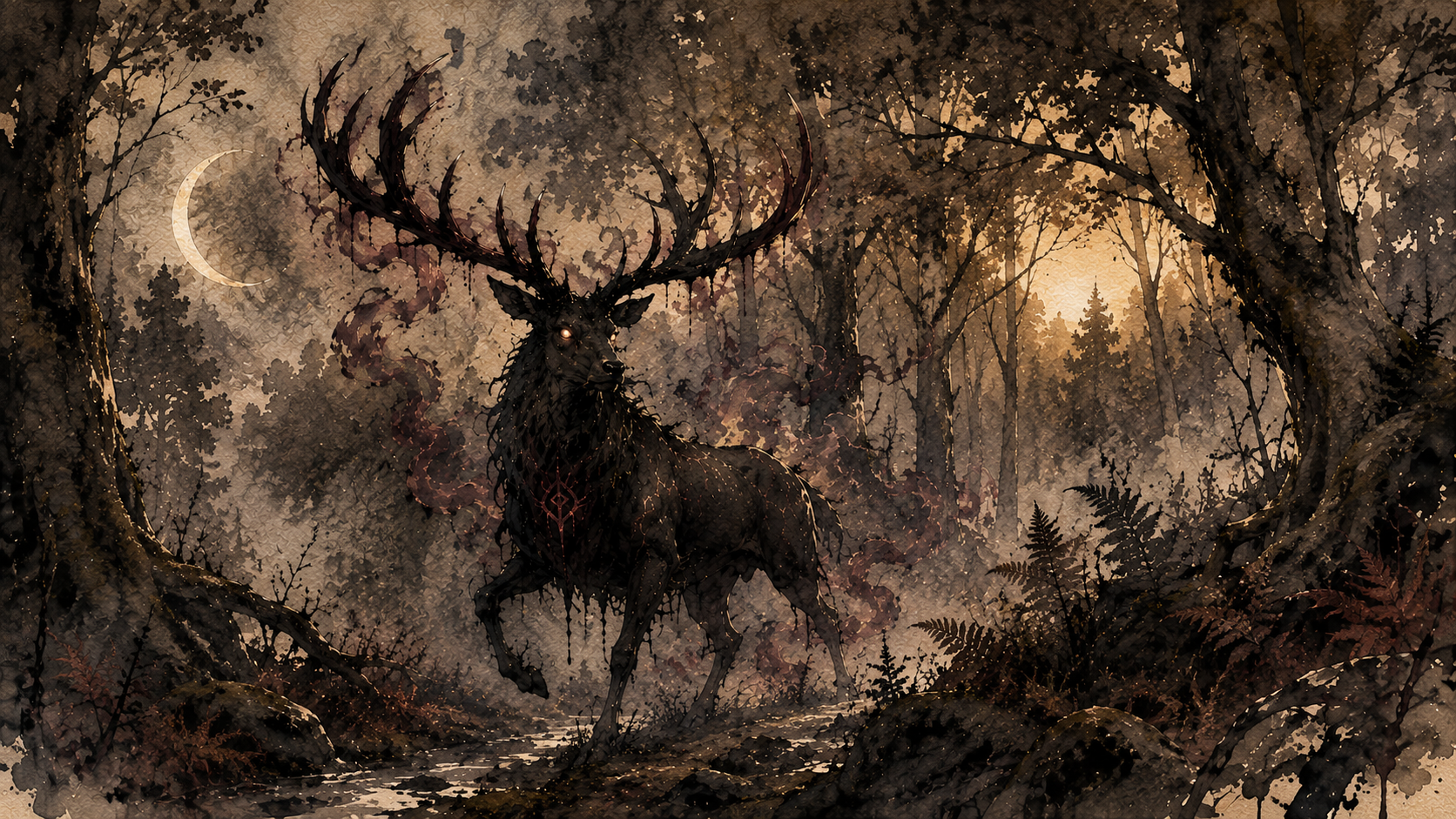
Another tradition tells of Rhaziel pursuing the Black Stag, a divine beast whose antlers held fragments of night between their branches. The Stag had never been caught. Rhaziel considered this reason enough to begin. He followed it through seven kingdoms, across the roofs of three great cities, beneath a mountain and into a forest where every path rearranged itself after being walked. The chase lasted so long that settlements grew into cities along the route. Children heard stories of the pursuing god and grew old telling them to their grandchildren.
At last, Rhaziel reached the Stag beside a dark lake. His spear was raised. The animal turned. Rhaziel saw that it was exhausted. Not defeated. Not afraid. Simply finished. The god lowered his spear.
The Stag walked into the water and vanished. His followers asked why he had abandoned the greatest hunt in history after finally placing victory within reach. Rhaziel answered: “I was pursuing the Stag. I had begun hunting the chase.”
The story became foundational to Rhazielan teachings about obsession. Focus can become sacred. Persistence can achieve what impatience never could. Yet a pursuit that survives only because the pursuer no longer knows how to stop has ceased to possess direction. Rhaziel did not fail to kill the Black Stag. He successfully discovered what he had actually been chasing.
The Rival at the Last Gate
A later martial tradition describes an undefeated champion who prayed to Rhaziel for a rival worthy of her. Years passed before that rival appeared. They fought. The champion lost. Rather than despairing, she laughed and thanked Rhaziel. She trained for another year and challenged the rival again. She lost again.
Their contests continued until both became famous across Erosia. Each learned the other’s rhythms, strategies and weaknesses. Victories changed hands repeatedly. Neither could dominate the rivalry permanently because each improved whenever the other did. Eventually, they met at the Last Gate, an ancient ruin neither had been able to breach alone. Instead of fighting one another, they entered together.
The story became one of Rhaziel’s most important teachings concerning competition. A worthy rival is not merely an obstacle to victory. Sometimes they are the reason you became capable of reaching the gate.
The Desire He Embodies
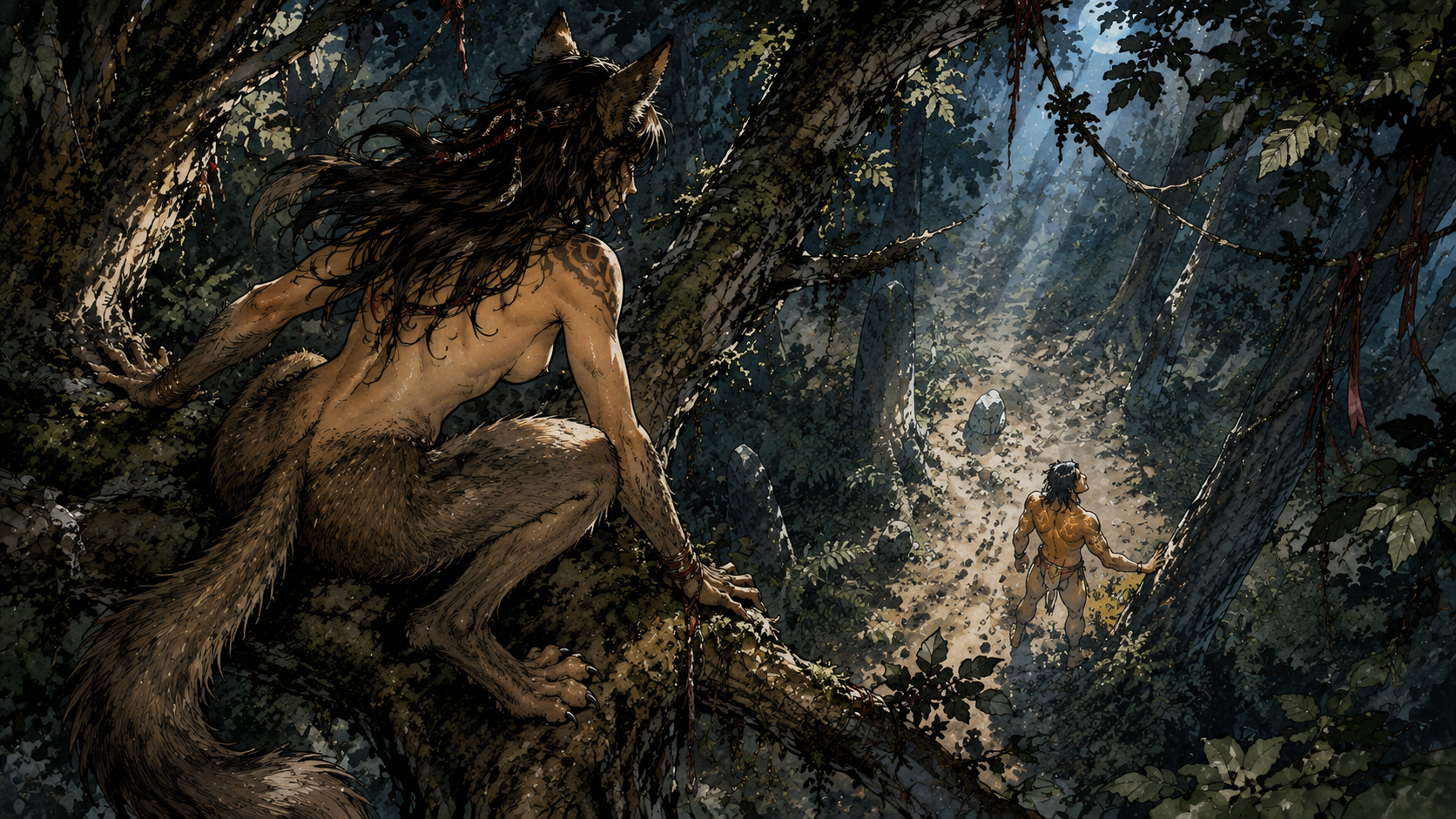
Rhaziel embodies the desire to pursue. His sacred current begins whenever something matters enough to create direction. A hunter follows tracks through snow. An explorer follows a coastline beyond every known map. A scholar refuses to abandon an impossible question. A lover crosses a crowded room because someone has looked back twice. The object of pursuit may be person, place, answer, achievement, sensation, rival, prey or possibility.
The underlying movement remains the same. Something calls. Someone follows.
Pursuit and Direction
Rhazielan theology treats direction as one of desire’s most important transformations. Wanting without action can remain beautiful. Delavira’s faithful know this better than most. Rhaziel simply governs the moment when a person decides not to remain where they are. The action need not be dramatic.
Sending a letter can be pursuit. Beginning training can be pursuit. Asking a question others have avoided can be pursuit. Taking the first step toward a mountain can be pursuit. The faithful therefore distinguish desire from destiny. Wanting something does not guarantee that it belongs to you or that the universe intends you to possess it. Desire simply reveals a possible direction. Rhaziel asks whether you wish to follow.
The Hunt and Attention
A poor hunter looks only for the quarry. A skilled hunter looks at everything. Broken grass. Disturbed mud. Missing birdsong. A branch bent against its natural growth. Rain that erased every track except the one sheltered beneath stone. For this reason, attention is sacred to Rhaziel. His clergy teach that genuine pursuit requires learning the object pursued rather than reducing it to an imagined prize. The investigator must allow evidence to contradict expectation. The explorer must adapt when the map fails. The competitor must study what the rival actually does rather than what the competitor wishes they would do.
The same principle governs intimate pursuit. A Rhazielan hunter watches body language, pace, breath, established signals and the boundaries that define the game. The fantasy may be feral. The attention beneath it is exact. Rhaziel does not sanctify mindlessness. Predatory focus is meaningful because the hunter notices.
Ambition and the Worthy Quarry
Rhazielan priests use the phrase Worthy Quarry for anything deserving sustained pursuit. Not every possible goal is worthy. A person may devote years to gaining wealth only to discover that wealth was never what they wanted. An adventurer may chase revenge long after the original wrong has stopped shaping anyone except themselves. A courtier may pursue someone romantically because rejection wounded their pride rather than because affection remains genuine.
Rhaziel does not condemn ambition. He demands that ambition remain examined. Temples frequently teach three questions:
What are you pursuing?
Why are you pursuing it?
What would make you stop?
A devotee capable of answering all three may still be dangerously obsessed. A devotee incapable of answering the third almost certainly is.
Competition and
the Beloved Rival
Competition belongs naturally within Rhaziel’s domain because another person can become a moving destination. A rival forces adaptation. They refuse to remain where the pursuer last understood them. Victory against such an opponent requires growth. Many Rhazielan athletic schools therefore treat worthy rivals with extraordinary respect. Sabotaging an opponent merely because one fears losing to them is considered spiritually hollow. The purpose of sacred competition is not to manufacture easy victories. It is to discover what effort becomes possible when someone else refuses to let you remain comfortable.
Some long-standing competitors exchange paired fang pendants. Each wears the other’s name against their chest.
Obsession and
the Returning Trail
Rhaziel is one of the few Erosian gods whose faithful use the word obsession without automatically treating it as pathology. Obsession can produce extraordinary work. A cartographer spends twenty years mapping a coastline no kingdom controls. A sculptor destroys thirty versions before discovering the expression they were trying to carve. A hunter learns the movement of one legendary creature so completely that they begin recognizing its passage from changes in the behavior of insects. The danger arises when the trail becomes more important than whatever placed the pursuer upon it.
Rhazielan clergy call this Hunting the Chase. Someone hunting the chase may continue because stopping would require admitting that the original desire has changed. They may mistake sunk effort for destiny. They may increasingly violate their own principles because pursuit itself has become identity.
Rhaziel does not demand that such a person stop. He demands that they look up from the tracks.
The Erotic Hunt
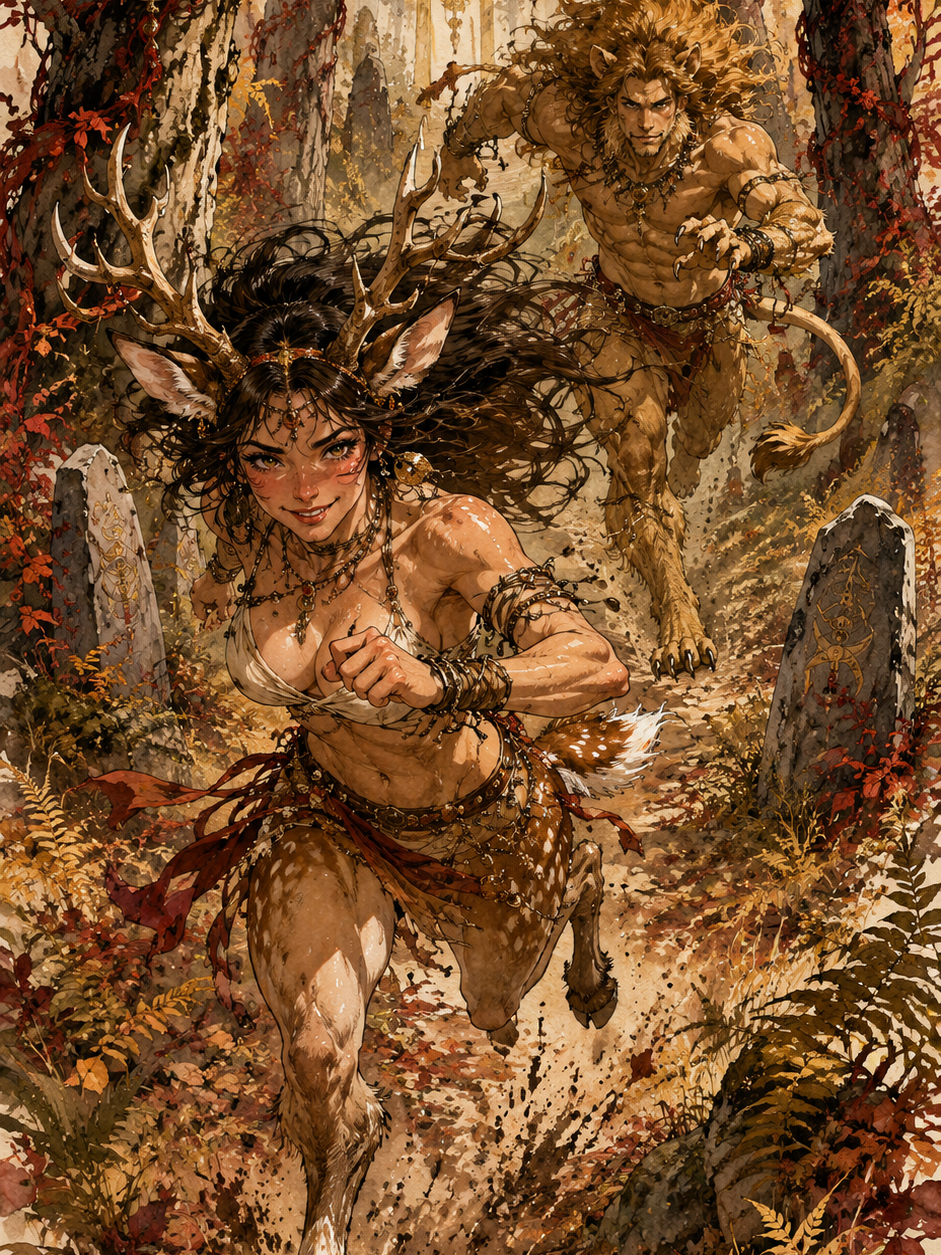
Rhaziel’s intimate mysteries make his broader theology physical. The quarry invites pursuit. The hunter accepts. The chase creates distance, anticipation and uncertainty. The quarry may run, hide, leave deliberate signs, taunt, evade, struggle within established limits or attempt to reach a place of safety before being caught. The hunter tracks, follows, corners and eventually attempts capture.
For participants drawn to the dynamic, pursuit itself becomes erotic. The quarry experiences the intoxicating knowledge of being wanted enough to be followed. The hunter experiences narrowed attention until the world seems to contain only one trail. The moment of capture changes the rhythm.
Hands close around wrists. Bodies collide. A final struggle may occur. The quarry is pinned, held, carried or otherwise restrained according to what has been established between the participants. Then comes the moment upon which the entire rite depends. The chase is over. The quarry decides what being caught means.
The Five Movements of the Sacred Hunt
Rhazielan intimate theology commonly describes the complete erotic rite through five movements.
- The Marking establishes the quarry and the terms of pursuit. A scent, ribbon, pigment, charm, garment or spoken declaration may identify who wishes to be hunted and where the hunt exists.
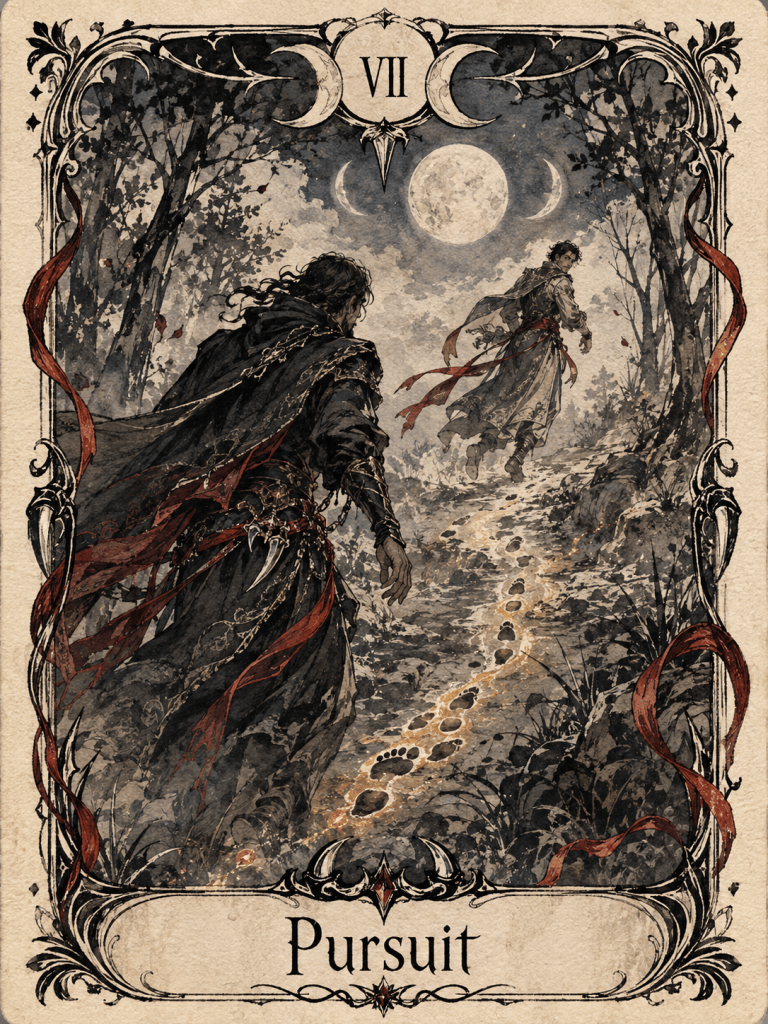
- The Pursuit is the chase itself. Distance creates desire. The quarry flees according to the agreed game. The hunter follows.
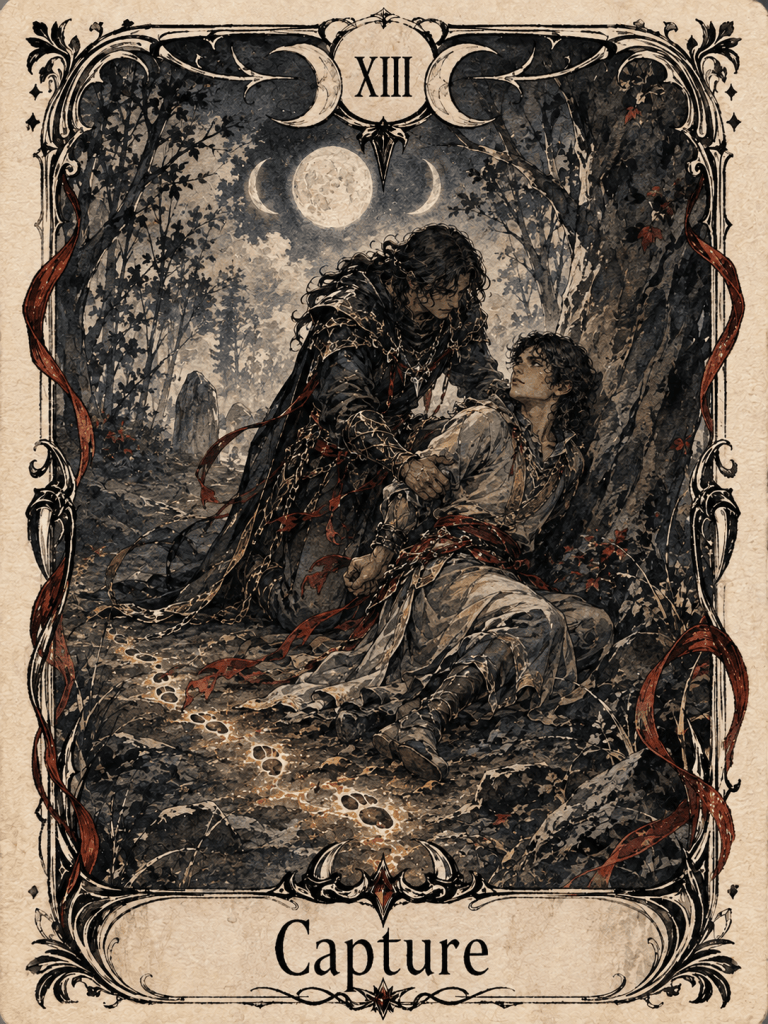
- The Capture occurs when the hunter physically catches and controls the quarry within the established boundaries of the rite. Pinning, grappling, holding, carrying or agreed restraint may mark the transition.
- The Claiming begins only when the quarry willingly allows capture to become erotic surrender. Kissing, intimate touch, sexual activity or other forms of consummation may follow according to the participants’ desires and boundaries. The hunter’s victory in pursuit does not grant this stage automatically.
- The Release ends the roles. Restraints are removed. Hunter and quarry return to ordinary relationship. Water, warmth, touch, solitude, conversation or other desired forms of aftercare may follow.
The cycle is not mandatory in every encounter. A chase may end in escape. A capture may end with laughter and nothing more. A ritual may stop after the Marking or Pursuit. Rhaziel’s faithful do not treat an unfinished sequence as spiritually incomplete. The structure exists so that everyone knows when one kind of meaning has ended and another begins. The most repeated teaching of the Five Movements is therefore: The chase may carry the hunter to the threshold. Only the quarry opens what lies beyond it.
Holy Symbol & Iconography
The Watching Fang
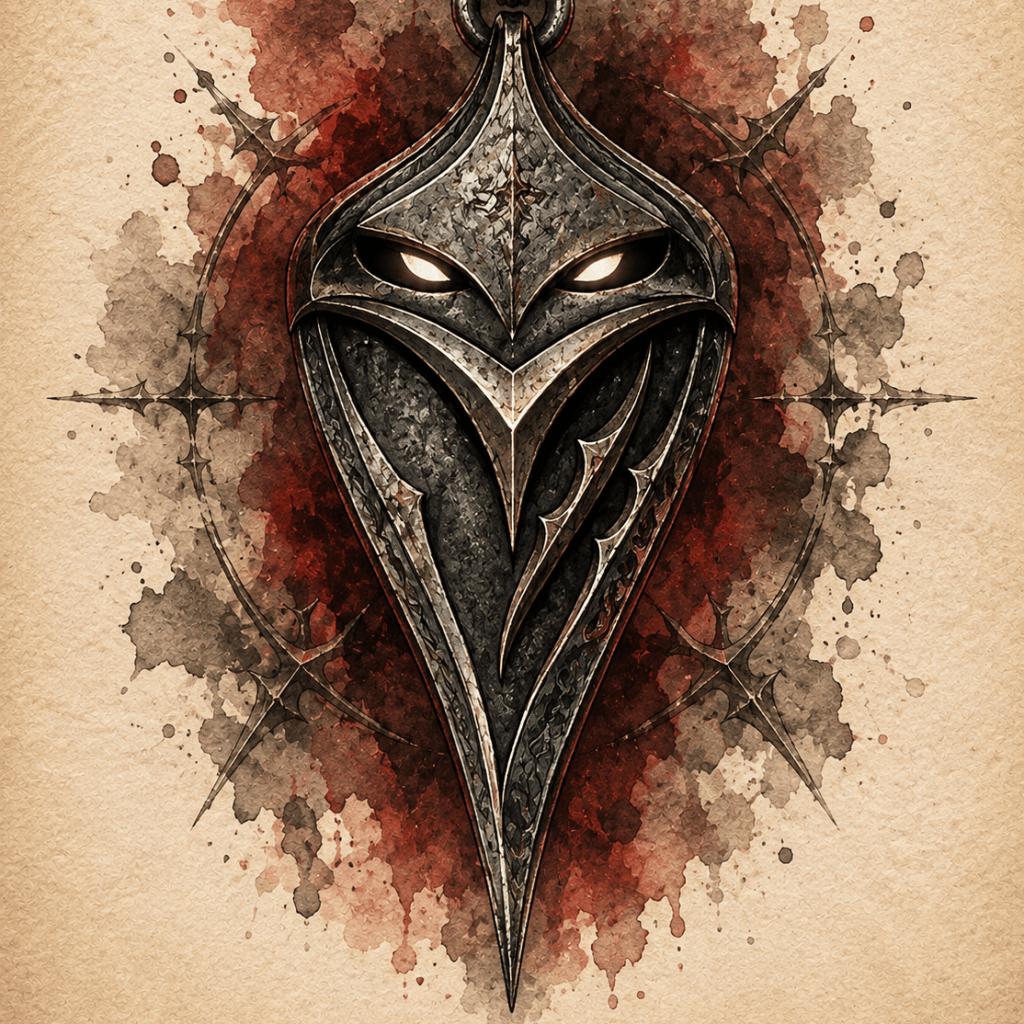
Rhaziel’s holy symbol is the Watching Fang, a long, narrow emblem of blackened steel shaped somewhere between a predator’s tooth, a spearhead and a ritual hunting blade.
The canonical design tapers sharply toward the lower point. Near the upper portion are two narrow, luminous eye forms set into the dark metal, creating the unmistakable impression that the symbol itself is watching. Beneath them, the inner negative space folds into a pointed heart-like contour without losing the silhouette of fang and weapon.
Asymmetrical claw-like cuts and hooked elements run along one side.
The complete form appears simultaneously predatory and devotional.
The fang represents pursuit made physical: the moment desire ceases merely to observe and begins to close distance.
The eyes represent attention.
The heart hidden inside the predatory geometry represents the reason for pursuit. Rhaziel is not hunger without meaning. Something has called strongly enough to be followed.
The downward point represents direction.
Older priests sometimes summarize the symbol through four statements:
The eye finds.
The heart chooses.
The fang follows.
The trail decides what comes next.
Sacred Colors and Materials
Rhazielan sanctuaries favor blackened steel, weathered leather, dark brown, hunter green, charcoal, smoky gold and controlled crimson. Blackened steel represents purpose hardened through effort. Leather represents the trail: equipment shaped by distance, weather and use. Hunter green represents the living world through which pursuit moves. Smoky gold represents divine attention, especially the moment when a seemingly insignificant sign becomes unmistakably important. Crimson represents desire at its most immediate: blood racing beneath skin, flushed exertion, danger recognized and erotic tension consciously welcomed.
Common materials include worn leather, horn, bone, carved dark wood, fur, black iron, river stone, feathers, bowstring, waxed cord and cloth carried through long journeys. Rhazielan objects should rarely appear pristine. Wear can be sacred. A knife polished beautifully but never carried has less devotional meaning than an ordinary trail tool used for twenty years and repaired repeatedly.
Tracks, Eyes and the Sacred Trail
Tracks dominate Rhazielan visual language. Footprints appear along temple floors, beneath altars and across devotional textiles. Some trails lead directly toward the holy symbol. Others disappear before reaching it. The missing final print is intentional. A trail tells you where something went. It does not tell you what happened after you followed.
Eyes appear almost as frequently. Narrow amber or crimson eyes may be carved into lintels, weapon hilts, buckles and trail markers. Unlike Eshthara’s eye, which represents awareness turned inward, or Delavira’s eye, which witnesses across sacred distance, Rhaziel’s eye is directional. It has noticed something.
Sacred Creatures
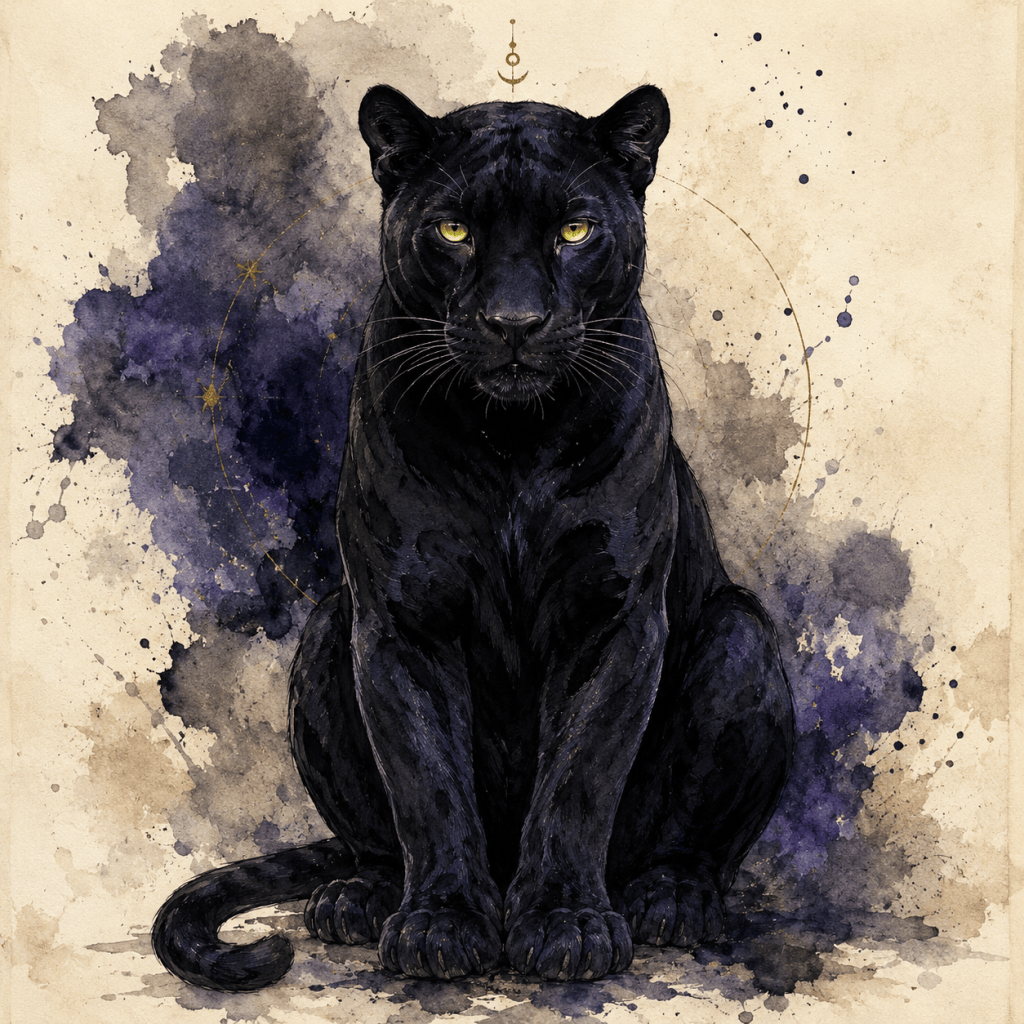
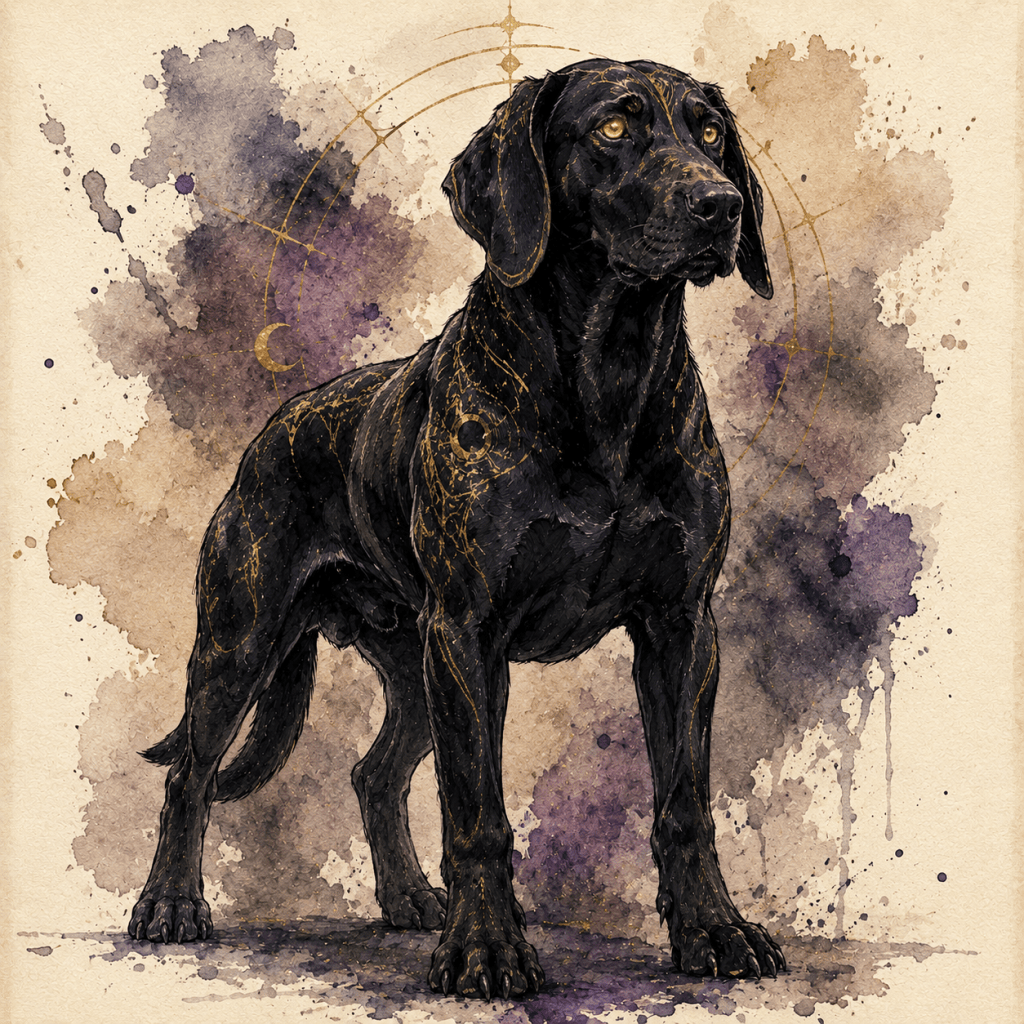
Coursing hounds are among Rhaziel’s most beloved sacred animals. Their gift is not raw aggression but sustained pursuit through terrain where sight alone fails. Night cats represent silent attention, patience and the explosive commitment of the final pounce. Falcons symbolize the ability to maintain focus across enormous distance before acting with sudden precision. Stag imagery occupies a more complicated place because of the Hunt of the Black Stag. Some traditions treat stags as sacred quarry: creatures whose beauty lies partly in the fact that they are never fully owned by the hunter.
Stories also speak of Gold-Eyed Trailhounds, large supernatural hounds appearing silently beside travelers who have lost a meaningful trail. They do not always lead the traveler forward. Sometimes they sit. Rhazielan priests consider that difference significant.
Depictions of Rhaziel
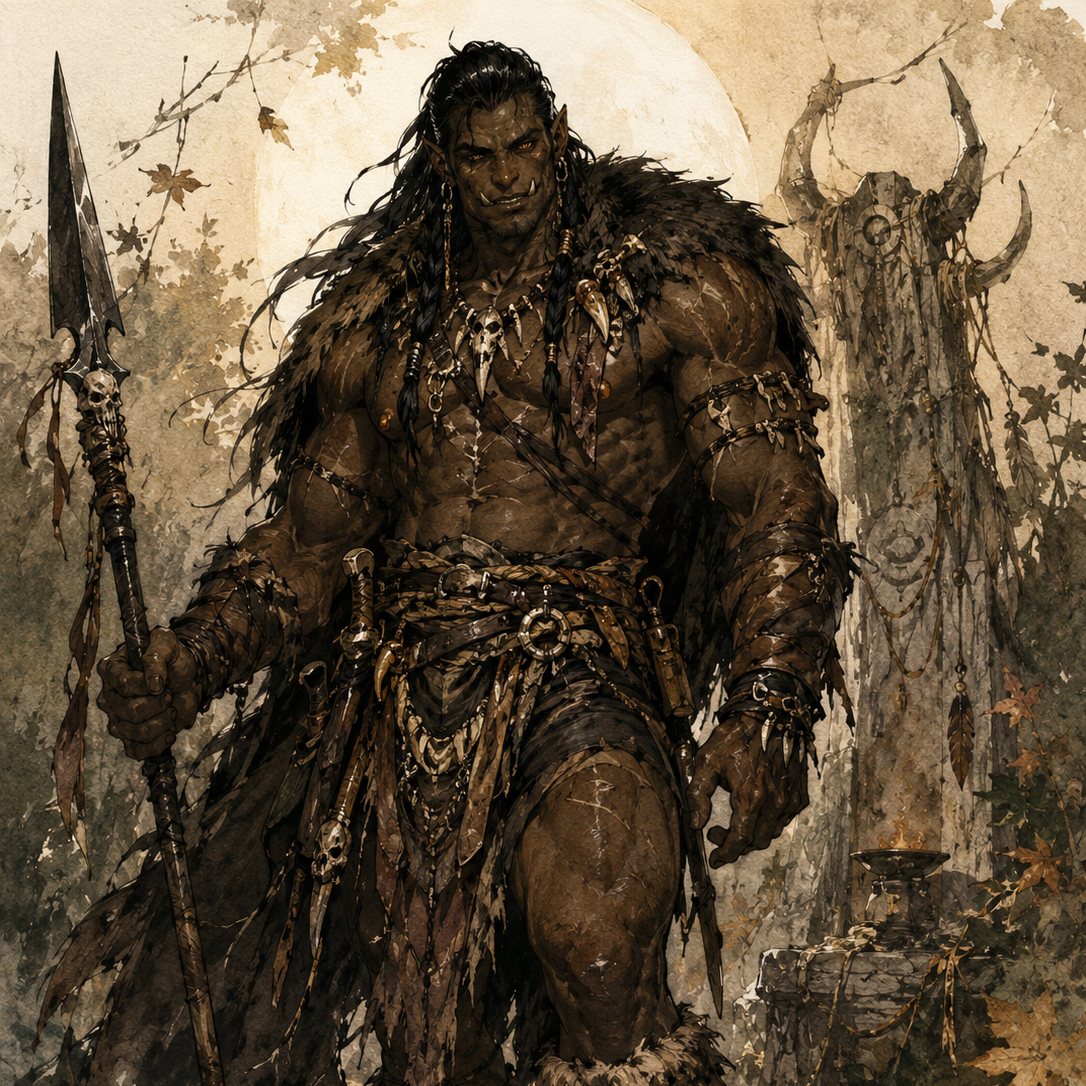
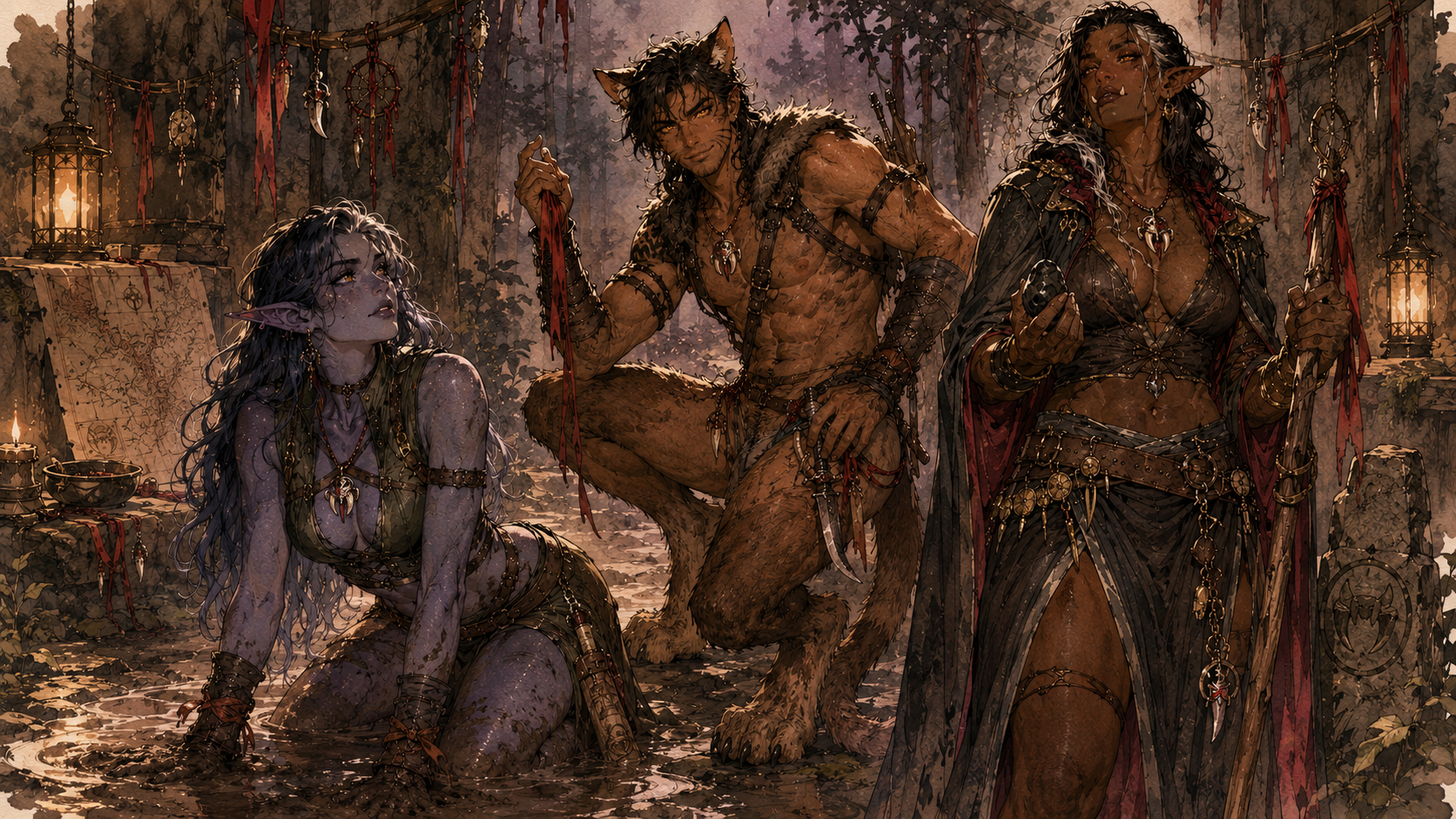
Sacred art portrays Rhaziel as a mature adult masculine Bloodoath orc deity of immense physical presence. He possesses deep umber-brown skin, powerful shoulders, a broad muscular torso, thick arms, prominent lower tusks and long dark hair often partially braided with hunter’s charms.
His eyes glow amber-gold. His expression is rarely rage. The most characteristic Rhazielan expression is the hunter’s grin: confidence sharpened by the certainty that he has noticed something worth following. His ceremonial regalia favors weathered dark leather, hunter green, fur, blackened iron, bone ornaments and practical straps shaped by movement rather than courtly display. Hunting knives, spears, bows and other pursuit tools may accompany him.
Sacred art frequently shows Rhaziel at one of three moments: noticing the first sign of a trail, closing distance during pursuit or holding a willing quarry after capture.
The final expression matters. Rhaziel should appear predatory without appearing indiscriminately cruel. His established visual truth remains:
Pursuit. Focus. Determination.
The chase matters.
Worship & Daily Devotion
Rhaziel can be worshipped anywhere something worth pursuing creates a path forward. A courier can pray while tightening bootlaces. An adventurer can pray while marking a map. An athlete can pray while stepping onto a training floor. A scholar can pray while reopening a problem abandoned months ago. A lover can pray while choosing the scent they intend another person to follow. His faith attracts hunters, scouts, explorers, investigators, couriers, athletes, duelists, adventurers, competitors, trackers, bounty hunters, ambitious craftspeople and people whose intimate lives include pursuit-and-capture play.
The First Step
One of Rhaziel’s simplest daily devotions occurs before beginning work. The worshipper names something they intend to pursue. Then they take one concrete action toward it.
The action may be small. A page written. A message sent. A road entered. A training session begun. Rhazielan priests teach that ambition becomes real only when it leaves evidence. The First Step creates the first track.
The Hunter’s Pause
The Hunter’s Pause occurs when pursuit has become emotionally intense. The devotee stops. They breathe.
Then they ask: Am I still following the quarry, or am I hunting the chase?
The practice is particularly important among investigators, lovers, competitors and adventurers engaged in long-term goals. A person who chooses to continue after the pause has not lost momentum. They have restored direction to it.
The Returning Trail
Devotees sometimes revisit abandoned goals deliberately. An unfinished manuscript is reopened. A road once considered too dangerous is walked again. A failed courtship is reconsidered only if circumstances and invitation have genuinely changed. The worshipper then decides whether the old trail still deserves pursuit.
Resuming is sacred. So is consciously abandoning it. The rite exists to distinguish unfinished business from obligations invented by nostalgia.
The Quarry Stone
Travelers sometimes carry a small stone from the place where a significant pursuit began. When the pursuit ends, the stone is left at the destination, returned to the place of origin or placed within a Rhazielan shrine. Temple courtyards may contain thousands of such stones. No inscription explains which represent victory.
Favored Offerings
Traditional offerings include broken arrowheads, worn bowstrings, maps, repaired boots, hunting knives, pieces of trail markers, trophies from honorable competition, tokens exchanged between rivals and objects carried for the complete duration of a significant journey. Intimate offerings include crimson ribbons, perfumes used in ritual pursuit, collars or bracelets worn only during a specific hunter-and-quarry relationship, locks of hair offered voluntarily and tokens taken from the quarry at the beginning of a chase and returned afterward. A particularly respected offering is a written account of something the devotee chose to stop pursuing.
Rhaziel does not accept only victories.
Clergy & Temples
Trailkeepers
Trailkeepers form the broadest branch of Rhaziel’s clergy. They are guides, trackers, scouts, explorers, searchers and keepers of roads. Many serve travelers who have become lost, communities searching for missing people or adventuring companies navigating dangerous country.
Their training emphasizes observation before confrontation.
A Trailkeeper should notice what another traveler walked past. They also maintain maps, wilderness shelters, trail shrines and records of routes that have become unsafe. Their traditional teaching is:
“A track is an answer left by movement.”
Night-Hunters
Night-Hunters preserve Rhaziel’s sacred hunting traditions and oversee formal pursuit rites.
They teach tracking, stealth, evasion, grappling, wilderness survival and the ceremonial protocols of the Sacred Hunt. Some serve as game wardens or professional hunters responsible for dangerous creatures.
Others specialize in adult hunter-and-quarry rites.
Their authority in those contexts is narrow and explicit. They establish boundaries, verify signals, inspect pursuit spaces and ensure that the difference between roleplayed danger and actual danger remains unmistakable to everyone responsible for the rite.
Keepers of the Last Step
Keepers of the Last Step specialize in obsession, failed pursuits and the difficult theology of stopping.
They counsel explorers who cannot abandon impossible expeditions, lovers unable to accept that circumstances have changed, warriors consumed by revenge and artists whose pursuit of perfection has become self-destruction.
Some outsiders assume the Keepers exist to discourage ambition. The opposite is true. They are often among Rhaziel’s most relentless clergy.
Their purpose is to ensure that relentless effort remains attached to something the devotee still consciously chooses.
Pursuit-Singers
Pursuit-Singers preserve stories of legendary hunts, journeys, rivalries, rescues, courtships, searches and quests. Their songs rarely begin with the victory. They begin with the first track. The greatest performances may recount years of frustration before reaching the decisive moment. In some traditions, a Pursuit-Singer deliberately stops immediately before the ending and asks the audience what they believe the pursuer truly wanted. Only then is the conclusion sung.
Houses of the Long Trail
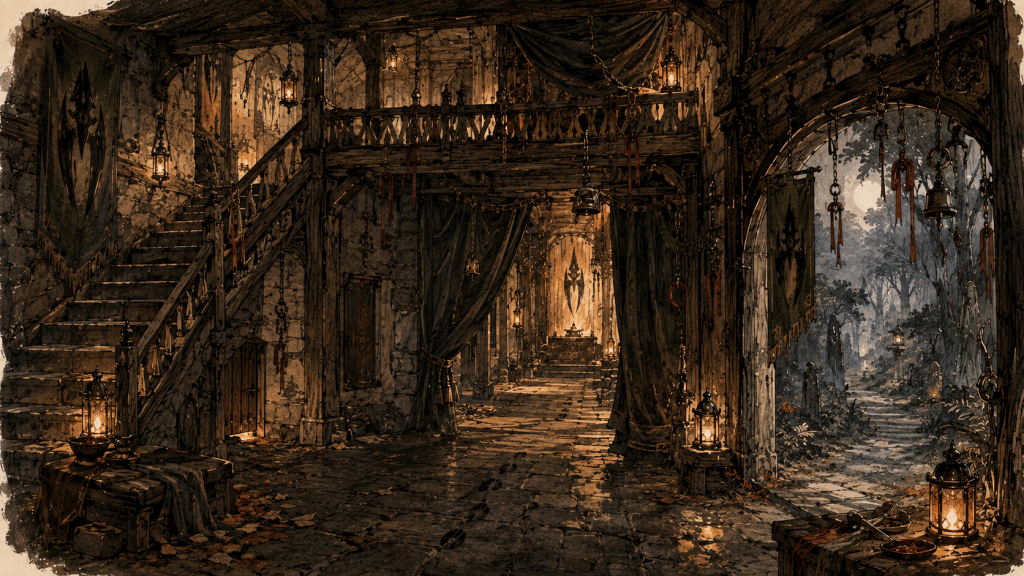
Rhaziel’s temples are commonly called Houses of the Long Trail, though regional names include Fang Sanctums, Hunter’s Houses and Shrines of the Following Shadow. They are designed around movement rather than monumental central halls. Passageways bend. Stairs rise into observation balconies.
Courtyards connect through several routes rather than one obvious doorway. Curtains and screens create shifting sightlines. Training grounds open into gardens or forest paths. Some sanctuaries deliberately include one chamber that cannot be reached by the most obvious route. Larger temples possess a Sacred Course extending beyond the building itself. Depending upon location, this may be a woodland trail, rooftop route, cavern network, canyon path or carefully designed garden maze.
The central sanctuary usually contains the Watching Fang above a dark stone marked with overlapping footprints. Many Houses maintain two entrances. The first is clearly visible. The second must be found.
Rites, Taboos & Divine Signs
The Rite of the Marked Quarry
The Marked Quarry is one of Rhaziel’s foundational rites. A willing participant is marked with a scent, ribbon, pigment, charm or other agreed sign indicating that they wish to be pursued under specific conditions. The location, duration, boundaries and end conditions of the hunt are established before the mark is applied. In public festival versions, the mark may simply be a crimson ribbon tied at the wrist. In intimate rites, scent and placement may become more personal. The mark never grants permission outside the ritual context in which it was given. A Rhazielan saying makes the distinction explicit: The mark names the game. It does not erase the person.
The Breathless Run
The Breathless Run is the most famous Rhazielan pursuit rite. One participant becomes quarry. Another becomes hunter. The quarry receives a head start and enters a defined course. They may leave tracks deliberately, obscure them, hide, double back, taunt or attempt to reach a sanctuary point before capture. The hunter follows. If the quarry reaches sanctuary, the chase ends in escape. If the hunter successfully catches the quarry, the capture is acknowledged according to the form of the rite. Public versions may end with a raised hand, bell, embrace or ceremonial token. Intimate versions may proceed into the Capture and Claiming movements if all participants continue to desire them. Neither hunter nor quarry is considered spiritually superior because of victory. The chase reveals both.
The Stolen Footsteps
The Stolen Footsteps teaches silent pursuit. Participants move through a prepared space containing bells, hanging chains, loose leaves, shallow water, sand or other materials designed to reveal careless movement. The objective is to pass unseen and unheard. Advanced versions require one participant to follow another without detection while remaining within strict ritual boundaries. The rite is used by scouts, hunters, rogues, soldiers and occasionally temple children, whose version generally involves considerably more giggling than liturgy.
The Chosen Capture
The Chosen Capture begins where most public pursuit rites end. A willing quarry is caught according to established rules and physically controlled by the hunter. The capture may include grappling, pinning, carrying, agreed restraint or another form of immobilization. The hunter then stops escalating. That pause is sacred. The quarry communicates whether capture will remain the conclusion or whether the rite will continue into Claiming. A quarry may choose intimacy. They may choose only to remain held. They may laugh and end the game. They may change their mind.
All are recognized outcomes. The ritual teaches that the hunter’s skill determines whether capture occurs. The quarry determines what capture means.
The Claiming
The Claiming is an adult private mystery of Rhaziel. It occurs when the quarry willingly transforms capture into erotic surrender. The forms vary widely between individuals and traditions. Kissing, intimate touch, sexual activity, marking, restraint and other agreed acts may become part of the rite. No single form is required, and no specific sexual act defines Rhazielan devotion. What matters is the transition.
During pursuit, the quarry attempts to escape according to the agreed fantasy. During Claiming, the quarry communicates that the chase has reached the intimacy they wanted it to reach. The shift from resistance to chosen surrender is one of Rhaziel’s central erotic mysteries.
The Release
The Release formally ends the roles established by the hunt. Restraints are removed. The quarry’s mark is washed away, untied or returned. Hunter and quarry acknowledge one another outside the roles they temporarily inhabited. Some pairs prefer touch, food, water, blankets or quiet conversation. Others want solitude, laughter, bathing or sleep. The exact form is personal. The sacred requirement is that the hunt is understood to have ended. Rhaziel teaches pursuit intensely. He also teaches that no role should need to remain active merely because it once produced desire.
The Great Prohibition
Rhaziel possesses many hunting laws, but one prohibition stands above them: No pursuit remains sacred after invitation has become refusal. Harassment, unwanted stalking, ignoring withdrawal, continuing a sexual chase after a stop signal, treating fear as permission, damaging another person’s safety or reputation in pursuit of them and using ritual language to excuse coercion are profound violations of Rhaziel’s faith.
A prior invitation does not create permanent access. A person who enjoyed being hunted yesterday may not wish to run today. A ritual mark applies only to the context for which it was given. Physical arousal during a chase does not determine consent. Being successfully pinned does not automatically grant the hunter further sexual access. Rhaziel’s faithful preserve the distinction in one of their sharpest teachings: The trail may be followed. The refusal may not.

Signs of Rhaziel
Rhaziel’s presence often manifests through evidence of movement. A footprint remains perfectly preserved despite rain. A bent branch slowly turns toward the direction someone traveled. A shadow stretches farther than its owner and seems to lean toward something important. Footsteps sound behind a devotee, then cease the instant they turn. A distant heartbeat becomes audible. Warm breath brushes the back of the neck despite no one standing nearby. Amber light may briefly fill the eyes of someone who has recognized a meaningful trail.
Those particularly favored by Rhaziel sometimes develop three subtle claw-like markings along the ribs, hip, shoulder or forearm. Their shadow may lengthen when they become intensely focused upon a goal. In intimate contexts, a devotee’s pulse may become unusually easy for a trusted partner to hear. Rhaziel’s signs do not always point forward. Sometimes every track ends. His priests pay close attention when that occurs.
Rhaziel and the Velvet Court
Within the Velvet Court, Rhaziel embodies Pursuit, Focus and the movement of desire toward what it seeks. Where Velyssara awakens desire, Rhaziel asks what mortals will do because of it. His relationship with Ulvexa is frequently misunderstood because both gods possess strong associations with hunting, ferality and predatory desire. Their sacred currents are related but distinct. Ulvexa embodies instinct, momentum and primal appetite. Rhaziel embodies focus, tracking and sustained pursuit. Ulvexa is the body beginning to run because the hunt has awakened. Rhaziel is the hunter still following hours after the first excitement has faded.
Delavira provides an equally important counterpoint. She teaches that distance may itself be pleasurable and need not always be closed. Rhaziel represents the impulse to close it. Their traditions therefore meet constantly in courtship, teasing and delayed pursuit. Delavira whispers, not yet. Rhaziel asks whether that invitation means follow. Mirellune’s authority begins where Rhaziel’s chase may end. Capture can create the possibility of surrender, but surrender becomes meaningful only when authority is consciously entrusted. Rhaziel teaches the hunter to catch. Mirellune teaches what responsibility may follow when someone chooses to yield. Nyzun shares Rhaziel’s fascination with intensity and physical challenge. A chase can become an ordeal of endurance. A pin can become an encounter with pressure and sensation. Yet Nyzun asks what the participant feels at the Edge, while Rhaziel asks what makes them continue along the trail.
Velzhari’s devotion to being seen naturally invites Rhazielan pursuit. Some shared myths portray her leaving increasingly obvious signs for Rhaziel while pretending outrage that he continues finding them. Eshthara complicates him differently. She asks whether the quarry exists as the hunter perceives it or whether obsession has constructed an imagined destination. Rhaziel dislikes the question. That may be why her priests keep asking.
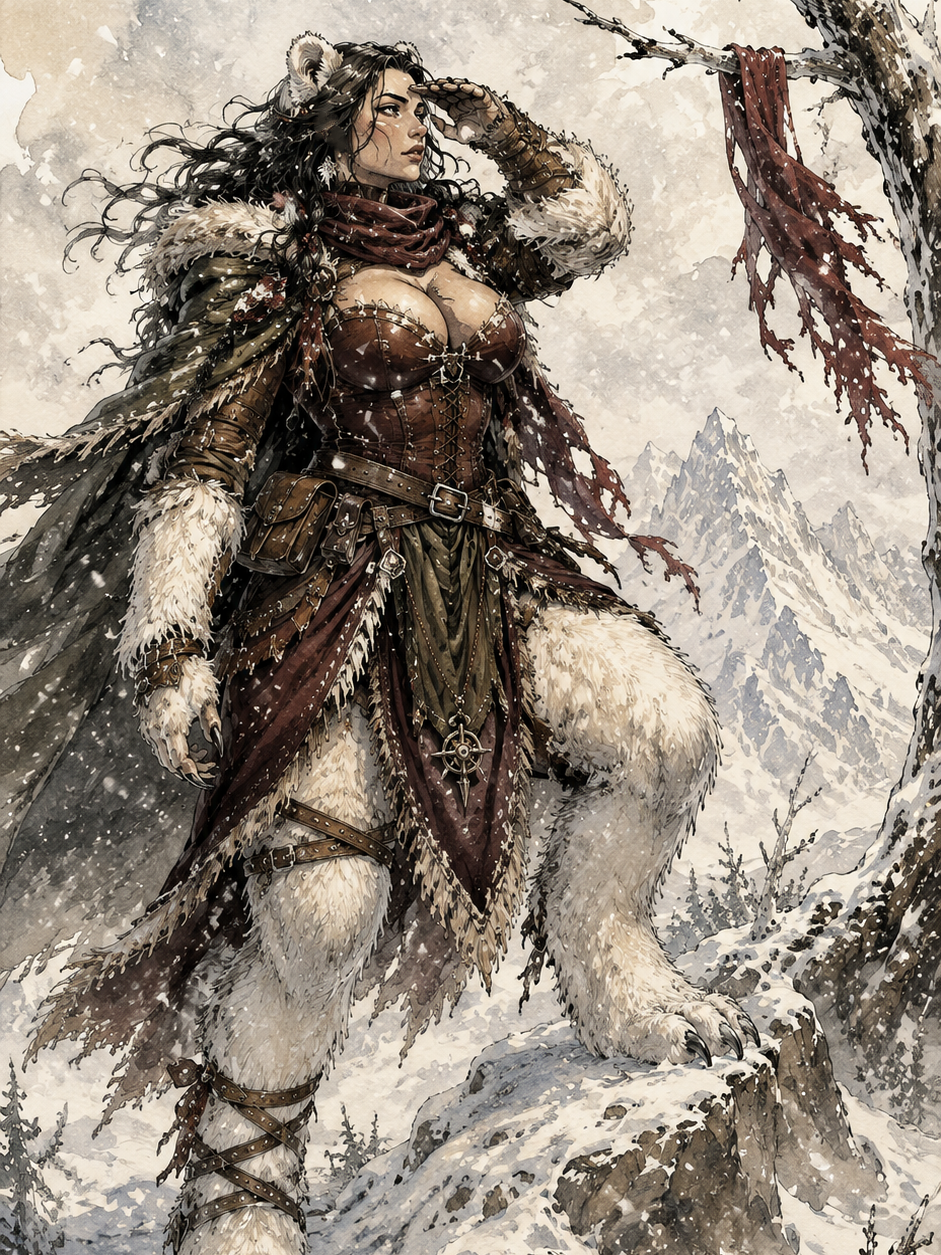
Miracles & Divine Presence
Rhaziel’s miracles often resemble impossible tracking. A search party finds one footprint beneath weeks of snow. A missing child’s scarf catches upon a branch miles from where anyone expected them to travel. An investigator notices that every witness avoided looking toward the same door. A sailor sees migrating birds following a route no chart records and decides to follow. An athlete moments from surrender hears another set of footsteps running beside them even though the track is empty.
His miracles may also protect quarry. A hunted person fleeing unjust pursuit discovers a trail invisible to those behind them. Fog closes around a path after they pass. A predator following without invitation hears Rhaziel’s breathing behind them instead. Older traditions insist that the Divine Stalker occasionally becomes the hunter of hunters. When Rhaziel manifests directly, witnesses often become aware of being watched before they see him. Birds grow quiet. Loose leaves turn in one direction. Shadows lengthen.
Then amber eyes appear in the dark. Sometimes the god stands far away. Sometimes he is suddenly close enough for the witness to feel warmth from his breath. He rarely asks whether they are afraid. He asks: “What are you chasing?”
What His Faith Teaches
Rhaziel teaches that desire acquires meaning through movement. Mortals want countless things. Most desires pass. Others persist until they begin reorganizing a life around themselves. The sacred task is not simply to suppress or indulge them. It is to understand which deserve pursuit. His faithful preserve several principles.
- Desire creates direction. Wanting does not guarantee possession, but it reveals where attention wishes to travel.
- Attention is devotion. To pursue something well requires learning what it actually is rather than chasing an imagined version of it.
- A worthy rival is a gift. Someone who forces you to grow may matter more than someone easily defeated.
- Persistence is not entitlement. Continuing effort may overcome distance, difficulty, ignorance and fear. It does not transform another person’s refusal into an obstacle that devotion is meant to conquer.
- Obsession requires a trail. Focus remains meaningful while it responds to reality. When evidence no longer matters, the pursuer is no longer tracking.
- Capture is not ownership. Reaching something does not automatically establish a right to keep, use or possess it.
- Erotic surrender begins after the chase ends. Within hunter-and-quarry play, resistance during the agreed pursuit belongs to the fantasy. Claiming begins only when the quarry chooses what capture will permit.
- Release completes the role. Something may be deeply desired, intensely pursued and joyfully consummated without becoming permanent.
And above all: The chase matters.
At the Table
Rhaziel works best in campaigns concerned with pursuit, exploration, investigation, rivalry, ambition, obsession, hunting and the difference between determination and entitlement. His presence belongs naturally in frontier expeditions, bounty hunts, athletic tournaments, detective stories, wilderness campaigns, long-distance rescues, rival adventuring companies and quests built around something that refuses to remain easily reached. A Rhazielan NPC does not need to be stalking a lover through the woods. They might be the investigator who has worked the same unsolved disappearance for fifteen years.
They might be the rival adventurer who keeps reaching the dungeon one hour before the party. They might be the elderly explorer who finally admits the mountain is no longer what they are chasing. That is a Rhazielan question.
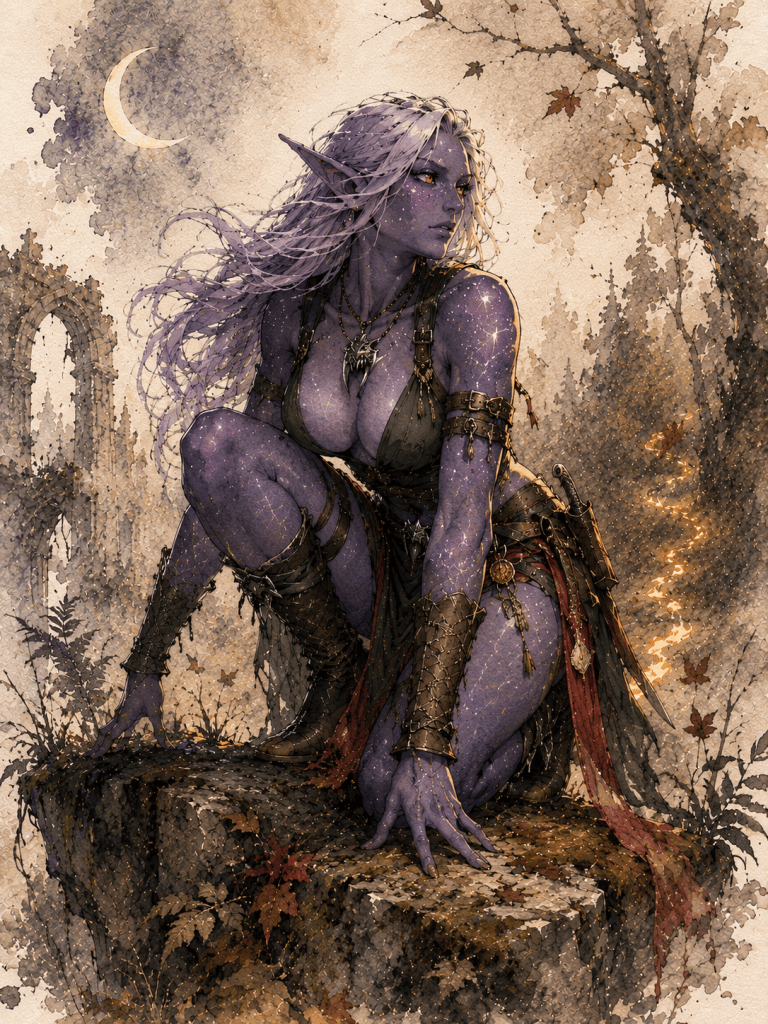
Rhazielan Characters
Characters drawn toward Rhaziel commonly include rangers, scouts, rogues, athletes, explorers, investigators, duelists, bounty hunters, ambitious warriors, couriers and adventurers who experience purpose most clearly when something lies ahead of them. His faith also suits characters whose relationship with pursuit is unhealthy. A hunter may no longer know how to live without quarry. A rival may care more about defeating another person than improving themselves.
A lover may need to learn the difference between persistence and entitlement. An adventurer may discover that completing a lifelong quest leaves them terrified because pursuit had become their identity. Conversely, a character afraid of failure may learn that beginning a chase does not require certainty about reaching the end. These are Rhazielan conflicts.
Divine Domains and Traditions
The archives associate Rhaziel with Shadow, Passion, Trickery and Obsession, alongside traditions such as the Oath of the Hunt, Oath of the Chosen Prey, College of Pursuit, College of Breathless Song, Circle of Night-Stalkers, Pact of the Shadowed Lover and Pact of the Whispering Steps. These remain useful historical associations where their corresponding player options have not yet received Second Bloom conversion. Future Rhazielan character design should emphasize pursuit, tracking, repositioning, sustained focus, chosen quarry, closing distance and the tactical distinction between finding a target and successfully reaching it.
Boons of Rhaziel
The archives preserve several strong blessing concepts.
- Predator’s Breath enhances stealth or social pressure while deliberately approaching a quarry.
- Heart of the Hunt rewards an active chase.
- Pinning Force improves the devotee’s ability to grapple or restrain a target.
These concepts remain thematically appropriate, but the archived numerical rules predate the current mechanical framework.
(Needs updated mechanics: Base 5e → Veiled → Unveiled.)
Shadow Pounce
Older Rhazielan traditions describe a supernatural technique called Shadow Pounce, allowing the devotee to close a short distance instantly and appear near or behind a quarry. The concept strongly fits Rhaziel’s identity as the deity who closes distance, but its final implementation requires explicit range, timing, target restrictions and saving-throw interaction.
(Needs updated mechanics: Base 5e → Veiled → Unveiled.)
Breath of the Hunter
The archives also preserve Breath of the Hunter, a divine manifestation that creates intense awareness of approach and retreat among nearby creatures. A rebuilt version should emphasize movement choice, pursuit and tactical repositioning rather than supernatural compulsion toward erotic behavior. When optional Desire mechanics are active, Rhazielan effects can naturally interact with Arousal generated by consensual pursuit, capture or chase-tagged scenes. Such mechanical pressure never determines narrative sexual consent.
(Needs updated mechanics: Base 5e → Veiled → Unveiled.)
Sacred Relics
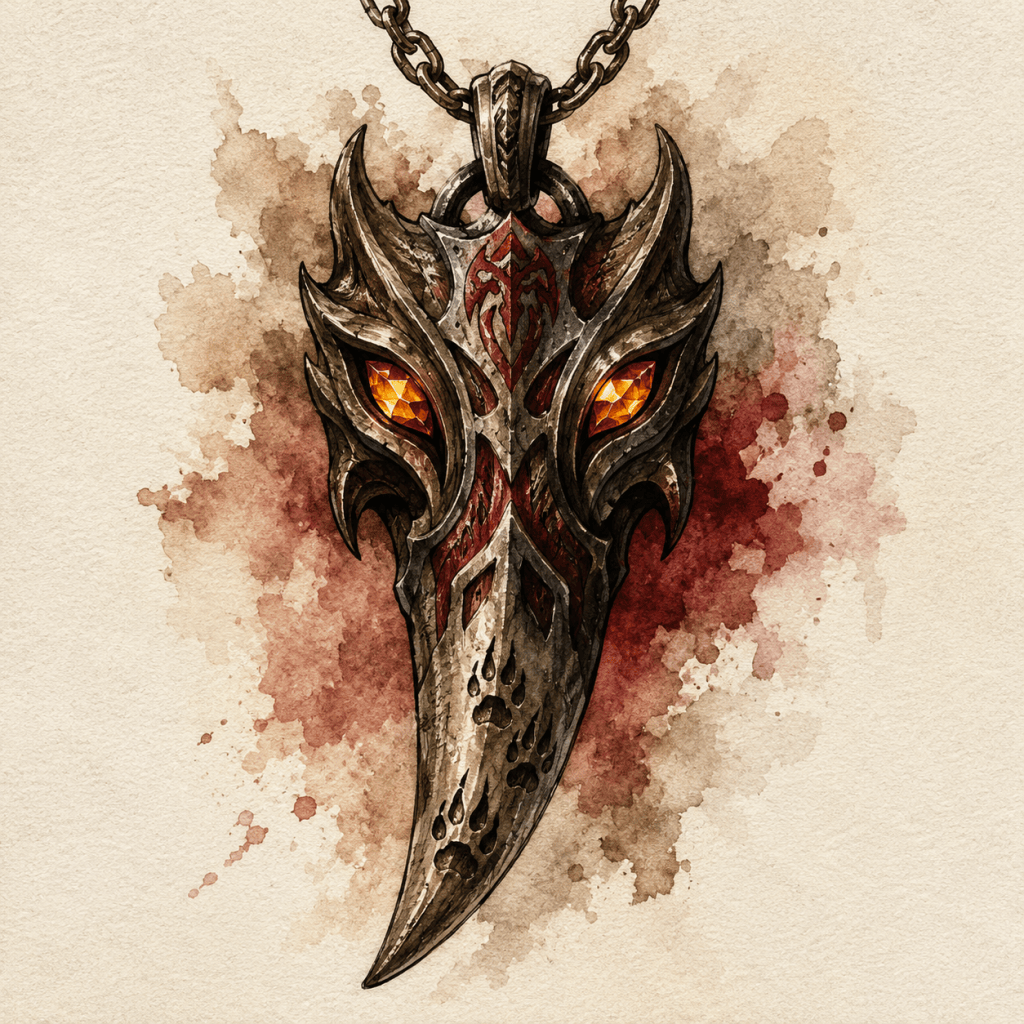
The Hunter’s Mark Pendant
This rare form of the Watching Fang contains two narrow amber stones where the symbol’s eyes would normally be empty. When a quarry is deliberately marked according to the pendant’s rite, the stones gradually warm whenever the bearer discovers meaningful evidence of the quarry’s passage. Older accounts claim the pendant could reveal a trail across impossible distances. More troubling legends describe corrupted versions capable of marking someone without their participation. Rhazielan temples destroy such relics whenever possible.
(Needs updated mechanics: Base 5e → Veiled → Unveiled.)
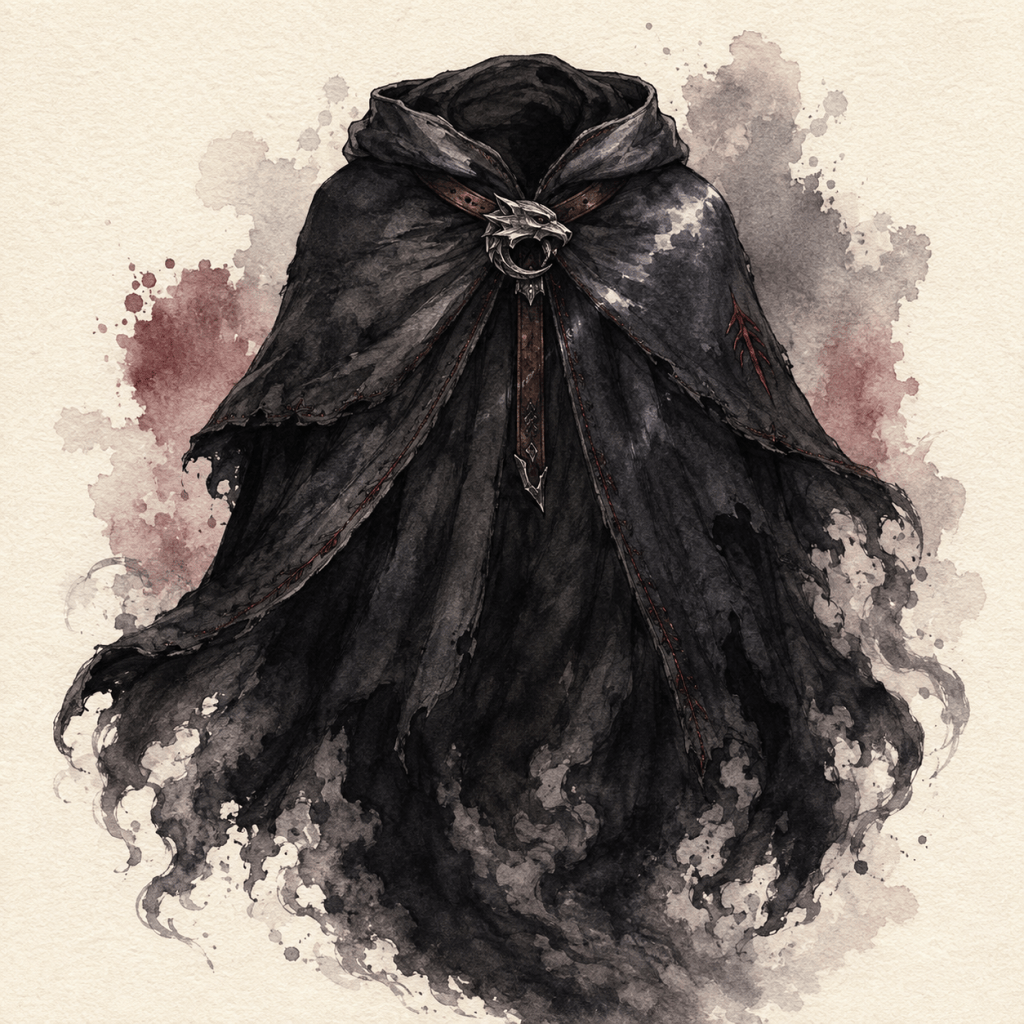
Rhaziel’s Shadowcloak
This heavy charcoal cloak appears ordinary while its bearer remains still. During active pursuit, the hem dissolves gradually into smoke-dark shadow. Branches seem to avoid catching it. Footsteps become muted. Moonlight passes strangely across its surface. The archives claim master hunters could use the cloak to become briefly insubstantial while closing distance with a chosen quarry.
(Needs updated mechanics: Base 5e → Veiled → Unveiled.)
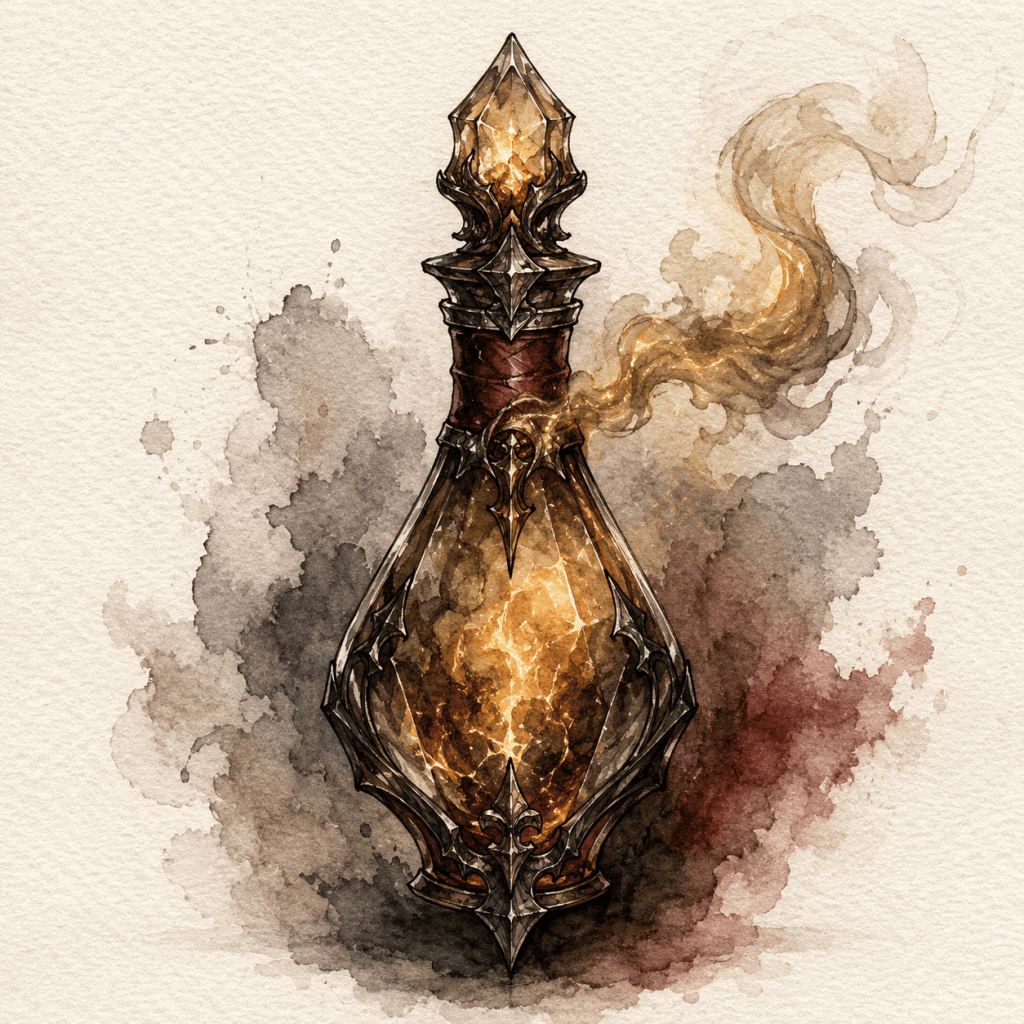
The Breathstone Phial
This small smoky-gold crystal vial remains warm regardless of weather. When opened, it releases a brief exhalation carrying leather, wet leaves and the unmistakable sensation that someone has drawn very close behind the listener. Older versions created direct Arousal effects. Its Second Bloom mechanics should instead establish a complete baseline effect before adding Veiled or Unveiled interactions.
(Needs updated mechanics: Base 5e → Veiled → Unveiled.)
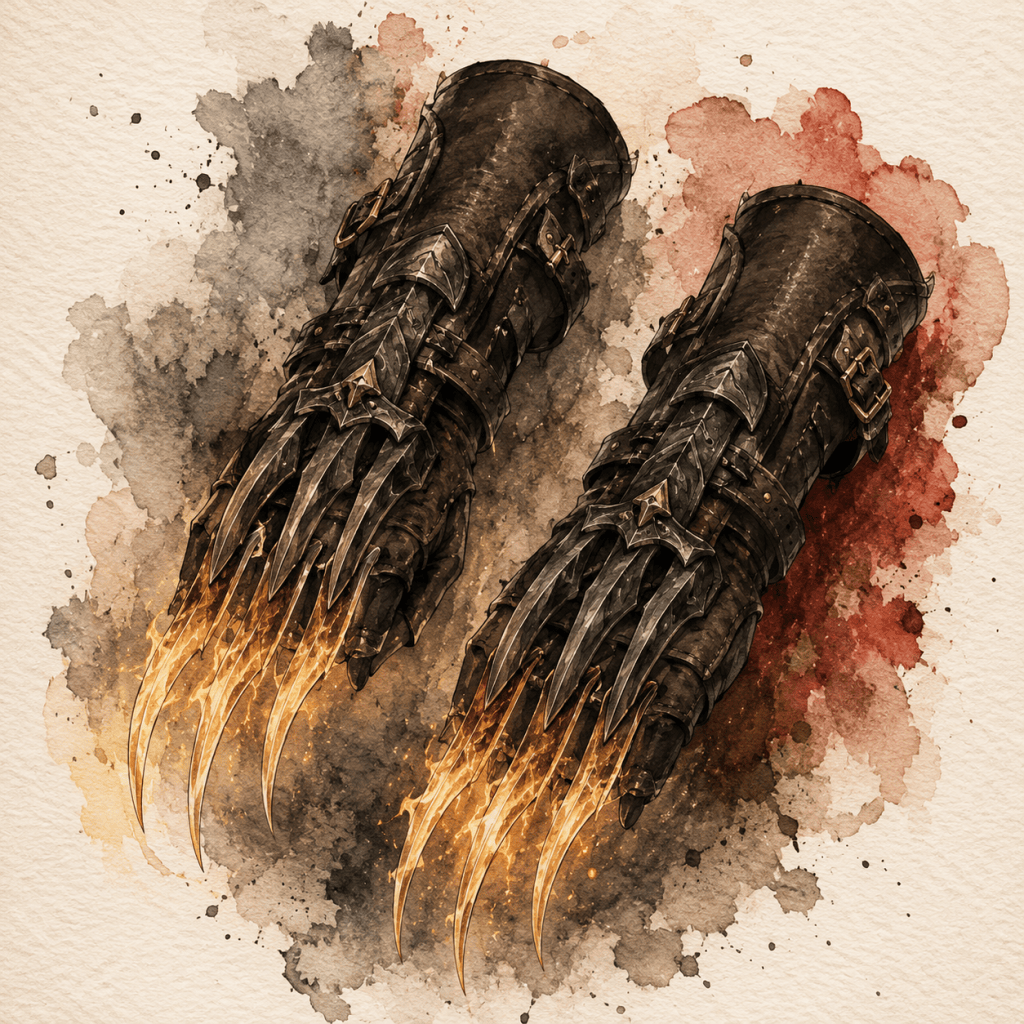
Claws of the Divine Stalker
These dark leather bracers bear three blackened-steel claws along each forearm. The claws remain decorative until the wearer commits to closing distance with a chosen quarry. Then translucent amber talons extend beyond them without injuring the wearer. Archived traditions associate the relic with grappling, capture and supernatural pinning force.
(Needs updated mechanics: Base 5e → Veiled → Unveiled.)
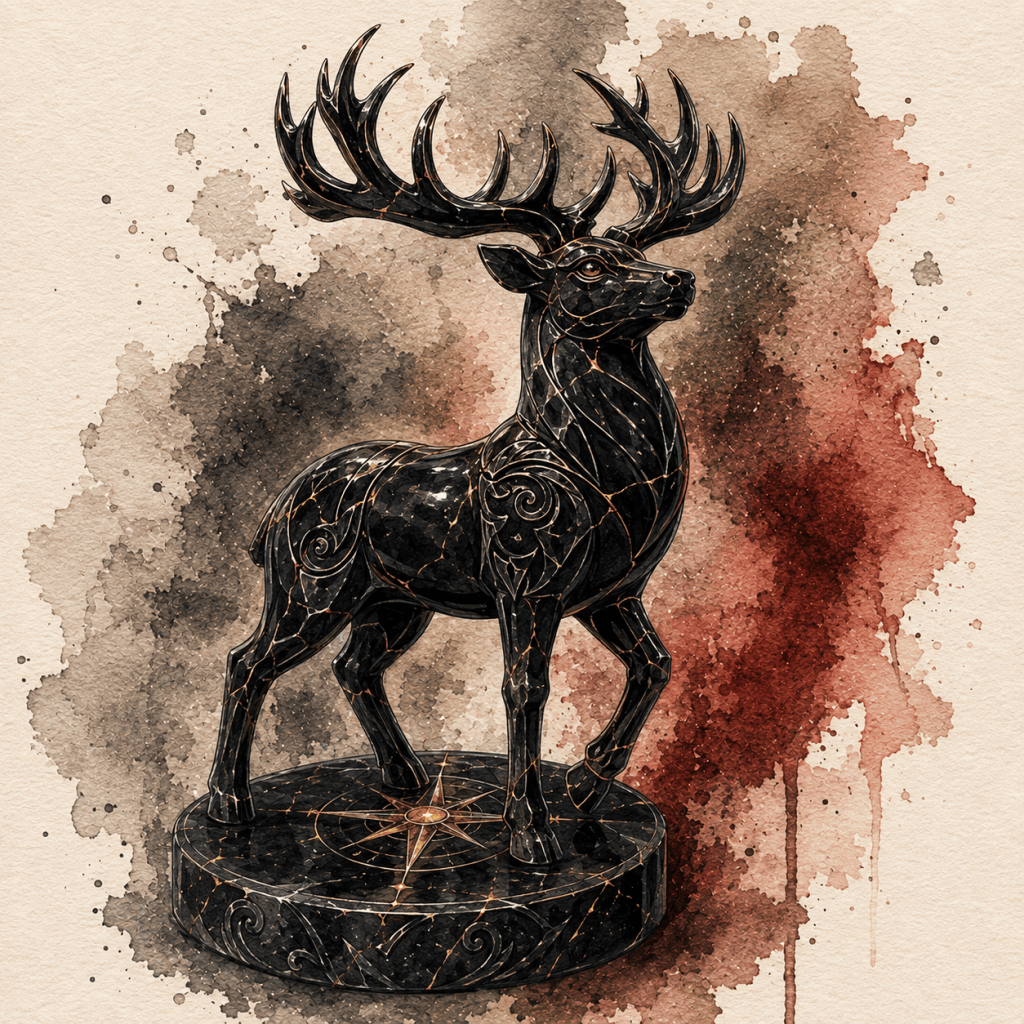
The Stone of the Black Stag
This smooth black stone bears no inscription. A faint golden track appears upon its surface whenever its bearer becomes consumed by a long pursuit. The track sometimes points toward the quarry. Sometimes it points home. No Rhazielan theologian has established a reliable means of predicting which.
(Needs updated mechanics: Base 5e → Veiled → Unveiled.)
Adventure Hooks
The Quarry That Never Arrived
A major Breathless Run ends without either hunter or quarry returning to sanctuary. Searchers find both sets of tracks leaving the ritual course and entering forbidden woodland. Then a third set appears behind them. Whatever followed the participants seems to have understood the rite well enough to join.
The Mark Without Invitation
People throughout a city begin awakening with Rhazielan quarry marks painted upon their skin. None consented to participate in a hunt. By nightfall, supernatural hunters begin following the marks. Rhaziel’s clergy declare the phenomenon blasphemous and ask the characters to discover who has learned to counterfeit sacred invitation.
The Last Rival
Two legendary adventurers have competed for decades. One dies. The survivor immediately announces one final expedition to a ruin they had both failed to reach, claiming their rival would have wanted the race completed. The dead adventurer’s ghost appears to the characters with a different request. “Make them stop.”
The Black Stag Runs Again
Witnesses report seeing the Black Stag from Rhaziel’s oldest myth moving through several distant forests on the same night. Hunters throughout Erosia interpret the sightings as the beginning of the greatest sacred hunt in centuries. Keepers of the Last Step are alarmed. The oldest surviving version of the myth says nothing good happens when mortals mistake Rhaziel’s abandoned quarry for their own.
The City of Following Shadows
Shadows throughout a major city begin stretching toward the same district regardless of the position of the sun. Soon citizens experience an overwhelming certainty that something important is hidden there. The sensation creates treasure seekers, investigators, priests and criminals in equal measure. Every shadow points toward an ordinary locked apartment. Its occupant has no idea why.
The Hunt That Must End
A celebrated Night-Hunter has pursued a supernatural predator for twenty years. The creature once killed dozens. It has harmed no one for a decade. Evidence suggests it changed long ago, yet the hunter refuses to believe the quarry can become something different simply because time passed. Rhaziel’s Watching Fang above the local sanctuary has turned away from the hunter for the first time.
Scents for Gameplay
Rhaziel’s presence is often recognized through scents associated with movement, weather, leather and the heightened physical awareness of pursuit. Use these fragrances as atmospheric cues rather than automatic confirmation of divine involvement.
| d12 | Scent | Suggested Moment |
|---|---|---|
| 1 | Worn leather warmed by skin | Rhaziel’s presence may be near. |
| 2 | Wet leaves and dark earth after rain | A trail has become important. |
| 3 | Pine needles crushed beneath a boot | Travel, tracking or the beginning of pursuit. |
| 4 | Cold iron, leather and distant woodsmoke | Formal preparation for a hunt. |
| 5 | Amber resin and autumn wind | A meaningful quarry has been identified. |
| 6 | Warm skin, cedar and a faint trace of sweat | Physical exertion, competition or pursuit drawing close. |
| 7 | Another person’s perfume carried from impossibly far away | Courtship, marked quarry or intimate pursuit. |
| 8 | Fur, moss and extinguished candlewick | Hidden observation, waiting or the hunter holding position. |
| 9 | Rain striking warm stone | A long pursuit is about to change direction. |
| 10 | Leather, crimson spice and warm breath | Capture, charged proximity or consensual hunter-and-quarry ritual. |
| 11 | Ozone, iron and leaves suddenly disturbed by no visible wind | The quarry is closer than anyone realizes. |
| 12 | The unmistakable scent of someone or something the observer has been desperately trying to find | A direct omen or powerful manifestation of Rhaziel’s attention. |
Using Scent as Foreshadowing
Repetition gives Rhaziel’s sensory signs meaning. If wet leaves and dark earth repeatedly accompany the discovery of an important trail, the scent alone can eventually make players start looking for tracks. If another person’s perfume appears where distance should make it impossible, characters may understand that pursuit has become personal before anyone speaks.
A crowded ballroom may suddenly smell of pine and rain when a long-sought rival enters. An underground ruin may carry autumn wind moments before a hidden passage is discovered. A quarry hiding from something genuinely dangerous may smell worn leather and realize another hunter has begun following the thing behind them. Rhaziel’s strongest manifestations create the sensation that distance has shortened without anyone visibly moving.
The air warms. A footprint becomes clear. Somewhere nearby, something has noticed the trail. And the chase begins.
 Whispers of Erosia
You must be logged in to post a comment.