
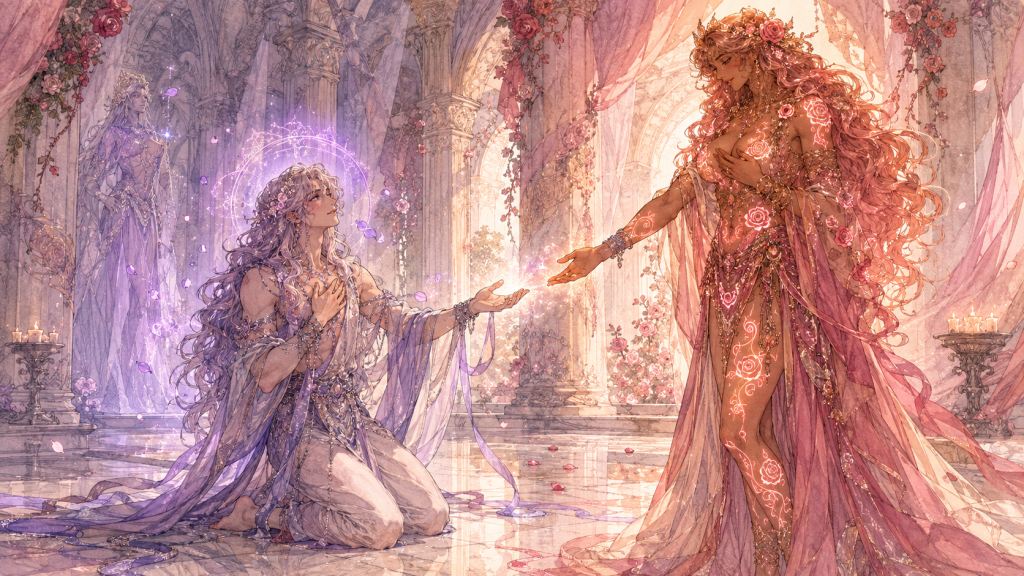
Solynth
The Lord of Soft Submission • Keeper of the Offered Heart
God of Yielding, Softness and Devoted Service
Submission • Softness • Service
Willing submission, trust, service, praise, role yielding, feminization, androgyny, cross-dressing, tender dominance, collars, devotional care and the relief found in placing oneself willingly within another’s hands.
“To soften is not to break.”
Solynth is the god of chosen yielding: the breath released when someone finally stops holding themselves rigid, the knees deliberately lowered before someone trusted and the strange courage required to say, I do not wish to lead this moment. I want to be guided.
His worship embraces submission, service, praise, tenderness, collars, role reversal, gentle dominance and the desire to be shaped carefully by someone whose attention has been willingly invited. Among his most recognizable mysteries are feminization, androgyny and cross-dressing, especially among masculine-presenting devotees who discover pleasure in lace, silk, stockings, ribbons, cosmetics, gowns or other forms of beauty they were taught did not belong to them.
Yet Solynth is not merely the god of men who embrace femininity. His deeper mystery concerns the roles people carry and the relief that may come when those roles are set down. A ruler may tire of deciding. A caregiver may long to be cared for. A warrior may wish to remove their armor before someone who will not mistake vulnerability for weakness. A woman accustomed to commanding may desire an evening in which another chooses the wine, the route and the hour of rest. An androgynous devotee may discover that no single form of presentation fully contains them.
For Solynth, these desires arise from the same sacred current.
The world often teaches people that strength must remain visible to remain real. Solynth teaches otherwise. Power does not vanish because it kneels. Masculinity does not disappear beneath lace. Authority is not diminished because it is surrendered temporarily. A person who serves with intention is not necessarily lesser than the person being served.
The faithful preserve three teachings above all others:
Submission is chosen.
Softness is strength.
What is entrusted must be held gently.
Lore & Mythos
The Breath Between Command and Surrender
The oldest Solynthian creation traditions do not describe a birth in the ordinary sense. They claim Solynth emerged from a pause. Velyssara had already awakened desire throughout creation, and Mirellune had revealed that authority could be given rather than merely seized. Mortals understood hunger, passion, devotion, command and obedience. Yet one longing remained difficult to name. Someone who possessed the strength to stand wished to kneel.
Not because they had been defeated. Not because refusal had become impossible. They simply desired the feeling of placing themselves willingly into another person’s care. The archives describe the moment as a single trembling breath between command and surrender. Whoever first experienced it understood that they remained capable of rising. That knowledge made the decision to remain lowered meaningful.
The breath became warm. Lavender light gathered around it. Solynth opened his eyes.
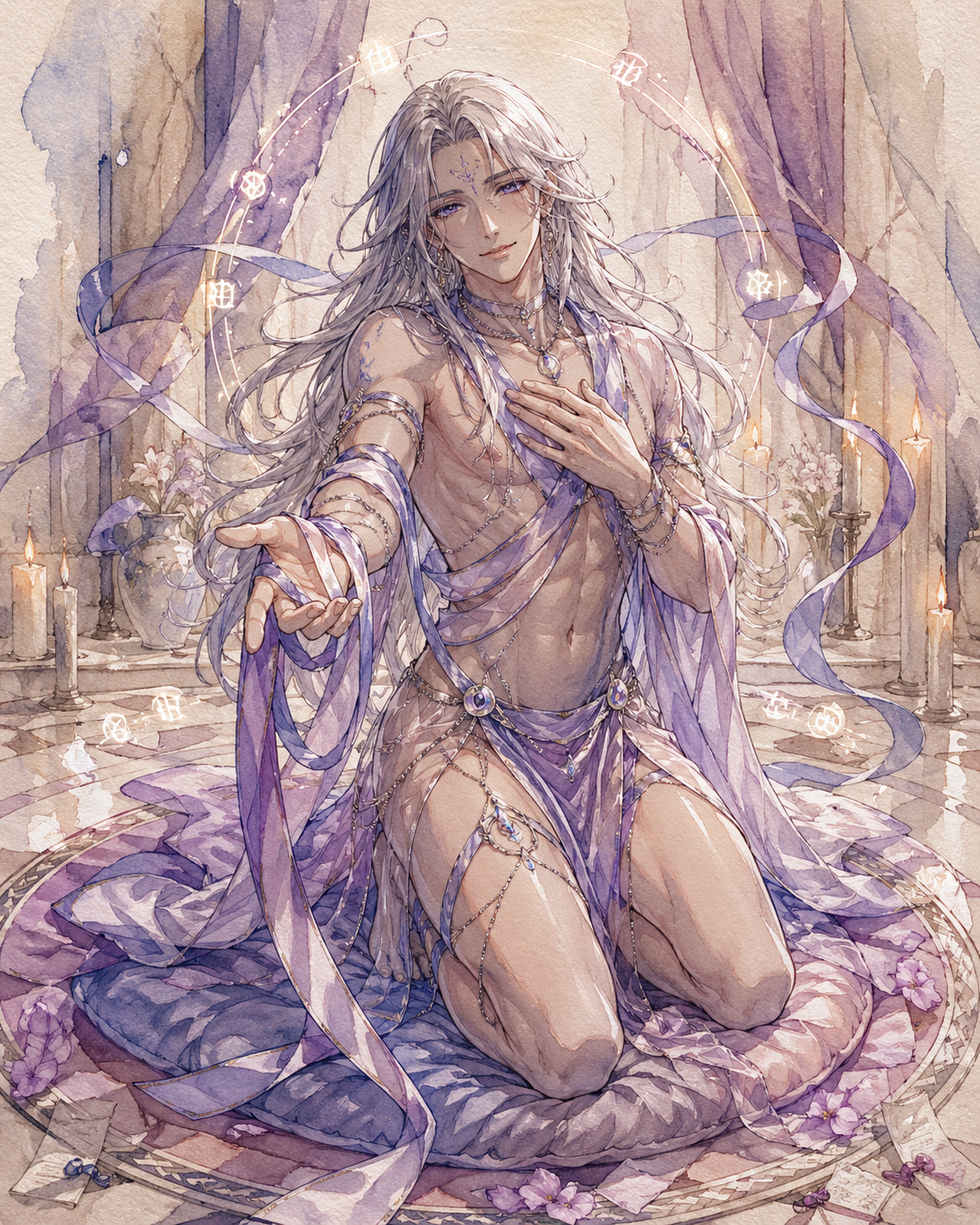
Some traditions portray his first form as a beautiful young man whose features shifted subtly between masculine and feminine expressions. Others describe an androgynous figure clothed only in ribbons of blue and violet light. A few older hymns insist that anyone who looked directly at him saw whatever form of softness they had denied themselves.
Solynth did not issue a command. He extended one open hand. From this account comes the oldest surviving name for him: the Lord of Soft Submission.
The Man in the Blue Dress
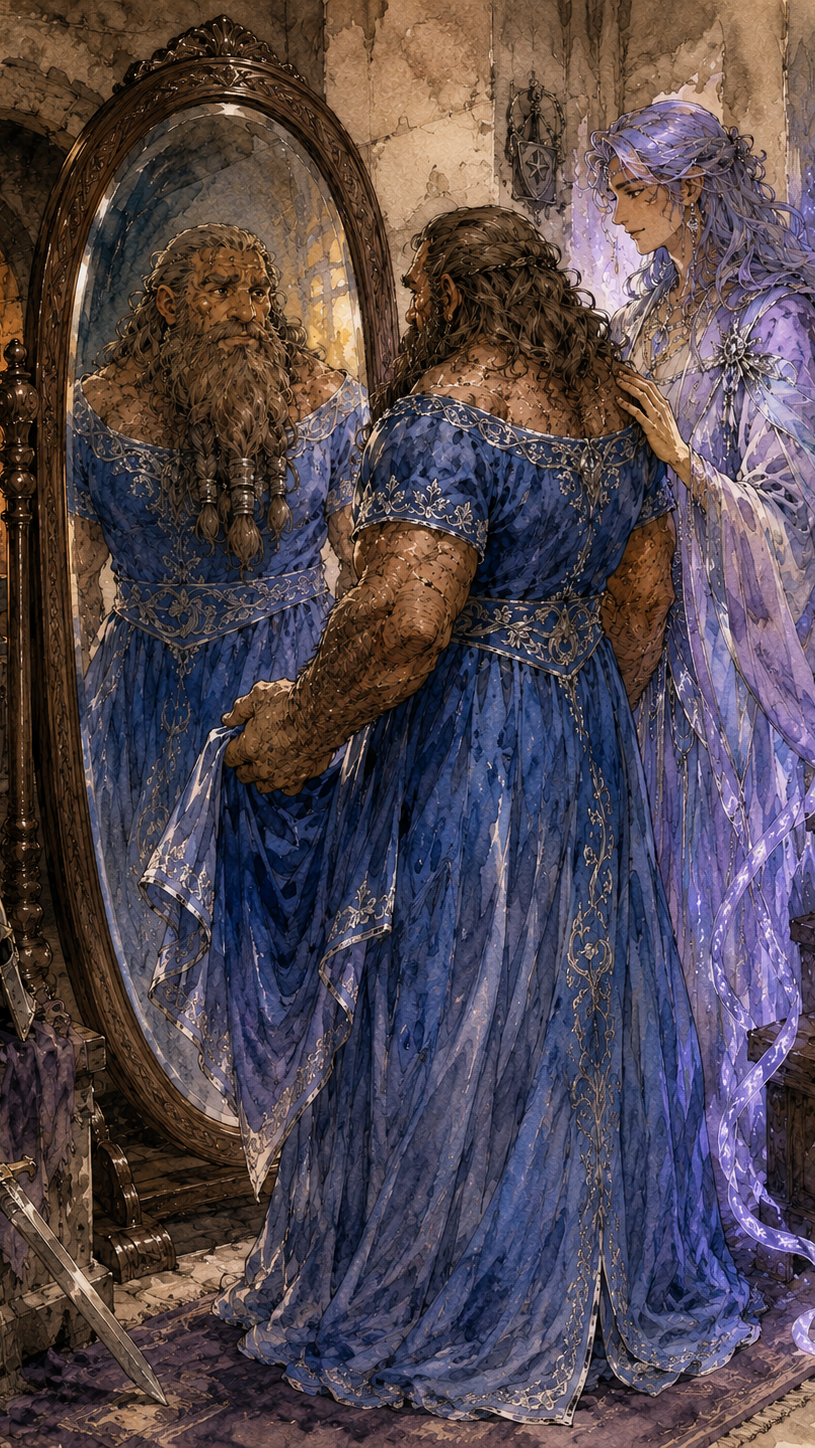
A later story, especially beloved among the Silken Brothers and other masculine devotional orders, tells of a blacksmith who prayed to Solynth for years without entering a temple. The blacksmith was enormous, bearded and renowned for forging armor. He married, raised children, served in war and was regarded throughout his town as an exemplary man. He also kept a blue dress hidden beneath the floorboards of his workshop.
The garment had been purchased years earlier from a traveling merchant. He loved its color. He loved the softness of its fabric. He loved the thought of wearing it. He never did.
The blacksmith feared that wanting the dress meant he had misunderstood himself. He did not wish to become a woman. He did not hate his body. He loved his wife and enjoyed being called husband and father. Yet the dress called to him. One night, Solynth entered the workshop disguised as an apprentice and asked why the garment remained hidden. The blacksmith confessed that he was afraid wearing it would make him less of what he already was.
Solynth asked whether the metal in a sword ceased to be metal after it was polished. The blacksmith said no. Solynth asked whether a flower carved into a breastplate made the armor incapable of stopping a blade. Again the blacksmith said no.
“Then why,” Solynth asked, “have you made your manhood more fragile than steel?” The blacksmith put on the dress. In most versions, he wore it first only in the locked workshop. Later he wore it before his wife. Some stories say he eventually wore it publicly during the Lavender Vigil. Others insist he never did.
Solynthian theologians consider the disagreement important. The miracle was not being seen. The miracle was no longer believing that softness could take something essential away.
The Warrior and the Lavender Ribbon
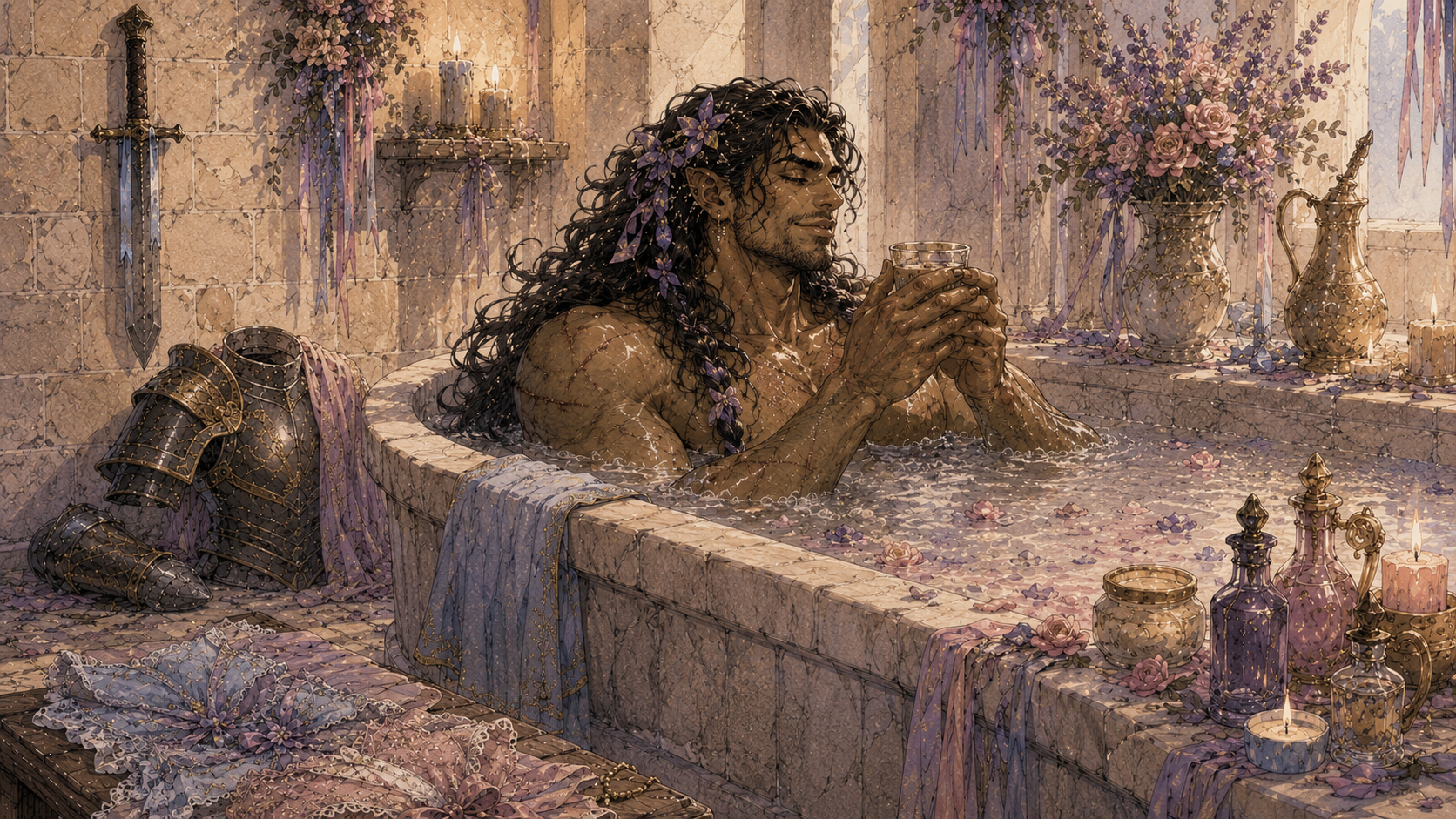
One of Solynth’s most beloved myths concerns a warrior whose name changes according to the culture telling the story. In most versions, he is a celebrated soldier who has spent his entire adult life being dependable. Others ask him where to march, how to fight, when to retreat and what must be done next. His family relies upon him. His companions follow him. Even his lovers ask what he prefers before naming desires of their own.
He becomes very good at carrying weight. He becomes incapable of setting it down. One evening, after returning victorious from a campaign, the warrior finds a stranger waiting in his chambers. The stranger has prepared a bath, laid clean clothing beside the bed and placed a single lavender ribbon upon the table.
The warrior assumes he must decide what happens next. The stranger asks whether he would prefer not to. According to the oldest version, the warrior begins laughing because the question seems absurd. Then he begins crying for the same reason. He says yes.
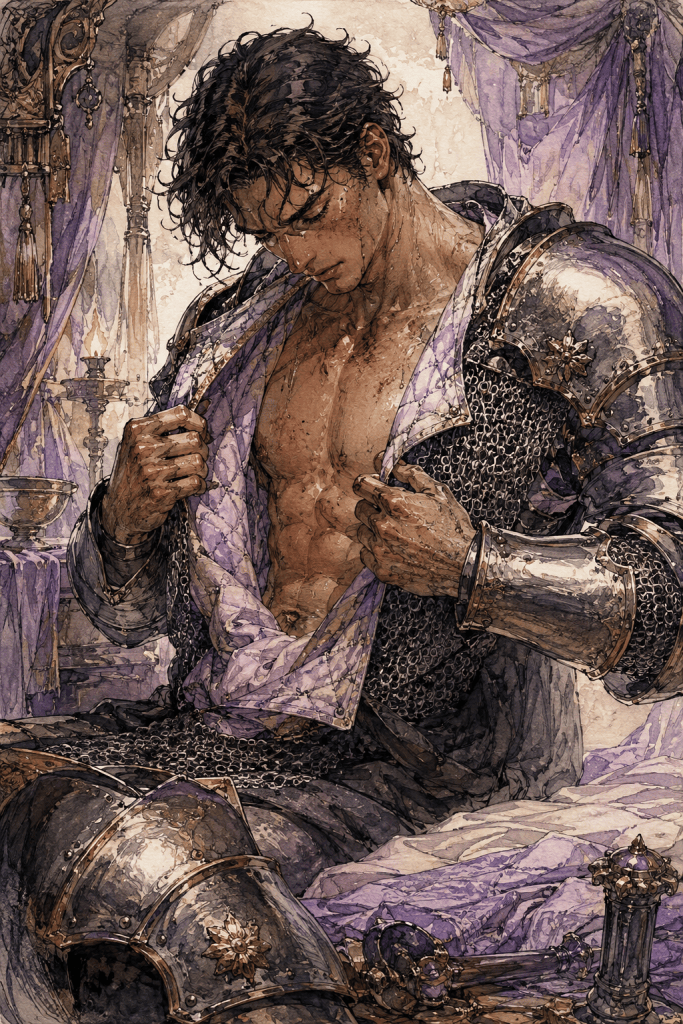
The stranger removes the warrior’s armor. He washes road dust from the warrior’s hair. He selects the evening meal without asking what should be served. He draws a soft robe around the warrior’s shoulders and ties the lavender ribbon gently at his throat. Nothing extraordinary happens. The warrior simply sleeps.
When he awakens, the stranger is gone. The ribbon remains. Only later does he realize that the person who visited him was Solynth. Solynthian clergy teach the story to people who confuse capability with obligation. The warrior did not become less capable because another person made decisions for one night. His strength had not vanished. He had simply stopped being required to perform it.
The myth survives in one of Solynth’s most common teachings: You may set down what you are still strong enough to carry.
The First Velvet Kneel
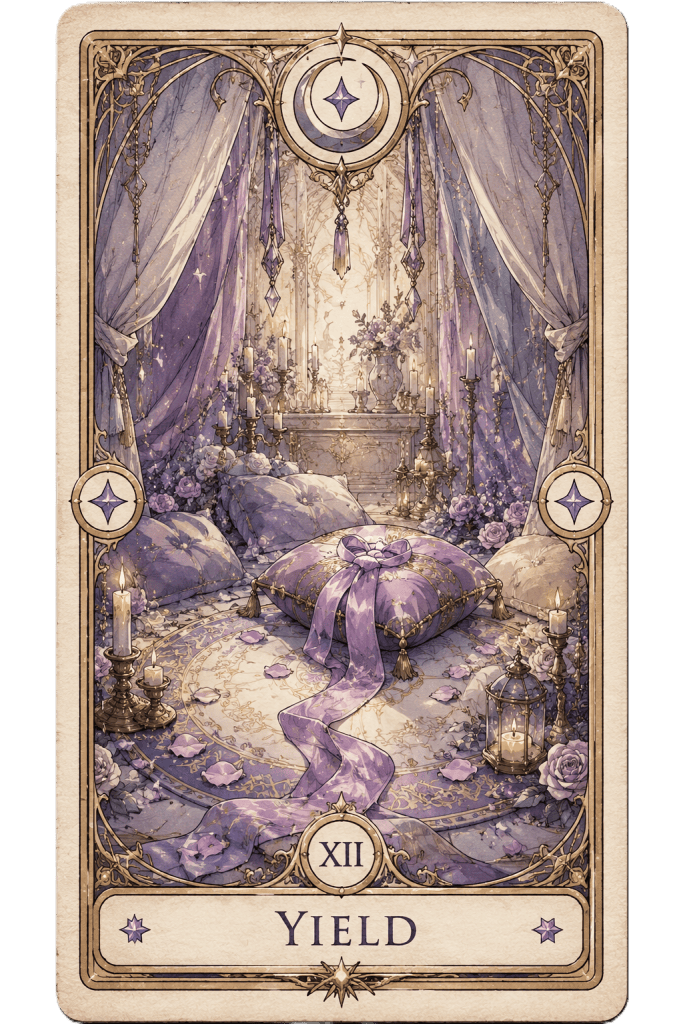
Another foundational tradition concerns the first formal act of Solynthian submission. A mortal came before Solynth and asked to be taught how to kneel beautifully. The god instructed them to lower themselves upon a cushion. The mortal obeyed. Solynth corrected their shoulders, adjusted the angle of their hands and lifted their chin with two fingers. He then told the devotee to rise.
The mortal remained kneeling. Solynth repeated himself. Again, the mortal did not move. When Solynth asked why, the devotee answered, “Because I want to remain.”
The god smiled. He told them to rise a third time. This time, the devotee stood immediately. Solynth embraced them. The story became the basis of the Velvet Kneel, one of his most widespread ritual practices. The lesson is subtle but fundamental. Sacred submission is not demonstrated by perfect obedience alone. It is demonstrated by the continuing presence of choice.
The kneeling mattered because the devotee wished to remain. The rising mattered because the devotee still could.
The Bowl and the Crown
A less erotic but equally important parable concerns a queen famous for her generosity. She spent every day hearing petitions, resolving disputes, feeding guests, comforting grieving families and ensuring that everyone around her received what they needed. Her people loved her. Her household adored her. Eventually, she became furious whenever anyone attempted to help her.
When a servant brought food without being asked, the queen refused it. When a physician instructed her to rest, she continued working. When her lover offered to choose the evening’s entertainment, she insisted the decision did not matter and told them to choose whatever pleased them. Solynth appeared during a feast and placed an empty bowl before the queen.
She ordered it filled. He did nothing. She repeated the command. Again he did nothing. Finally, irritated, the queen asked what he wanted from her. Solynth said, “Ask me to feed you.”
The queen could command armies. She could negotiate treaties. She could speak before thousands. She could not say those four words. Solynth waited. Eventually, she whispered the request.
He filled the bowl and fed her with his own hand. The story became one of Solynth’s principal teachings concerning receptivity. Service is sacred, but a person may become imprisoned by being forever necessary. Those who give constantly must sometimes permit themselves to receive. A person who cannot accept care has not transcended need. They have merely made need unspeakable.
The Desire He Embodies
Solynth embodies the desire to yield without disappearing. His sacred current begins when someone willingly permits another person, role, relationship or purpose to guide them. This may be erotic. It may be devotional, social or deeply ordinary. An apprentice may find satisfaction in performing a task exactly as taught. A knight may choose to serve a cause greater than personal ambition. A lover may wish to kneel, obey, receive praise or surrender decisions for an evening. A person accustomed to command may long for the relief of being told what comes next.
The underlying desire is not necessarily weakness. It is release from the requirement to remain self-directing at every moment.
Submission & the Offered Will
Solynthian theology distinguishes sharply between yielding and powerlessness. A powerless person may comply because resistance is impossible. A yielding person possesses meaningful choice and deliberately relaxes some part of it. This distinction produces the concept called the Offered Will. A devotee may offer attention, service, posture, a decision, an agreed role or a defined degree of obedience. The offering does not automatically include anything else.
Someone may kneel without consenting to touch. Someone may accept a collar without surrendering every decision. Someone may enjoy being dressed by another person while retaining complete authority over what clothing may be used. Solynth’s faithful therefore distrust assumptions disguised as intimacy.
An offered thing is sacred precisely because it was offered. Everything else remains where it was.
Softness & the Unarmored Self
Softness is Solynth’s central metaphor. Armor has value. So do walls, discipline, confidence, independence and the ability to endure difficult things. Solynth does not condemn any of them. He asks whether they can be removed. A person who possesses defenses but never permits themselves to lower them may eventually forget the difference between protection and identity. Solynthian teachers call this condition Living Armored.
The Unarmored Self is not a person’s secret “true” identity hidden beneath every role. Solynth’s theology is less absolute than that. A warrior may genuinely love being a warrior. A ruler may genuinely enjoy command. A caregiver may genuinely find fulfillment in nurturing others.
The sacred question is whether these roles remain choices. Can the warrior be held? Can the ruler be guided?Can the caregiver receive care? Can the strong person say, I want to be soft now, without believing they have betrayed themselves?
Solynth waits wherever the answer becomes yes.
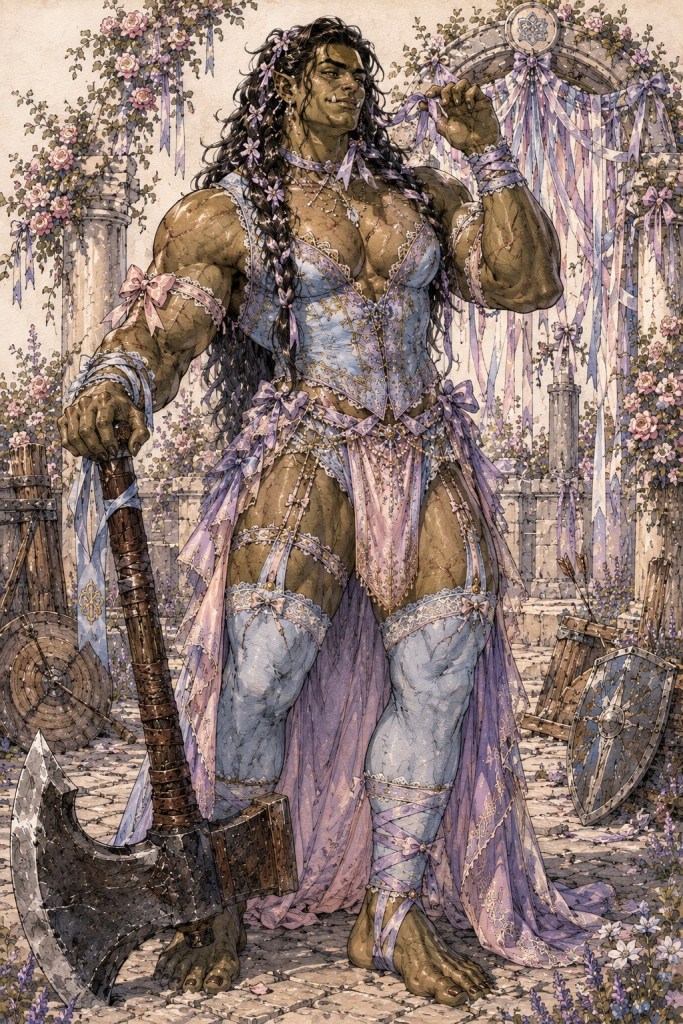
Masculinity & Feminine Adornment
Among Solynth’s most distinctive mysteries is the relationship between masculinity and femininity. The archives use the word feminization openly, and contemporary Solynthian clergy generally retain it when describing deliberate erotic or ritual transformation of presentation. A masculine devotee may dress in lace, satin, stockings, gowns, ribbons, cosmetics, delicate jewelry or traditionally feminine ceremonial clothing. Another person may guide the transformation as part of an agreed role. Praise, service, posture and submissive behavior may accompany it.
Yet Solynthian theology insists that feminine presentation does not automatically erase masculine identity. A man in a dress may still be a man. A warrior in stockings may remain a warrior. A bearded husband wearing lavender lace has not necessarily become wife, woman or something between. He may simply be a man who discovered that softness feels beautiful against his skin.
Other devotees experience femininity differently. Some discover that feminine presentation reveals an aspect of identity they wish to carry beyond ritual space. Some move toward androgyny. Some change names, pronouns, social roles or bodily presentation. Solynth does not demand that every exploration end at the same destination.
His concern is permission. The faithful summarize the mystery simply: Softness does not revoke masculinity.
Androgyny and the Space Between
Androgyny remains sacred within Solynth’s faith because it resists the assumption that beauty must always declare itself entirely masculine or entirely feminine. Some worshippers deliberately cultivate ambiguous presentation. Others possess bodies or identities that already cross familiar boundaries. Still others move between strongly gendered expressions according to desire, ritual or circumstance. Solynth does not treat androgyny as indecision.
It may be fullness. A person may enjoy a masculine body and feminine clothing. Another may seek a form in which neither category feels primary. A third may move between presentations without regarding any of them as false. The archives frequently depict Solynth himself as androgynous, though contemporary sacred art often preserves a softly masculine foundation beneath his shifting presentation. The theological meaning remains the same: identity can possess softness, ambiguity and contradiction without needing to resolve itself for another person’s convenience.
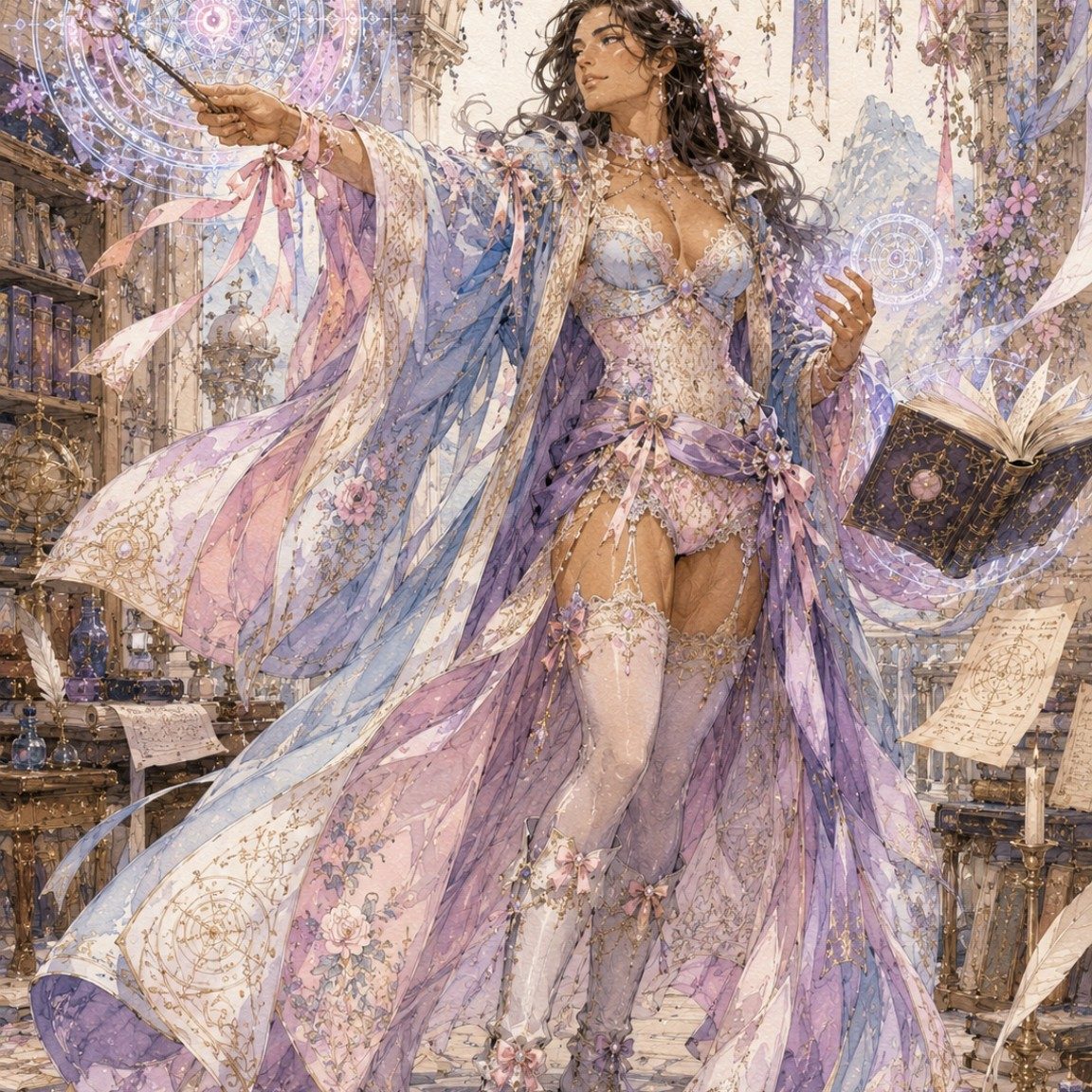
Service and the Tender Task
Service occupies a central place within Solynth’s worship because yielding often becomes visible through action. Preparing another person’s meal can be devotion. Brushing their hair can be devotion. Polishing boots, arranging clothing, carrying equipment, preparing a bath, offering massage, setting a table or completing a requested task carefully can all become sacred acts. Yet Solynthian service is not servitude.
Service becomes holy through intention, not inferiority. A devotee who chooses to serve may derive profound satisfaction from doing something well because it pleases another person. That satisfaction is not automatically evidence of low status. The faith also teaches the responsibility of the recipient. Careless entitlement profanes service. Someone who accepts devotion without gratitude eventually teaches the giver that their attention is invisible.
Thus one of Solynth’s quieter teachings says: Receive service as though someone chose to give you part of their life. They did.
Praise and Erotic Humility
Praise is powerful within Solynthian practice because it makes recognition explicit. Many devotees respond intensely to being told they have done well, that they are beautiful, that their service was noticed or that their submission is pleasing. Praise may become erotic precisely because it allows someone to stop evaluating themselves for a moment and receive another person’s approval.
This differs from humiliation, though humiliation may appear within some consensual private traditions. Solynth’s central mystery is erotic humility, not degradation. Erotic humility allows the ego to soften without requiring self-hatred. A worshipper may lower their eyes, blush, kneel or accept being guided without believing they are worthless. The faith considers the difference profound.
- Humility says, I do not need to be above you.
- Shame says, I do not deserve to be beside you.
Solynth sanctifies the first. He opposes the second when it is imposed as truth.
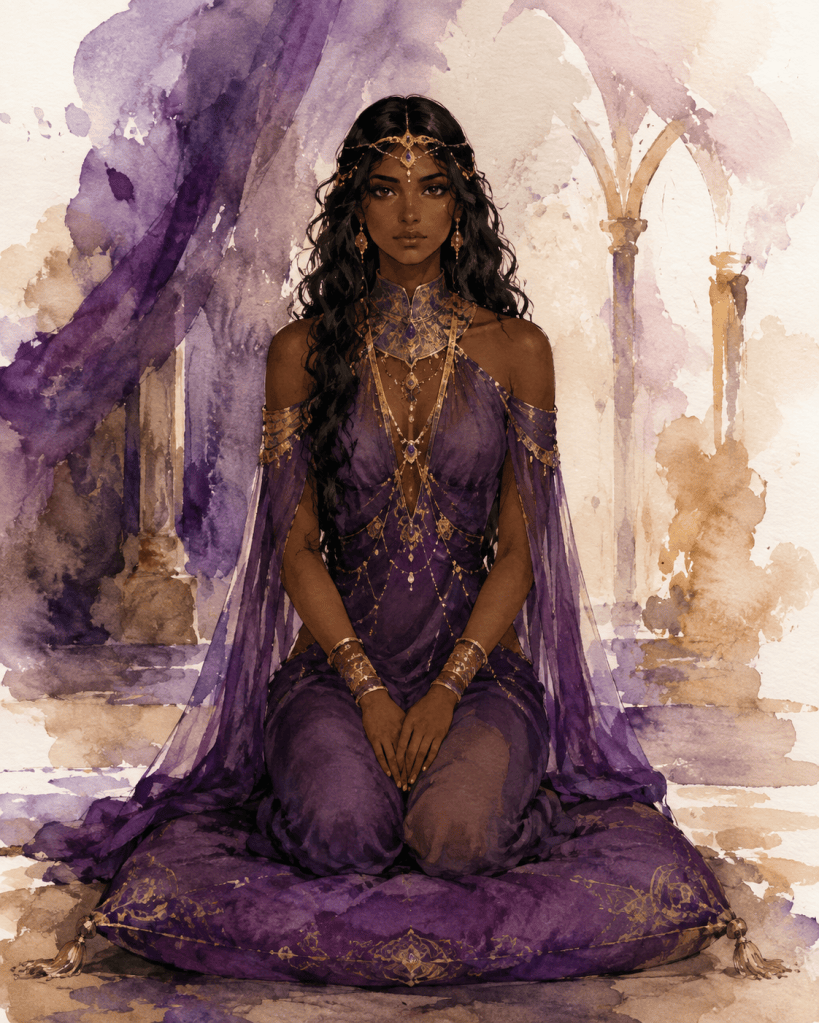
Collars and Chosen Belonging
Collars are among Solynth’s most recognizable devotional objects, though their meaning differs somewhat from Mirellunean practice. Within Mirellune’s worship, a collar often marks structured authority, vow or formalized relationship. Solynthian collars more commonly represent chosen belonging, tenderness and the emotional pleasure of a role willingly accepted. Some are barely more than ribbons. Others are elaborate lace or jeweled pieces. A devotional collar may indicate service to Solynth, affection between partners, a submissive role, a temporary ritual state or simply the wearer’s delight in what the garment makes them feel.
The faithful consider it discourteous to assume a collar’s meaning without asking. The neck may carry a symbol. The person still owns the explanation.
Gentle Dominance and the Receiving Hand
Although Solynth is primarily associated with submission, the person receiving surrender also stands within his sacred current. Solynthian dominance is often called the Receiving Hand. A Receiving Hand does not prove authority by maximizing commands. They create the conditions in which another person can safely stop directing themselves. They notice tension. They remember boundaries. They praise sincerely. They adjust a ribbon before it chafes. They understand that a trembling body may need reassurance rather than escalation.
The archive phrase “Shape me gently” survives especially strongly in these traditions. To receive another person’s submission is not merely to gain power. It is to become responsible for the softness placed within reach.
Holy Symbol & Iconography
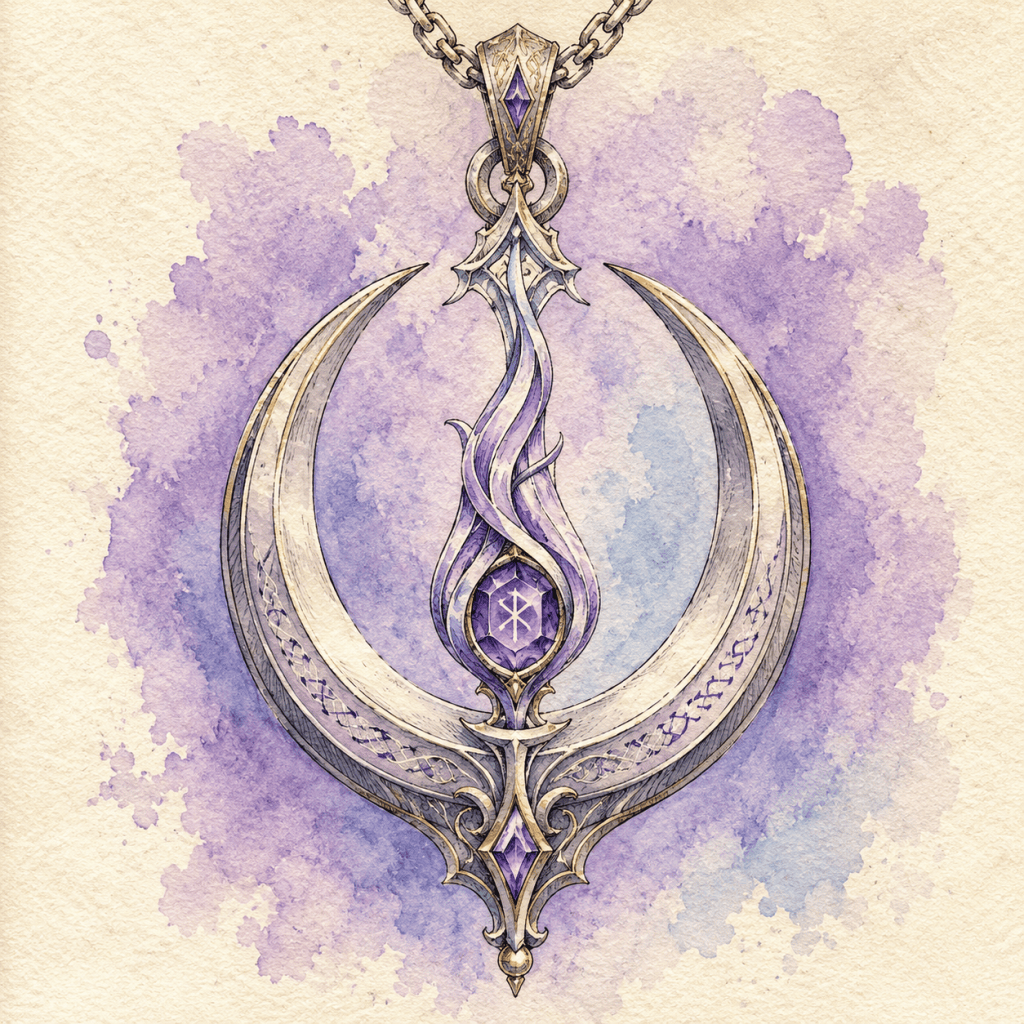
The Open Crescent
Solynth’s holy symbol is an elaborate silver-and-lavender emblem formed around a wide open crescent. The crescent curves upward on both sides like the arms of a collar that has not been fastened closed. Its surface is worked in pale silver, soft gold and faint violet enamel, with delicate inscriptions and ornamental filigree following the interior arc.
At the center hangs a faceted violet gem, usually amethyst or enchanted dream-crystal. From the jewel rises a narrow flame-like form of lavender, blue and silver metal resembling both a ribbon twisting upward and a flower opening toward light.
The entire emblem is suspended from a small ring and devotional fitting, allowing it to be worn as a pendant, hung above a shrine or incorporated into collars, mirrors and temple architecture.
The open crescent represents surrender that remains open to choice. Some theologians see a collar deliberately left unfastened. Others see cupped hands waiting to receive. Both interpretations are considered orthodox. The violet jewel represents the Offered Heart: the vulnerable self consciously revealed rather than seized. The rising ribbon-flame represents softness becoming strength through expression. It is sometimes called the Velvet Bloom. The suspension ring represents relationship. Solynthian priests note that the symbol hangs because something supports it. No person exists in complete isolation.
A common catechism interprets the holy symbol through four lines:
The heart offers.
The hands receive.
The ribbon softens.
The crescent remains open.
Sacred Colors and Materials
Solynthian sanctuaries favor lavender, sky blue, milky white, blush rose, silver and soft gold.
Lavender represents yielding without fear. Sky blue represents relief, openness and the calm that follows relinquished responsibility. Milky white represents vulnerability without shame. Blush rose represents emotional warmth, praise and the body’s visible response to being seen tenderly. Silver represents reflection and self-knowledge. Soft gold represents care deliberately bestowed.
Common materials include satin, silk, velvet, lace, fine linen, polished silver, pale gold, amethyst, pearl, ribbon, carved ivory-colored stone, fragrant wood, soft leather and enchanted textiles. Texture matters immensely. A Solynthian object is often intended to be felt as much as seen.
Ribbons, Bows and Soft Collars
Ribbons are the faith’s most widespread secondary symbol. They may be tied around wrists, throats, thighs, weapons, braids, armor straps, temple pillars or household objects. A ribbon may mark devotion, invitation, a temporary role or simply the desire to carry softness into an otherwise hard environment. Bows symbolize deliberate presentation. Solynthian theologians sometimes observe that a bow is made from tension arranged beautifully rather than eliminated entirely. Soft collars represent belonging, trust and chosen role. Unlike closed chains, they emphasize intimacy and touch. Many temples maintain simple ribbon collars for worshippers who wish to participate in ritual without purchasing permanent devotional objects.
Armor and Lingerie
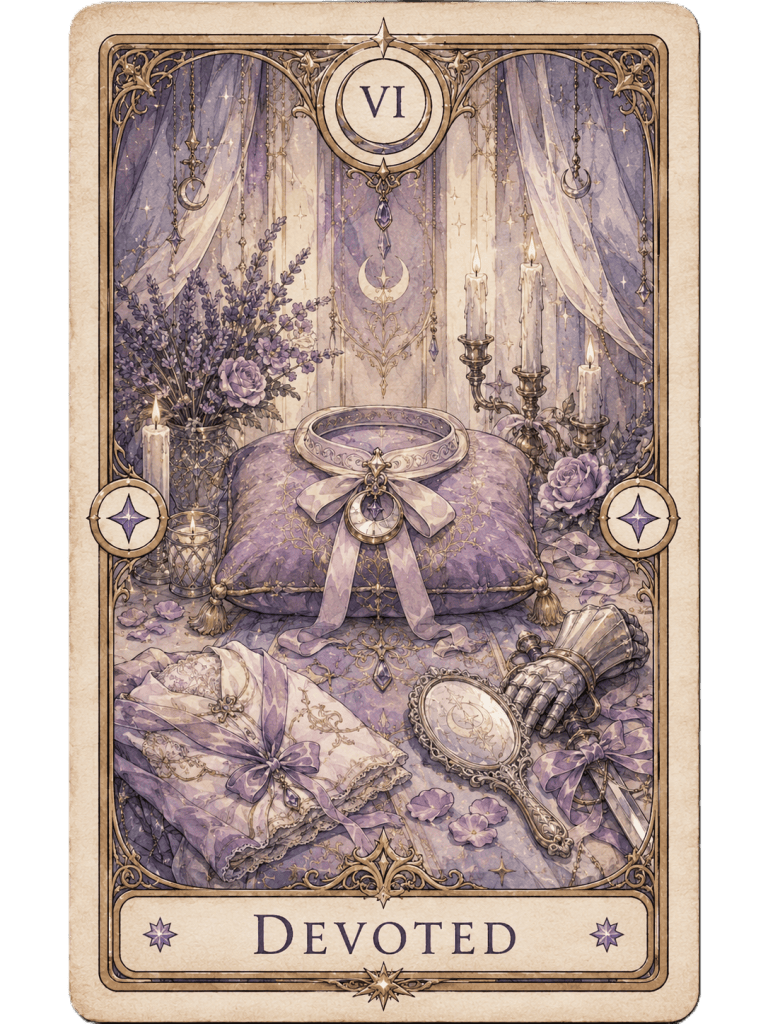
One of the most distinctive visual traditions within Solynth’s worship places objects of hardness beside objects of softness. Armor rests beside lace. A greatsword leans against a dressing table. A warrior’s gauntlets lie beneath folded stockings. A breastplate hangs beside a lavender robe. The pairing has become so common that outsiders occasionally mistake it for contradiction. Solynthians consider that reaction evidence that the image is doing its work. The sword does not invalidate the silk. The silk does not invalidate the sword.
Mirrors
Mirrors appear throughout Solynthian temples, but unlike Delaviran mirrors, which often emphasize distance and observation, or Velzhari’s mirrors, which celebrate visibility, Solynthian mirrors focus upon private recognition. A worshipper may dress before a mirror and simply become accustomed to the sight of themselves. Some mirrors can be curtained. Being seen by oneself can be enough.
Sacred Creatures
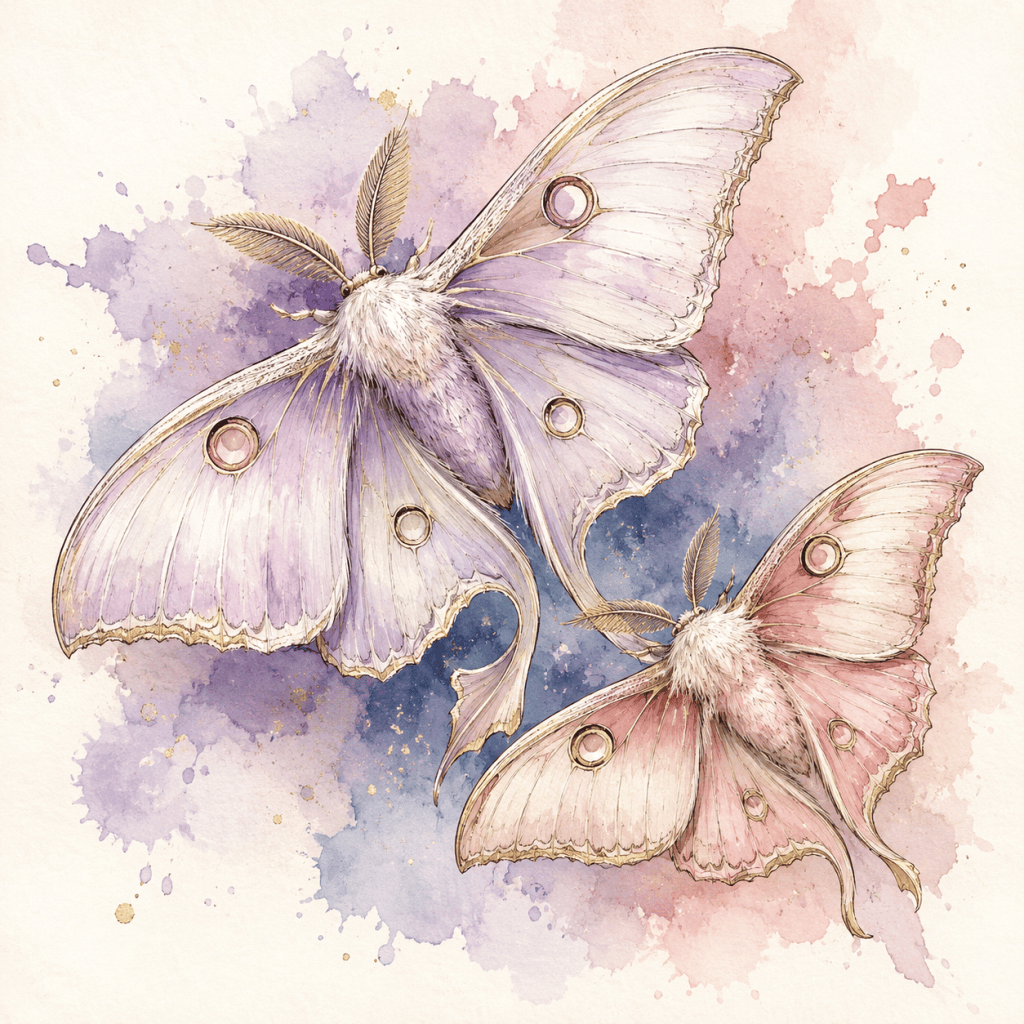
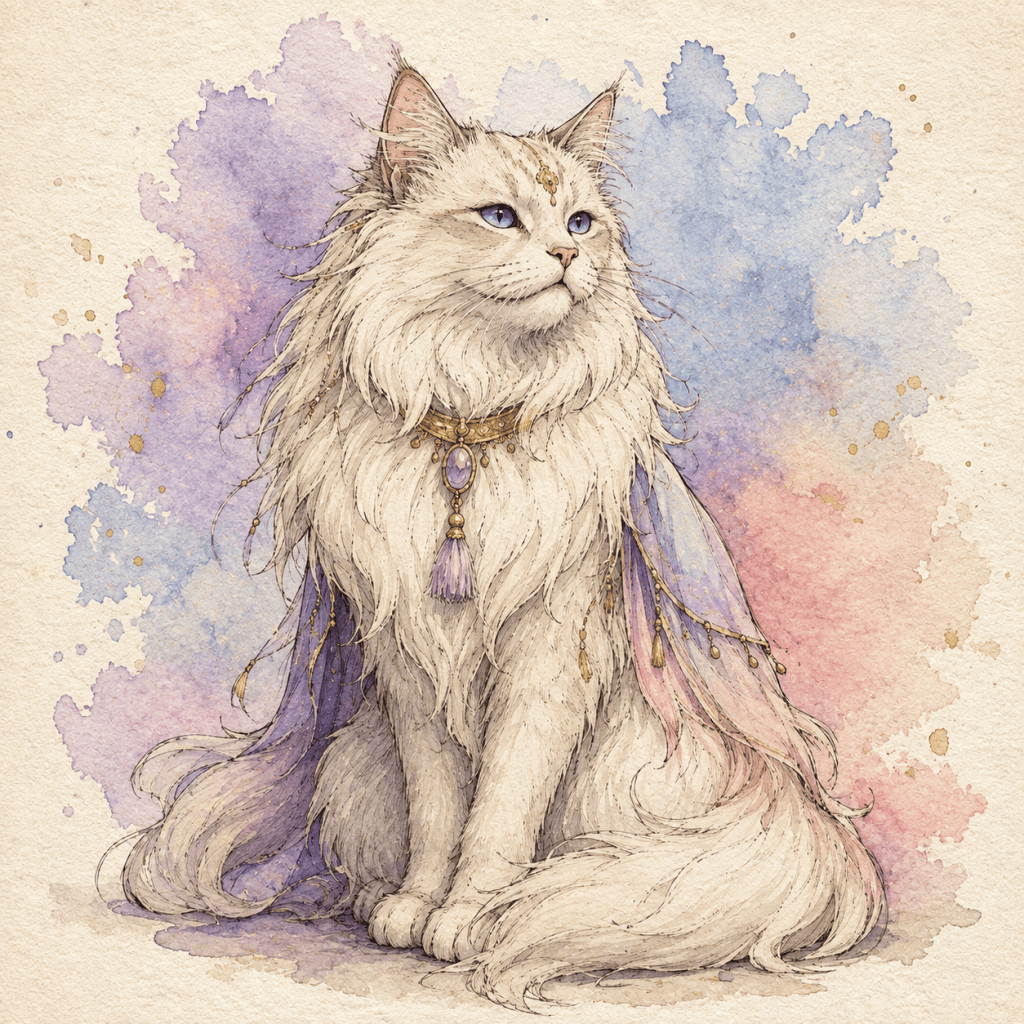
Silk moths, doves, swans, ribbon serpents and gentle long-haired cats appear frequently in Solynthian art. Silk moths represent transformation through softness rather than violence. Doves symbolize trust strong enough to rest. Swans represent elegance capable of containing both strength and grace. Ribbon serpents, small harmless snakes with iridescent lavender markings, symbolize bodies that move without rigid division between masculine and feminine forms.
Long-haired temple cats are associated with the Receiving Hand because they approach on their own terms, settle where safety is found and depart when they choose. Stories also speak of Velvet Moths, divine creatures whose wings appear white until touched by moonlight, when lavender and blue patterns emerge. They are said to gather near people who have finally allowed themselves to express a long-hidden softness.
Depictions of Solynth
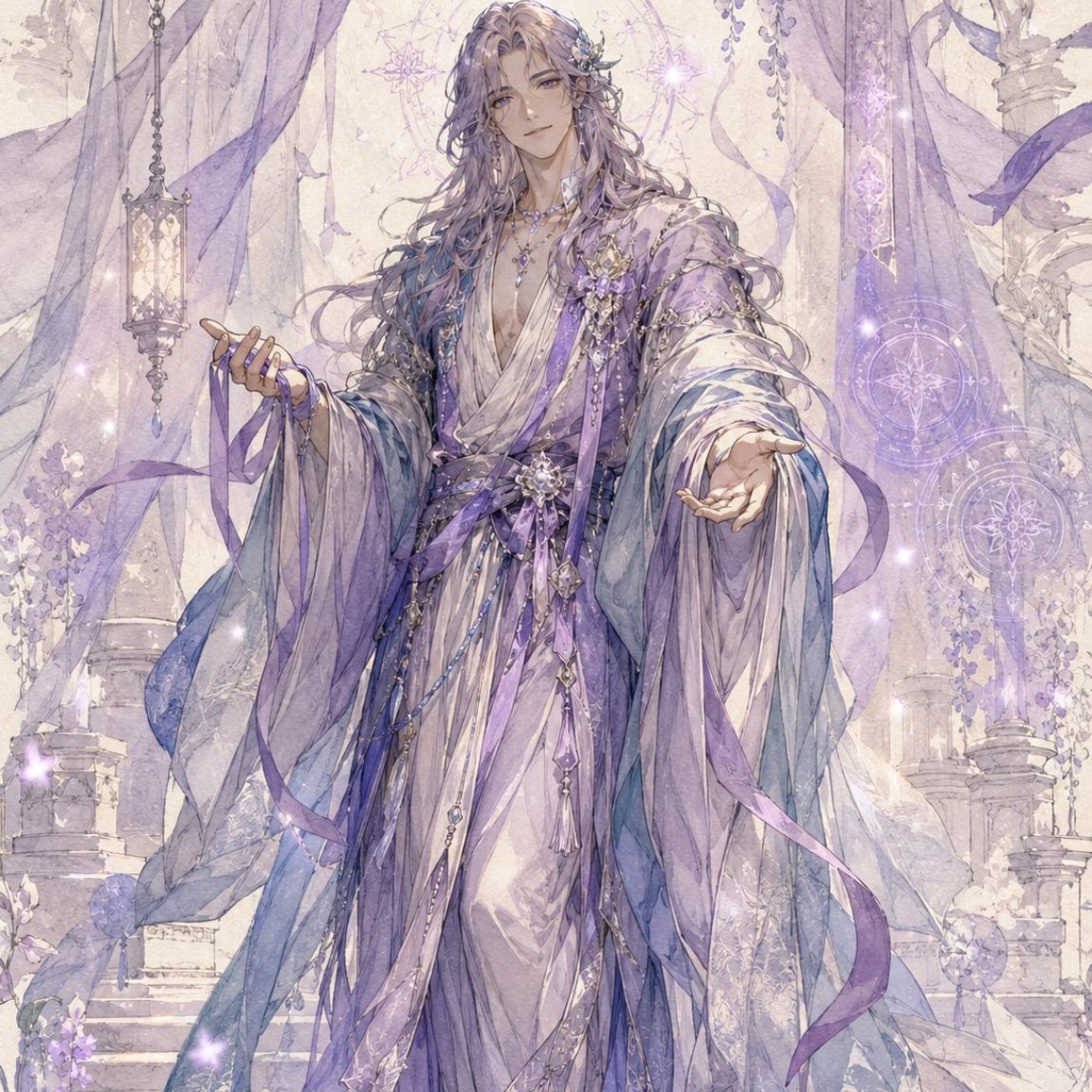
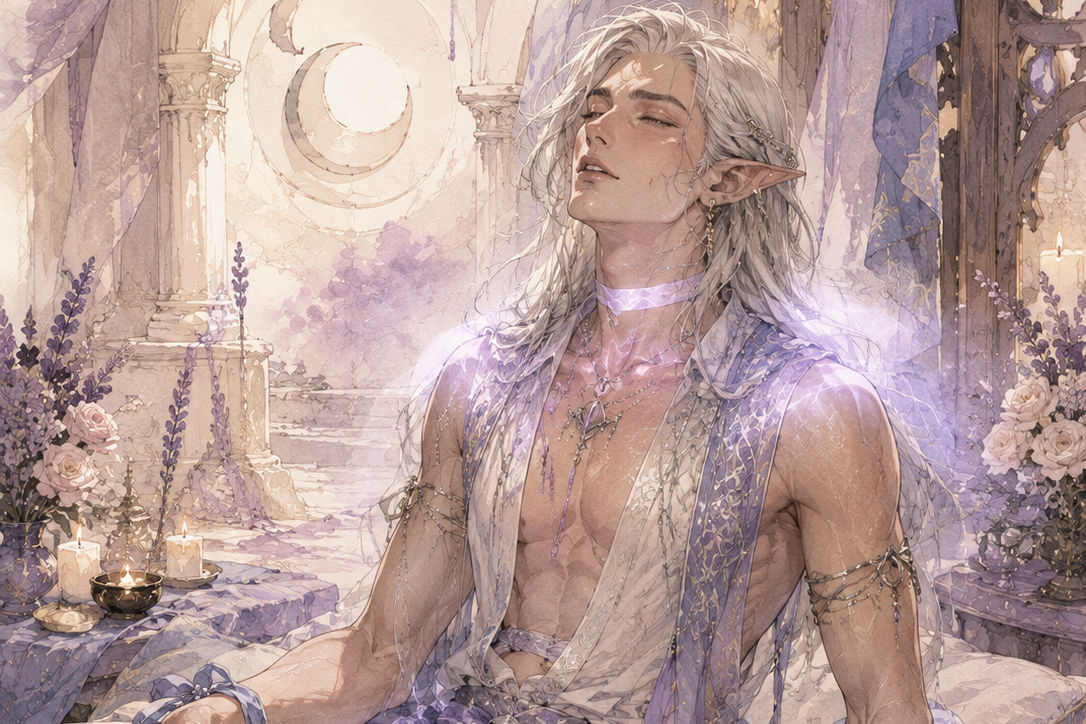
Sacred art portrays Solynth as a mature adult deity of softly masculine and distinctly androgynous beauty. His body is graceful rather than slight, with a masculine chest, elegant shoulders, long limbs and enough physical strength that his softness never reads as fragility. His features are refined, warm and difficult to classify rigidly as masculine or feminine.
Long flowing hair remains one of his defining visual traits, commonly rendered in silver-lavender, ash brown, blue-black or another color touched by lavender divine light. His eyes glow softly in violet, pale blue or silver.
His clothing favors layered silks, robes, stockings, ribbons, delicate jewelry, embroidered devotional garments and occasional lingerie-inspired ceremonial pieces adapted into high-fantasy sacred regalia. Solynth may be depicted in clothing strongly coded feminine while remaining unmistakably himself.
His posture matters more than any single garment. Open palms, lowered shoulders, graceful kneeling, a gently inclined head or the offering of a ribbon communicate the central visual truth of Solynth. He yields without vanishing.
Worship & Daily Devotion
Solynth can be worshipped anywhere someone deliberately sets down a role, receives care, performs service with intention or embraces a form of softness they previously denied themselves. Changing clothes after a difficult day can be prayer. Preparing tea exactly as someone likes it can be prayer. Asking a trusted companion to make a decision can be prayer. Wearing silk beneath armor can be prayer. Kneeling alone for several quiet breaths can be prayer. His faith attracts servants and rulers, warriors and courtiers, caregivers, attendants, lovers, artists, clothiers, counselors, professional submissives, gentle dominants, people exploring gender presentation and anyone exhausted by the expectation that strength must remain constantly visible.
The Hidden Silk
Many worshippers wear one soft devotional object beneath ordinary clothing. It may be lace, a ribbon around the thigh, a satin undergarment, a small collar hidden beneath a high neckline or simply a square of lavender cloth carried against the skin. The object need not be visible to anyone else. The practice teaches that a private pleasure does not become less meaningful because it remains private.
The Unfastening
At the end of demanding work, a worshipper deliberately removes something associated with responsibility. A belt, weapon, badge, apron, crown, tool or outer garment may be set aside.
The devotee then replaces it with something soft.
The act creates a boundary between obligation and rest. Solynthian clergy frequently recommend the practice to people who carry professional authority home long after the work itself has ended.
The Velvet Kneel
A worshipper kneels upon a cushion, floor mat or folded cloth and intentionally relaxes their posture. The goal is not endurance. It is release. The devotee observes where the body continues to hold tension despite being safe enough to stop. Shoulders lower. Hands open. Breathing deepens. Some speak a devotional phrase. Others remain silent.
The Offered Task
Devotees sometimes ask a trusted person for one clearly defined act of service to perform. The task may be practical, ceremonial or intimate. Preparing food, brushing hair, cleaning equipment, arranging clothing or completing a simple household responsibility are common. The recipient is expected to acknowledge the service rather than treat it as invisible labor. The ritual teaches that service becomes meaningful when both giver and receiver remain present to it.
Praise Practice
A worshipper names something they have done well and allows another person to affirm it without deflection. This deceptively simple practice can be difficult for devotees accustomed to dismissing praise. They are discouraged from immediately minimizing accomplishment, joking away approval or returning a compliment merely to restore emotional balance. For several breaths, they simply receive. Solynthian teachers consider the ability to accept sincere praise an important form of yielding.
Favored Offerings
Traditional offerings include ribbons, handmade bows, collars voluntarily retired from use, fine cloth, lacework, perfume, scented oils, letters of gratitude, repaired garments, devotional underclothing, silver mirrors, cosmetics, flowers and objects associated with roles someone has consciously set aside. Service itself may also be offered. A devotee may clean a shrine, mend temple cushions, prepare food, wash linens, brush ceremonial garments or assist another worshipper in dressing.
One of the most respected offerings is an object a person once felt ashamed to desire and now places openly upon the altar. The object need not remain there. Often the worshipper takes it home and uses it.
Clergy & Temples
Velvet Pages
The Velvet Pages form the broadest body of Solynth’s clergy. Their title survives from older traditions in which initiates literally served senior priests before taking vows of their own. Modern Velvet Pages minister through hospitality, practical service, emotional support and ritual assistance. They prepare sanctuaries, tend clothing archives, help worshippers articulate boundaries and guide introductory practices such as the Velvet Kneel and Praise Practice.
Their traditional teaching is: “Service offered is not service owed.”
Blushbearers
Blushbearers specialize in praise, confidence, self-presentation and the emotional vulnerability of being positively seen. They often counsel people exploring gender expression, submissive roles or forms of beauty they have been taught to reject. Many become skilled clothiers, makeup artists, hairdressers and attendants.
A Blushbearer may spend an afternoon helping a heavily scarred warrior discover which dress makes him feel beautiful, then spend the evening counseling a matriarch who cannot remember the last time she allowed another person to make a decision for her.
Their work is not considered frivolous. To help someone inhabit their own softness without shame is priestly labor.
Soft Priests
Soft Priests preserve Solynth’s formal submission rites and traditions of gentle dominance. They study negotiation, service, praise, emotional response, posture, ritual collars, sensory comfort and methods of guiding someone without overwhelming their agency.
Their most important skill is learning the difference between a participant becoming emotionally vulnerable because a rite is working and becoming distressed because something is wrong. A Soft Priest is expected to notice before being told whenever possible.
They are also expected to listen immediately when told.
Andro-Saints
Andro-Saints preserve Solynth’s traditions of androgyny, cross-gender adornment and fluid presentation. Some are theologians. Others are performers, tailors, jewelers, barbers, body artists or itinerant counselors. They maintain collections of clothing designed to fit a wide range of bodies without assuming what style belongs to whom. The title does not require the priest to be androgynous personally. An Andro-Saint’s vocation concerns helping others explore the sacred space between assigned expectations and chosen presentation.
Tenders of the Receiving Hand
Some temples maintain clergy known as Tenders of the Receiving Hand. They train people who wish to hold dominant, guiding or caregiving roles within Solynthian practice. Their theology emphasizes restraint, praise, observation and responsibility toward someone who has deliberately become vulnerable.
They frequently work alongside Mirellunean clergy but differ in emphasis. Mirellunean teachers focus upon authority, structure and the limits of command. Tenders focus upon emotional reception: how to make surrender feel safe enough to become soft.
Houses of the Open Crescent
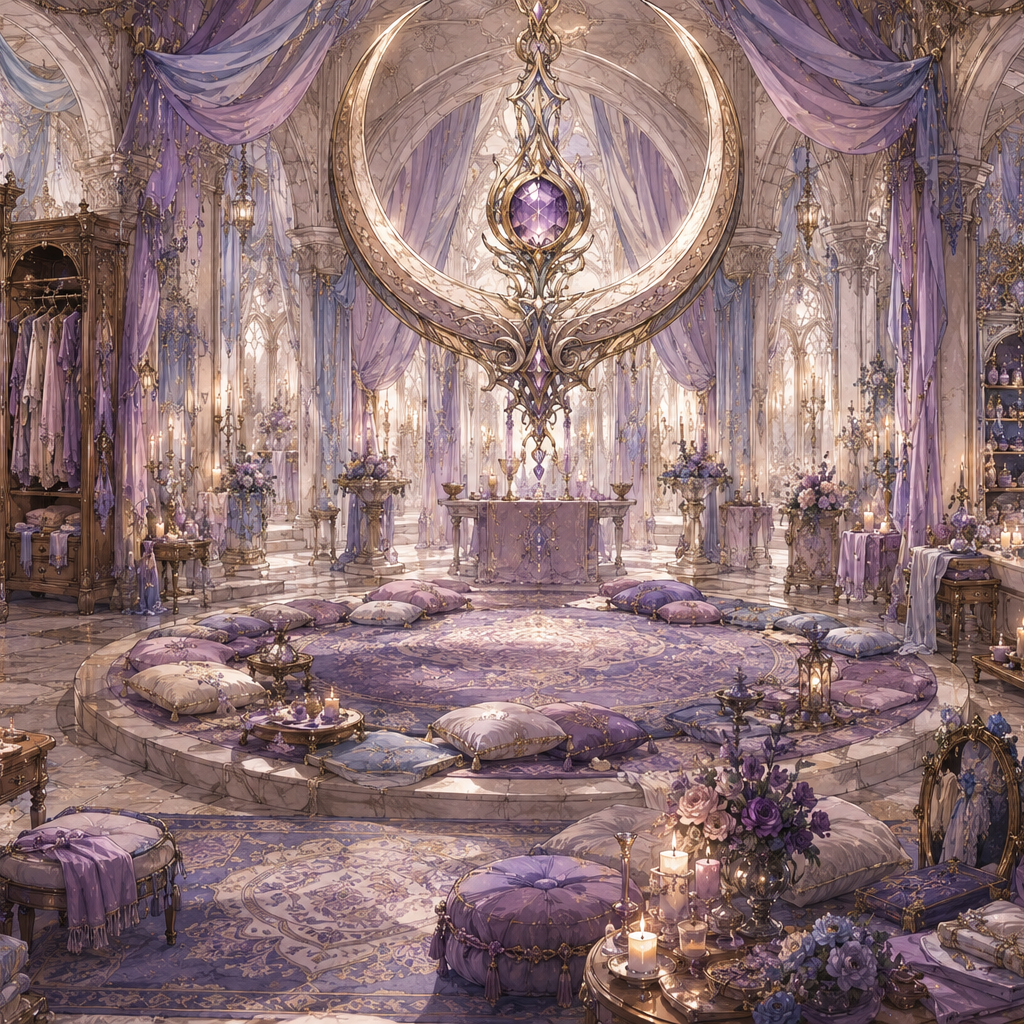
Solynth’s temples are commonly called Houses of the Open Crescent, though regional names include Velvet Houses, Lavender Sanctums, Houses of the Offered Heart and Ribbon Halls. Their interiors favor pale stone, warm wood, lavender and blue fabrics, cushioned floors, curtains, mirrors, dressing rooms, baths, flower arrangements and soft indirect lighting. These sanctuaries rarely organize themselves around a monumental throne.
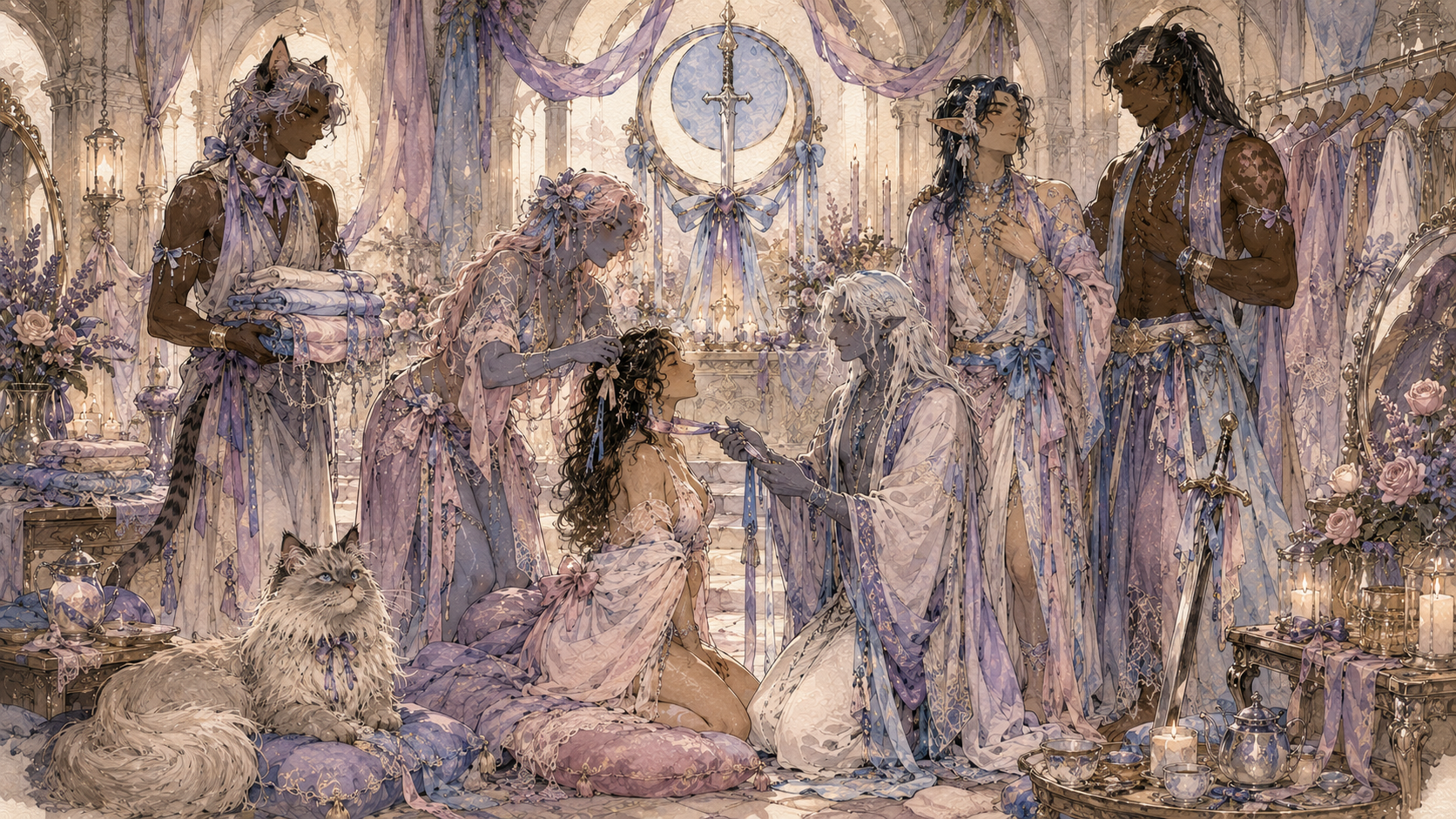
The central chamber often contains a large representation of the Open Crescent suspended above a broad carpeted or cushioned floor. Worshippers may kneel, sit, recline or gather in small circles beneath it. Wardrobe chambers are among the most characteristic temple spaces. Larger Houses maintain extensive collections of robes, lingerie, stockings, gowns, jewelry, collars, masculine clothing, feminine clothing and garments deliberately difficult to classify. Items are organized primarily by size and comfort rather than assumed gender.
Private dressing chambers contain mirrors that may be covered at the worshipper’s request. Bathing rooms are equally common. Solynthian theology understands unarmoring, washing and being tended after difficult labor as natural expressions of his domain.
Most temples also maintain quiet rooms where no one is expected to perform service, accept guidance or explain themselves. A sanctuary devoted to yielding must also contain somewhere a person may simply be left alone.
Rites, Taboos & Divine Signs
Rite of the Velvet Bloom
The Rite of the Velvet Bloom is one of Solynth’s oldest formal ceremonies. A willing participant kneels upon a cushion while an officiant gradually adjusts posture with permission: shoulders lowered, hands opened, spine relaxed and chin positioned according to the devotee’s comfort. The rite proceeds slowly. The officiant may offer praise, breathing guidance or gentle instruction. The participant practices allowing correction without experiencing it as criticism. The ritual’s name comes from the image of a flower opening rather than being forced apart. Vulnerability blooms. It is not extracted.
Rite of the Pink Ribbon
During the Rite of the Pink Ribbon, a devotee chooses a ribbon in lavender, rose, blue, white or another personally meaningful color. The ribbon is tied around the wrist, throat, thigh, upper arm or another agreed location. Before the knot is completed, the devotee states what the ribbon represents. They may be offering service, submission, trust, a temporary role, permission to be guided or simply acknowledgment of a softer part of themselves. When the stated meaning ends, the ribbon is untied. Cutting it is reserved for vows that have been broken through serious violation.
Rite of Tender Craft
Participants create or alter devotional objects for one another: collars, ribbons, bows, garments, cuffs, jewelry, cushions or soft harnesses. Measurements are taken carefully. Materials are selected according to the recipient’s preferences. Ornamentation may symbolize desires, names, roles or promises. The object gains sacred meaning through attention invested in fit. A beautiful collar that hurts its wearer through negligence is poor Solynthian craft. Tenderness requires competence.
Rite of the Yielding Heart
A willing participant listens while a trusted guide offers a series of affirmations concerning identity, beauty, service, vulnerability or desire. The participant may repeat some statements aloud and reject others.
This distinction is essential. The rite does not exist to teach the participant what they “really are.” It allows them to hear possible truths spoken safely enough to notice which ones resonate. The strongest moments sometimes occur when the participant says no. A rejected affirmation can reveal the self as clearly as an accepted one.
The Dressing of Trust
The Dressing of Trust is especially common in Solynthian traditions involving feminization, androgyny and cross-dressing. The devotee establishes beforehand which garments, cosmetics, jewelry and forms of assistance are welcome. A partner, priest or attendant then dresses them slowly. Mirrors may be used throughout, revealed only at the end or omitted entirely. For some masculine devotees, the rite involves lingerie, gowns, stockings or cosmetics. For others, the transformation is far subtler. A single ribbon may be enough. The purpose is not to produce a predetermined appearance. It is to experience being cared for while presentation becomes intentional.
The Night Without Command
A devotee voluntarily places a clearly defined range of ordinary decisions into another person’s hands for an agreed period. The chosen guide may determine meals, clothing, entertainment, schedule, route or other low-risk matters established beforehand. More intimate forms exist between partners who have deliberately negotiated them. The rite is particularly common among leaders, caregivers and people whose daily lives require constant decision-making. The sacred experience lies in temporary relief from choosing.
The Lavender Vigil
During the Lavender Vigil, worshippers dress as they would if ridicule, expectation and social consequence had no voice. Some wear extravagant feminine clothing. Some dress androgynously. Some choose garments associated with a different social role or stage of life. Others select clothing that would appear entirely ordinary to anyone else but carries private significance. The Vigil usually takes place among trusted witnesses. No participant is required to explain what their clothing means. Interpretation belongs first to the wearer.
Blush Meditation
Blush Meditation is a quiet solitary rite practiced while kneeling or sitting with the hands resting upon the thighs. The worshipper breathes slowly while recalling moments of praise, vulnerability, embarrassment, tenderness or desired submission. The purpose is not to suppress the body’s response. Warmth, blush, trembling or arousal may arise. The devotee notices without allowing reaction to become obligation.
Self-Collaring
During Self-Collaring, a worshipper ties or fastens a soft devotional collar around their own neck while speaking an intention. The intention may concern service, identity, discipline, softness or simply the desire to inhabit a chosen role privately. Solynthian clergy emphasize that the rite demonstrates something easily forgotten: submission does not always require another person. A person may choose a posture of devotion before themselves, their god or a principle they value.
The Great Prohibition
Solynth’s faith possesses many taboos, but one overrides all others: No softness may be used as evidence that someone deserves less dignity.
Forced submission, coerced feminization, unwanted cross-dressing, humiliating a person’s gender expression without invitation, exploiting service as an excuse for entitlement, treating arousal as consent and using affection or praise to manipulate someone into roles they have refused are grave violations. The faith reserves particular contempt for those who mock men for femininity, women for desiring submission, androgynous people for refusing classification or submissive people for supposedly lacking strength.
Cruelty disguised as dominance is not sanctified because someone calls it a role. Service taken for granted ceases to honor the person giving it. A collar placed without permission is not devotional. A kneeling body is not public property. The faithful preserve the principle in a simple teaching: What yields by choice is sacred. What is bent by force belongs to something else.
Signs of Solynth
Solynth’s favor often manifests through relaxation, warmth and subtle changes in fabric or light. Lavender ribbons loosen themselves before becoming uncomfortable. Clothing settles perfectly against the body. Rough fabric briefly becomes unexpectedly soft. A devotee’s shoulders may relax the moment they enter a sanctuary despite having carried tension for hours.
A warm blush may spread across cheeks, chest or collarbones during meaningful praise. Silver-blue light sometimes appears faintly around the knees after a moment of chosen submission. The archives also describe ribbon-shaped marks appearing temporarily around the throat, wrist or thigh.
Breath may carry scents of rose, vanilla, lavender or warm milk. Those strongly favored by Solynth occasionally experience the Silken Weight: the sensation of a warm garment settling over their shoulders when they finally admit that they no longer wish to remain in control. No garment is visible. The relief is unmistakable.
Solynth and the Velvet Court
Within the Velvet Court, Solynth embodies Yielding, Softness and Devoted Service. Where Velyssara awakens desire, Solynth asks whether desire might include the wish not to direct everything oneself. He gives sacred language to receptivity, voluntary dependence and the emotional relief of being safely guided. His relationship with Mirellune requires the clearest distinction. Both deities govern forms of submission and trust, but Mirellune’s concern is authority: who has been given the right to command, where that authority ends and what responsibilities accompany it. Solynth’s concern is the inner desire to yield: how it feels to soften, serve, kneel, receive praise or let another person carry the direction for a while.
Mirellune asks: Whom do you trust with authority?
Solynth asks: Where are you tired of remaining hard?
Their traditions overlap frequently, particularly within structured dominance and submission, but neither is subordinate to the other. Nyzun provides another important contrast. Nyzun teaches the Sacred Edge and the discipline required to remain sovereign amid intense sensation. Solynth is less interested in testing the Edge than in the emotional state created when testing is unnecessary. Nyzun says that stopping may be strength. Solynth offers the cushion upon which someone may finally rest afterward.
Cyrillith shares Solynth’s fascination with presentation and role. Cyrillith uses costume to perform, become and explore possible selves. Solynth often uses clothing differently: not necessarily to become someone else, but to discover that the person already present was always permitted to wear it. Delavira’s traditions intersect with Solynth through soft dominance, controlled pace and the sensuality of being observed without being immediately possessed. A Delaviran may prolong desire. A Solynthian may find pleasure in being told to wait. Eshthara’s guided attention can deepen Solynthian surrender, though both faiths remain wary of allowing altered consciousness to erase meaningful choice. Solynth offers softness; Eshthara loosens certainty.
Aratheia shares Solynth’s understanding that receiving can require courage. Aratheia teaches mortals to accept nourishment. Solynth teaches them to accept guidance, praise and care without treating receptivity as failure. Across these relationships, Velyssara remains the source from which the sacred legitimacy of desire flows. Solynth’s contribution is quieter. Desire may reach outward. It may also open its hands.
Miracles & Divine Presence
Solynth’s miracles rarely arrive through force. A soldier removes armor after three days without sleep and discovers that someone has placed clean lavender cloth beneath it. A servant exhausted from caring for a household finds the evening meal already prepared. A ruler reaches automatically for a decision and, for the first time in years, hears themselves say, “You choose.” A masculine devotee who has hidden feminine clothing for decades discovers that every garment fits perfectly when finally worn. A woman accustomed to carrying everyone around her falls asleep with her head in another person’s lap and wakes without embarrassment.
A collar unfastens at precisely the moment its meaning has ended. A ribbon refuses to knot when someone is uncertain. A mirror reflects a devotee without mockery, even when their own expectations prepared them to see something ridiculous. When Solynth’s presence grows stronger, lavender and sky-blue light gathers around cloth, hands and open palms. Fabric drifts despite still air. Bows tie themselves gently. Cosmetics appear more luminous without changing the face beneath them.
Harsh voices sometimes soften without losing authority. The most powerful manifestations affect atmosphere rather than objects. A room feels safe enough for someone to unclench their jaw. A person who has refused help suddenly realizes that they want it. Someone kneels and discovers they do not feel smaller.
What His Faith Teaches
Solynth teaches that strength and hardness are not synonyms. Hardness can protect. It can also become habit. A person may survive so long by refusing vulnerability that they eventually forget vulnerability can occur without danger. His faith therefore treats softness as a capacity rather than an opposite of strength.
Yielding Is an Action
Submission is frequently described as passive by people who have never chosen it deliberately. Solynthian theology disagrees. To offer trust is an action. To kneel is an action. To accept guidance is an action. To serve attentively is an action. To permit oneself to receive praise without deflecting it can require considerable effort. Submission does not cease being active simply because another person presently holds direction.
Roles Are Tools, Not Prisons
A person may genuinely love leadership, masculinity, femininity, service, dominance, caregiving, martial strength or any number of roles. Solynth does not demand their abandonment. He asks whether the person can still choose them. A role that can never be set down begins to resemble captivity even when it is socially admired.
Femininity Does Not Diminish Masculinity
This teaching is particularly important in Solynth’s masculine mysteries. Femininity is not a substance that contaminates manhood. Lace does not make a man lesser. Receptivity does not revoke masculinity. Cosmetics do not make strength fraudulent. A submissive role does not erase a masculine identity unless the person themselves wishes to redefine it. Likewise, a person who discovers something deeper through feminine presentation is not required to retreat merely to reassure others. The wearer decides what the garment reveals.
Service Requires Recognition
Solynthian service is not sacred because servants occupy a lower place. It is sacred because a person willingly directs attention toward another. This makes gratitude a theological responsibility. Someone who receives service carelessly has failed to understand what was offered.
Praise Should Reveal, Not Manufacture
Praise can nourish. It can also manipulate. Solynthian clergy teach that meaningful praise must remain connected to something genuinely seen. Empty flattery designed to manufacture dependence is not tenderness. To praise someone responsibly is to tell them what attention discovered.
Receiving Is Also a Discipline
Many people find giving easier than receiving because giving preserves control. Receiving requires allowing another person’s action to matter. Solynth teaches that permitting oneself to be cared for, praised, guided, adorned or served can be an act of trust every bit as significant as offering those things to someone else.
Softness Remains Voluntary
Above all, Solynth’s faith rejects compulsory vulnerability. No one is required to kneel because kneeling can be sacred. No man is required to embrace femininity because feminine expression can be liberating. No leader must surrender authority merely because rest would benefit them.
No submissive owes submission simply because it has been offered before. Softness becomes sacred at the moment it is chosen. Without choice, Solynth is absent.
At the Table
Solynth works best in campaigns concerned with identity, service, social expectation, emotional vulnerability, chosen submission and the burden carried by characters whom everyone assumes will remain strong. His presence can be deeply erotic, but it need not be. A Solynthian story may revolve around a knight learning to accept help, a prince secretly exploring feminine presentation, a servant discovering that devotion does not require self-erasure or a matriarch struggling to trust another person with responsibility.
Solynthian Characters
Characters drawn toward Solynth commonly include attendants, knights, courtiers, counselors, clothiers, artists, servants, caregivers, ritual specialists, submissives, gentle dominants and people exploring gendered presentation.
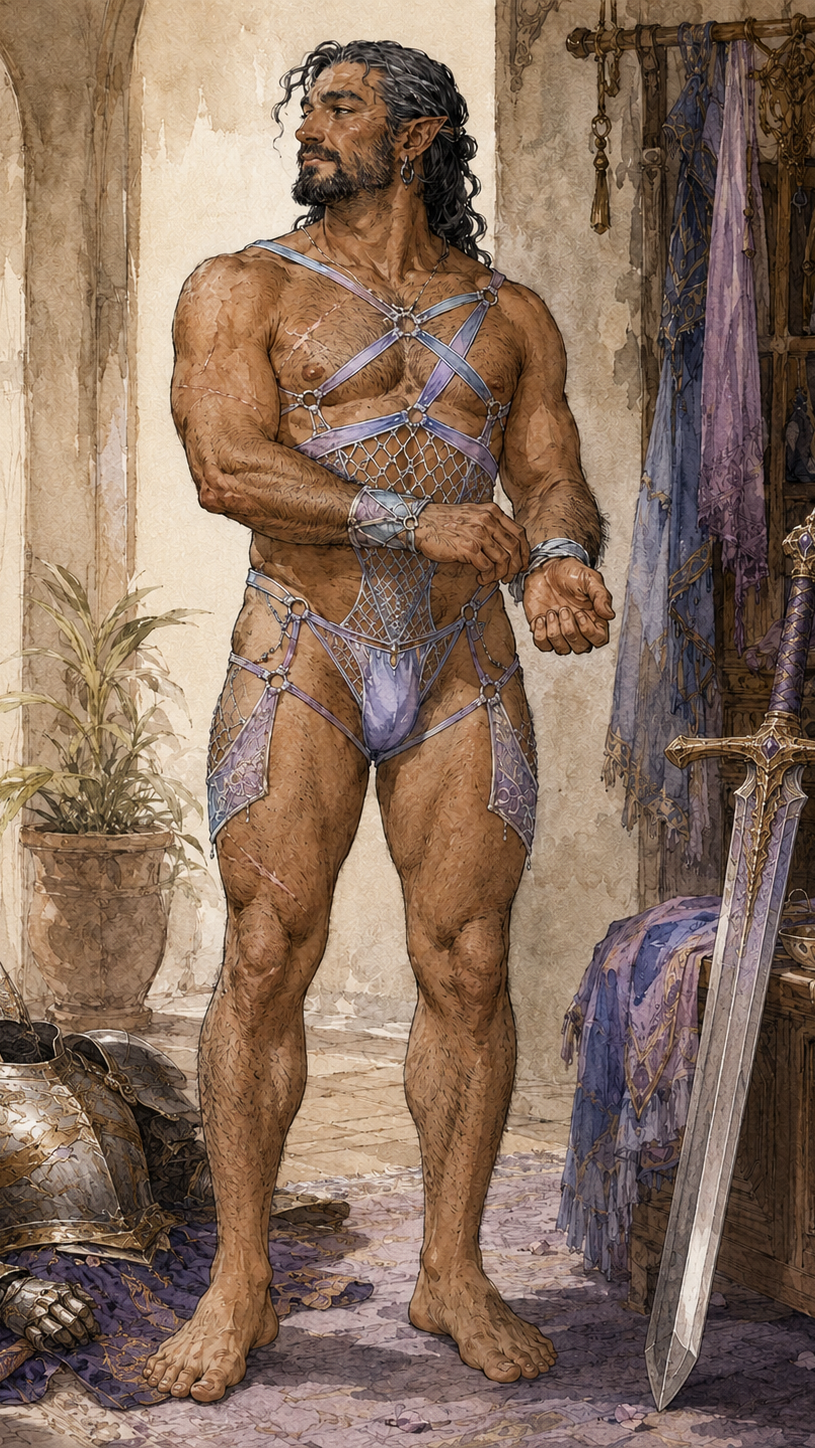
His faith is especially useful for characters whose outward role conflicts with an inward desire for softness. A massive Bloodoath warrior may wear lavender lace beneath armor. A dominant matriarch may privately seek a sanctuary where nobody asks her to decide anything.
A masculine adventurer may enjoy dresses without experiencing any uncertainty about being a man. An androgynous character may reject the expectation that presentation must resolve into one stable category. A professional servant may discover that service feels sacred only when it remains chosen.
Divine Domains and Traditions
The archives associate Solynth with concepts once described as Love, Beauty, Charm and Humility, alongside traditions such as the Oath of Velvet Kneeling, Oath of Gentle Devotion, College of Blush and Breath, College of Tender Echoes, Pact of the Softened Voice and Pact of the Yielding Heart.
These names remain useful setting hooks, but their archived mechanics predate the current Second Bloom framework.
(Needs updated mechanics: Base 5e → Veiled → Unveiled.)
Boons of Solynth
Older traditions preserve blessings connected to praise, graceful yielding, calming speech and sacred kneeling. Some allowed devotees to become more persuasive while openly submissive, softened hostile intent through a whispered invocation or rewarded creatures that willingly accepted another person’s guidance.
These concepts remain appropriate to Solynth but should be rebuilt without turning submission into compulsory behavior.
(Needs updated mechanics: Base 5e → Veiled → Unveiled.)
The Offered Will
Future Solynthian mechanics should reward voluntary cooperation, service, receiving help, accepting a chosen guide or explicitly entering a submissive role without requiring any character to participate erotically.
The most important mechanical distinction should remain the same as the theological one:
The character chooses when the Offered Will exists.
(Needs updated mechanics: Base 5e → Veiled → Unveiled.)
Sacred Relics
Ribbon of the Yielding Heart
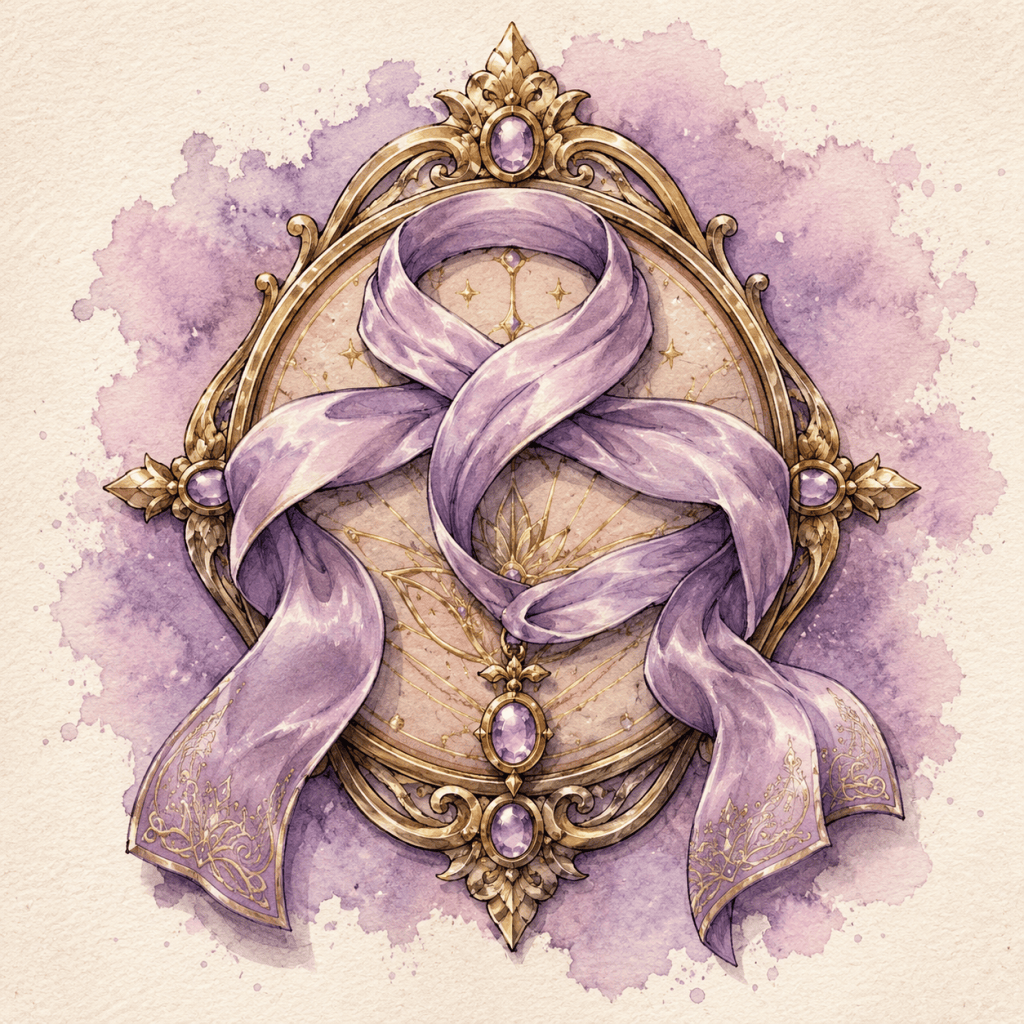
This length of impossibly soft lavender silk is said to descend from the ribbon held by Solynth during one of the earliest Velvet Kneels. The ribbon cannot be tightened painfully around a creature that does not wish to wear it. When willingly accepted, it is said to become warm whenever the wearer is sincerely praised. Older traditions associate the relic with charm, trust and graceful submission.
(Needs updated mechanics: Base 5e → Veiled → Unveiled.)
Collar of Velvet Oaths
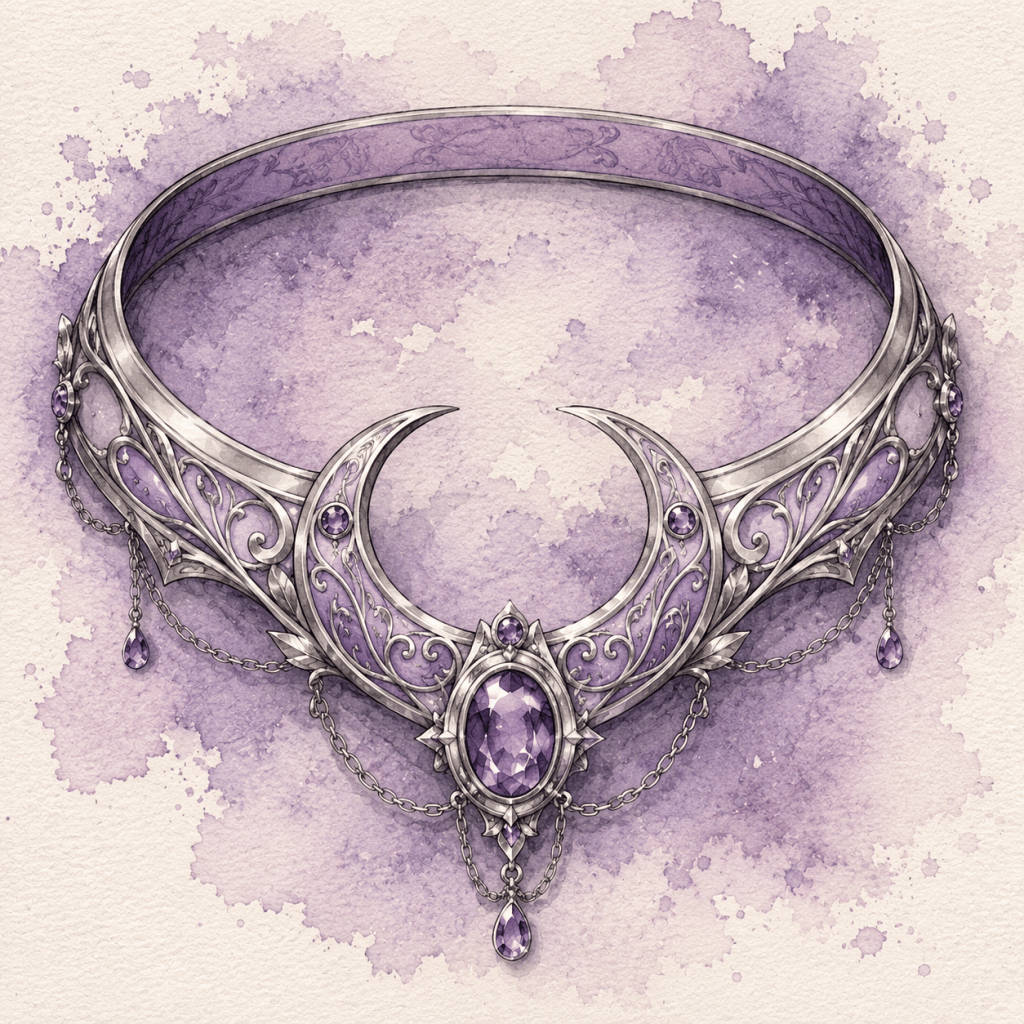
The Collar of Velvet Oaths is a delicate silver-and-lavender collar shaped around the open crescent of Solynth’s holy symbol. Its central amethyst never closes completely against the throat. The archives claim that a person wearing the collar may hear the praise of a trusted partner even across great distance. More elaborate stories suggest the wearer can always distinguish a sincere command from one given carelessly or in anger. The collar does not enforce obedience. Solynthian priests consider that omission the entire point.
(Needs updated mechanics: Base 5e → Veiled → Unveiled.)
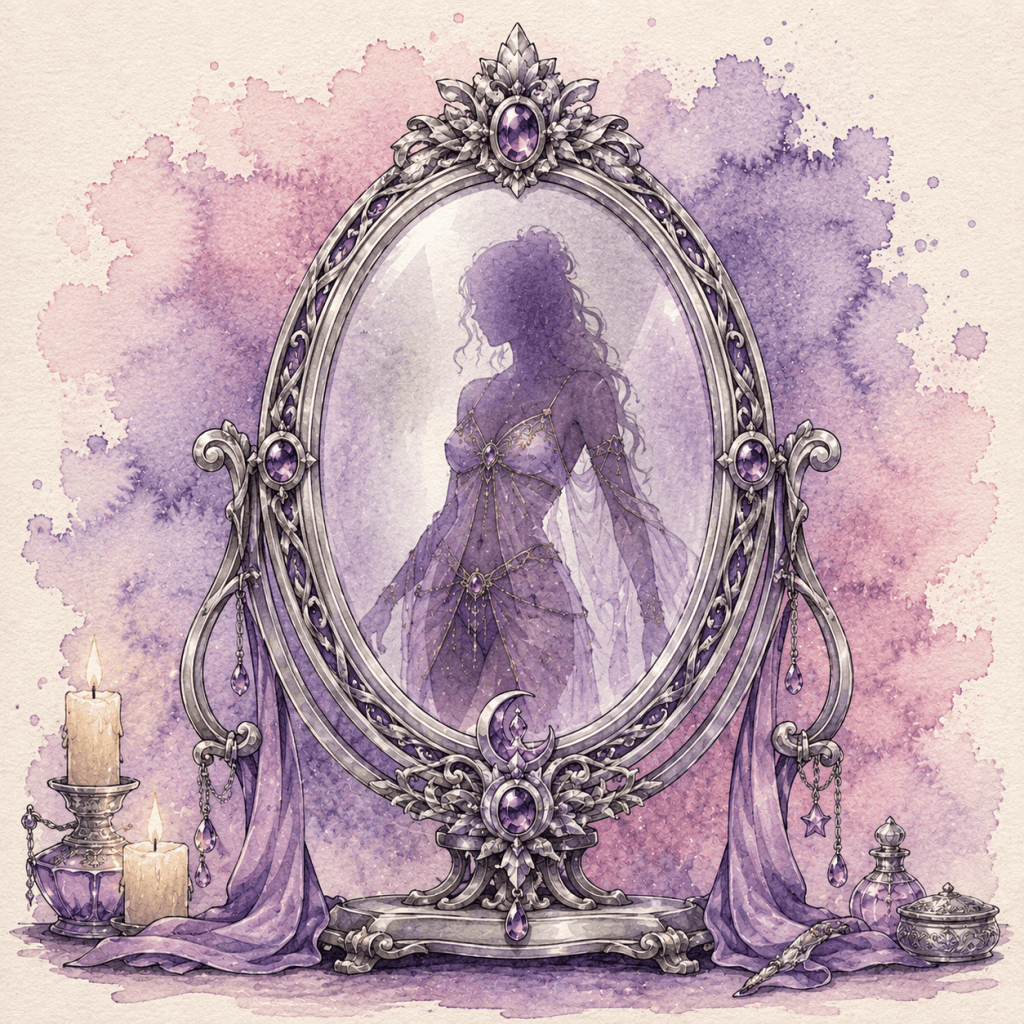
The Silver Dressing Mirror
This oval mirror appears in several contradictory temple records and may represent multiple relics rather than one object. A person looking into it does not see a transformed body. Instead, the reflection wears whatever clothing the viewer would choose if ridicule, expectation and social consequence possessed no voice. The mirror does not explain what the image means.
Some viewers laugh. Some cry. Some leave immediately and purchase fabric.
(Needs updated mechanics: Base 5e → Veiled → Unveiled.)
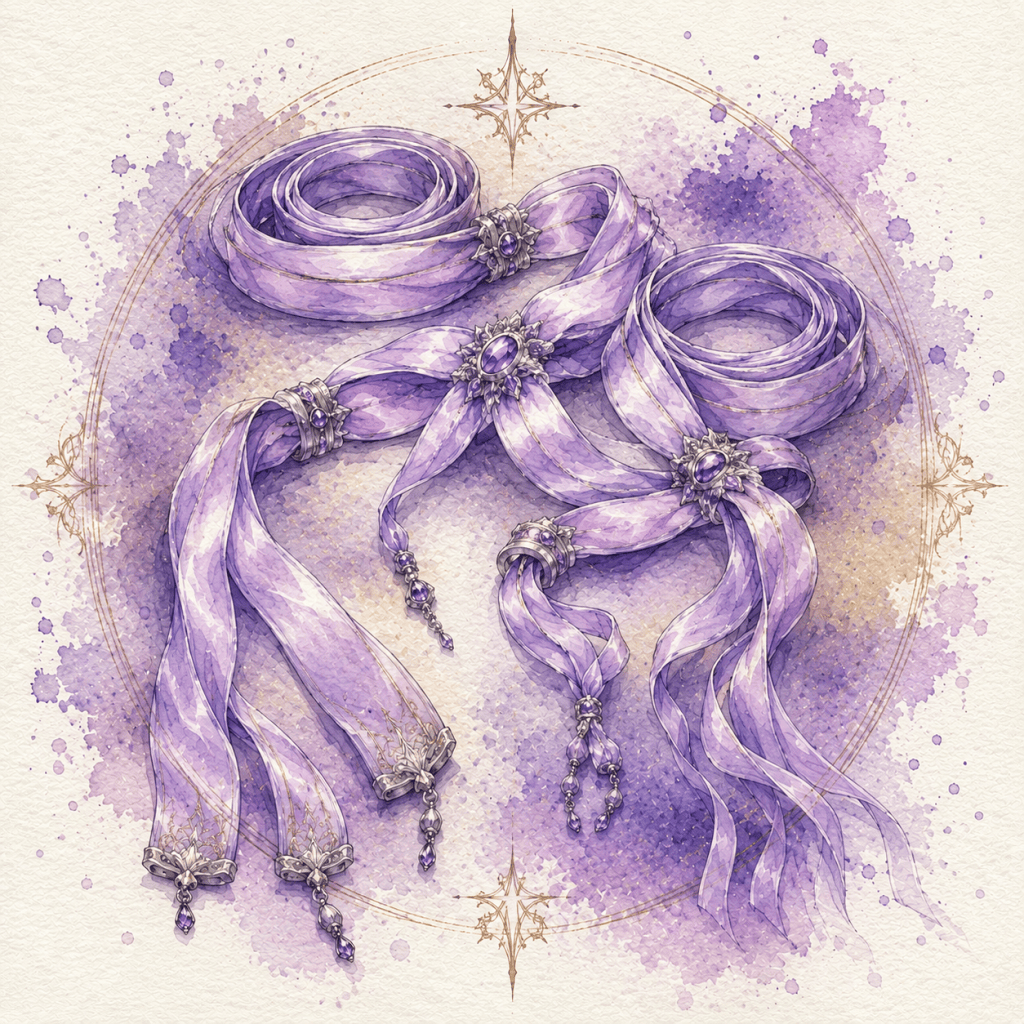
Solynth’s Silk Bindings
These pale lavender lengths of enchanted silk are soft enough to pass through the hand like water yet become secure when willingly arranged around the body. Archival accounts describe them as restraints that never chafe, numb or injure their wearer and loosen immediately when the agreed rite ends. The bindings were historically associated with trust, guided posture and devotional submission rather than imprisonment.
(Needs updated mechanics: Base 5e → Veiled → Unveiled.)
Adventure Hooks
The Knight Beneath the Lace
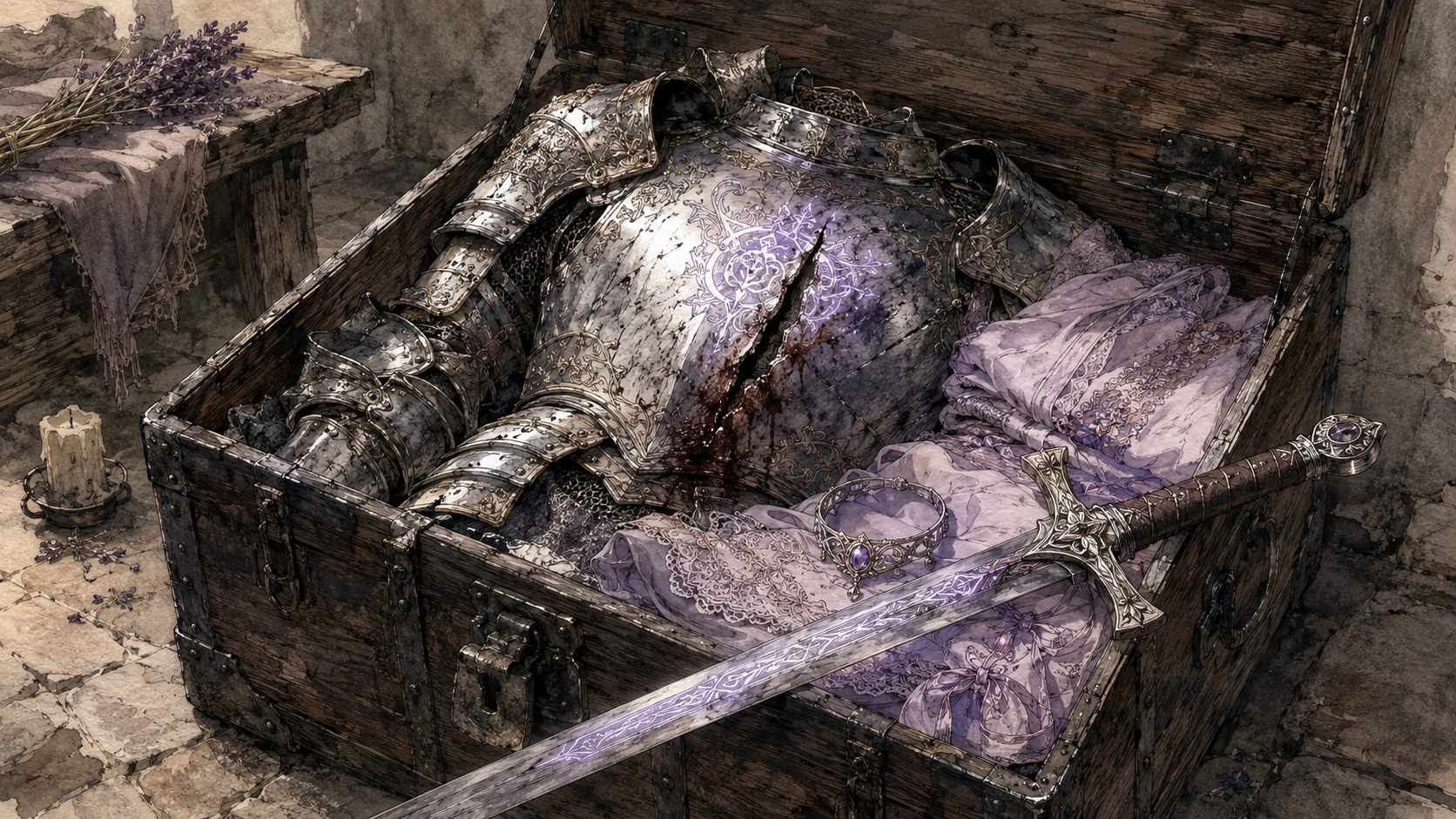
A celebrated knight dies defending a remote settlement. While preparing the body for burial, villagers discover exquisite Solynthian lingerie beneath the knight’s armor and a devotional collar hidden among their possessions. The knight’s family wants everything buried quietly. Their military order wants the garments destroyed to preserve an image of martial respectability. A surviving lover insists the knight had intended to wear the garments publicly during the next Lavender Vigil.
The dead cannot clarify their wishes. Then Solynth’s holy symbol begins appearing upon the armor.
The House That Cannot Kneel
A prominent House of the Open Crescent suddenly loses the ability to perform the Velvet Kneel. Anyone attempting to lower themselves before the central shrine experiences inexplicable resistance and remains standing. Nothing physically restrains them.
The temple’s clergy initially suspect divine displeasure. Investigation reveals that a senior priest has been quietly pressuring initiates to participate in rites they do not actually want. Solynth has not forbidden kneeling. He has made false submission impossible.
The Unfastened Collar
Across one city, devotional collars begin opening simultaneously. Some belong to intimate partners. Others mark religious service, household roles or long-term vows. No wearer is harmed, but the phenomenon causes panic among people who believed their relationships secure. Mirellunean clergy insist no formal vows have been broken. Solynthian priests suspect a different question is being asked: Do the people wearing these collars still want them?
The Lavender Prince
A politically important prince secretly venerates Solynth and regularly dresses in elaborate feminine ceremonial clothing within a private sanctuary. Someone obtains images of the prince during a Lavender Vigil and threatens public exposure unless he changes the outcome of a treaty negotiation.
The prince refuses to be ashamed. His advisers are considerably more frightened than he is. The characters are hired not to bury the secret, but to identify who believes softness can still be used as a weapon.
The Perfect Servant
A beloved temple attendant becomes impossibly efficient. Meals appear before anyone asks. Baths are drawn at exactly the right temperature. Clothing is cleaned and arranged overnight. Every request is anticipated. At first, the sanctuary considers it a blessing. Then the attendant stops sleeping.
They insist Solynth has finally made them perfect at service. The god’s Open Crescent above the altar has begun closing.
The Dress That Waited
A traveling merchant discovers an ancient blue dress that changes size to fit any masculine wearer perfectly. Men who try it experience no compulsion and suffer no curse. Many simply become unwilling to return it because they have never before seen themselves dressed in a way that made them feel so unexpectedly beautiful. The garment appears harmless.
An Andro-Saint recognizes the embroidery as belonging to a lost Solynthian saint whose final pilgrimage ended in disappearance. The hem now contains a map that was not there yesterday.
The Receiving Hand
A respected Solynthian dominant is accused of exploiting a devotee’s submission. Both insist nothing improper occurred. The accuser is not the devotee but another priest who claims that technical consent is not enough when emotional dependence has become overwhelming.
The dispute threatens to divide the sanctuary. Then a ribbon offered during the contested rite begins glowing whenever either person lies. Unfortunately, neither of them appears to be lying.
Scents for Gameplay
Solynth’s presence is often recognized through fragrances associated with clean fabric, warm skin, flowers and the moment when duty gives way to rest. His scents should feel intimate rather than overpowering, as though noticed only after someone has moved close enough to matter. Use these scents as atmospheric cues rather than automatic proof of divine intervention.
| d12 | Scent | Suggested Moment |
|---|---|---|
| 1 | Lavender warmed by skin | Solynth’s presence may be near. |
| 2 | Clean silk and pale sandalwood | Chosen vulnerability, dressing or quiet devotion. |
| 3 | Rosewater and freshly laundered linen | Care, preparation or a sanctuary of the Open Crescent. |
| 4 | Violet, vanilla and warm beeswax | Praise, emotional tenderness or a devotional rite beginning. |
| 5 | Satin warmed beside a hearth | Rest after responsibility, unarmoring or the Unfastening. |
| 6 | Lavender oil and clean skin | Close trust, massage, bathing or gentle care. |
| 7 | Rose, powder and cedar wardrobe wood | Cross-dressing, feminization or chosen presentation. |
| 8 | Blue lotus and cool silver | Androgyny, self-recognition or the Lavender Vigil. |
| 9 | Warm milk, lavender and soft wool | Being cared for after exhaustion or finally accepting help. |
| 10 | Clean leather beneath violet perfume | A warrior, leader or other strong figure deliberately setting down authority. |
| 11 | Lavender followed by a sudden trace of one’s favorite comforting fragrance | A deeply personal moment of chosen surrender or emotional release. |
| 12 | The exact scent of clothing the observer once wanted but was ashamed to wear | A direct omen or unmistakable manifestation of Solynth’s attention. |
Using Scent as Foreshadowing
Repetition can make Solynth’s fragrances emotionally legible before characters understand their source. If lavender and warm cloth repeatedly accompany moments when someone finally permits themselves to rest, the scent can become reassuring long before a divine sign appears. If rosewater and cedar accompany acts of chosen presentation, characters may recognize that someone nearby is confronting a hidden part of themselves.
A battlefield camp may suddenly smell of lavender despite containing no flowers. A queen’s council chamber may carry the scent of warm silk seconds before she delegates a decision she would normally hoard. A warrior opening a long-hidden chest may smell powder and cedar before touching the dress inside.
A character who has spent years refusing help may catch the scent of warm milk, lavender and wool while standing alone.
Nothing visible happens. Then someone knocks gently at the door. Solynth rarely commands mortals to soften. He simply makes softness feel possible.
 Whispers of Erosia
You must be logged in to post a comment.