
Temple of Eternal Petals
Where Desire Is Acknowledged and Guided
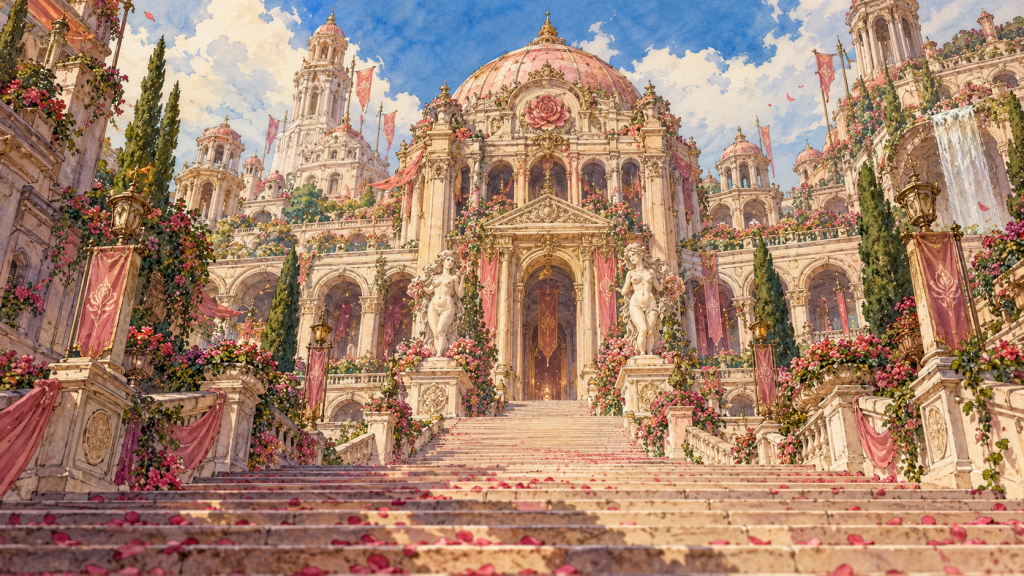
The Temple of Eternal Petals is Amarosa’s principal active temple of Velyssara, the Blooming Desire, and the institutional heart of her worship within the city. White stone and rose-veined marble rise around open courtyards, vaulted halls, high balconies, petal-shaped prayer alcoves and a circular Bloom Dais kept visible from nearly every major approach.
The great doors are often open. Pilgrims come to worship, but also to sit, breathe, drink water, seek counsel, prepare for a union, recover after a difficult rite, walk the gardens or simply remain somewhere sacred without being asked to perform devotion.
The Temple carries Amarosa’s present clergy, formal rites, public festivals, devotional services and religious authority. The House of the Sacred Bloom remains an older sacred site whose history still matters, but it is no longer the city’s principal Velyssaran temple.
For Velyssara’s complete mythology, sacred teachings, divine signs, relics and wider worship traditions, see Velyssara — The Blooming Desire.
Quick Facts
Location: Heartblossom Heights, Amarosa
Type: Major temple, civic sanctuary, ritual complex
Deity: Velyssara, Goddess of Lust, Sex, Life and the First Desire
Senior Clergy: The Rosebound
Known For: The Bloom Dais, Heartpool, Rosewalk gardens, sacred unions, restorative care and public festivals
Atmosphere: Luminous, warm, open, reverent without severity
Primary Role: Worship, counsel, healing, ritual, civic ceremony and communal care
Historic Note: Amarosa’s former Velyssaran sanctuary survives as the House of the Sacred Bloom
Entering the Temple
The Temple of Eternal Petals is designed around welcome rather than intimidation. There is no distant altar intended to make worshippers feel small before the divine. Curving halls, planted terraces, pools, balconies, fountains and quiet alcoves make the complex feel inhabited rather than monumental.
The Court of Open Hands
Most visitors first enter a broad garden court shaded by flowering vines and open colonnades. Temple Guides receive pilgrims here, answer practical questions and help visitors find the part of the Temple that fits what brought them through the gates.
The traditional first question is not, “What rite have you come to perform?” It is simpler:
“What do you need?”
Some visitors know. Others do not. Both are welcome.
The Living Rhythm of the Temple
The Temple was designed around rhythm rather than enclosure. Wide marble courtyards allow gatherings to breathe. High ceilings diffuse sound. Petal-shaped alcoves offer privacy without isolation. During major rites, rose-gold lanterns brighten the halls, incense softens hard edges, petals drift from the galleries and choirs hold low harmonic tones beneath spoken invocations.
Its architecture teaches the same lesson as its clergy: desire is not hidden here. It is recognized, guided, chosen and tended afterward.
The Bloom Dais
A circular raised platform at the ceremonial heart of the Temple, the Bloom Dais is the principal site for major rites, communal invocations, public blessings and moments of divine convergence. Its openness is deliberate. Sacred experience may be witnessed here without being made compulsory.
The Petal Galleries
High balconies ring the central ritual spaces. Clergy, musicians, honored guests and ritual attendants use them to observe, chant, monitor communal response and regulate the pacing of large ceremonies.
The Heartpool
Near the central sanctuary lies the Heartpool, a broad circular basin of warm water surrounded by rose stone, flowering vines and low places to sit beside the water. Flowers are floated upon it during rites of union, rose-silk cords are placed beside it before vows and bowls used for Breath Offerings are traditionally warmed from its waters.
The Rosebound watch the Heartpool closely. In Velyssaran tradition, a sacred pool that cools or stills without natural cause may signal that something has gone wrong within the spiritual life of the Temple or the city around it.
The Rosewalk Gardens
Gardens descend across several terraces behind the main sanctuary. Their paths are intentionally imperfect: roses spill beyond their beds, petals remain where they fall and vines are cultivated without being forced into rigid geometry.
Through them winds the Rosewalk, traditionally walked barefoot and in silence at dawn or twilight. Devotees undertake it before marriage, after heartbreak, when beginning again, while seeking fertility, after childbirth, when releasing an old love or simply when they no longer understand what their own heart wants.
There is no required revelation waiting at the end. The walk itself is the devotion.
Baths of the Velvet Hands
Warm bathing chambers occupy a quieter terrace of the Temple. Some pools are communal and social. Others are private. The distinction is deliberate.
The Velvet Hands oversee bathing rites, therapeutic touch, massage, anointing and other forms of embodied care. Their work is particularly valued by people recovering from illness, injury, childbirth, grief, exhaustion or estrangement from their own bodies.
Every act begins with permission. Touch offered in service is never presumed to be invitation.
Chambers of Confidence
Among the Temple’s most sacred rooms are small private chambers where a visitor may speak with a Rosebound away from public worship. Love, sexuality, fertility, jealousy, loneliness, shame, grief, unwanted desire and changing relationships are all common reasons to enter.
The Rosebound do not pronounce a person’s desires pure or impure. Their work is to help visitors understand what they feel, what consequences may follow and how desire can be approached without violating either their own agency or someone else’s.
The Veiled Sanctuaries
These quieter rooms are built for recovery. Soft light, cushioned stone benches, clean water, blankets and trained attendants provide space for grounding after intense rites, grief, exhaustion or overwhelming emotion. Silence is treated as a valid form of devotion.
The Vestment Chamber
Sacred garments, ceremonial textiles, rose-silk cords, ritual implements and carefully maintained relics are kept under controlled access near the central ceremonial spaces. The chamber is practical as much as holy: garments are inspected, cleansed, rested and cataloged between ceremonies.
The Table of Returning Warmth
Velyssaran rites do not always end when the formal ceremony ends. A refectory and adjoining terrace provide water, bread, fruit, tea, blankets, warm oils and quiet companionship after emotionally or physically intense observances.
This practice is part of Velyssara’s established tradition of Communal Aftercare. Vulnerability creates responsibility. Care is not simply preparation for sacred experience; it is part of the sacred experience.
A Day Beneath the Petals
| Time | Temple Rhythm |
|---|---|
| Dawn | The Rosewalk opens in silence. Petalborn refresh the pools, gardens and devotional spaces while early pilgrims offer private prayers. |
| Morning | Rosebound counsel begins. Temple Guides receive visitors, Velvet Hands open the baths and Breath Offerings are prepared. |
| Midday | Public blessings, union consultations, healing work and civic appointments fill the central courts. |
| Dusk | A public devotion is held at the Bloom Dais with music, incense, petals and shared reflection. |
| Evening | Private rites, ceremonies of union and arranged Mysteries take place by appointment. Stillrooms and Gentle Witness remain available. |
Those Who Keep the Eternal Petals
The Temple is maintained by far more people than its senior clergy. Rosebound, Petalborn, Velvet Hands, Temple Guides, healers, gardeners, musicians, archivists, cooks, cleaners, attendants and Oathsworn wardens all keep the complex functioning.
First Rose Ilyra Vael
First Rose of Amarosa
Ilyra Vael is the senior Rosebound of the Temple and Amarosa’s principal Velyssaran religious authority. She oversees doctrine, ordination, major festivals, disputes of ritual practice and the Temple’s relationship with the city’s civic institutions. Ilyra is known for refusing to mistake confidence for certainty; she will listen to an argument longer than most petitioners expect, then ask the one question they hoped she would not.
Coris Veyne
Keeper of the Bloom Dais
Coris manages the ceremonial calendar, musicians, ritual attendants, sacred vessels and the practical choreography of major public rites. Nothing reaches the Bloom Dais during a festival without passing through Coris’s schedule, and almost nothing surprises them twice.
Nimira Senn
First Velvet Hand
Nimira directs the Temple’s embodied-care ministry: baths, restorative touch, massage, anointing, recovery and the training of other Velvet Hands. Her reputation rests less on miraculous healing than on an uncanny ability to notice when someone has stopped inhabiting their own body comfortably.
Tavian Merrow
Keeper of Vows
Tavian witnesses Blooming Unions, First Kiss rites, reconciliations, Returning Flame ceremonies and formal dissolutions. He maintains the Temple’s records of publicly witnessed vows while insisting that the Temple records what people promised—not what outsiders think those promises should have meant.
Dame Calistra Vane
Warden of the Eternal Petals
An Oathsworn commander responsible for the safety of pilgrims, clergy, relics and temple grounds, Calistra leads the Temple’s Rosewardens. Her authority is separate from the First Rose’s spiritual office. During an emergency, she may halt a procession, close a court or end a ceremony until safety is restored.
Pell Oris
Master of Guides
Pell coordinates the Temple Guides who receive visitors, explain customs, arrange appointments and quietly prevent confused pilgrims from wandering into private rites. Pell’s most common advice to new Guides is simple: “Do not decide why someone came before they tell you.”
The Petalborn
Those newly accepted into Velyssara’s clergy begin as Petalborn. They tend gardens, prepare baths and ritual rooms, care for sacred garments, assist the Rosebound, carry messages and learn to recognize when a visitor needs celebration, counsel, privacy or somewhere safe to sit. Their first discipline is attention.
Temple Services
The Temple does not charge admission for worship. Public prayer, the gardens, Gentle Witness and ordinary Rosebound counsel are available without fee; donations are accepted from those who wish to support the Temple’s work. More elaborate rites, private chambers, materials and commissioned ceremonies carry suggested offerings.
Immediate care is not refused because someone arrives without coin.
| Service | Suggested Offering |
|---|---|
| Entry, public prayer and gardens | Free |
| Temple Guide assistance | Free |
| Gentle Witness | Free |
| Private Rosebound counsel | Offerings accepted |
| Rosewalk | Free |
| Breath Offering | 2 sp |
| Pulse Circle | 5 sp |
| Communal temple bath | 5 sp |
| Private bathing chamber | 2 gp |
| Velvet Hand restorative session | 5 gp |
| Blessing of a New Beginning | 5 gp |
| First Kiss rite | 5 gp |
| Rite of Returning Flame | 10 gp |
| Blooming Union, simple ceremony | 25 gp |
| Blooming Union, formal temple ceremony | 100 gp+ |
| Private Mystery | By arrangement |
Healing and Restorative Magic
Rosebound and temple healers provide magical restoration when appropriate, particularly for illness, childbirth, injury, exhaustion and complications following dangerous adventures. Availability depends upon the clergy on duty, the severity of need and any costly material components required by the magic. Emergency care takes priority over convenience.
Devotions and Sacred Rites
The Temple practices the wider devotional traditions established in Velyssara’s faith. Visitors do not need to participate in any rite simply because they entered the Temple, and no single form of intimacy is treated as holier than another.
Breath Offerings
A shallow bowl of rosewater is warmed until steam rises. The devotee whispers a desire into the mist and allows the steam to carry it away. The prayer does not ask Velyssara to guarantee fulfillment. It asks that the desire be heard without shame.
Pulse Circles
Participants gather and gradually settle into a shared rhythm of breath and presence. Touch is optional. Confession is unnecessary. The practice reminds worshippers that no living heart beats entirely alone.
The First Kiss
Despite its name, the First Kiss does not require a literal kiss. Two participants approach one another, stop beyond touching distance and each state what they offer and what they ask in return. Only after both have answered do they close the remaining distance together.
The Blooming Union
The Temple witnesses marriages, handfastings and other chosen bonds between consenting adults. The Rosebound prescribe no universal vow. Those entering the union must speak their own. Velyssara blesses the choice to join rather than a single approved form of relationship.
The Rite of Returning Flame
Partners confronting a fading relationship light one another’s lamps and speak of what they still cherish, what they miss and what they hope may grow again. Rekindling is not the required outcome. Sometimes the sacred truth is that a relationship has changed.
Private Mysteries
Some rites are performed only by those involved. Their form may include bathing, massage, dancing, shared breath, exchanged vows, meditation, sensual touch or consensual sexual intimacy; others contain nothing erotic at all. What makes a Private Mystery sacred is that its meaning belongs to its participants.
For the complete traditions, taboos and theology behind these rites, visit Velyssara — The Blooming Desire.
The Petal Counter
Near the Court of Open Hands stands a small devotional counter operated by Petalborn and temple artisans. It is not treated as a conventional gift shop. The counter supplies household shrines, travelers, newly joined couples and devotees who wish to continue simple Velyssaran practices away from the Temple.
| Offering | Price | Use |
|---|---|---|
| Breath Offering Kit | 5 sp | Small bowl, rosewater, candle and dried petals for performing a Breath Offering away from the Temple. |
| First Bloom Candle | 5 sp | Rose-and-amber beeswax traditionally lit before difficult conversations or new beginnings. |
| Rose-Silk Devotional Ribbon | 1 gp | Used in Silk Veil Devotions, courtship rites and personal vows of chosen vulnerability. |
| Temple Rosewater | 1 gp | A sealed flask of fragrant rosewater for household shrines, bathing and blessings. |
| Consecrated Rose Oil | 5 gp | Warm anointing oil used in rest, massage and devotional care. |
| Traveling Shrine of the First Bloom | 15 gp | A folding wooden shrine bearing the Rose of the First Bloom with space for a candle and small offering. |
| Petal Pouch | 50 gp | A small enchanted pouch of rose petals that remain fresh and fragrant until scattered. |
| Rosewater of Returning Warmth | 50 gp | A temple-prepared restorative draught intended for travelers and adventurers. |
| Lovers’ Knot Rings | 100 gp per pair | Paired silver rings traditionally exchanged as symbols of chosen connection. |
Not Everything Sacred Is for Sale
The Temple safeguards relics associated with Velyssara that are not merchandise. The Heartpetal Locket, Velvet-Bloom Veil, Rosepulse Scepter and legendary Breath of the First Kiss belong to stories, pilgrimages, rewards and divine mysteries rather than ordinary commerce.
A character might be entrusted with such an object, asked to recover one, allowed to study one or discover that a supposed relic is not what its keeper believed.
Gentle Witness
Not every person who enters the Temple needs guidance. Some only need someone not to look away. Clergy trained in Gentle Witness offer water, quiet presence, grounding rites, symbolic closure or simple companionship without expectation. They do not demand confession. They do not treat silence as failure. A pilgrim may sit, kneel, recline, grieve, rest or leave.
“You do not need to give anything more right now.”
A common Velyssaran whisper during rest
Stillrooms
Like other major Amarosan institutions, the Temple maintains Stillrooms: warm, dim spaces with cushions, clean water, folded blankets and a single candle. They are used after loss, transformation, difficult rites or simply when someone needs somewhere to finish feeling what happened.
Care Has Limits
The Temple does not teach that sacred spaces can absorb endlessly. Pools must be circulated. Rooms must be aired and reset. Ritual objects must rest. Emotional residue must be released rather than merely contained. During high festivals, attendants monitor occupancy, resonance, fatigue and the subtle signs that a space has become too full.
Maintenance is part of devotion.
The same principle applies to the people who serve here. A Rosebound may end a counseling session. A Velvet Hand may decline further touch. A Temple Guide may call for another attendant. Clergy are caretakers of sacred desire, not endlessly available vessels for it.
For the DM: Bring the Temple to Your Table
The Temple of Eternal Petals is intended to function as more than scenery. It can provide downtime, ritual scenes, relationship milestones, healing, sanctuary, social encounters, civic complications and adventure hooks.
Temple Goods as Item Cards
The Breath Offering Kit, First Bloom Candle, Rose-Silk Devotional Ribbon, Petal Pouch, Rosewater of Returning Warmth and Lovers’ Knot Rings are natural candidates for printable item cards. Mundane devotional goods can remain simple equipment, while enchanted versions can be expanded into standard 5e magic items with optional Veiled and Unveiled interactions.
Openings into Adventure
- The Heartpool has gone cold even though every physical channel beneath it remains warm.
- A couple arrives for a Blooming Union, but one of their witnesses disappears before the ceremony.
- A relic removed from the Vestment Chamber has been replaced by an immaculate forgery.
- A Rosebound asks the characters to escort a frightened pilgrim whose confession has made them a target outside the Temple.
- During a crowded festival, Dame Calistra closes the Bloom Dais without explaining why.
- A Petalborn tending the Rosewalk discovers a flower blooming in a color no Velyssaran gardener recognizes.
A Place in Your Campaign
The Temple of Eternal Petals can serve as sanctuary, ritual stage, investigation site, source of healing, civic institution, festival anchor or moral counterweight to Amarosa’s more permissive social spaces.
It does not oppose pleasure.
It gives pleasure structure, gives desire language and makes sure something remains afterward to tend what was opened.
People marry here. Children receive blessings here. Lovers reconcile here. Relationships end here with tears and dignity. Pilgrims arrive hoping for miracles. Citizens stop because the gardens are beautiful. Adventurers come because someone finally admitted what they want.
The Temple is sacred because life passes through it.

