

Shadowlust
Secrets of the Hidden Craving
A veil can conceal, invite, transform, preserve, or reveal. Its truth belongs first to the one who wears it.
Shadowlust is the magic of trance, illusion, dreams, identity, masquerade, obsession, and the desires that wait beneath language. It moves through altered perception, hidden longing, private truth, and the fluid boundary between the self that is known and the self that is becoming.
Shadowlust is not evil magic, and secrecy is not guilt. The discipline protects private selves as readily as it exposes deception. Its practitioners understand that revelation has meaning only when the subject retains some authorship over what is revealed and when.
Core Themes
- Dreams and dreamwalking
- Trance and altered perception
- Identity, role, and masquerade
- Hidden longing and chosen confession
- Fascination, obsession, and illusion
- Secrets and private truth
Common Keywords
Control · Dream · Masquerade · Obsession · Trance
Who Practices Shadowlust
Dreamweavers, Veilwalkers, masked performers, Zenthiran devotees, Sigilwrights, diviners, spies, and scholars of the private mind study Shadowlust. Because the discipline can affect perception and volition, responsible instruction emphasizes recognizable influence, clear boundaries, and the difference between invitation and compulsion.
How the Magic Manifests
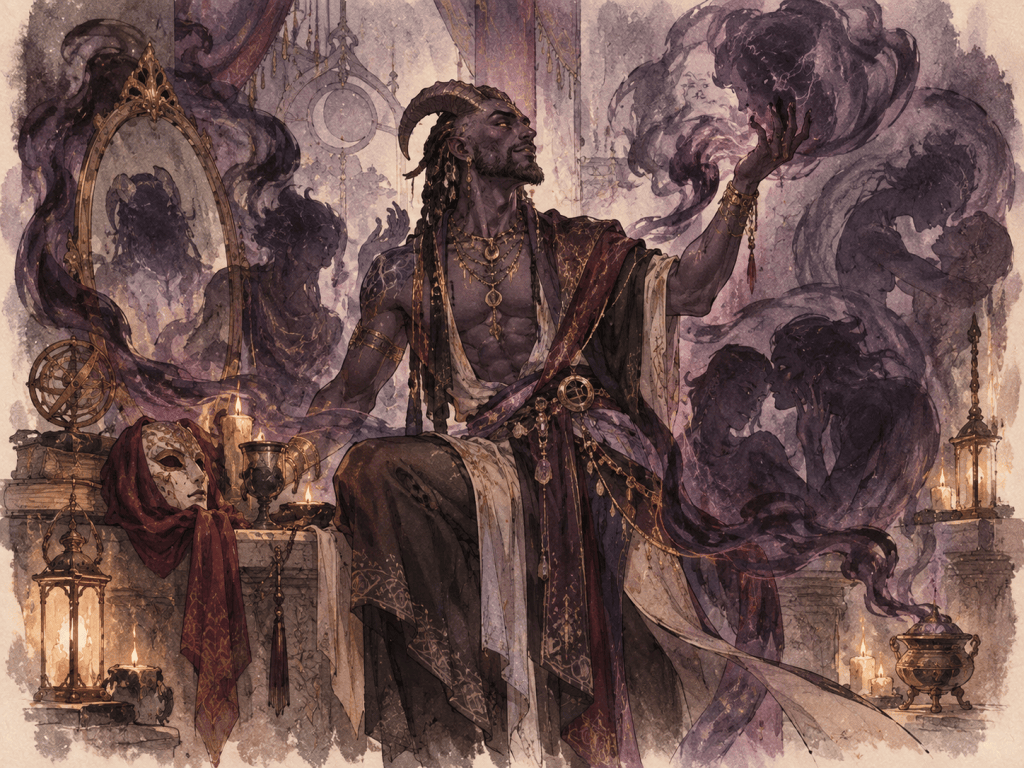
Shadowlust may manifest through violet shadow, translucent veils, shifting masks, whispered echoes, dreamglass, doubled reflections, star-filled darkness, or symbols visible only at the edge of perception. Its magic often reveals possibility rather than a single objective truth.
Traditional Schools
Shadowlust commonly accompanies illusion, enchantment, divination, conjuration, and transmutation. It can disguise, entrance, reveal a dream, shape identity, cross into hidden realms, or give temporary form to longing. The traditional school remains authoritative for standard rules.
Privacy and Distortion
The discipline’s sacred expression is truth discovered or revealed at a chosen pace. Its distortion is truth without privacy: revelation becoming violation, fascination becoming obsession, illusion refusing to release its subject, or influence denying another person authorship of the self.
Using Shadowlust at the Table
Players should decide what their character keeps private without shame, what mask helps them express something true, and how they distinguish fascination from obsession. Dungeon Masters can use dream prisons, predatory mirrors, compelling performances, and secrets given magical form while preserving player authority over personal disclosures.
Character Questions
- What part of yourself do you reveal only by choice?
- What mask helps you express something true?
- Which dream has followed you into waking life?
- How do you distinguish fascination from obsession?
- What secret would you protect even from someone you love?
Consent and Responsible Practice
Shadowlust instruction distinguishes privacy from deception and invitation from compulsion. Consensual practice requires adults beyond their Age of Bloom who possess capacity and remain free to withdraw. Hostile enchantment, involuntary exposure, or coerced trance remains hostile regardless of alluring imagery, and should resolve through clearly stated rules and agreed table boundaries.
Browse Shadowlust spells (Coming Soon)


You must be logged in to post a comment.