

The Meridian Exchange
Trade moves on coin. Empires move on trust.
Across Amarosa’s harbor, the Meridian Mark is almost as recognizable as a sail. It is burned into shipping crates, pressed into crimson wax, engraved into counting-room doors and stamped across contracts carried between merchants who may never meet face to face.
The Meridian Exchange is one of Amarosa’s most influential commercial institutions, a fellowship of factors, registrars, arbiters, clerks and commercial specialists who make distant trade possible. It does not own the city’s guilds, command its merchants or dictate how individual trades conduct their work. Instead, it creates the shared system through which those interests can trust one another long enough to do business.
A voyage may begin with a ship, a cargo and a captain, but long before the vessel leaves harbor someone must finance the journey, verify the agreement, guarantee payment and decide who bears the loss if something goes wrong. That is the world of the Meridian Exchange.
Sometimes its work moves fortunes. Sometimes it prevents a feud. Sometimes it simply ensures that a crate reaches the person who paid for it.
The Measure Between Ports
The Meridian Exchange did not begin as a single great institution. Its oldest traditions grew from smaller agreements between merchants who needed a way to conduct business with people they did not personally know.
Amarosa’s harbor brought together traders from different ports, cultures and commercial traditions. Coinage changed from one ship to the next. Contracts recognized in one city meant little in another. A respected merchant could become an unknown stranger simply by traveling far enough from home.
Early factors solved these problems by standing between buyers and sellers. They witnessed agreements, verified reputations and guaranteed certain transactions using their own names and wealth. Over time, those personal networks became written records, shared procedures and eventually a permanent institution.
The Meridian Exchange grew because merchants discovered something important: trade could move farther when trust did not have to travel alone.
What Is the Meridian Exchange?
The Meridian Exchange is neither a merchant house nor a professional guild. Its members do not manufacture one kind of product, control a single craft or operate under one family banner.
Instead, the Exchange exists wherever separate parts of commerce must meet.
A shipwright may build a vessel. A captain may command it. A merchant may own the cargo. A creditor may finance the voyage. An insurer may accept part of the risk, while a buyer waits in a distant port. The Meridian Exchange provides the contracts, records and recognized commercial practices that allow those people to participate in the same venture without needing complete personal trust in one another.
Its work includes financing, bonded cargo, letters of credit, commercial arbitration, verification of trading reputations and the recognition of obligations between distant parties. Individual factors often specialize, but the institution itself remains deliberately broad.
The question asked within the Exchange is rarely, “What do you sell?”
It is more often, “What have you promised?”

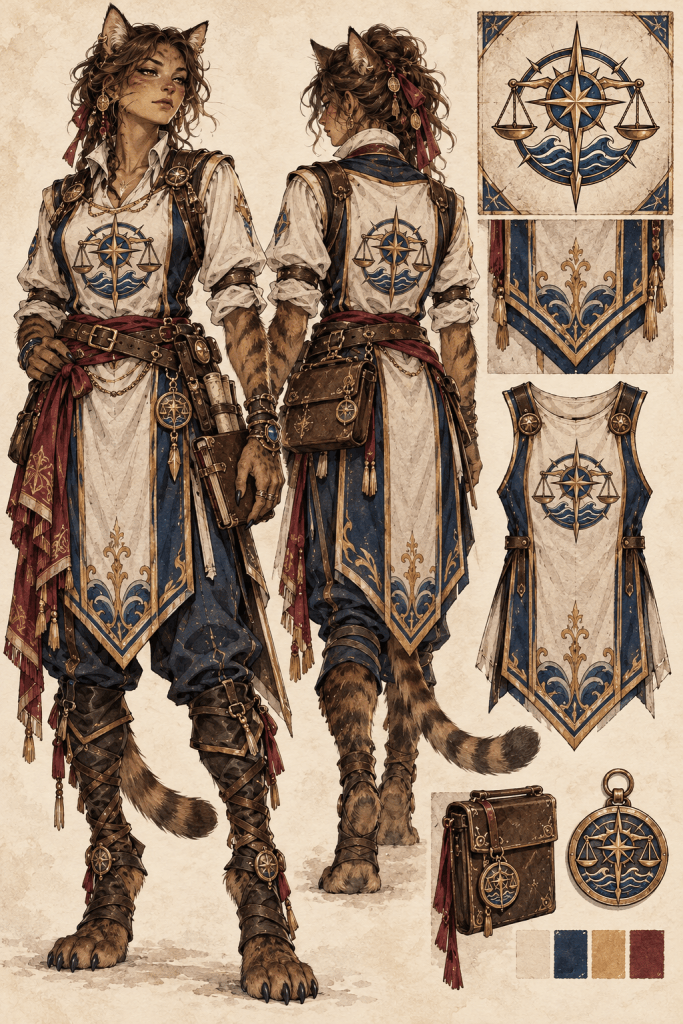
Becoming a Factor
There is no single path into the Meridian Exchange. Some factors begin as clerks who spend years learning contracts, currencies and the histories hidden inside old ledgers. Others arrive after careers as merchants, ship captains, accountants, advocates or agents for established houses.
Prospective factors are judged as much by reputation as by education. Skill with numbers matters, but so do discretion, patience and the ability to recognize when someone is telling only the convenient portion of the truth. A brilliant negotiator who cannot be trusted is considerably less useful to the Exchange than a quieter person whose word carries weight.
Junior factors typically work beneath established members before conducting major business in their own names. Over time, they develop specialties, clients and relationships of their own.
The most successful eventually reach the point where merchants come seeking not merely the Exchange’s seal, but a particular factor’s judgment.
The Principles of Exchange
The Meridian Exchange possesses no sacred oath, but generations of factors have inherited a set of principles that shape its work. They are taught less as commandments than as habits necessary for an institution built upon confidence.
A promise must be recorded clearly.
Risk must be named before profit is counted.
No scale remains balanced if only one side is measured.
A factor’s name is worth only what others believe it to be.
These principles do not make the Exchange charitable. Merchants still bargain aggressively, creditors still protect their interests and factors expect to be paid for their work.
The principles instead recognize that commerce cannot survive indefinitely when every transaction is treated as an opportunity to deceive someone. Profit may reward cleverness, but enduring trade requires enough predictability that people are willing to return tomorrow.
The First Factor
The senior public voice of the Meridian Exchange is known as the First Factor. The title does not grant ownership of the institution. The First Factor coordinates the Exchange’s senior leadership, represents its interests in major commercial disputes and carries enormous influence over matters of policy and reputation. The position depends as much upon confidence from other factors as it does upon wealth or personal power.
The current First Factor is Lord Sareth Vhal, a tiger-pattern Felinari merchant magnate known for immaculate presentation, controlled speech and an ability to make even an ordinary contract feel considerably more consequential than it appeared a moment earlier.
Sareth rarely raises his voice because he rarely needs to. His power rests upon relationships cultivated over years, obligations remembered long after others have forgotten them and an understanding that the strongest position in a negotiation is often knowing what the other person cannot afford to lose.
Yet the Exchange is not House Vhal, and Sareth is not the Exchange. That distinction is essential to the institution’s credibility, particularly when matters before it involve interests connected to his own commercial holdings.
The Work of the Meridian Exchange
Trade is only the visible result of the Exchange’s work. Behind every ship leaving Amarosa lies a web of agreements determining who provided the money, who owns the cargo, who carries the risk and who must answer when the voyage does not unfold as planned.
Contracts and Guarantees
Exchange factors draft, witness and register commercial agreements between parties who may possess very different expectations. A clear contract cannot prevent misfortune, but it can determine who accepted which risks before misfortune arrived.
Guarantees extend that trust farther. A recognized factor or institution may place its own reputation behind another party, allowing business to occur where personal trust would otherwise be insufficient.
Credit and Finance
Not every profitable voyage begins with enough coin to pay for itself. Merchants borrow against expected returns, shipowners finance repairs and captains sometimes require provisions before a cargo ever reaches market.
The Exchange connects capital with opportunity while maintaining records of who owes what to whom. These arrangements can build fortunes when a venture succeeds and ruin them when assumptions prove wrong.
Bonded Cargo
Goods registered through the Exchange may travel under bond, meaning ownership, value and responsibility have been formally recorded before departure. Such cargo often bears the Meridian Mark, allowing warehouses, inspectors and distant factors to recognize that the shipment is part of an established commercial agreement.
The mark does not imply ownership by the Exchange. It means someone within the Exchange knows what the cargo is supposed to be, where it should be going and who expects it to arrive.
Arbitration
Commercial disputes can become expensive long before anyone draws a weapon. The Exchange provides recognized arbitration for merchants who prefer resolution to retaliation.
Arbitration may concern damaged goods, missed deliveries, conflicting interpretations of contracts or disputes over responsibility for unexpected losses. The Exchange’s authority comes from the willingness of merchants to respect its decisions, making impartiality one of its most valuable assets.
The Hall of Exchange
The Amarosan seat of the Meridian Exchange stands near the commercial arteries linking the harbor with the markets and terraces above. Visitors expecting extravagant displays of merchant wealth are often surprised by how restrained the building feels.
Polished wood, pale stone and brass fittings dominate its public rooms. Large maps cover the walls, marked with ports, currents and trade routes annotated by generations of factors. The central trading floor remains busy throughout the day as merchants negotiate beneath its galleries and clerks move between desks carrying manifests, contracts and sealed correspondence.
Private chambers occupy quieter portions of the building. Large loans, sensitive arbitrations and negotiations involving rival houses are conducted away from the public floor, where discretion matters as much as accurate accounting.
The Hall contains wealth, certainly. More importantly, it contains memory.
Life Inside the Exchange
Most days within the Meridian Exchange are considerably less dramatic than stories about merchant princes suggest. Contracts must be copied, cargo values verified, old accounts reconciled and correspondence translated from distant ports. Clerks spend hours comparing manifests that differ by a single line. Factors meet clients who insist that circumstances have changed since an agreement was signed. Couriers arrive carrying news capable of changing the value of a cargo before its ship has reached the horizon.
Arguments are common, but shouting is usually regarded as evidence that someone has arrived poorly prepared. Much of the institution’s strength comes from this ordinary work. A dramatic ruling may be remembered for years, but the Exchange survives because thousands of unremarkable transactions are recorded correctly every season.
The Course of a Transaction
A significant Exchange-backed transaction often follows a recognizable sequence:
Introduction → Verification → Negotiation → Agreement → Registration → Fulfillment → Settlement
The most important moment usually occurs before the contract is signed. Factors are trained to identify what each party believes they are agreeing to, rather than assuming identical words carry identical expectations.
Once an agreement enters the Exchange’s records, everyone involved knows that its terms can be recalled later.
That knowledge alone prevents many disputes.
Merchant Wisdom
Factors accumulate sayings nearly as quickly as they accumulate ledgers. Some are practical reminders passed between clerks, while others have survived because too many merchants learned their lessons the expensive way.
“Never count a cargo still beyond the horizon.”
“A desperate buyer negotiates badly. A desperate seller lies beautifully.”
“If the numbers require faith, you are no longer doing accounting.”
“A cheap voyage becomes expensive remarkably quickly.”
Perhaps the saying most closely associated with the Exchange concerns the value of its records:
“Coin remembers until it is spent. The Meridian remembers longer.”

The Meridian Mark
The Exchange uses a distinctive symbol showing a compass star balanced with merchant scales above stylized waves. The design is intentionally simple enough to remain recognizable when burned into wood, pressed into wax or reduced to a small stamp beside a signature. The compass represents reach and direction, while the scales represent measure, obligation and equitable accounting. The waves beneath them acknowledge the maritime routes through which much of Amarosa’s wealth enters and leaves the city.
Crimson wax bearing the Mark seals official Exchange documents. Warehouses may display larger versions in carved wood or brass, while cargo registered through Exchange agreements frequently carries the simplified mark burned directly into its crates. Wherever it appears, the meaning remains essentially the same: someone remembers this transaction. That recognition can be reassuring. It can also make a stolen crate considerably more troublesome than the thief expected.
Records of Obligation
The Exchange’s ledgers form an archive of commercial relationships extending far beyond the transactions currently unfolding on the trading floor. Debts, guarantees, disputes and settlements may remain relevant years after the people involved assumed the matter was finished.
Access to those records is controlled. Ordinary transactions may be easily verified, while private accounts and sensitive agreements remain available only to appropriate factors or parties to the contract.
Tampering with an Exchange ledger is treated as an attack upon the institution itself. A single altered line can call far more than one transaction into question because the Exchange’s greatest asset is confidence that its records have not been rewritten to suit whoever currently possesses the most coin.
The vault protecting those records therefore guards something more valuable than gold.
It guards memory.
The Weight of Reputation
The Meridian Exchange commands no soldiers and governs no district of Amarosa. A merchant who violates an Exchange-backed agreement is not automatically dragged into chains, nor does a factor possess civic authority simply because someone failed to pay a debt. The consequences are subtler. Future creditors may demand greater security. Insurers may raise their rates. Merchants may insist upon advance payment, while factors become reluctant to place their own names behind new agreements.
These responses require no conspiracy. They are the natural result of damaged confidence spreading through a network built upon reputation. The Exchange rarely needs to punish anyone directly. Commerce remembers for it.
The Meridian Exchange in Play
Characters may encounter the Exchange as employers, clients, witnesses, debtors or neutral parties asked to resolve problems that ordinary merchants cannot. A missing shipment may represent more than lost cargo if several fortunes depend upon its arrival, while a forged Meridian Mark could threaten confidence in legitimate goods throughout the harbor.
Adventurers may be hired to recover records, escort an important factor, verify the fate of a lost vessel or retrieve bonded cargo before competing claims become impossible to untangle. Characters possessing rare relics or unfamiliar commodities may also discover that the Exchange is one of the safest places in Amarosa to determine what an object is worth.
Whether learning its value is the same as keeping its existence private is another question.
The Measure of Trust
The Meridian Exchange does not shape Amarosa through swords, temples or crowns. Its influence lives in signatures, sealed agreements and the quiet certainty that someone will remember what was promised long after everyone leaves the room. Every day, cargo bearing the Meridian Mark passes through Amarosa’s harbor. Each crate represents something purchased, financed, entrusted or owed, and somewhere within the Hall of Exchange a corresponding line waits inside a ledger.
Ships may disappear beyond the horizon. Markets may rise and fall. Merchants may become wealthy enough to believe old obligations no longer matter. The Meridian remembers.
The Exchange among Amarosa’s organizations
Membership, faith & internal debate
Clearing fees, insurance arrangements and member subscriptions sustain clerks, interpreters and bonded warehouses. Joining requires a sponsor and a bond; working there does not. Its real weapon is refusal to guarantee a deal, not a private army.
Members honor different patrons. Mirellunean language of entrusted authority appeals to its contract writers, but the Exchange is no church. It regards divine signs as reasons to investigate, not substitutes for settlement. It can fund a relief fleet one week and deny an insolvent neighborhood credit the next.
A sailor sends wages home through an Exchange counter while a widow disputes a lost-cargo claim nearby. An internal reform bloc wants clear hardship appeals; senior houses fear appeals will become political favors. The Common Hearth Ledger offers independent scrutiny, and the Crimson Court undermines risk calculations.
Allies, rivals & shared pressures
- The Common Hearth Ledger — The public treasury can test claims that profitable harbor investment benefits the whole city.
- The Crimson Court — Piracy makes commercial guarantees expensive and politically contentious.
- The Freewake Company — Independent carriers need credit without surrendering their independence.
Explore Erosia
Amarosa — The City of Blossoming Hearts · Mirellune – The Silken Sovereign
Adventure seed: the missing cargo ledger
The Exchange hires the party to recover a missing cargo ledger. It proves that a respected insurer knowingly covered unsafe ships. Sareth must choose between exposing a member and containing a panic. Returning the book, arranging restitution and making its evidence public produce different allies.


You must be logged in to post a comment.