
Gnolls — The Matriarchal Packs
“They called them beasts because they hunted beneath the open sky. They called them savages because they carried no banners recognized by mortal kingdoms. Yet I found healers tending the injured, artisans shaping beautiful things from bone, and elders teaching their daughters the names of the stars. Perhaps the error was never theirs.”
— Morvane Kaestra, The Kaestra Catalogue
Creature family: Humanoid (Gnoll) | Disposition: Any | Habitats: Savannah, grassland, scrubland and desert margins | Play: Classic, Veiled and Unveiled
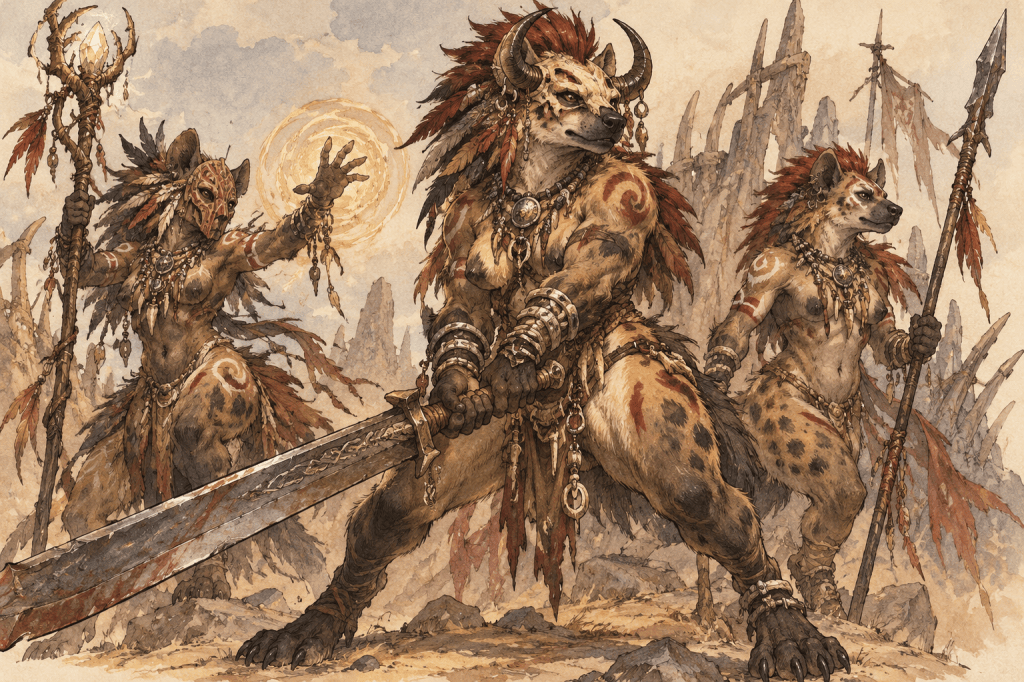
Across the golden savannahs and thorn-scrub borders of Erosia live the Gnolls: powerful, fully furred, hyena-headed peoples whose great family packs may become formidable enemies, hard-won allies, wary trading partners or unexpected guardians. Their sharp teeth, painted hides and ancestral bone masks have earned them a fearsome reputation, but those signs belong to a living culture—not a universal oath to violence. Gnolls are presented here as nonplayable bestiary peoples, not an available player ancestry and not an inherently evil species.
The Golden Savannah packs described on this page are the first regional example of Gnoll society. Other Gnoll cultures elsewhere in Erosia may organize their families, laws, rites and leadership very differently. This entry establishes a shared bestiary foundation without making one tribe’s customs universal.
Appearance and Ecology
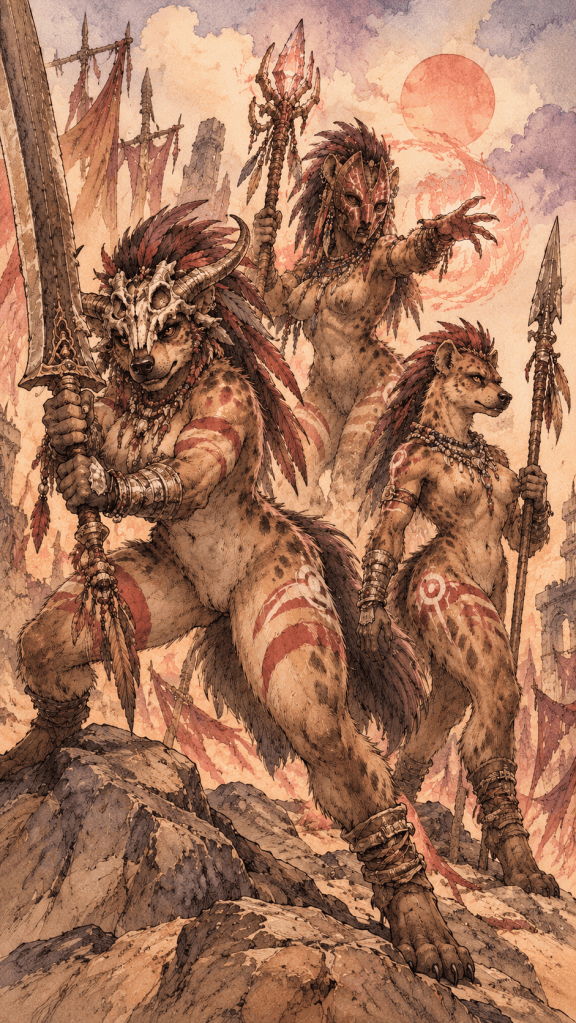
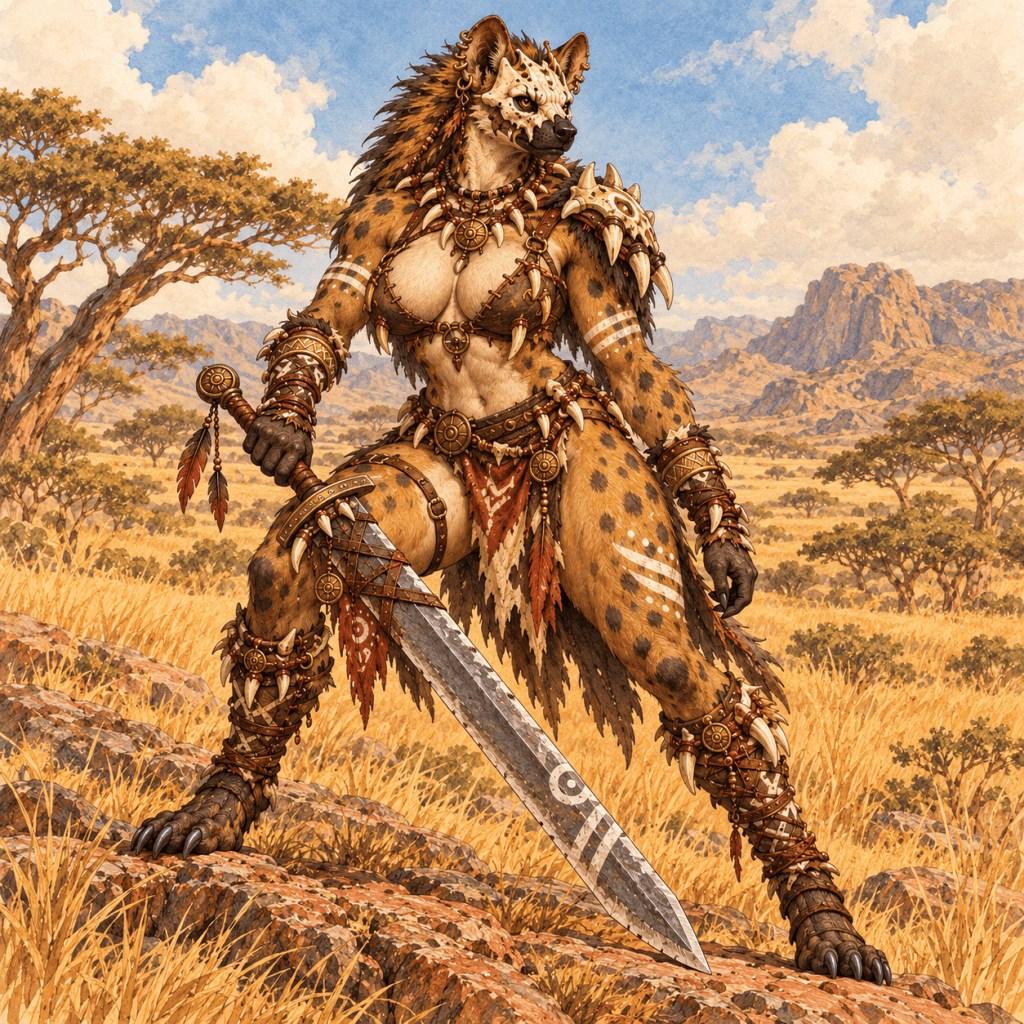
Gnolls resemble upright, anthropomorphic spotted hyenas. Their powerful shoulders, heavy jaws, round ears, black noses and amber-eyed expressions unmistakably mark their ancestry. Thick fur covers the entire body, ranging from tawny gold and sandy ochre to dark umber, commonly broken by black or brown spots. Raised manes, often dyed with ochre or naturally reddish, accent their necks and backs. Their digitigrade hind limbs end in broad clawed paws, while strong tails aid balance and convey emotion.
The Golden Savannah clans traditionally wear little or no clothing. Fur provides natural coverage and protection, while paint, scars, jewelry and ritual ornaments communicate rank, affiliation and achievement. Bone necklaces, carved beads, bronze ear rings, thick bracers and headdresses made from the remains of respected desert beasts are not random trophies. Each is part of a language of memory, responsibility, kinship or distinction.
Though well adapted to dry country, Gnolls are not indiscriminate consumers of the land. Packs track seasonal migration, maintain traditional water rights, exchange goods with neighboring peoples and remember the consequences of exhausting a hunting ground. A season of drought may still push a desperate pack into raiding, and prosperous clans may fight bitterly over access to a river. Ecology explains such conflicts; ancestry does not excuse cruelty.
The Golden Savannah Matriarchies
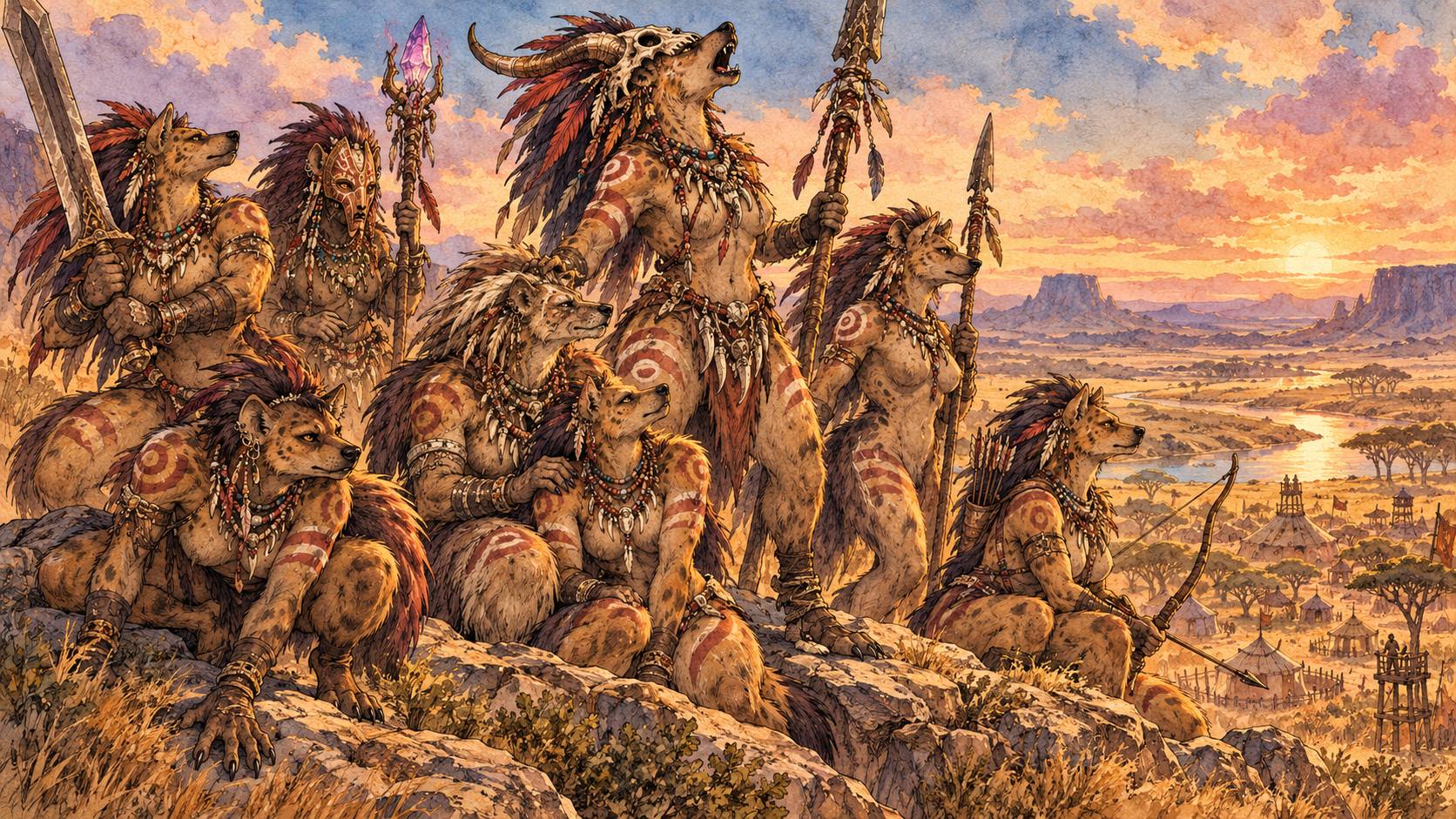
Among the Golden Savannah packs, family descent and many forms of authority pass through maternal lines. Senior females commonly serve as hunters, territorial defenders, commanders and judges, with distinguished War-Matriarchs coordinating allied packs during a crisis. Males commonly work as makers, traders, oral historians, healers and guardians of communal life, though personal vocation and local custom vary. Nothing in Gnoll nature prevents a male from fighting or a female from practicing any peaceful craft.
A pack is more than a hunting unit. It is an extended network of households, foster bonds, inherited obligations and remembered favors. Several packs may form a clan; several clans may unite temporarily into a confederation under a War-Matriarch. This hierarchy should be useful to a Dungeon Master, not treated as fixed social biology.
The Laws of Water and Kin
Custom differs between clans, but three principles frequently guide dealings with outsiders. A shared watering place must not be poisoned or taken by treachery. Young, infirm and unarmed dependents are protected during disputes. The promises of an acknowledged host bind the household that offers them. Breaking one of these customs may turn neutral strangers into enemies faster than drawing a blade.
Gnolls distinguish between a threat to their pack and a stranger who has simply entered unfamiliar ground. A wary Spearwarden may issue a challenge before attacking. A Hunter may shadow travelers for a day to learn their intentions. A War-Matriarch may demand tribute for passage, or request aid in restoring a stolen well. Other clans may be harsher, more welcoming, or openly predatory.
Lives Beyond Battle
| Role in the settlement | Contribution |
|---|---|
| Den-Mother | Household care, fostering, teaching and communal welfare |
| Bonekeeper | Ancestral histories, names of the dead and funerary rites |
| Hearth-Healer | Medicine, recovery and the health of the clan |
| Trail-Speaker | Trade, diplomacy, interpretation and negotiated passage |
| Hidewright | Shelters, tools, leatherwork and ritual crafts |
| Waterkeeper | Seasonal wells, migration routes and stewardship agreements |
| Elder Matriarch | Law, succession, reconciliation and judgments between households |
These are occupations, not immutable castes. A Witch Doctor might also be a Hearth-Healer; a retired Guardian might become a Waterkeeper. A pack encountered in the wilderness is connected to people who are not present in the fight.
The Seven Roles of the War-Pack
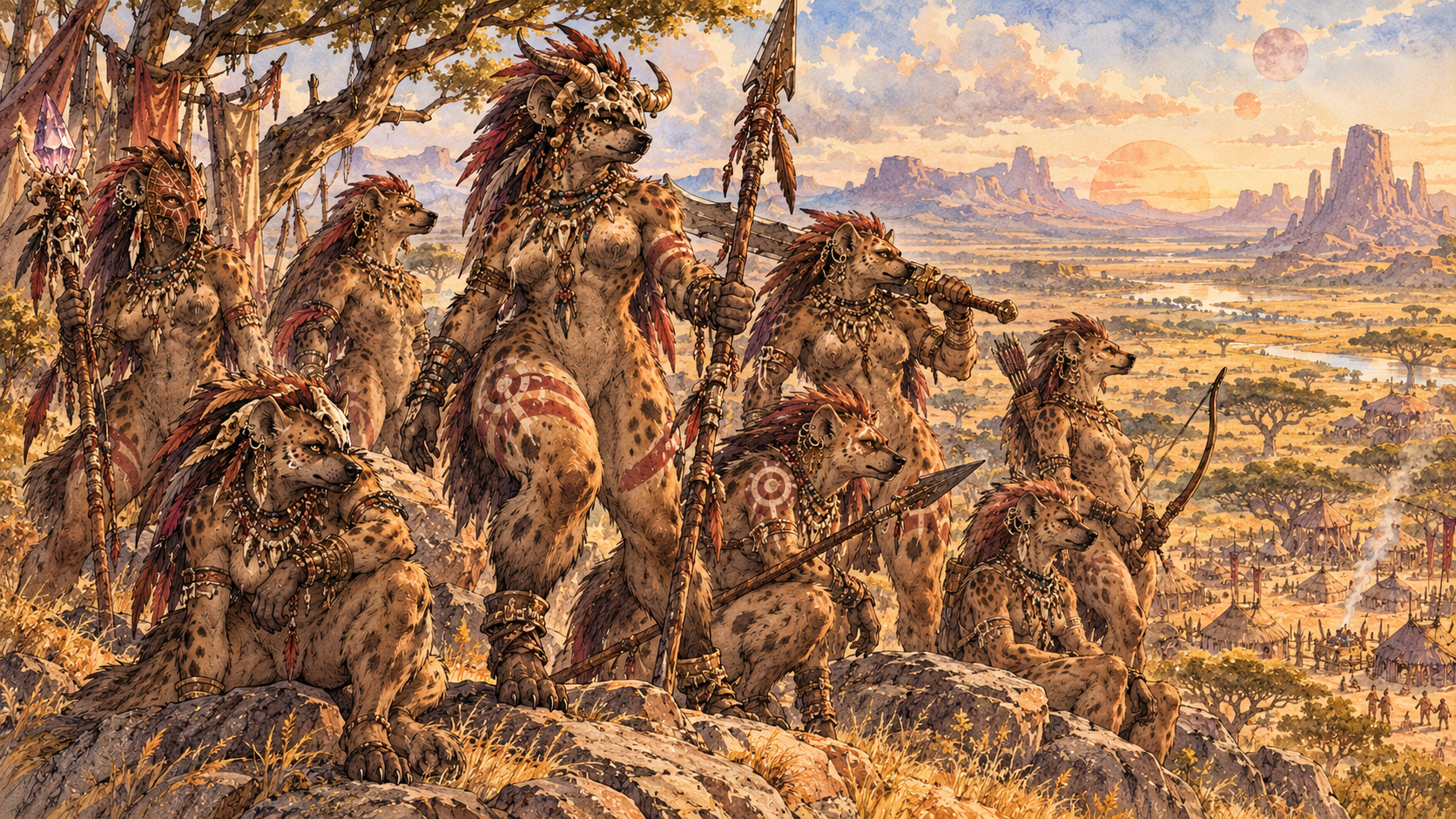
The following profiles distinguish combat duties, rather than separate subspecies or mandatory character classes. Their challenge ratings and abilities are Second Bloom playtest proposals; individual stat-block pages will carry full final statistics and encounter adjustments. The Wildheart Brute is inspired by the themes of Erosia’s Wildheart tradition without granting a monster the player class by default.
| Pack role | CR (provisional) | Battlefield purpose | Signature 5e feature |
|---|---|---|---|
| Spearwarden | 1/2 | Frontline protection | Guarding Thrust redirects attacks away from packmates |
| Pack Hunter | 1 | Ranged coordination | Mark the Quarry helps allied Gnolls focus a threatened target |
| Stalker | 1 | Ambush and infiltration | Shadow Step allows Disengage or Hide as a bonus action |
| Bone-Mask Guardian | 2 | Hold a defensive line | Hold the Line and Interpose control movement or reduce injury |
| Witch Doctor | 2 | Magic and recovery | Mend the Pack and Ancestral Hex preserve momentum |
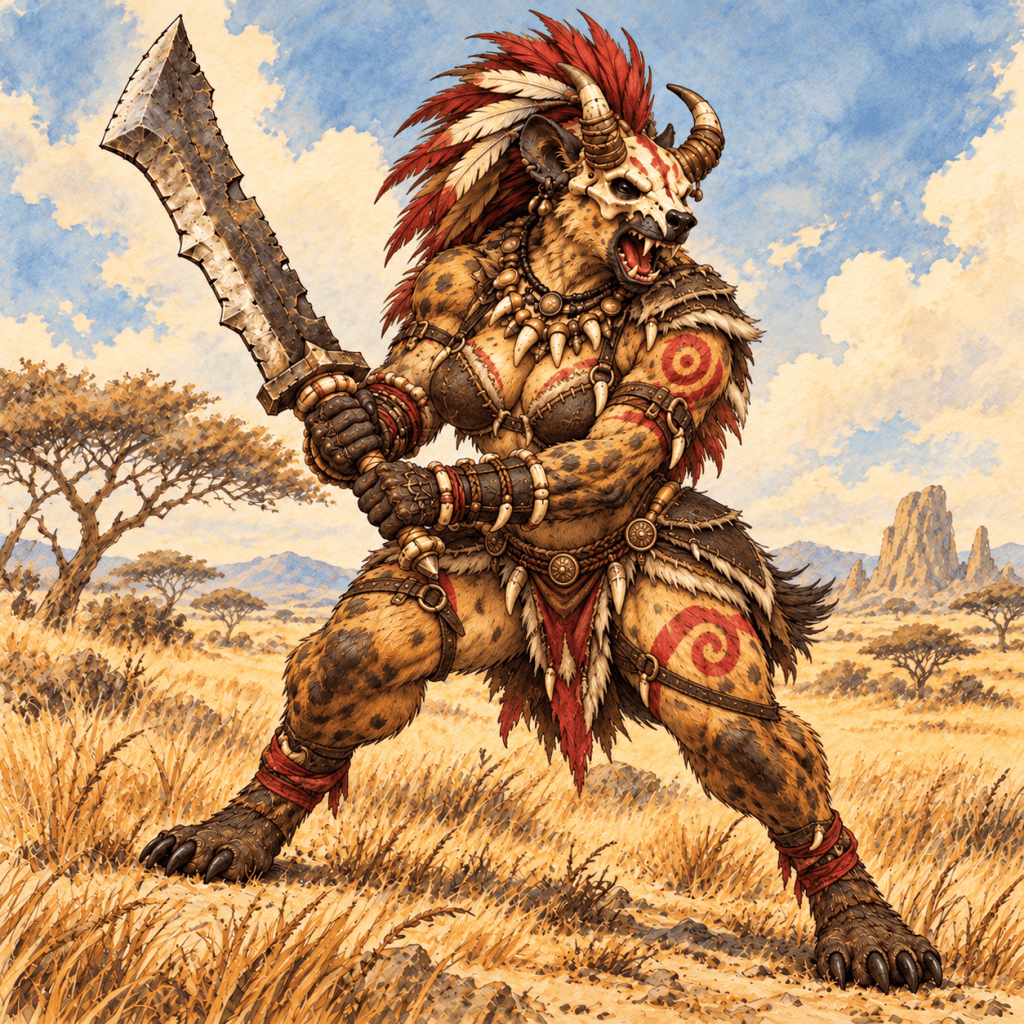
| Wildheart Brute | 3 | Heavy melee pressure | Crushing Advance drives enemies away from the pack |
| War-Matriarch | 4 | Command and morale | Pack Command and Rally the Bloodline coordinate the whole group |
Spearwarden — The First Line
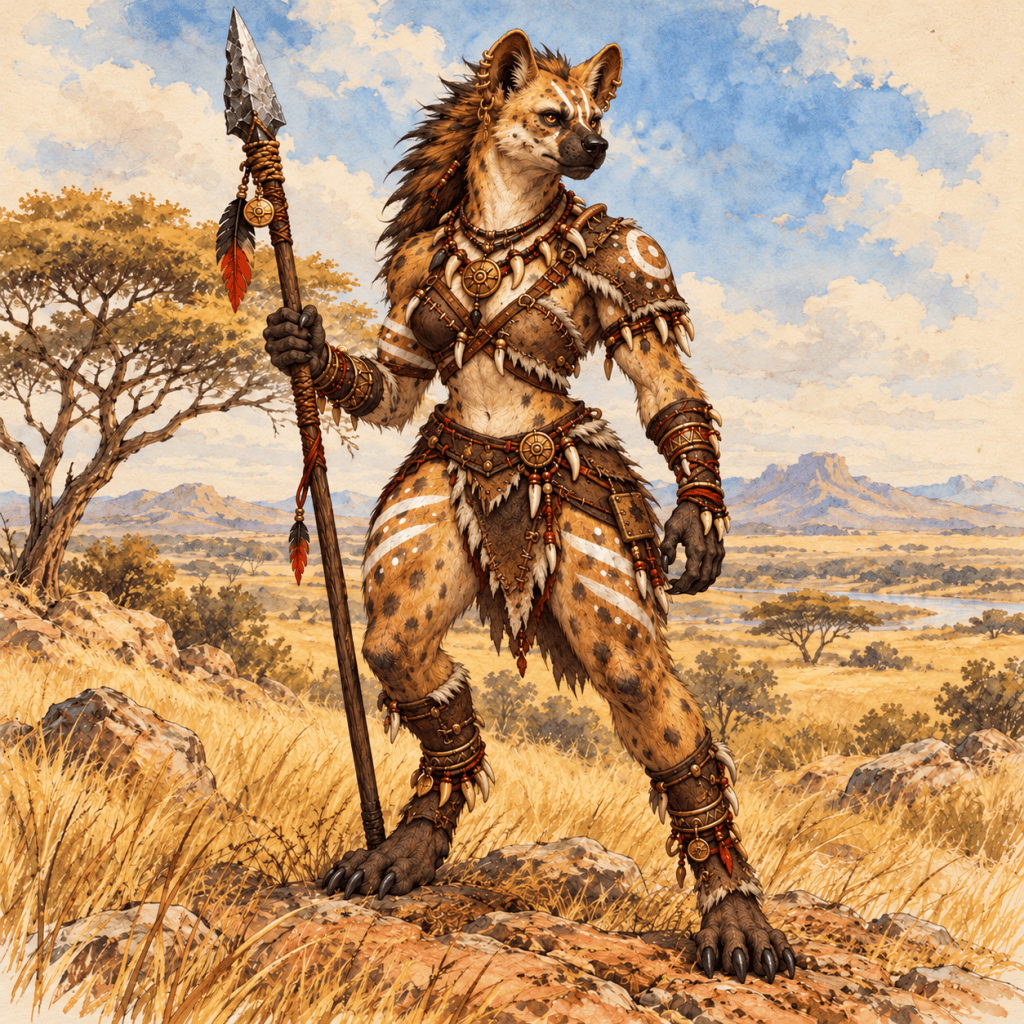
5e: A spear-armed defender who fights close to an ally. Guarding Thrust (Reaction): When a creature the Spearwarden can see attacks an allied Gnoll within 5 feet, the Spearwarden imposes disadvantage on that attack before it is rolled. Pack Strike: Once on its turn it deals an additional 1d4 damage to a creature within 5 feet of another conscious Gnoll.
Desire Identity — Loyalty. The first desire is to keep the line unbroken; its strongest fear is abandonment. Pack Heart rises when a companion is defended. Its release, Stand Fast, hardens the resolve of nearby allies.
Pack Hunter — The Watchful Eye
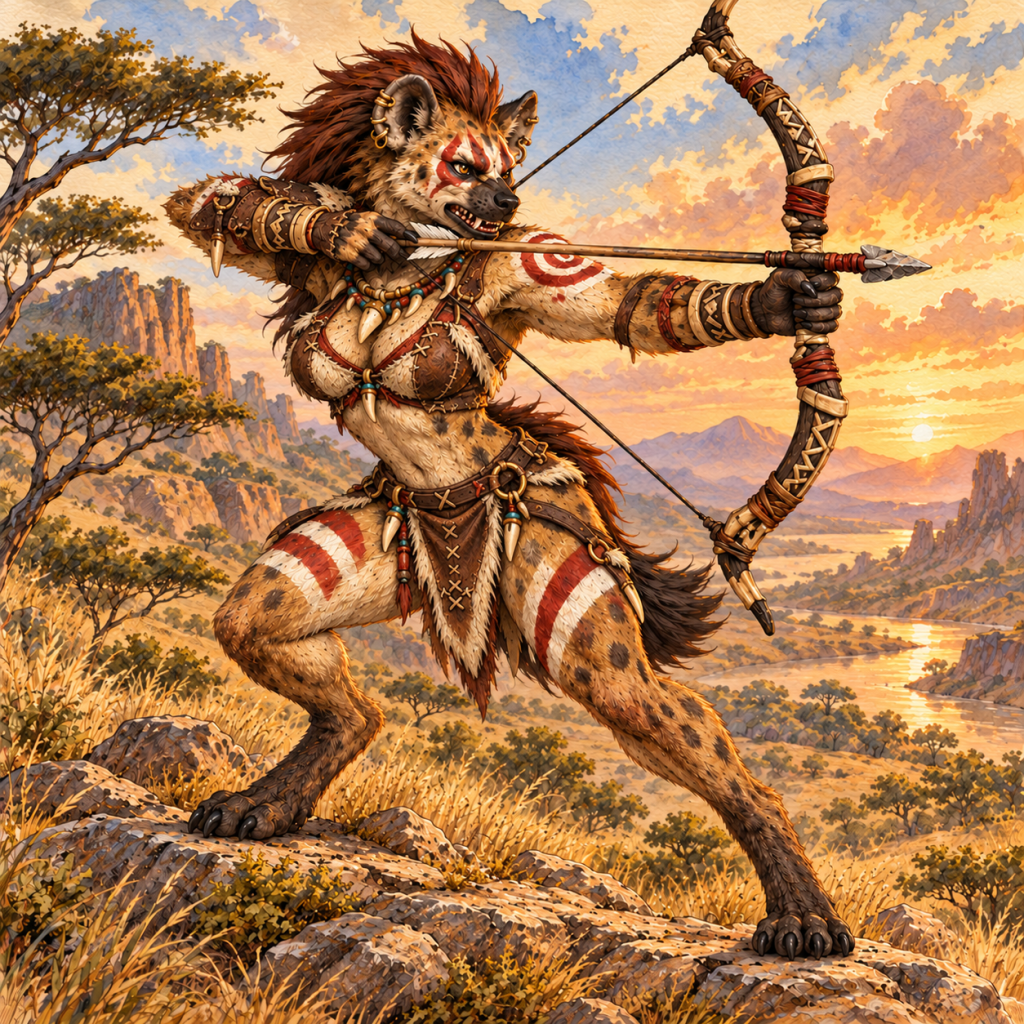
5e: An archer trained to pick targets for the pack. Mark the Quarry: Once per turn after hitting a creature with a ranged weapon attack, the Hunter marks it until the start of the Hunter’s next turn. The next attack that hits the marked creature from a different allied Gnoll deals 2 additional damage. Reposition (Bonus Action): After making a ranged attack, the Hunter may move up to 10 feet, provoking opportunity attacks normally.
Desire Identity — Anticipation. The promise of a successful coordinated hunt fuels the Hunter. Pack Heart rises when an ally strikes its chosen quarry. Its release, Perfect Quarry, creates a final opening for an arrow.
Stalker — The Silent Fang
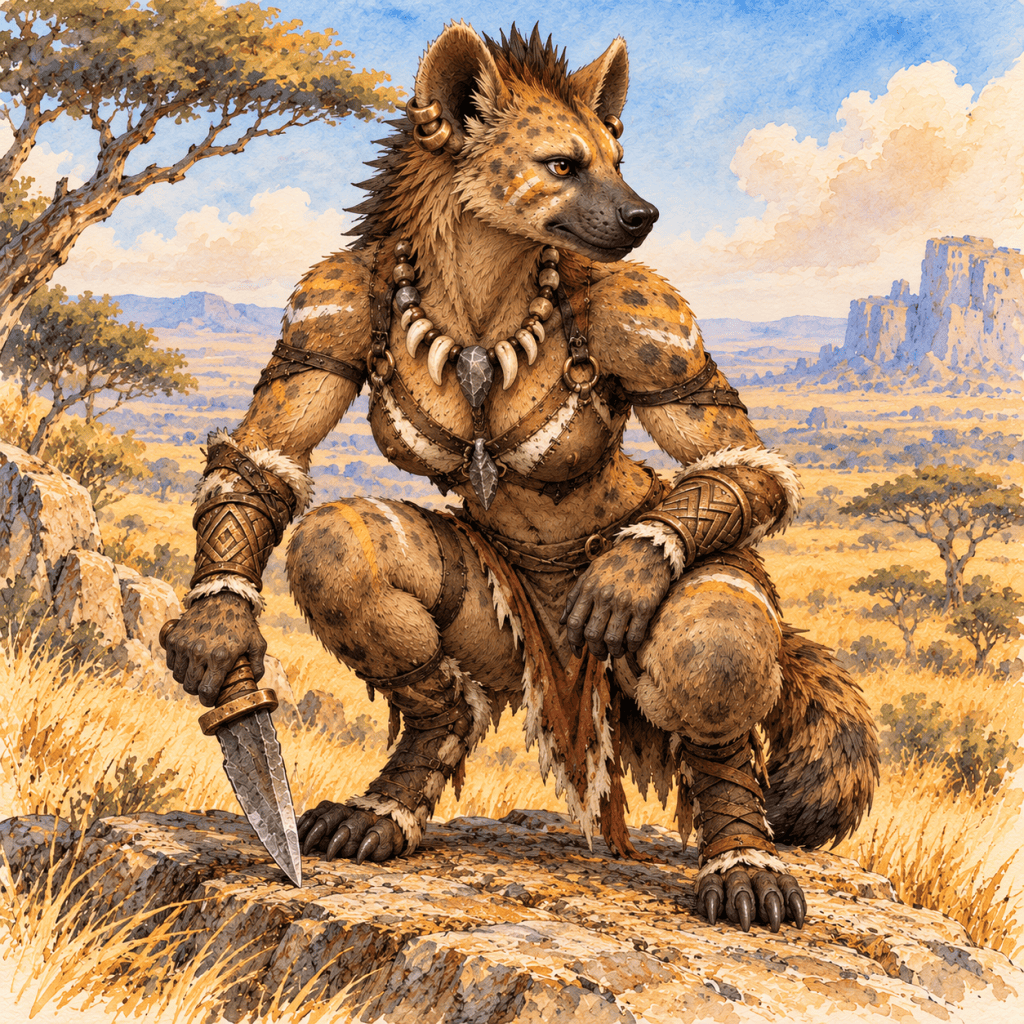
5e: A quick-moving scout and ambusher, often carrying paired curved blades. Shadow Step: The Stalker can take the Disengage or Hide action as a bonus action, provided it can satisfy the normal conditions for hiding. Pack Ambush: Once per turn, one blade strike deals an extra 1d4 damage when another Gnoll ally is within 5 feet of the target.
Desire Identity — Freedom. The Stalker prizes open routes, escape and the freedom to choose when violence begins. Pack Heart rises after a successful strike from hiding. Its release, Ghost Step, becomes a swift, elusive attack.
Bone-Mask Guardian — The Unbroken Oath
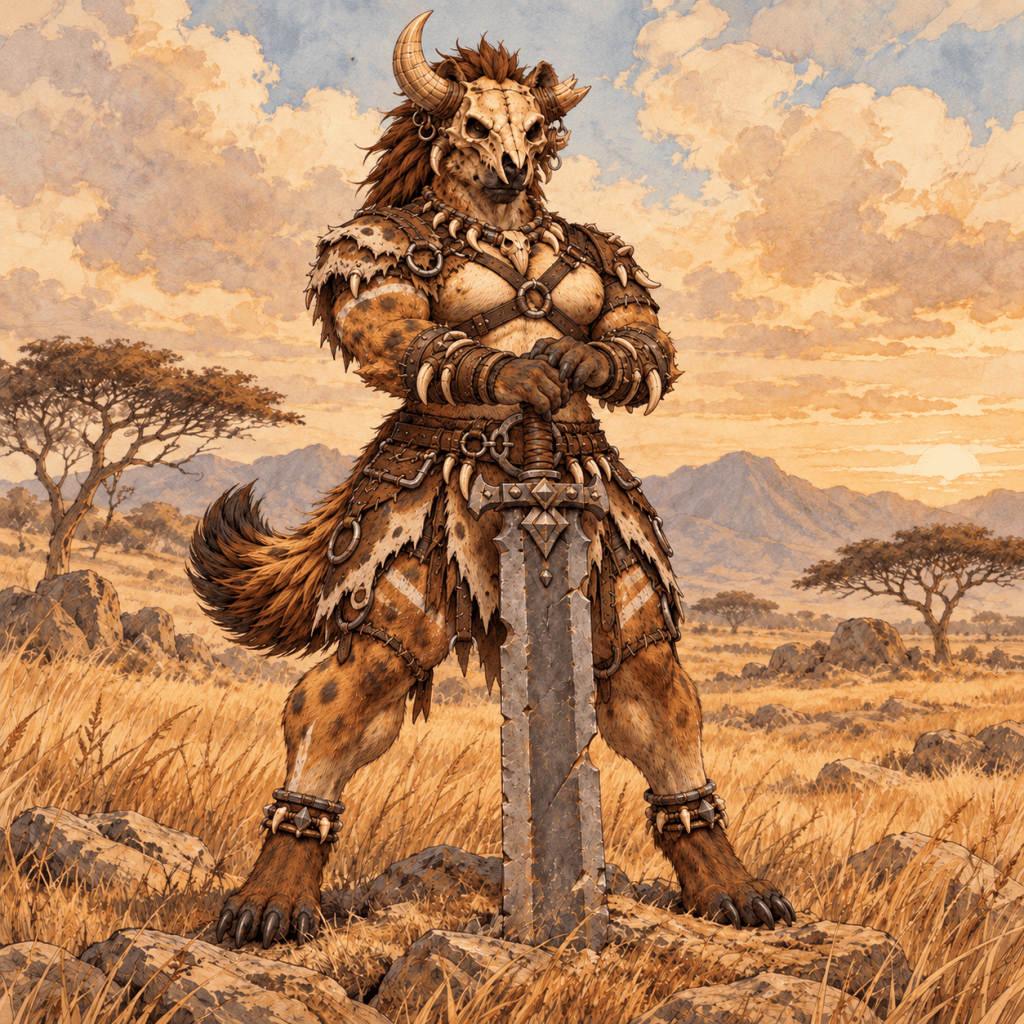
5e: A heavy defender often recognized by an ancestral bone mask. Hold the Line (Reaction): When a hostile creature enters the Guardian’s reach, the Guardian can make one greatsword attack; on a hit, the target’s speed becomes 0 for the rest of its turn. Interpose (Reaction): When an allied Gnoll within 5 feet takes damage, reduce that damage by 1d8 + 3. Both features consume the same reaction, forcing a meaningful choice.
Desire Identity — Duty. The Guardian’s protective oath outweighs personal glory. Pack Heart rises when it stops an intruder or prevents harm. Its release, Circle of Bone, lends ancestral endurance to companions.
Witch Doctor — The Voice of the Ancestors
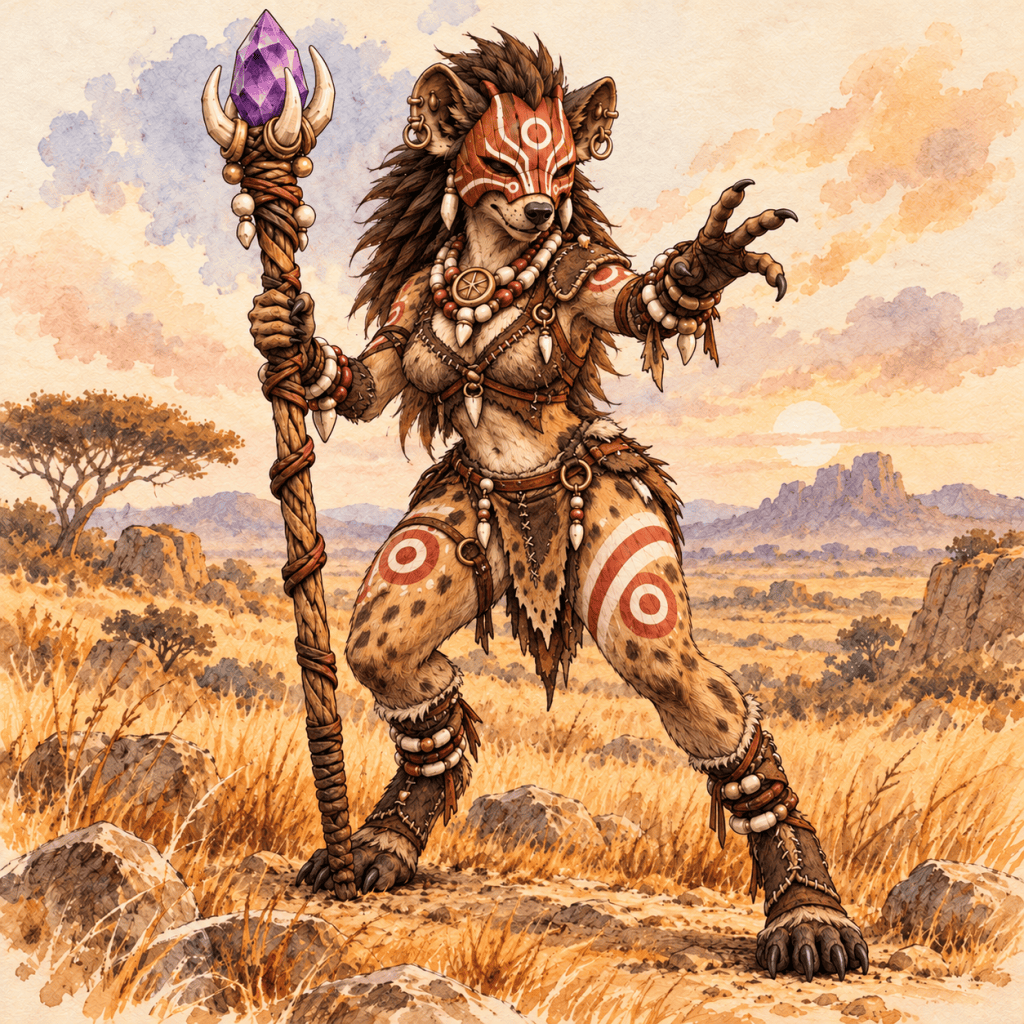
5e: A ritual specialist and healer, often bearing a crystal-topped staff. Mend the Pack (Bonus Action; 2/Day): One creature within 30 feet regains 1d8 + 3 hit points. Ancestral Hex (Recharge 5–6): A creature within 30 feet makes a Wisdom save against the Witch Doctor’s spell save DC, taking 2d6 psychic damage and losing its reactions until the start of the Witch Doctor’s next turn on failure, or half damage without the reaction penalty on success.
Desire Identity — Connection. Ritual, healing and ancestral communion awaken its Pack Heart. Its release, Ancestor Chorus, restores allies and gives them a chance to resist fear or charm. Witch Doctors are community leaders as often as battlefield casters.
Wildheart Brute — The Breaking Fang
5e: A massive, exceptionally strong frontline warrior. Crushing Advance: Once per turn after hitting with a greatsword attack, the Brute can force a Strength saving throw; on failure, push the target 5 feet and move into the vacated space without provoking an opportunity attack from that target. Hardened Ferocity (1/Combat): When first reduced to half hit points or fewer, the Brute gains resistance to bludgeoning, piercing and slashing damage until the end of its next turn.
Desire Identity — Protective Fury. The Brute’s Pack Heart rises when an allied Gnoll is injured nearby. Its release, Wildheart Bloodrush, turns that pressure into a rapid countercharge. Its aggression is most frightening when a companion is threatened.
War-Matriarch — The Mother of Fangs
5e: A tactical commander and elder champion. Authority of the Mother: Allied Gnolls within 15 feet that can hear her have advantage on saves against being frightened. Pack Command (Reaction): When an ally within 30 feet is targeted by an attack, she can order it to move up to half its speed without provoking opportunity attacks before the attack resolves. Rally the Bloodline (Bonus Action; 3/Day): Up to two allied Gnolls within 30 feet gain 5 temporary hit points each.
Desire Identity — Belonging and Responsibility. Her Pack Heart rises when her commands preserve or strengthen the group. Her release, The Mother’s Great Howl, gives allies the strength and opportunity to move as one. Not every Matriarch is wise, and not every Matriarch is cruel.
Mechanics of Desire — The Pack Heart
The Pack Heart is the Golden Savannah Gnolls’ characteristic expression of the Mechanics of Desire. It represents protective instinct, predatory focus, shared anticipation and the emotional pressure of belonging. It is not inherently sexual. Gnolls can also experience sexual, romantic or ecstatic desire, but a normal combat encounter does not presume that meaning. Their Arousal tracks the same mechanical pressure described in the source rules, interpreted through each individual’s defining impulse.
This design follows the site’s Desire Matrix Design Doctrine: identify the creature’s emotional force; establish its relationship to Libido, Arousal and Climax; then express that identity in combat and other encounters. Arousal, Climax and pack loyalty do not automatically generate Whispers.
Shared Trait: Pack Stirring
- Unveiled Play. Once per round when a Gnoll experiences its role’s listed trigger, that Gnoll gains 1 Arousal. It uses the published Arousal track from 0 to 6. When it reaches 6, resolve its role’s Climax Effect, reduce Libido by 1 and reset Arousal to 0. The normal limit on Arousal gained in a turn, depletion rules and other core rules still apply.
- Veiled Play. A Gnoll begins Composed. Its first Pack Stirring trigger makes it Stirred; a later qualifying trigger while Stirred makes it Overwhelmed. Resolve the role’s release, then end its Desire condition. This is a proposed creature-specific way to use the published Veiled states, not a replacement for them. Veiled Play does not track Libido.
- Classic Play. Do not track Arousal or Libido. Gnolls retain their ordinary 5e traits and tactics; special emotional effects use their stated Classic equivalents. Pack Stirring by itself creates no extra benefit in Classic Play.
Role-Specific Desire Matrix
| Role | Desire DC | Libido | Pack Stirring trigger | Climax Effect / Veiled release |
|---|---|---|---|---|
| Spearwarden | 11 | 2 | Uses Guarding Thrust | Stand Fast: Up to three Gnoll allies, including itself, within 10 feet gain 5 temporary hit points each |
| Pack Hunter | 12 | 3 | An ally hits its marked quarry | Perfect Quarry: Immediately make one longbow attack against the marked target; on hit, add 1d6 piercing damage |
| Stalker | 12 | 3 | Hits after emerging from concealment or while hidden | Ghost Step: Move up to half speed without opportunity attacks; make one curved-blade attack during the movement |
| Bone-Mask Guardian | 12 | 4 | Uses Hold the Line or Interpose successfully | Circle of Bone: Gnoll allies within 10 feet gain 7 temporary hit points each |
| Witch Doctor | 13 | 4 | Heals a creature or successfully protects it from supernatural emotional pressure | Ancestor Chorus: Up to three allies within 30 feet regain 1d8 hit points and repeat one save against charm or fear |
| Wildheart Brute | 14 | 3 | An allied Gnoll within 15 feet takes damage | Wildheart Bloodrush: Move up to speed without opportunity attacks and make one greatsword attack during the movement |
| War-Matriarch | 14 | 5 | An ally benefits from Pack Command or Rally the Bloodline | Mother’s Great Howl: Up to three Gnoll allies within 30 feet gain 7 temporary hit points and move half their speed without opportunity attacks |
EROSaves. A Gnoll uses its Constitution or Wisdom saving throw bonus as provided by the core rules and adds proficiency only when proficient in that saving throw. Its listed Desire DC is used only for abilities that impose an EROSave on another creature, not as a difficulty against which the Gnoll resists its own triggers. For an improvised Gnoll emotional-pressure action, select a sensory or emotional approach that the target can actually perceive and respond to.
Climax does not compel intimacy. A Gnoll’s battlefield release is a mechanical culmination of protective or predatory pressure. It never decides whom another creature loves, desires or consents to touch. Even in Unveiled Play, a player retains authority over a character’s enduring feelings and boundaries.
Example: Spirit Resonance
A Witch Doctor may invoke ancestral voices to unsettle a creature it can see within 30 feet. Classic: DC 13 Wisdom saving throw; on failure the target cannot take reactions until the beginning of the Witch Doctor’s next turn. Veiled: DC 13 EROSave; on failure the target becomes Stirred, or Overwhelmed if already Stirred by this Witch Doctor, resolving the effect before resetting. Unveiled: DC 13 EROSave; on failure the target gains 1 Arousal. In all modes, a target must be able to perceive the resonant call, and the ability cannot create consent or determine attraction.
Behavior, Combat and Morale
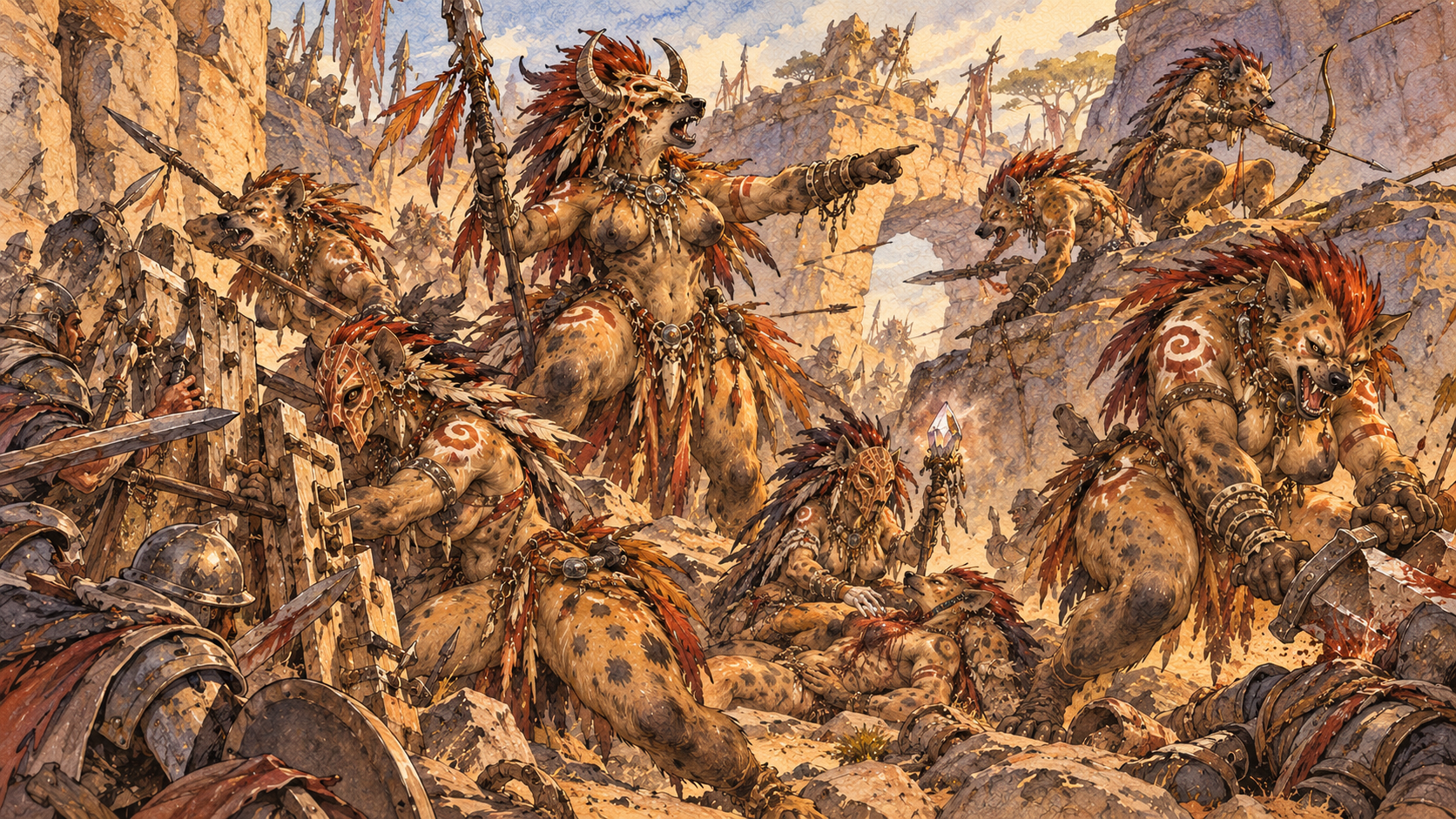
A well-led pack is dangerous because the members cover one another. Spearwardens defend approaches while Bone-Mask Guardians deny narrow passage. Hunters mark priority threats; Stalkers probe the flanks and seek an escape route as readily as an opening to attack. Brutes counterattack anyone who breaks the line. Witch Doctors safeguard injured companions, and the Matriarch decides when the pack should press, negotiate or withdraw.
Gnolls rarely consider dying pointlessly to be honorable. When their commander falls, half their warriors are incapacitated, or the pack’s actual objective becomes impossible, surviving Gnolls reassess. The DM may resolve this by roleplay, a Wisdom check by the acting leader, or the situation itself. A disciplined retreat, appeal for parley, last protective stand or offered concession can all be appropriate.
A Gnoll’s hostility is connected to a reason: trespass, hunger, poaching, theft, a disputed boundary, vengeance, an abusive leader or a perceived danger to kin. A party may be justified in fighting a particular tribe without being justified in condemning every Gnoll in Erosia.
Encounter Seeds
- The Last Watering Hole. A clan blocks a route to the only reliable well. Their demand is steep, but another settlement upstream has diverted the seasonal river.
- The Bone-Mask Challenge. A Guardian stands before an abandoned shrine and refuses passage. The mask belongs to a deceased ally whose remains adventurers unknowingly carry.
- The Hunter’s Warning. An arrow lands at the party’s feet, deliberately missing. A pack of Hunters is driving travelers away from nesting grounds where a dangerous predator has awakened.
- The Matriarch’s Bargain. Rival Gnoll clans approach open war after a ceremonial staff is stolen. The Matriarch wants the thieves found before her council orders an attack.
- The Witch Doctor’s Debt. A shaman can treat a mysterious supernatural illness but needs a rare medicinal plant from land now occupied by hostile outsiders.
Using Gnolls in Play
First contact: Show a sign of intention before initiative—scouts watching from a ridge, deliberately planted warning spears, guarded wells or an elder sent to speak. This establishes that violence is possible but not inevitable. Escalation: Give both sides something tangible to defend and at least one actionable choice besides mutual destruction. Aftermath: Survivors, debts, kinship, reputation and negotiated concessions can shape future regional encounters.
An entire tribe should never be represented only by a combat roster. When adventurers enter a Gnoll settlement, show everyday work and its people: builders mending shelters, healers preparing salves, traders counting goods, children learning stories and elders settling disagreements. Every warrior has a life beyond the battlefield.
Kaestra Catalogue Note
“A pack does not become harmless simply because it has customs, tenderness and laws. Quite the opposite. Its members are willing to take dreadful risks for one another. Understanding what they defend will often save more lives than knowing how sharply their claws can cut.”
— Morvane Kaestra
Development note — Second Bloom Edition. This is the parent ecology and culture entry for Gnolls. Seven dedicated creature pages will expand the provisional roles into complete 5e stat blocks with full ability scores, attacks, saving throws, encounter tactics and complete Classic, Veiled and Unveiled Desire treatments. Regional customs described here apply to the Golden Savannah clans unless otherwise stated. Final numbers are subject to encounter playtesting.
Related reading: Bestiary · Mechanics of Desire · Desire Matrix Design Doctrine


You must be logged in to post a comment.