
The Rosethorn Chasm
“Amarosa teaches that every longing has a root. Beneath the city, some roots have grown too deep to name.”
Beneath the City of Blossoming Hearts
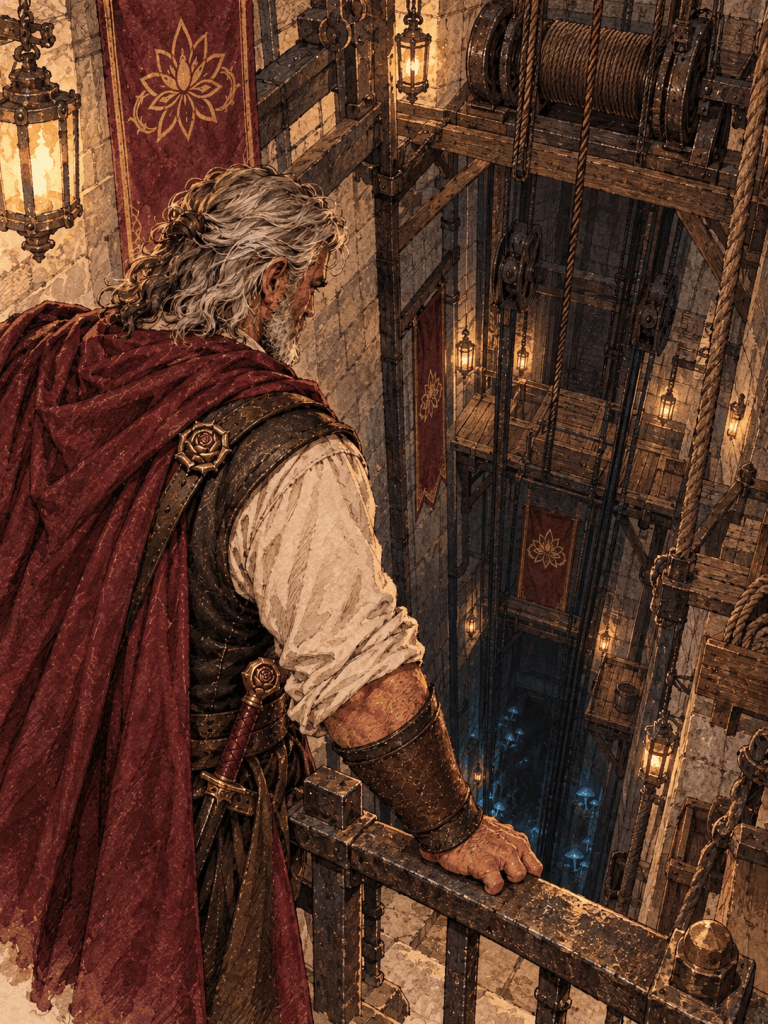
The Rosethorn Chasm is the immense system of natural fissures, buried structures, root-choked passages, and forgotten streets descending beneath Amarosa. To the city above, it is the darkness beneath the blossoms and the place from which too many beautiful, dangerous things return.
The upper reaches begin below the Underbriar Warrens, where old foundations have broken into caverns and abandoned corridors. From there, the descent passes through architecture belonging to several eras of the city. Shrines stand beneath later shrines. Pleasure temples open into natural galleries. Stairways end above empty air, while bridges join buildings whose streets were buried centuries ago. No single map captures the whole of it because collapses, floods, new growth, and undiscovered passages continually change what explorers believe they know.
The Rosethorn Chasm is not merely a ruin beneath Amarosa. It is a record of the lives, faiths, disasters, and transformations upon which the modern city was raised.
A World Without Sky
Depth changes the character of the Rosethorn Chasm. The familiar tunnels of the upper levels eventually open into spaces large enough to contain districts, gardens, towers, and plazas. There is no sky above them. Their highest roofs disappear into darkness, tangled roots, and stone so distant that lantern light cannot reach it.
Ancient streets continue beneath vast canopies of root and thorn. Pale balconies overlook dry fountains. Vines descend like ropes from unseen heights, and living cables thicker than ship masts pass through walls, windows, and broken domes. In some chambers, luminous fungi and mineral growths cast a soft false twilight. Elsewhere, darkness remains complete until disturbed by torchlight or the regulated brilliance of a Bloomseeker Sun Lantern.
Distance is difficult to judge underground. A ruin visible across a cavern may require hours of climbing to reach, while a narrow opening behind a collapsed wall may lead into an entire buried quarter. Sound travels unpredictably through the stone. Footsteps may echo from the wrong direction, running water may seem close for half a day, and the faint clicking of an unseen creature can follow an expedition without ever growing louder.
The Layers Below
The Rosethorn Chasm is usually discussed as a series of broad depths rather than clearly bordered regions. These divisions are practical, not exact, and different maps often disagree about where one ends and another begins.
The Underbriar Threshold
The highest approaches mingle with the cellars, cisterns, forgotten foundations, and old service passages beneath Amarosa. Smugglers, scavengers, illicit traders, and shrine keepers use some of these routes, though few travel far beyond familiar markers. Here, city sounds can still be heard through pipes and stone, offering the comforting illusion that the surface remains close.
The threshold is also where poor preparation most often becomes fatal. Passages that appear stable may open into sudden drops, while ordinary drains can swell into violent underground channels after heavy rain. Creatures driven upward from deeper regions sometimes reach these tunnels before the city realizes anything has changed below.
The Temple Descent
Below the threshold lie sanctuaries, processional ways, gardens, and ritual chambers from forgotten periods of Amarosa’s history. Many were devoted to desire, transformation, fertility, beauty, or forms of devotion no longer practiced on the surface. Their surviving art is rarely complete. Faces have been deliberately removed from reliefs, divine names have been cut from altars, and some murals appear to have been painted over while their pigments were still fresh.
Relics recovered from the Temple Descent have reshaped modern scholarship more than once. They have also inspired fraud, theft, private collecting, and dangerous attempts to restore rites whose purposes are no longer understood. The Bloomseekers record what they can, but every catalogued chamber implies dozens more waiting in the dark.
The Buried Wards
Farther below, tunnels give way to streets. Buildings stand close together beneath the earth, their upper stories pierced by roots and their doors opening onto plazas untouched by sunlight. Some districts appear to have been abandoned gradually. Others preserve signs of abrupt flight: overturned carts, sealed rooms, scattered tools, and household shrines left with their final offerings in place.
The best-known entrances into these wards are tightly controlled. Even so, unauthorized expeditions continue to seek lost vaults, rare chasmglass, forbidden texts, and proof of whatever calamity swallowed these places. Few return with what they expected, and some return carrying dangers that do not reveal themselves immediately.
The Deep Rose
The name Deep Rose refers collectively to those reaches beyond reliable survey. No trustworthy chart establishes their full depth or extent. Explorers describe immense root systems, warm subterranean wetlands, fields of pale flowers, silent structures larger than anything visible on Amarosa’s surface, and passages in which worked stone gives way to something resembling grown architecture.
Reports from the Deep Rose are treated cautiously. Exhaustion, isolation, spores, unstable magic, and fear can distort memory, while treasure seekers have good reason to conceal their discoveries. Yet the same images recur across accounts separated by generations: blossoms opening at the approach of light, streets that seem to continue after the surrounding city has ended, and the sensation of being observed by something that has neither eyes nor voice.
Roots, Water, and Living Stone
The Rosethorn Chasm possesses several interconnected environments rather than one uniform underground landscape. Water descends from Amarosa through springs, storm channels, broken cisterns, and porous stone. It gathers in clear pools, flooded chambers, mineral terraces, and slow rivers that vanish into lower depths. Some water is safe after treatment. Some carries spores, alchemical residue, or magical effects that ordinary purification does not remove.
Plant life is equally varied. Common roots descend from the city gardens above, but deeper growths display unfamiliar colors, textures, and responses to heat or light. Pale vines coil around masonry without visibly breaking it. Thorn hedges close passages that older maps show as open. Flowers may bloom within moments of a Sun Lantern’s arrival, filling a chamber with perfume before anything else begins to move.
Stone within the chasm has also been altered by pressure, water, magic, and time. The most famous result is chasmglass, a translucent mineral prized for ornament, relic work, and the decoration of heavy armor. Its beauty makes it valuable; the difficulty of verifying a safe source makes it dangerous.
Those Who Descend
The Bloomseekers are the explorers most closely associated with the Rosethorn Chasm. Operating from the House of the Sacred Bloom, they survey passages, recover missing persons, document ruins, escort scholars, and contain threats before they reach Amarosa. Their work is not a claim of ownership. It is an acceptance that someone must learn what lies below before it climbs into the city unannounced.
Bloomseeker expeditions rely upon disciplined preparation. Their Sun Lanterns provide sustained magical daylight, reveal landmarks, and always indicate the direction of the House. Yet the same radiance that protects an expedition can awaken dormant growth and draw the attention of creatures adapted to darkness. In the Rosethorn Chasm, light is safety, invitation, and warning at once.
Others descend for less public reasons. Priests seek lost traditions. Relicwrights search for forgotten techniques. Merchants finance mineral claims. Families hire guides to find those who never returned. Smugglers use abandoned routes to bypass the city above, while private collectors pay heavily for objects that should have remained sealed behind stone.
Dangers of the Rosethorn Chasm
The greatest threat is not any single monster but the environment itself. Sudden drops, unstable structures, flooding, toxic growth, disorienting echoes, and exhausted supplies kill as readily as claws or poison. Magic may behave strangely near old ritual sites, especially where several traditions were practiced in the same place over generations.
The living dangers are no less varied. Predators stalk the dark, scavengers nest inside ruins, and plantlike creatures conceal themselves among roots and flowers. Some threats appear to respond to vibration, heat, scent, or light rather than sight. Others display traces of deliberate shaping, suggesting they were once guardians, tools, or participants in rites whose creators are gone.
For this reason, experienced guides teach one rule above all others: never assume that stillness means emptiness.
What the Rosethorn Chasm Means to Amarosa
Amarosa lives above the Rosethorn Chasm without agreeing upon what it represents. To some, it is a sacred inheritance and proof that the city’s devotion reaches back farther than surviving history. To others, it is a wound that should have remained sealed. Scholars call it an archive, treasure seekers call it an opportunity, and those who have lost loved ones below rarely call it anything at all.
The chasm nevertheless shapes the city. Its relics influence art and ritual. Its minerals appear in workshops and ceremonial armor. Its stories fill taverns, temples, classrooms, and warning songs. Even residents who never intend to descend live among foundations crossed by old passages and gardens fed by water that has traveled through the dark.
Amarosa is the City of Blossoming Hearts, but every blossom stands upon buried soil. The Rosethorn Chasm is the reminder beneath its beauty: desire can create, transform, preserve, consume, and grow long after its first purpose has been forgotten.
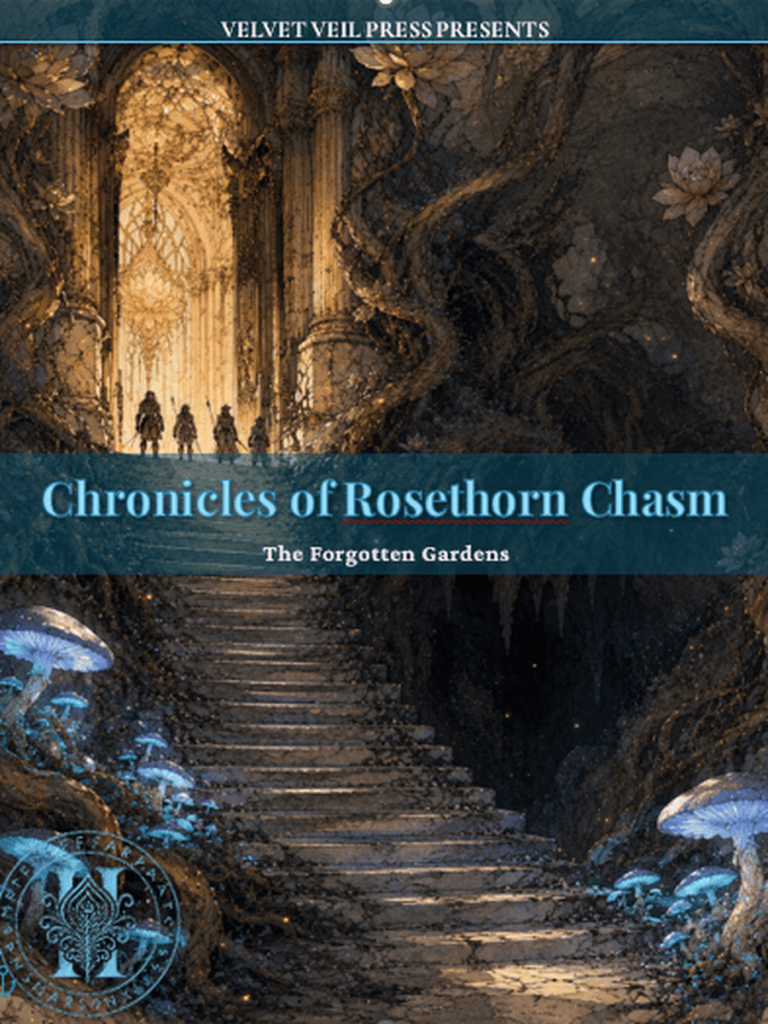
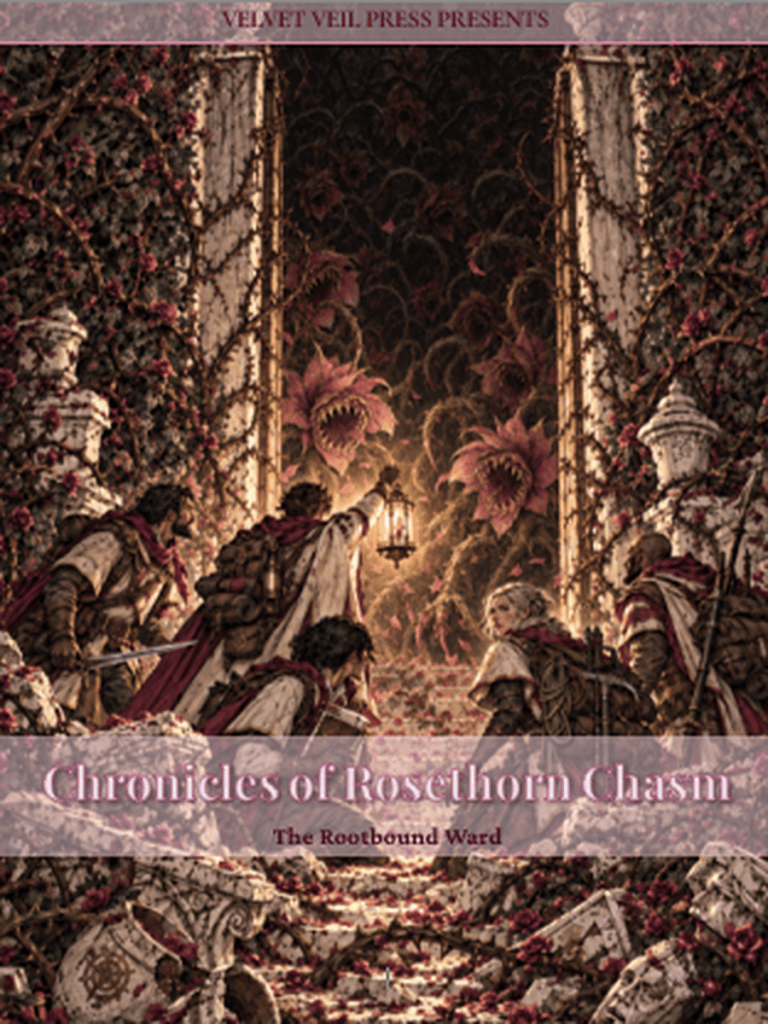
Adventure in the Rosethorn Chasm

Continue Exploring
Amarosa, City of Blossoming Hearts · The House of the Sacred Bloom · The Bloomseekers · Mysteries & Lost Places


You must be logged in to post a comment.