
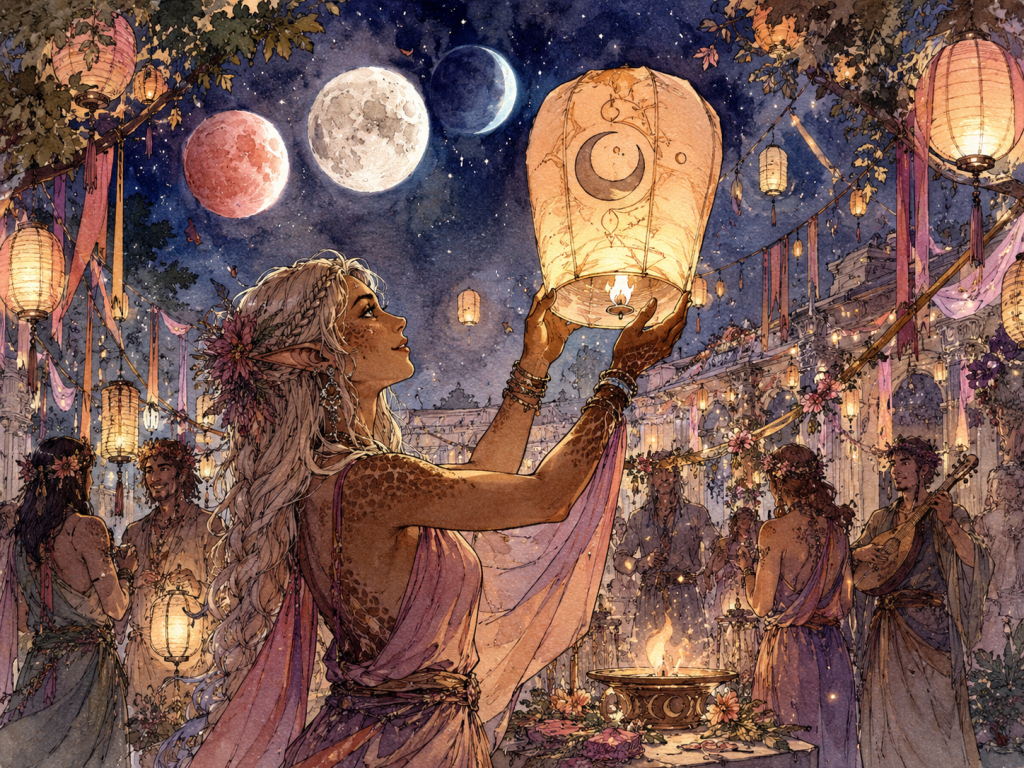
Celebrating the Rhythm of the Heavens
The movements of the Three Moons have shaped the cultures of Erosia since the earliest days of civilization. While scholars record their positions with meticulous precision and spellcasters study their influence upon magic, most people know the moons through celebration. Across every kingdom, city, and village, communities gather throughout the year to honor the changing heavens with festivals that mark the passage of time, strengthen bonds between neighbors, and celebrate the enduring rhythms of creation.
No single calendar governs all of Erosia. Every culture has developed its own traditions, holy days, and seasonal observances based upon the cycles of the Three Moons. Some festivals commemorate historical events, while others celebrate the harvest, the return of migrating animals, the beginning of spring, or the arrival of a particularly meaningful lunar phase. Although the customs vary from one region to another, nearly every people recognizes that the heavens provide a natural rhythm around which communities can gather.
Nights of Community
Moon festivals are among the most anticipated celebrations of the year. Town squares fill with music, marketplaces remain open long after sunset, and families travel great distances to reunite beneath the same moonlit sky. Temples hold public ceremonies, artisans display their finest work, and storytellers recount legends that have been shared across generations.
These celebrations are not reserved for nobles, priests, or accomplished spellcasters. Farmers, merchants, sailors, craftsmen, scholars, and travelers all participate according to their own traditions. For many communities, the festivals are less about observing the heavens and more about celebrating the people gathered beneath them.
Faith Beneath the Moonlight
Many religions incorporate the lunar calendar into their sacred observances. Temples often schedule important ceremonies to coincide with particular phases of the Three Moons, believing that these moments encourage reflection, renewal, remembrance, or celebration. Pilgrimages are frequently planned around major lunar festivals, allowing worshippers from distant regions to gather in shared devotion.
The faith of Velyssara is especially renowned for its vibrant celebrations. Festivals dedicated to the Lady of Desire often emphasize companionship, music, dance, beauty, courtship, artistic expression, fertility, and the celebration of life in all its forms. While each temple observes these traditions in its own way, they share the belief that joy, affection, and genuine human connection are sacred acts worthy of celebration.
Other faiths observe the moons quite differently. Some gather in quiet contemplation, others honor discipline through solemn ceremony, and still others dedicate their festivals to remembrance, renewal, or acts of public service. Together, these diverse traditions reflect the rich spiritual tapestry of Erosia.
Magic as Celebration
Moon festivals frequently provide opportunities for magic to become part of everyday life. Illusionists illuminate public squares with breathtaking displays of light and color. Priests offer blessings to travelers and families. Druids lead ceremonies celebrating the changing seasons, while musicians, dancers, and performers use magic to enrich their art in ways that delight audiences of every age.
Large festivals often become informal gatherings for practitioners of every magical tradition. Scholars exchange ideas beneath observatory domes, ritualists prepare community blessings, and wandering spellcasters eagerly share stories of unusual celestial events witnessed during their travels. Although these moments rarely resemble the dramatic spellcasting seen on the battlefield, they remind the people of Erosia that magic exists to enrich everyday life as much as it serves extraordinary adventure.
Traditions That Endure
Every region preserves festivals found nowhere else in the world. Some celebrate the first appearance of a particular moon after winter’s end, while others commemorate legendary heroes, ancient treaties, or miraculous events believed to have occurred beneath a memorable night sky. Families pass these customs from one generation to the next, ensuring that local traditions remain as much a part of their identity as language, food, or music.
Because these celebrations are rooted in community rather than uniform doctrine, Moon Festivals continue to evolve. New traditions emerge, old customs adapt, and every generation leaves its own mark upon the celebrations it inherits. The result is a living calendar that grows alongside the people who observe it.
A Shared Sky
For all their diversity, Moon Festivals share a common purpose. They invite people to pause, look upward, and remember that every community in Erosia lives beneath the same Three Moons. Differences of nation, faith, language, and custom fade for a moment as families gather, old friends reunite, children laugh beneath moonlit streets, and strangers become neighbors through shared celebration.
In a world shaped by ancient mysteries and powerful magic, the greatest gift of the Three Moons may not be the influence they hold over the Veil or the secrets they reveal to scholars. Their greatest gift is the reminder that, despite the many paths people choose in life, every journey unfolds beneath the same enduring heavens.
 Whispers of Erosia