
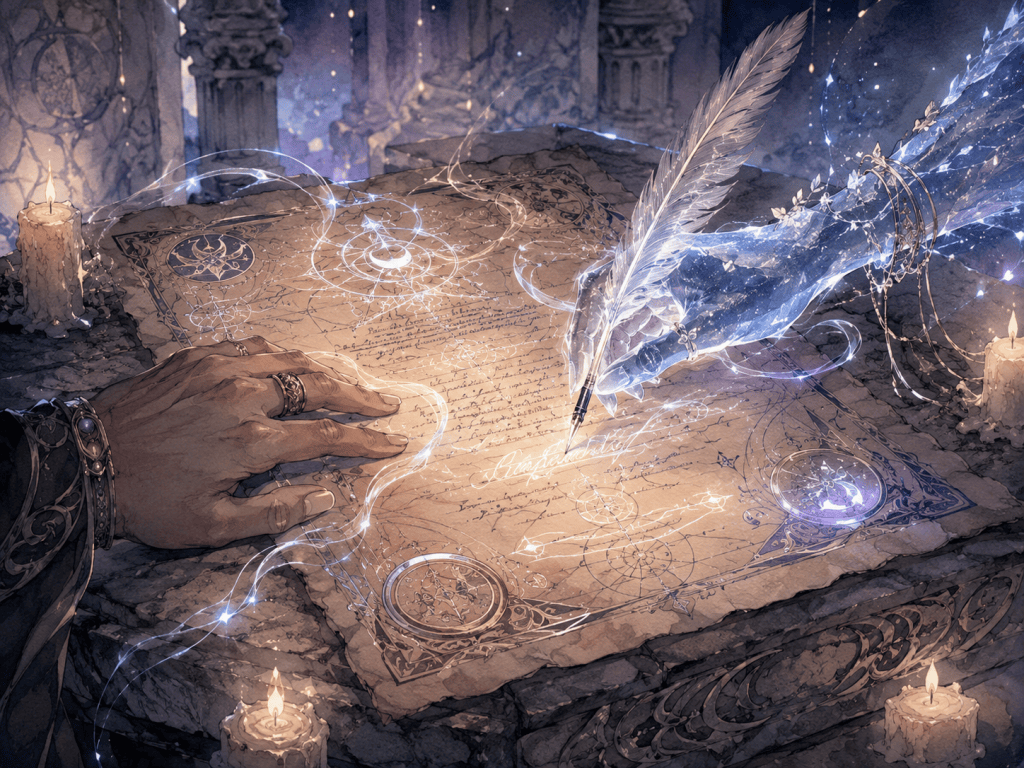
Power Forged Through Covenant
Pact magic is the practice of wielding power through a binding agreement with a supernatural patron. Unlike other magical traditions, which rely upon scholarship, devotion, instinct, or ancient primordial forces, pact magic is founded upon a covenant voluntarily entered into by two willing parties. The relationship grants the mortal access to extraordinary power while establishing obligations that shape both the patron and the one who bears the pact.
Throughout Erosia, these agreements take countless forms. Some are solemn oaths sworn beneath the stars, while others are negotiated over years of careful conversation. A few are forged in moments of desperation when survival demands impossible choices. Regardless of how they begin, every pact establishes a relationship that extends far beyond the granting of magical power.
More Than a Bargain
Outsiders often describe pact magic as little more than bargaining for power, but practitioners reject this oversimplification. A true pact is not a transaction that ends once an agreement has been reached. It is an enduring relationship built upon mutual expectations, responsibilities, and trust.
Every patron seeks something different from those who enter their service. Some desire knowledge gathered from the mortal world, others seek devoted champions who can act where they cannot, while still others simply wish to influence history through carefully chosen agents. Likewise, every mortal enters a pact for deeply personal reasons. Some seek wisdom, others protection, revenge, purpose, or the opportunity to accomplish goals that would otherwise remain impossible.
The exact terms of every covenant are unique, and no two pacts are ever truly alike.
Patrons Beyond the Gods
Although many people assume that only gods possess the power to create magical covenants, history tells a different story. Throughout the ages, powerful spirits, ancient immortals, celestial beings, mysterious entities beyond the Veil, and other extraordinary powers have all entered into pacts with mortals. Some are revered as benevolent teachers, while others are approached with caution or fear.
Unlike divine magic, pact magic does not require worship. Respect may exist between patron and practitioner, but devotion is neither expected nor required. A patron’s authority comes from the covenant itself rather than from religious faith.
A Relationship That Evolves
No pact remains static. As both patron and practitioner grow, so too does the relationship between them. Trust may deepen over time, new responsibilities may emerge, and the original purpose of the covenant may change as circumstances evolve. Some pacts endure for a lifetime and are remembered with gratitude, while others become strained as conflicting goals threaten to pull both parties apart.
Because of this, experienced practitioners often speak of nurturing their pact rather than merely maintaining it. The strongest covenants are those built upon understanding rather than fear, where both patron and mortal recognize that their shared success depends upon the strength of their relationship.
Pact Magic in Erosia
Pact magic occupies a unique place within Erosian society. Some cultures celebrate those chosen by powerful patrons, viewing them as ambassadors between the mortal world and extraordinary beings. Others regard them with suspicion, questioning the intentions of powers that exist beyond ordinary understanding. In many regions, opinions differ not because pact magic itself is considered dangerous, but because every covenant is ultimately judged by the character of both the patron and the one who accepted its gift.
For those who practice pact magic, the greatest lesson is that power is never given without purpose. Every covenant carries responsibilities alongside its rewards, and every promise has the potential to shape the future of both parties. The strength of a pact is measured not by the magic it grants, but by the relationship that sustains it long after the first oath has been spoken.
 Whispers of Erosia