
Objects That Remember
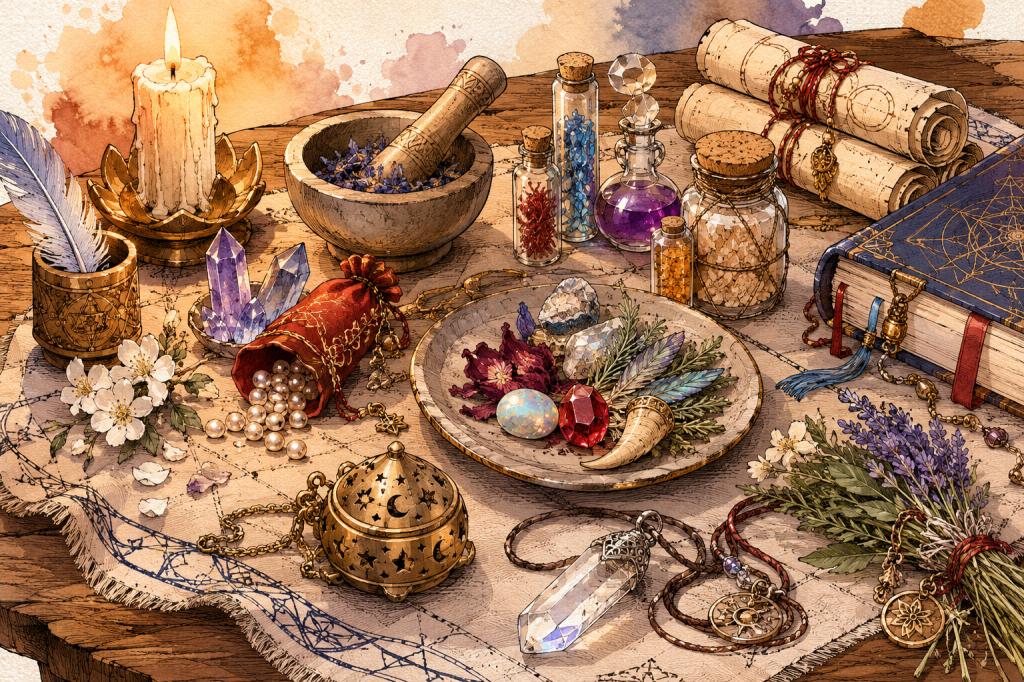
To an outside observer, a material component may appear to be nothing more than an ordinary object. A feather, a crystal, a length of copper wire, a sprig of mistletoe, or a pinch of ash seems insignificant when considered on its own. Yet throughout Erosia, spellcasters have long recognized that certain objects possess an unusual affinity for particular magical effects.
This affinity is known as sympathetic resonance.
Material components are not magical because they contain extraordinary power. They are magical because they already possess a natural relationship with the ideas, forces, or phenomena they represent. When incorporated into a spell, that existing relationship helps the spellcaster establish a clearer and more stable connection with the Veil.
Sympathy and Symbolism
Every material component carries meaning. Some acquire that meaning through their physical properties, while others become significant because of where they were found, how they were created, or the role they play within the natural world.
A feather carries an obvious association with flight. A polished gemstone reflects clarity and permanence. Ash recalls fire and transformation. Living plants embody growth, renewal, and the enduring cycles of nature. These relationships are not arbitrary traditions invented by spellcasters. They are observations preserved through generations of magical practice.
Different cultures may favor different components for the same spell, yet the underlying principle remains remarkably consistent. The object serves as a symbolic bridge between the spellcaster’s intention and the magical effect they seek to manifest.
Focus Through Familiarity
Material components also provide structure during the act of spellcasting. By handling an object that already resonates with the desired effect, the caster narrows their focus and strengthens the symbolic language through which the spell is expressed. This reduces uncertainty, reinforces intention, and helps produce reliable results.
Experienced spellcasters often describe this process as allowing the component to “speak the first words” of the spell. The object does not cast the magic on the caster’s behalf, but it helps establish the conversation before the spellcaster completes it.
Tools of Every Tradition
The use of material components is not limited to arcane practitioners. Priests carry sacred relics and blessed oils. Druids gather herbs, seeds, and branches from carefully tended groves. Ritualists prepare candles, incense, ceremonial vessels, and offerings that reflect the purpose of the ceremony. Even practitioners of primordial and pact magic often preserve objects that symbolize their relationship with the powers they serve.
Although the objects themselves differ from one tradition to another, they all fulfill the same purpose. They strengthen the connection between intention and outcome by drawing upon relationships that already exist within the world.
Arcane Focuses
Many experienced spellcasters eventually learn to channel magic through an arcane focus rather than relying upon individual material components for every spell. A wand, staff, crystal, holy symbol, or other focus serves as a carefully prepared conduit that embodies countless sympathetic relationships at once. Through years of use, study, devotion, or ritual, the focus becomes deeply attuned to its bearer and capable of expressing a wide variety of magical effects.
Even so, many practitioners continue to value traditional components. Certain rituals require specific objects whose symbolic significance cannot be replaced, while scholars often insist that understanding the relationship between a spell and its components reveals valuable insight into the nature of magic itself.
More Than Ingredients
To those unfamiliar with magic, a component pouch may appear to contain little more than a collection of curious odds and ends. To a spellcaster, however, every object tells a story about the spell it helps shape. Each feather, flower, crystal, shell, thread, or fragment reflects an enduring relationship between the physical world and the hidden mysteries of the Veil.
Material components remind the people of Erosia that magic is never separated from the world around them. The same forests, rivers, mountains, storms, and living creatures that sustain everyday life also provide the symbols through which possibility becomes reality. In this way, every spell begins not with an act of creation, but with recognition of the connections that have always existed.
 Whispers of Erosia