
Lysoria — The Hamlet of Hollow Lanterns
Orchards, cider smoke, glowing lanterns, and a welcome that grows quieter when the sun goes down.
The Hamlet at Harvest’s Edge
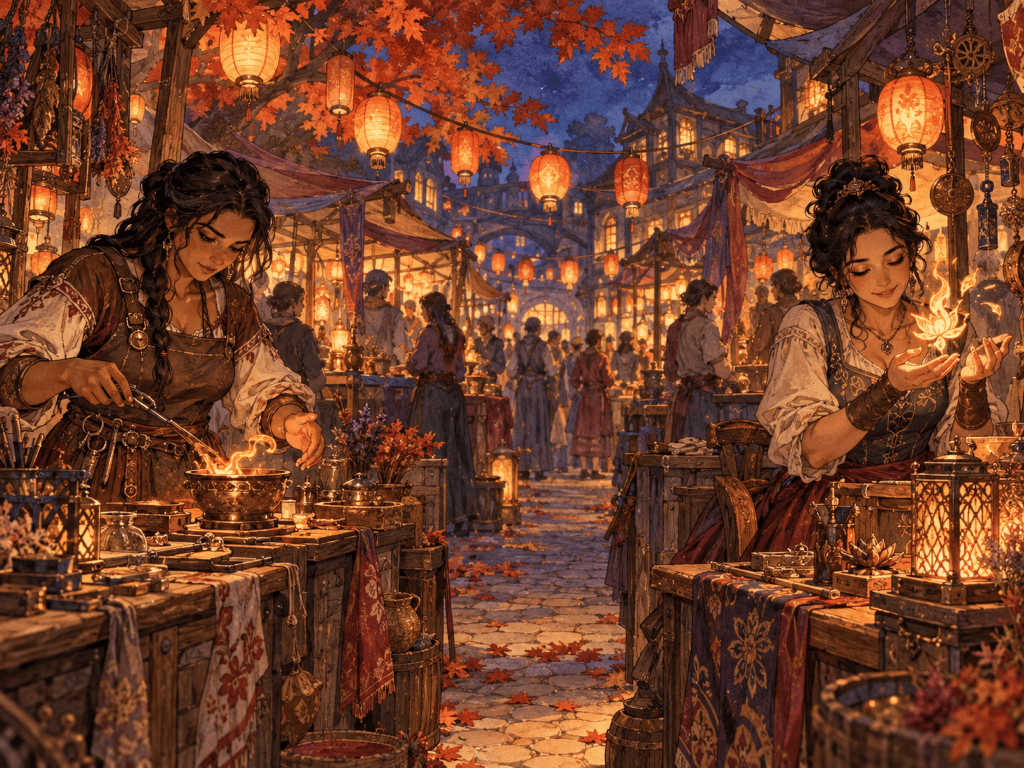
Lysoria is a farming hamlet of roughly six hundred souls, surrounded by cornfields, apple orchards and pumpkin patches. Cider-makers, growers, smiths and small merchants support a settlement whose chief wealth is the care taken with the land. Timber-fronted buildings cluster around a cobbled square, where market carts gather, musicians play and lanterns glow in the windows when the evenings cool.
Throughout the year, Lysoria is an unhurried place of planting, tending, repairing and trade. In autumn, travelers arrive for its Festival of Lanterns: a harvest celebration of games, masks, bonfires and hospitality. The village is friendly to strangers, but kindness does not mean that everyone shares every worry. Old warnings about the fields and occasional signs of secret nighttime rites lend the village an uneasy undercurrent without diminishing its ordinary life.
The annual Festival of Lanterns is Lysoria’s local expression of the wider Autumn Vigil. Its celebration belongs to the community, not to the dangers that may occasionally threaten it.
Quick Facts
- Settlement: Rural hamlet; approximately 600 residents
- Livelihood: Orchards, grains, pumpkins, cider-making, crafts and seasonal trade
- Leadership: Mayor Edran Marlowe
- Known for: The Festival of Lanterns, cider, masquerade crafts, harvest contests and the Corn Maze of Moons
- Surroundings: Cornfields, orchards, pumpkin patches and old paths winding toward the cultivated boundary
The People of Lysoria
A familiar face matters in a hamlet this small. Shopkeepers recognize repeat visitors, performers remember who danced with whom, and growers rely on one another through failed weather and abundant years alike. During festival nights, hospitality becomes an act of communal pride. Farmers bring casks and preserves, artisans offer small prizes, and households display carved lanterns traditionally believed to keep unwelcome spirits away.
Different shrines and personal devotions coexist here. Worship at the Shrine of the Harvest Mothers emphasizes the care of growing things and the bonds sustained by freely chosen affection; traveling celebrants bring other divine observances to the festival. None of these practices requires every villager to follow the same deity or participate in intimate rites.
Places of Interest
The Ciderpress Inn
Miraen Appleholt serves hot spiced cider and apple brandy at the village’s best-known gathering place. In festival season, music spills onto the square. She carries a wedding band that speaks of a private absence.
Harvest Hand Mercantile
Tomas Hallowell stocks lamp oil, corn-husk charms, carving knives and general provisions. His energy and courtesy conceal the fatigue of a busy season; unusual purchases can provide a trail for an inquisitive guest.
The Silken Mask
Ydris Vellorin creates veils, festival clothing and masks representing archetypes such as lover, trickster and mourner. Their loaner costumes let even newly arrived travelers join the masked dance.
Lantern & Thorn Apothecary
Old Maerys sells poultices, herbal preparations and lantern oils. Her warnings about wandering the cornfields after dark are worth hearing, even when she refuses to explain them.
Sweet Bloom Bakery
Rissa and Halden Merrit bake honeyed pumpkin bread and enormous cinnamon rolls. Their cheerful partnership makes the shop a bright stop on cold mornings.
Iron & Ash Forge
Brenn Thornmarch works horseshoes, farm implements and decorative lantern frames. He enjoys an outrageous joke but takes pride in well-made iron.
Shrine of the Harvest Mothers
Sister Ellayne tends a modest shrine to Velyssara and Talyss, decorated with dried flowers and carved gourds. Blessings for the harvest and community are offered alongside quiet counsel.
The Whispering Orchard
The Aldermane family opens its apple groves to festival visitors. Picnic blankets, lanternlit paths and old trees make it a peaceful retreat, though strange stories sometimes gather around its oldest roots.
The Corn Maze of Moons
Garrin Holt tends a seasonal maze of towering stalks, hung with guiding lanterns. In ordinary years it is a daring game and a landmark; stories of changing paths have made it a favorite subject for autumn ghost tales.
The Festival of Lanterns
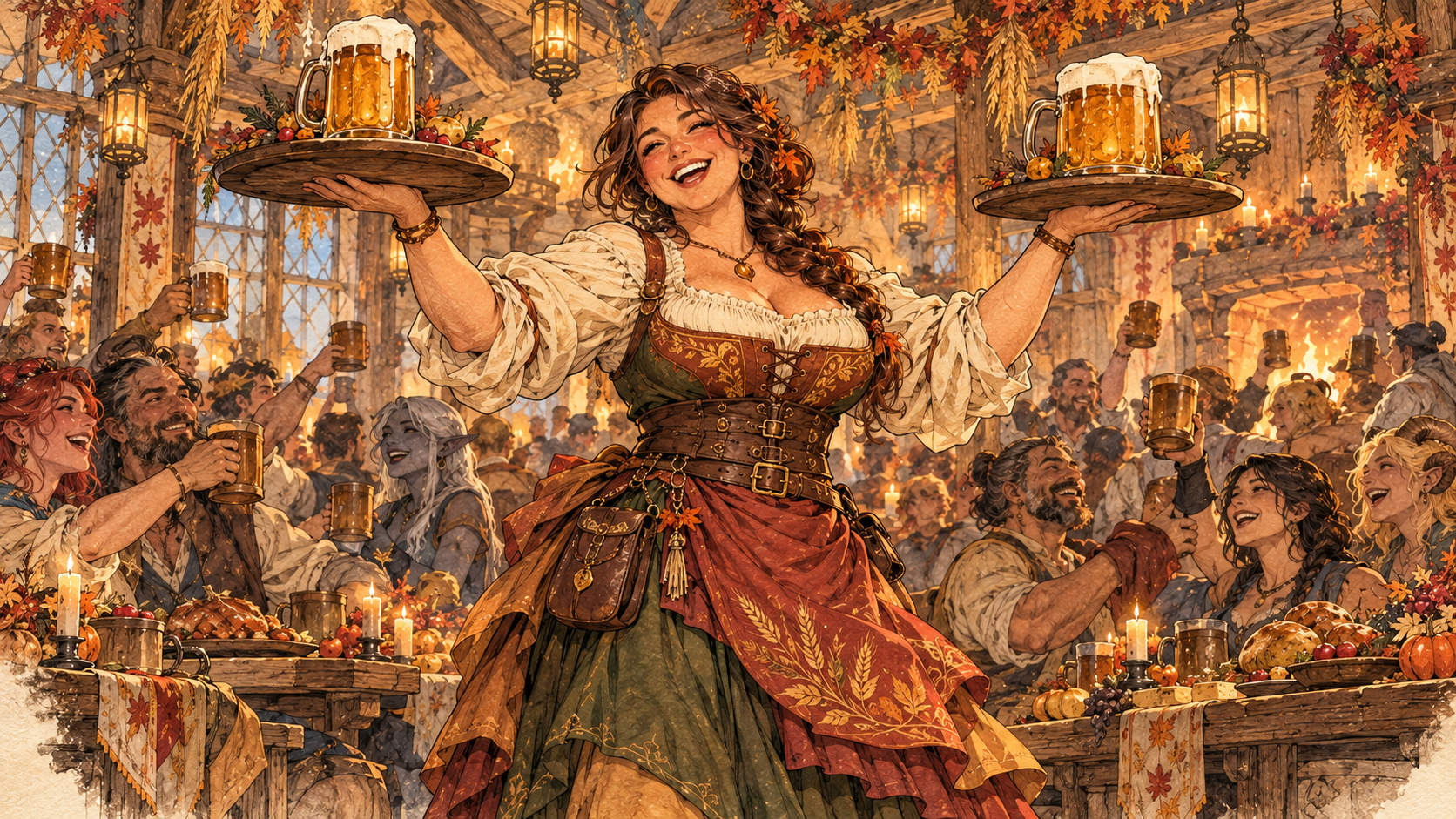
When the harvest reaches its final gatherings, the square fills with cider, music, games, handmade masks and token prizes. The village’s lanterns are carved in countless expressions, from joyful faces to solemn guardians. Visitors can take part in a harvest dance, challenge the ring toss, consult a fortune-teller or trade festival tokens for keepsakes.
Read the Festival of Lanterns guide for its booths, games, rewards and recurring characters. For adventures elsewhere in Erosia during the same season, see Autumn Vigil — 31 Days of Events.
The Old Rites Beneath the Fields
Long before this year’s harvest, some of Lysoria’s families told stories of rites practiced beyond the lanternlit roads. Their accounts mention thorn-crowned figures, black seeds saved apart from the ordinary planting, and gatherings held in the oldest furrows when the Crimson Moon hangs low. Such traditions seldom appear in the village’s public celebrations, and the people who speak of them rarely agree on their age or meaning.
In recent seasons, those stories have acquired an unsettling immediacy. Odd markings appear on abandoned fence posts. Travelers describe distant lanterns in fields where no farmer has reason to work after dark. A few households have taken to closing their shutters early, while others insist these are old superstitions made lively by autumn evenings. Beneath the uncertainty, secret meetings and forbidden observances do take place; their participants are careful to keep their identities and intentions from their neighbors.
Two names recur in whispered accounts: the Order of the Veiled Thorn and the Hollow Crown. Some residents use them interchangeably. Others believe they refer to different circles, perhaps bound by inherited symbols rather than a single leader. Publicly, there is little proof of either group’s reach. Neither should be confused with the lawful devotions practiced at the Shrine of the Harvest Mothers or with the villagers who simply enjoy the old lantern customs.
The Festival of Lanterns offers a convenient season for concealed visitors to pass through Lysoria among merchants and revelers, but the festival itself is no secret ceremony. Its games, dances and blessings belong to the hamlet. What may be growing at the edges of its fields is another matter, and few villagers yet know how deeply those roots reach.
Whispers on the Road
A lantern seems to burn longer than it should. A merchant has been buying more oil than the market can explain. Someone claims the corn maze looked different yesterday. Someone finds a small thorn-crown symbol carved beneath a disused gate. The villagers disagree about which stories are harmless superstition and which signs deserve concern. By daylight, Lysoria remains a place of work, trade and welcome.
Adventures in Lysoria
The hamlet is suited to small mysteries, tense negotiations, comforting visits and village-scale adventures. A visit may begin with shared meals and village errands, then deepen into questions of hidden loyalties, unusual harvest signs or strangers traveling the older field paths. A traveler might be asked to trace a supply shortage, escort a late harvest wagon, recover a missing lantern-maker’s tools or investigate why an orchard’s youngest trees are failing.
When the season turns, Lysoria remains: a working home for its residents, not a festival set abandoned after the last guest leaves. The villagers repair fences, save seed, gather around their hearths and wait for the next year’s lanterns.


You must be logged in to post a comment.