

Festival of Lanterns — Lysoria’s Autumn Vigil
Lanterns at every door. An apple in every hand. Music enough to chase away a cold evening—at least until the last dance.
A Celebration of Harvest and Hearth
The Festival of Lanterns belongs to the people of Lysoria. Held when the harvest is gathered and the cool nights deepen, it is the hamlet’s own observance of the wider Autumn Vigil. Carved gourds glow along windowsills and roads; market stalls bring cider, nuts, bread and handmade wares; musicians turn the square into a dance floor. Families and travelers join the early games, while later masked celebrations are open to those who choose them.
The tradition holds that lanterns should be carved with a face or emblem capable of welcoming a friend and warning away a wandering spirit. Some villagers prefer grinning pumpkins; others make solemn guardians. The festival is an expression of community and devotion, not a secret rite. Its joys remain its own even when an adventure introduces trouble.

How the Day Unfolds
- Daytime: Harvest markets, cider pressing, tool demonstrations, costume fittings and family-friendly contests.
- Dusk: The lantern-lighting, harvest dances, booth games and the opening of the festival prize stand.
- Night: Masked music, divination readings and optional adult social celebrations. Guests choose their own level of participation.
- Late hours: Quiet tea, homeward lantern walks and ghost stories about fields best left undisturbed.
Shrines, Masks and Divine Booths
Visiting clergy and artists interpret the season through their own divine traditions. Festival stalls may feature Velyssara’s rose-petal blessings, Talyss’s seed garlands, Aratheia’s sweetmeats and shared table, Ulvexa’s friendly strength tests, Rhaziel’s marked-trail pursuits, Cyrillith’s masks and Solynth’s gentle songs. These are examples of local seasonal worship, not a claim that all Erosia celebrates in precisely the same way.
The priestess Sister Ellayne offers quiet blessings at the Shrine of the Harvest Mothers, while Ydris Vellorin lends masks to guests who have come without one. A fortune-teller may offer symbolic readings using the Hollow Lantern Deck. The festival welcomes the curious, and guests are never obligated to disclose a private desire, participate in touch or accept a ritual.
Festival Games
A small wooden token is issued for a finished game or memorable act of fair play. Larger prizes cost more tokens. The following contests adapt the hamlet’s established attractions for ordinary 5e use; no Desire mechanics are necessary.
Apple-Bobbing of Desire
Maribelle “Sweet-Mouth” Thornwyck presides over a tub of rune-carved apples and very competitive guests.
At the table: Choose a DC 12 Dexterity (Sleight of Hand) or Constitution check. Success earns 2 tokens; a spirited attempt earns 1.
The Blindfolded Harvest Chase
Old Jarro Wick challenges guests to find a harvest marker inside a circle of hay bales, following sometimes unhelpful shouted directions.
At the table: Make a DC 12 Wisdom (Perception) check. Success earns 2 tokens; on failure, the contestant may try again with a different guide.
The Corn Maze Dare
Talia and Renn Evermere oversee a friendly timed passage through the short festival maze, distinct from any forbidden path encountered in an adventure.
At the table: A DC 12 Wisdom (Survival) or Intelligence (Investigation) check reaches the center efficiently; award 2 tokens for success or 1 for participation.
Pumpkin Ring Toss
Garrin “Sticky-Fingers” Dellor offers a row of grinning pumpkins and deceptively slippery iron rings.
At the table: Make a DC 12 Dexterity check to score. Two landed rings earn 2 tokens; otherwise award 1 for taking part.
Cider-Presser’s Challenge
Mistress Elvanna Greencup hosts a convivial contest of judging spices and matching cider to its orchard of origin.
At the table: Make a DC 12 Wisdom (Perception) or Intelligence (Nature) check. Guests may choose nonalcoholic cider. Correct identification earns 2 tokens.
The Petal Veil Dance
Lady Irelith Vey leads dancers through changing patterns of veils and partners. Any invitation may be declined.
At the table: A DC 12 Charisma (Performance) check earns 2 tokens; offering another dancer encouragement earns 1.
Scarecrow-Stuffing Contest
Finnrick Balehand races pairs to finish the neatest straw-stuffed field guardian.
At the table: A DC 12 Strength (Athletics) or Dexterity (Sleight of Hand) check earns 2 tokens. Finished scarecrows are displayed along the festival fence.

Prize Tokens and Keepsakes
Mira Sweetbloom, the Ribbon Keeper, trades prizes for tokens earned in fair games. The source adventure divides its rewards into small (1–2 tokens), medium (3–4) and large (5 or more) prizes. The items below retain the flavor of those rewards; any bonus listed here is a compact 5e adaptation for this public festival page.

- 1 token — Corn-Husk Doll: A simple straw keepsake traditionally given as a comfort charm; no magical effect.
- 2 tokens — Lantern Candy Apple: A cinnamon-glazed apple. When eaten, grants 1 temporary hit point.
- 2 tokens — Ribbon of the Harvest Queen: Once before the next dawn, the wearer can add 1d4 to a Charisma (Performance) check.
- 3 tokens — Carved Pumpkin Charm: Once before the next dawn, while carried, add 1d4 to one Intelligence (Investigation) check made in dim light.
- 4 tokens — Harvest Mead Flask: A sweet spiced drink, available as alcoholic or nonalcoholic; no magical effect.
- 5 tokens — Lantern of Lovers’ Light: Once, when lit, sheds dim light in a 10-foot radius for 1 hour. During that hour, the bearer has advantage on one saving throw against being frightened.
- 5 tokens — Silken Scarf of Fortune: Once before the next dawn, the wearer has advantage on one saving throw against an illusion effect.
- 5 tokens — Golden Gourd Medallion: A sign of festival accomplishment; residents who recognize it may offer hospitality or an introduction.
These are festival-scale adaptations, not a republication of the adventure’s older item mechanics. Additional prizes and enhanced versions can appear in a DM-facing supplement.
The Hollow Lantern Deck
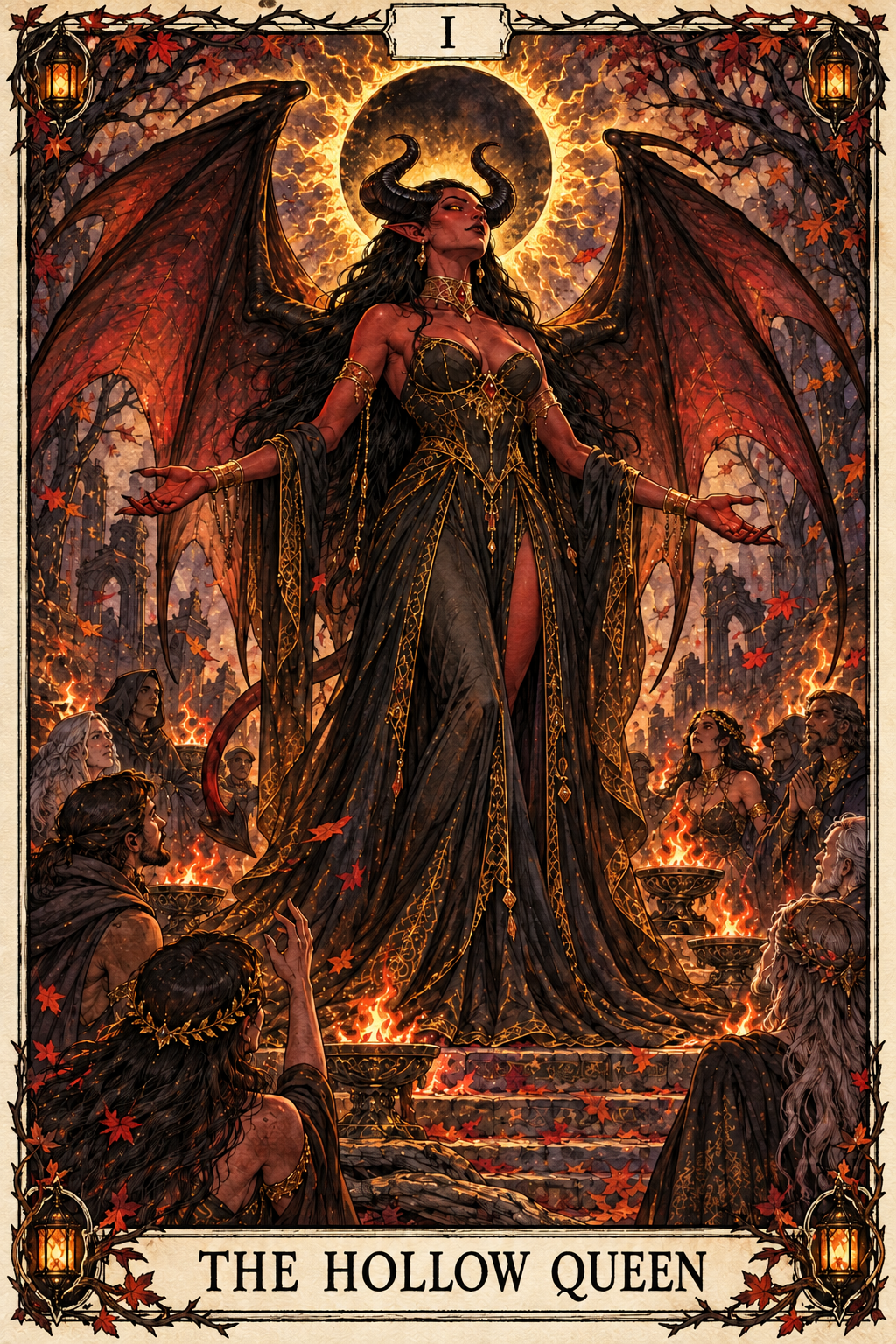
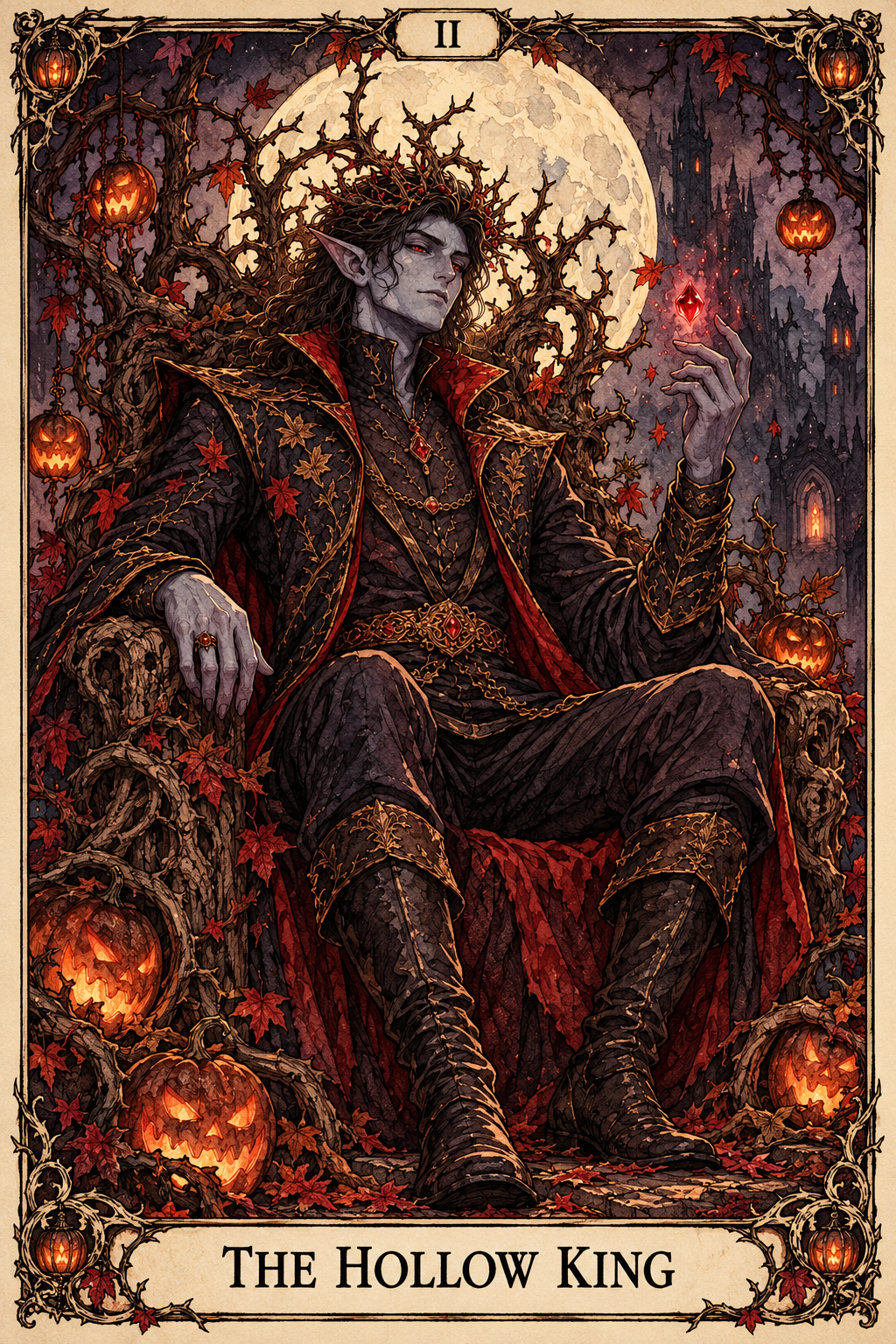
The Festival’s divination tradition uses a twenty-card deck with upright and reversed meanings. Among its emblematic cards are the Hollow Queen, Hollow King, Withered Bride, Whispering Crow, Blood Apple, Blooming Mask and Crown of Hollow Thorns. A reading is an invitation to reflection, storytelling or a new adventure lead—not a decree that overrides anyone’s will.
A keeper may ask a guest to draw a card for the past, one for the present and one for the future. Its upright interpretation represents a hope or temptation; the reverse suggests a challenge or danger. The full twenty-card interpretations from the original adventure can support a separate prop and divination page.

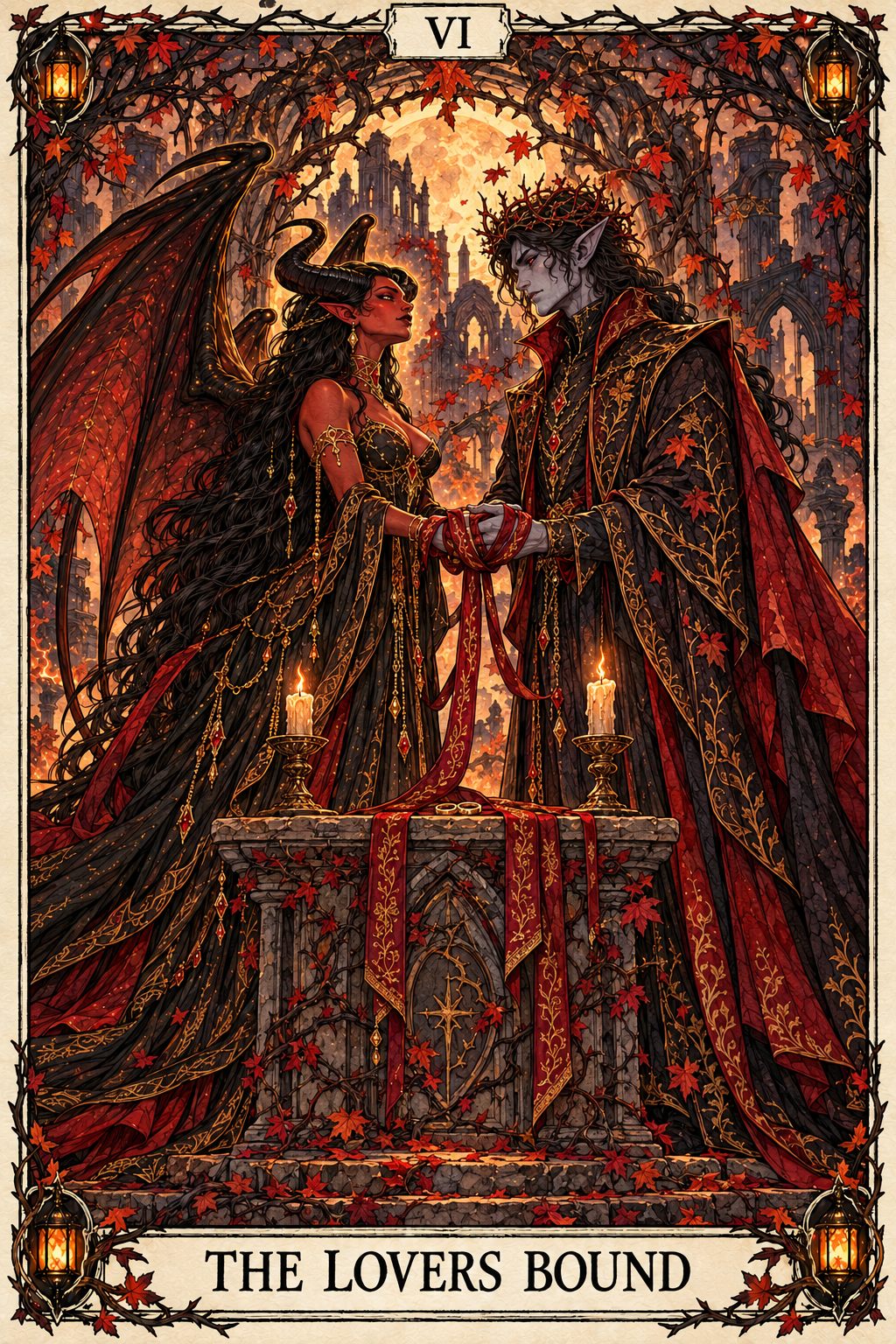
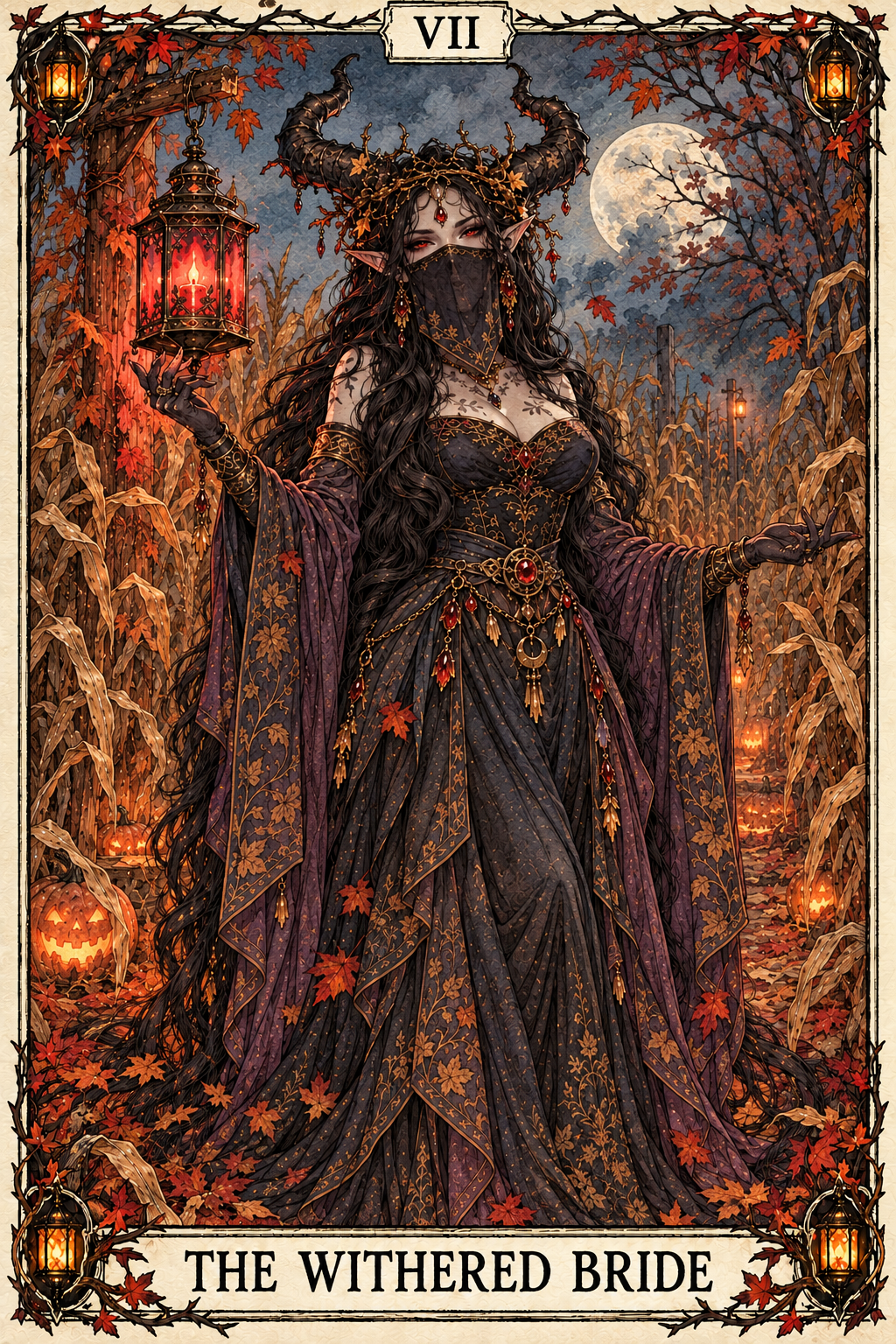
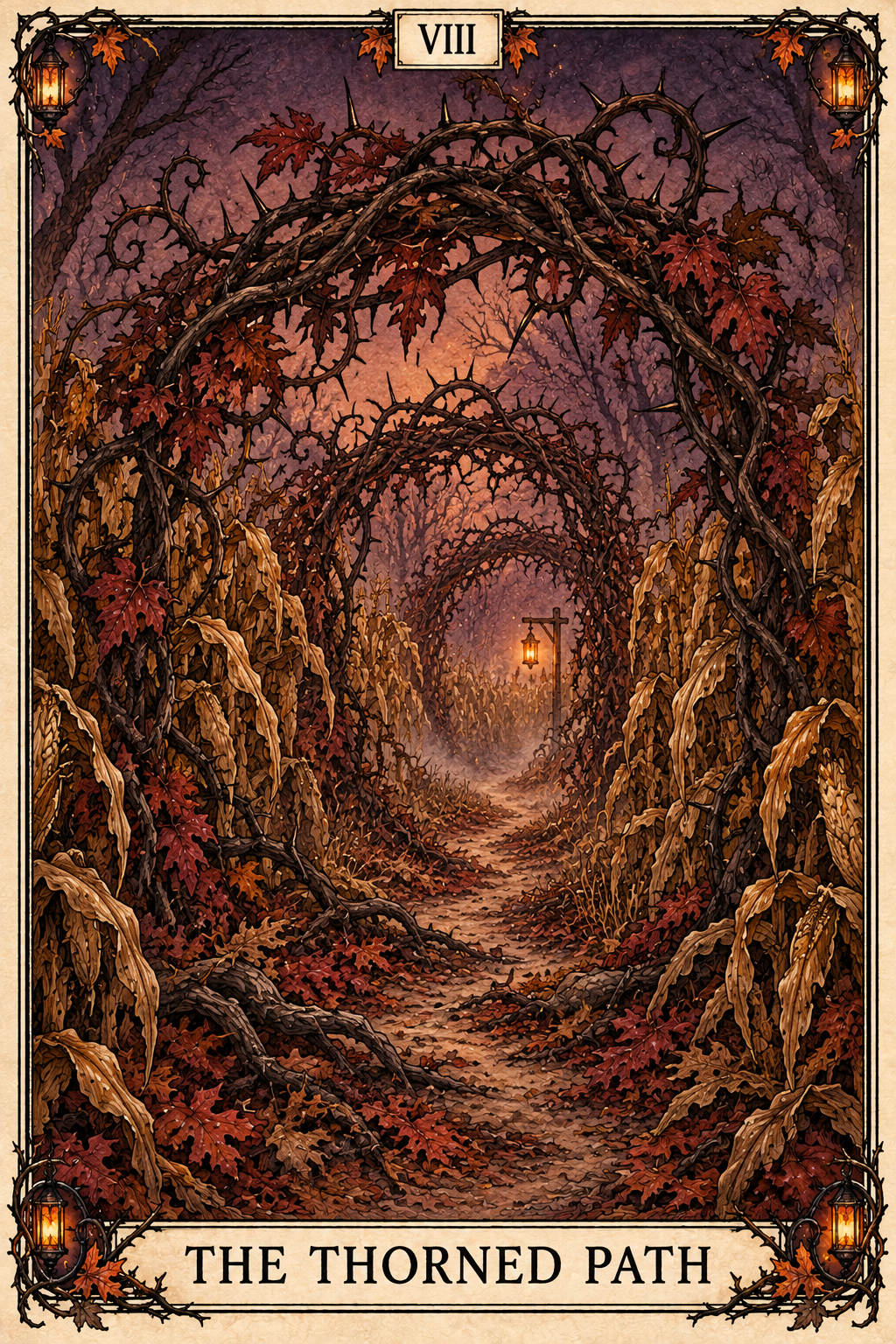
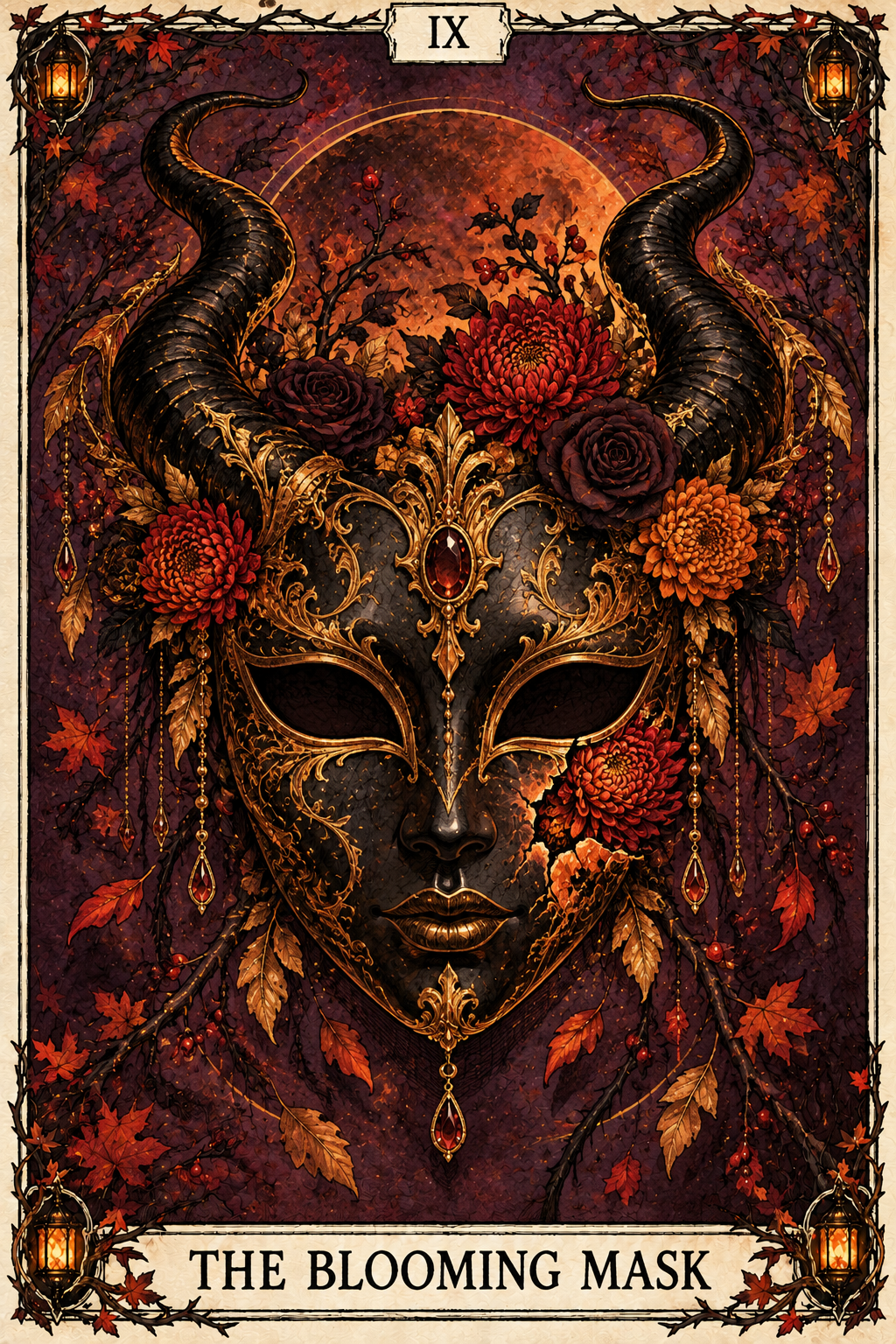
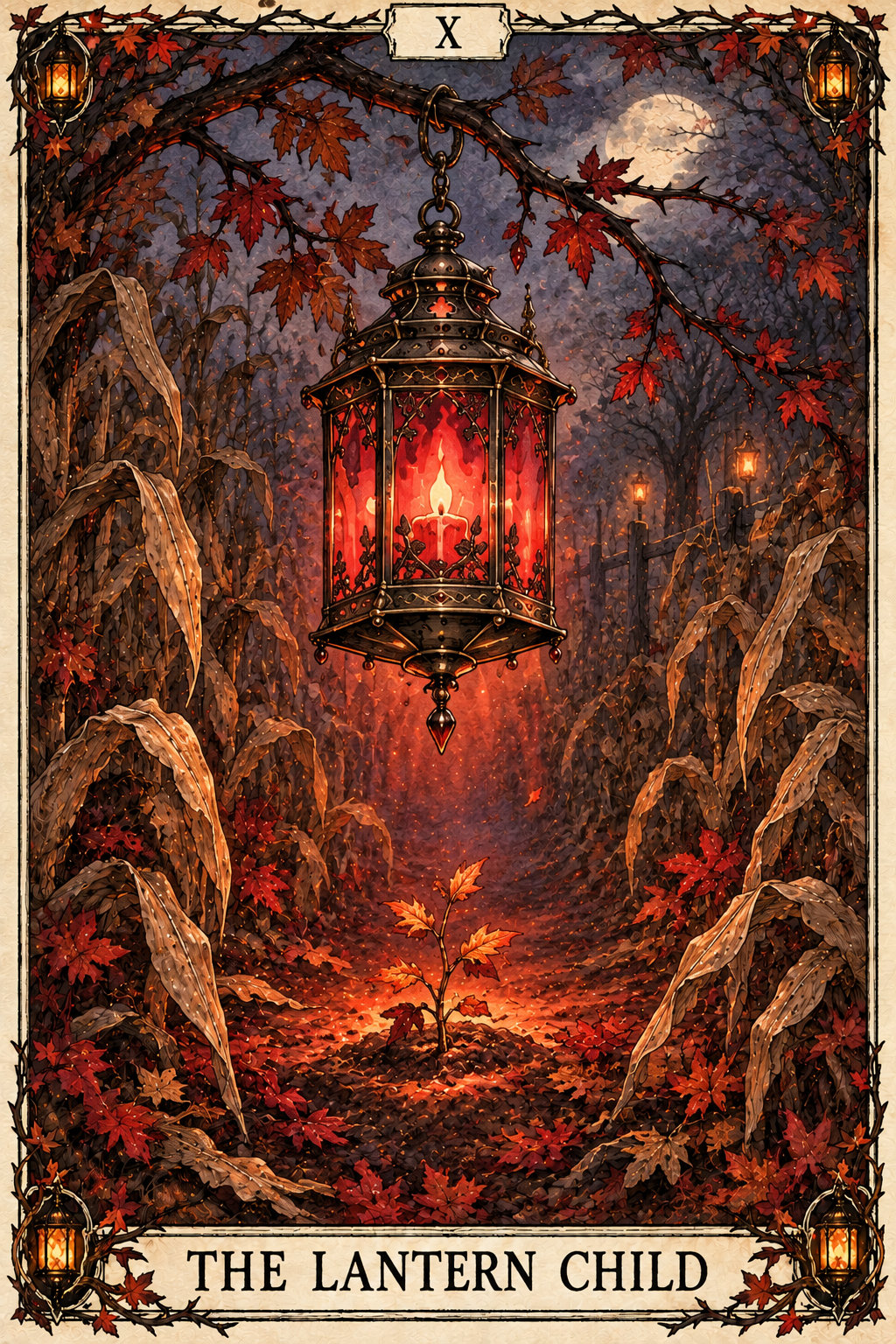
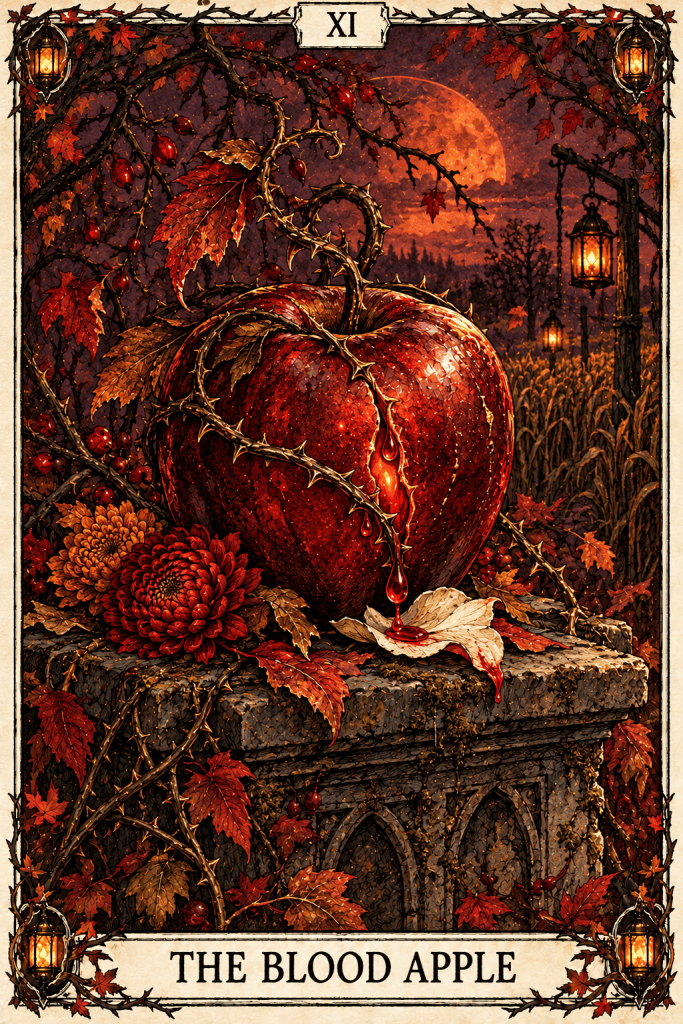
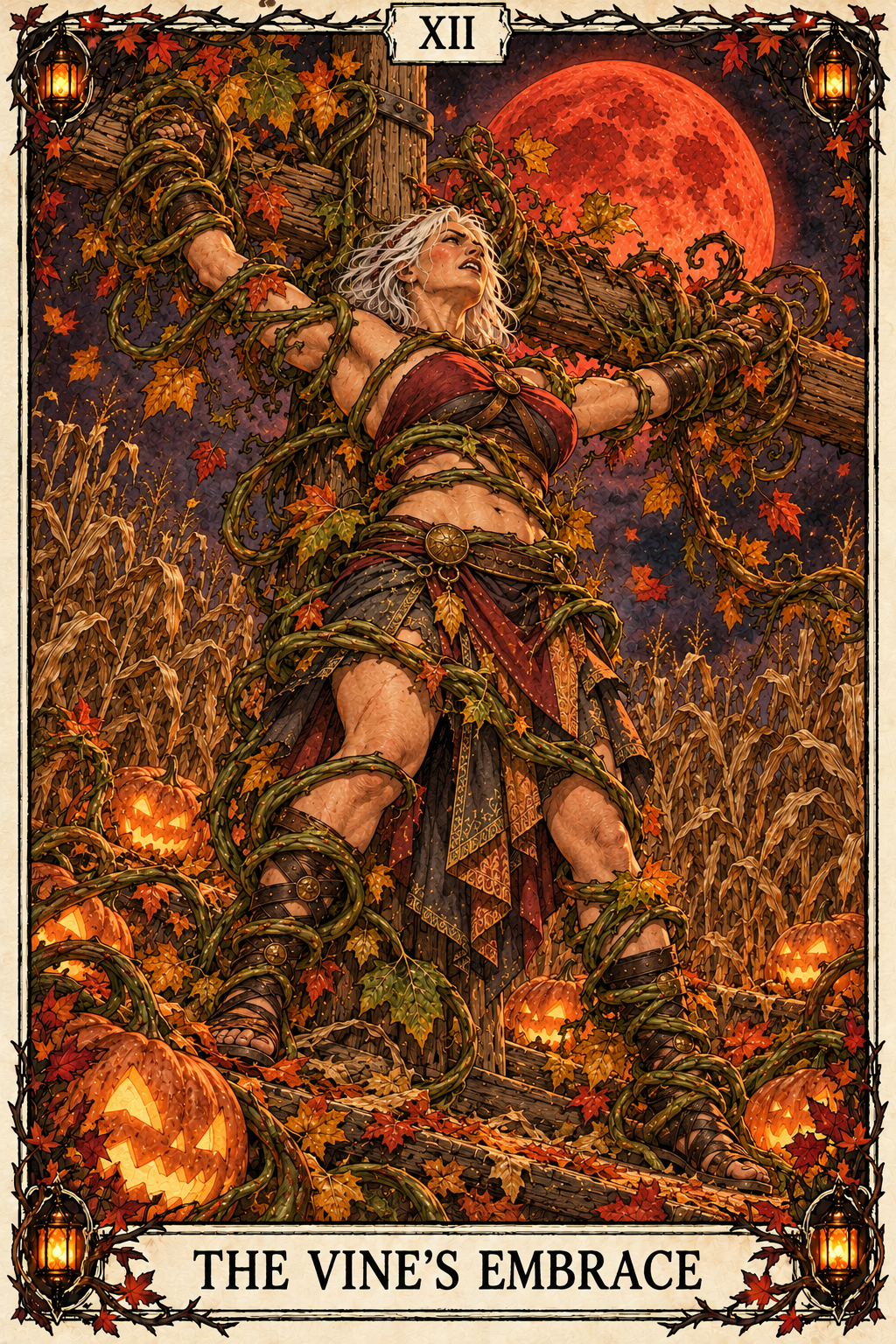
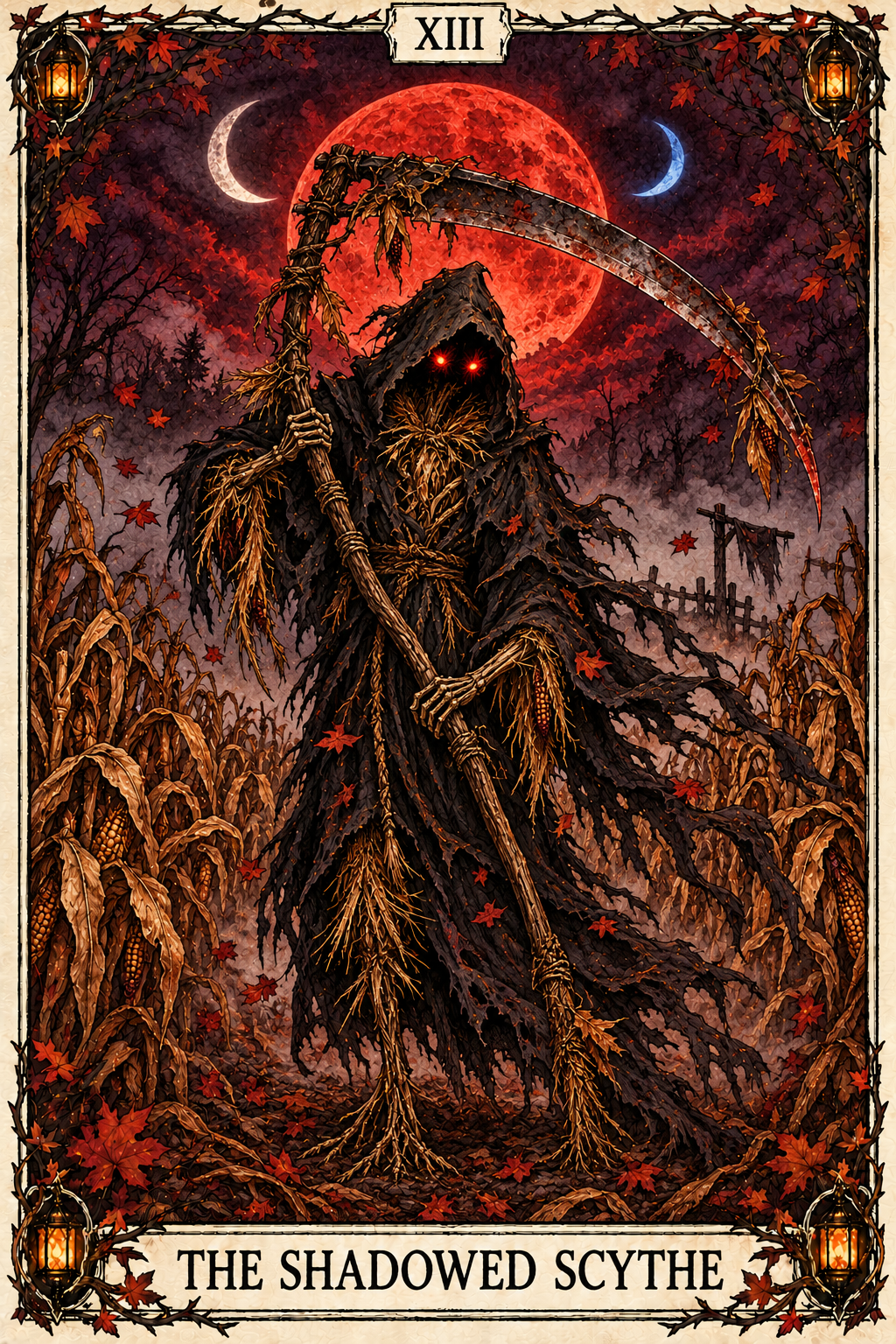
The Hollow Lantern Deck
Desire, Divination and the Turning of Fate
“The cards do not tell you what to desire. They show where your longing may lead.”
The Hollow Lantern Deck belongs to Lysoria’s Festival of Lanterns, but its readers may be encountered throughout Erosia. Its twenty images speak of belonging, temptation, grief, ambition and transformation. Each reveals a desire and the shadow that follows when that desire becomes consuming.
A gifted reader does more than interpret symbols. Through a brief divination ritual, the reader binds an omen to the querent’s unfolding story. That omen may steady a difficult choice, reveal an opportunity or make a familiar weakness harder to ignore. The cards influence fortune; the character decides how to answer.

Receiving a Reading
A reading requires 10 minutes, a gifted reader, the deck and one willing creature within 5 feet. The creature receiving the reading—the querent—names a question concerning a goal, relationship, fear or unresolved choice. Draw one card and determine its orientation by flipping a coin: heads is upright; tails is reversed. The reader explains its meaning and mechanical influence. The querent may accept or decline the omen after hearing both. An accepted omen follows these rules:
- Duration: Until the querent finishes their next long rest.
- Frequency: One accepted magical reading per querent per long rest. Further readings provide interpretation only.
- Uses: Each omen activates once. Its trigger must involve a consequential situation; trivial repetition cannot activate it.
- Roll effects: Declare an omen’s advantage or disadvantage before rolling. Normal stacking rules apply.
- Targets: The omen affects the querent unless its entry specifies another willing creature.
- Agency: A reading cannot determine consent, attraction, identity or permanent feelings. Declining a reading, invoking the Veil or leaving an intimate scene never activates a reversed omen.
- Turning the card: Before activation, a meaningful choice that addresses a reversed card’s warning may turn it upright, with the DM’s agreement. This replaces the unused effect.
The rules below are an optional deck subsystem used alongside the Mechanics of Desire.
Reading the Twenty Cards
| No. | Card | Desire Current | Upright Meaning | Reversed Meaning |
|---|---|---|---|---|
| I | The Hollow Queen | Recognition | Belonging, earned regard, a place within the community. | Validation pursued at the expense of purpose. |
| II | The Hollow King | Authority | Self-command, responsibility, power held deliberately. | Domination, insecurity, authority mistaken for ownership. |
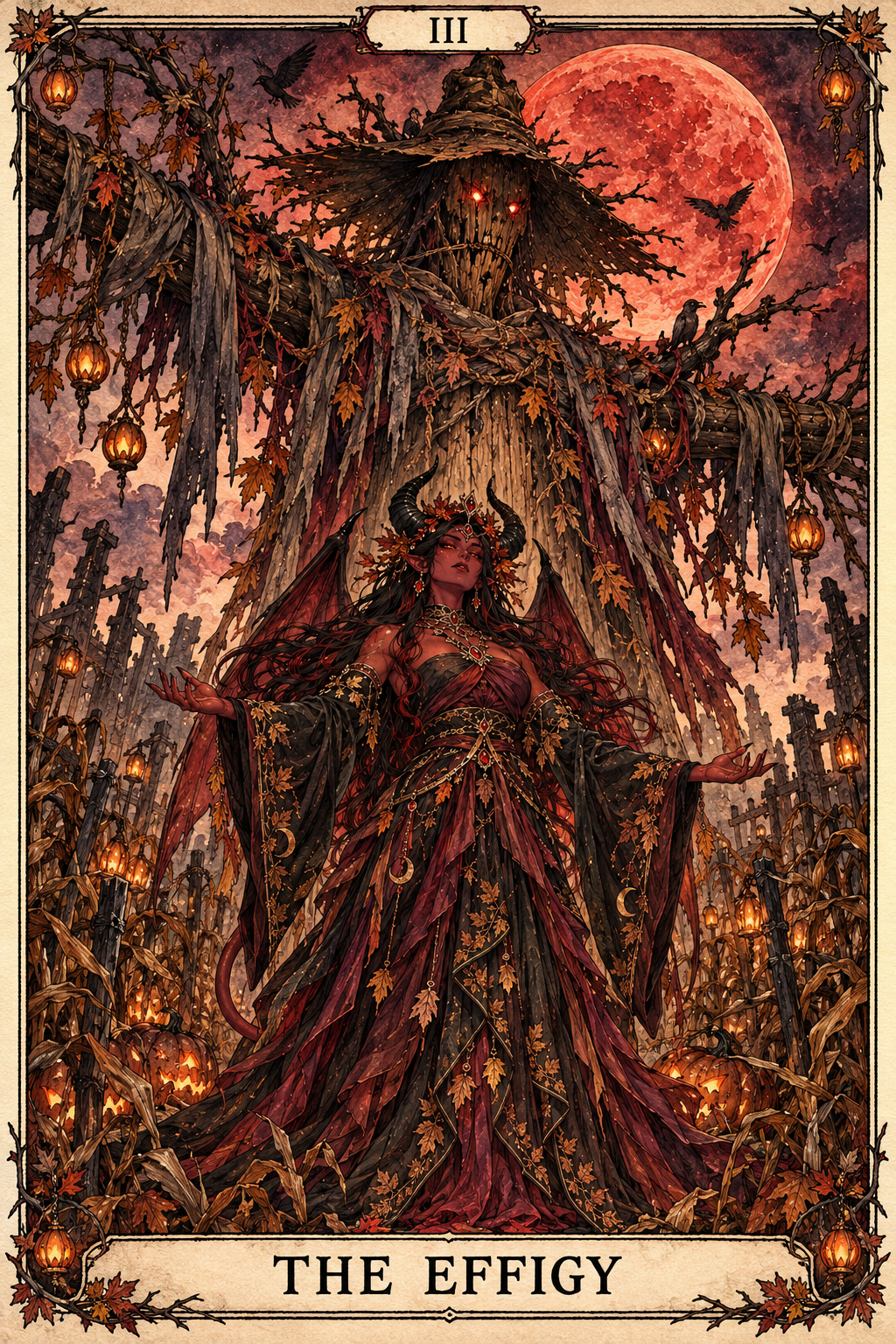
| III | The Effigy | Identity | A chosen self, transformation, freedom from an imposed role. | Living through a mask that no longer fits. |
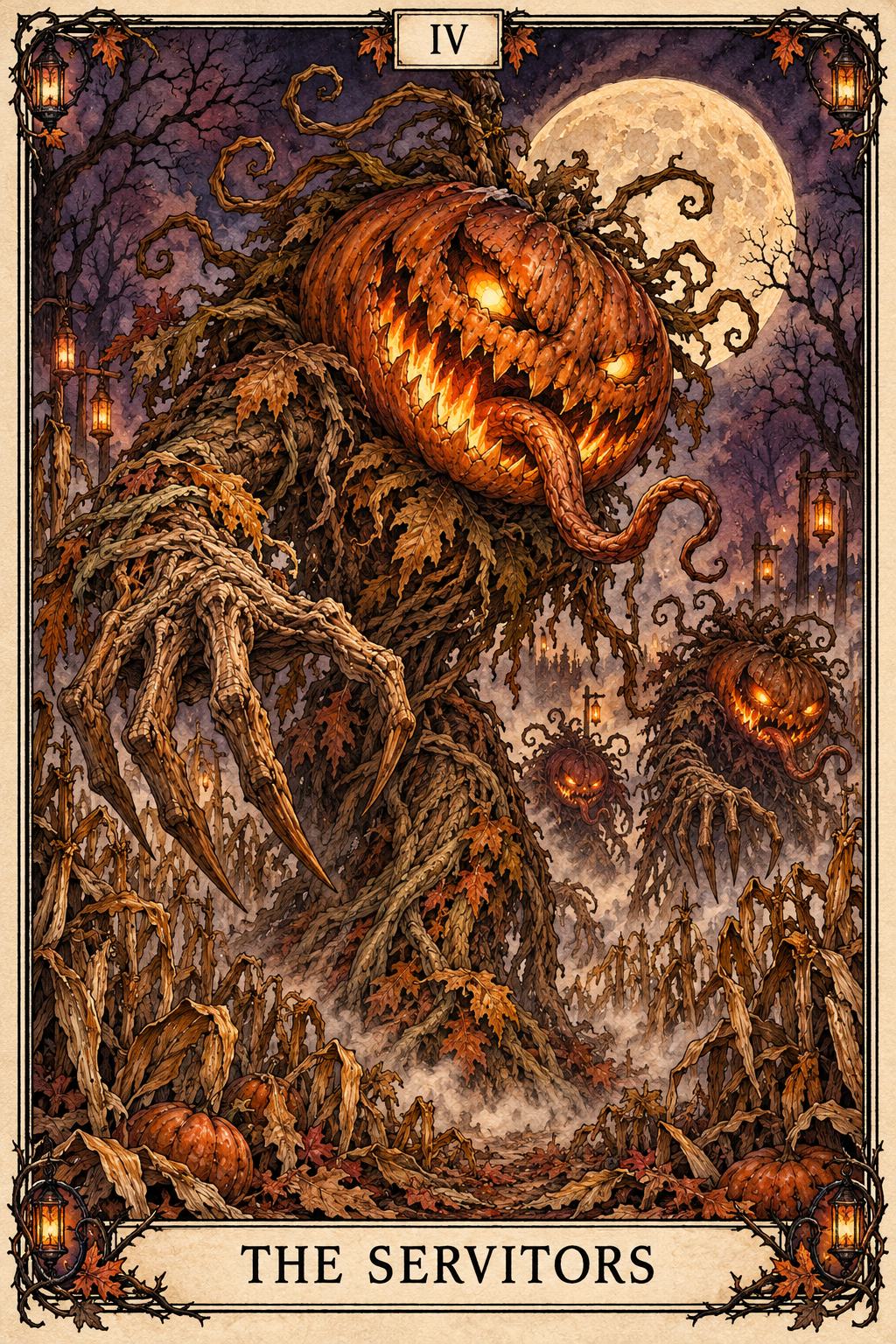
| IV | The Servitors | Purpose | Meaningful service, cooperation, useful work freely chosen. | Obligation without limits, usefulness mistaken for worth. |
| V | The Harvest Moon | Abundance | Provision, generosity, preparation for leaner days. | Hoarding, scarcity feared even amid plenty. |
| VI | The Lovers Bound | Connection | Mutual trust, chosen bonds, strength shared. | Dependence, possessiveness, reassurance demanded. |
| VII | The Withered Bride | Remembrance | Love carried forward, grief given a place to rest. | False promises of restoration, refusal to release the past. |
| VIII | The Thorned Path | Perseverance | Endurance in pursuit of a worthy destination. | Suffering mistaken for progress. |
| IX | The Blooming Mask | Revelation | Truth freely offered, beauty expressed without disguise. | Concealed intentions, performance replacing sincerity. |
| X | The Lantern Child | Hope | Protection, beginnings, a small light worth preserving. | A warning dismissed, vulnerability overlooked. |
| XI | The Blood Apple | Temptation | Appetite guided by discernment, pleasure with a understood price. | A reward accepted before its cost is known. |
| XII | The Vine’s Embrace | Shelter | Care that strengthens freedom, rest within trusted company. | Confinement offered in the language of protection. |
| XIII | The Shadowed Scythe | Release | A necessary ending, a clean severance, room for renewal. | A harmful commitment repeatedly reopened. |
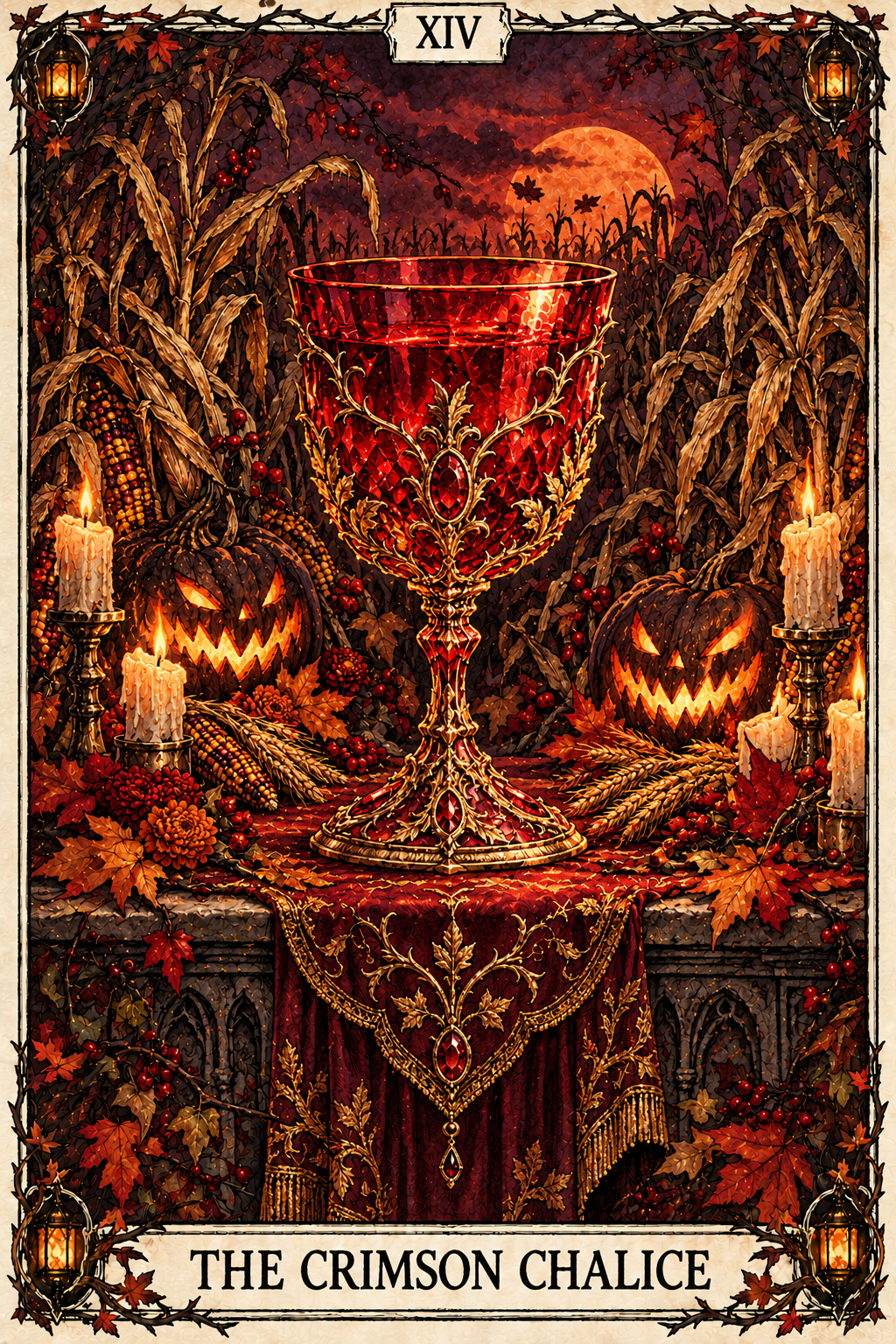
| XIV | The Crimson Chalice | Replenishment | Receiving hospitality, accepting restoration, enough. | Consumption without satisfaction, another’s limits disregarded. |
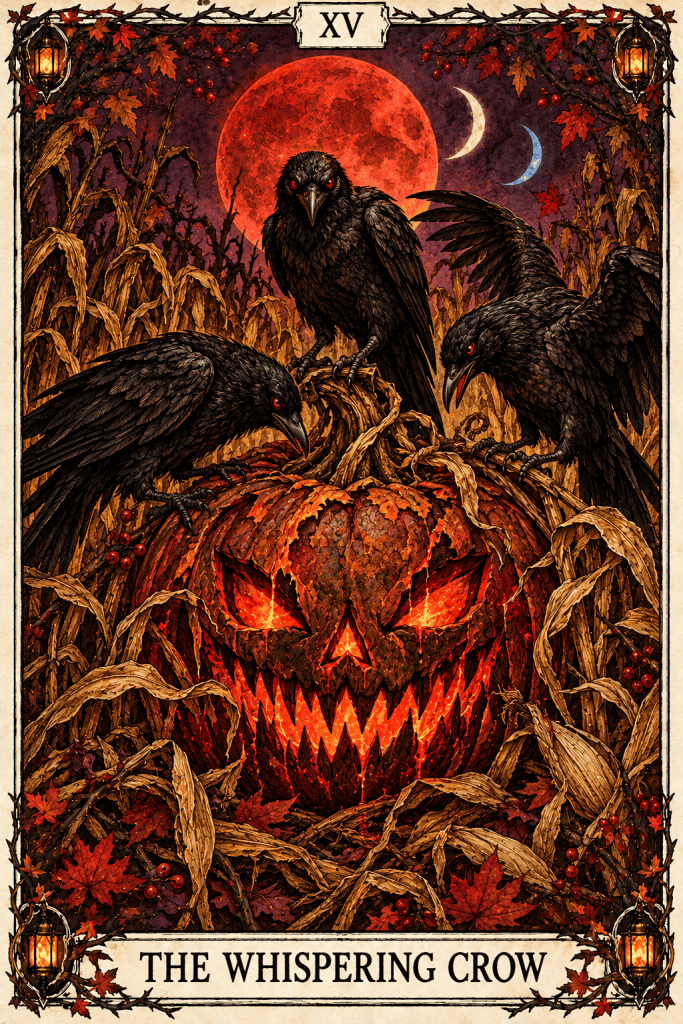
| XV | The Whispering Crow | Curiosity | A revealing clue, patient listening, knowledge approached carefully. | Secrets pursued despite a known danger. |
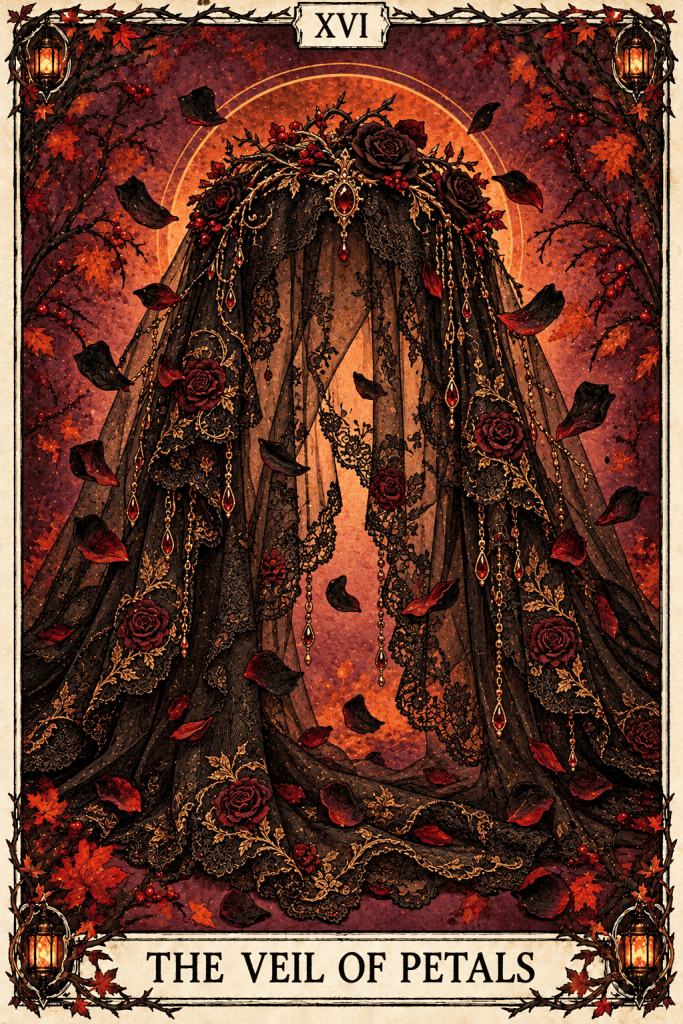
| XVI | The Veil of Petals | Privacy | Boundaries honored, vulnerability offered by choice. | Concealment that prevents informed agreement. |
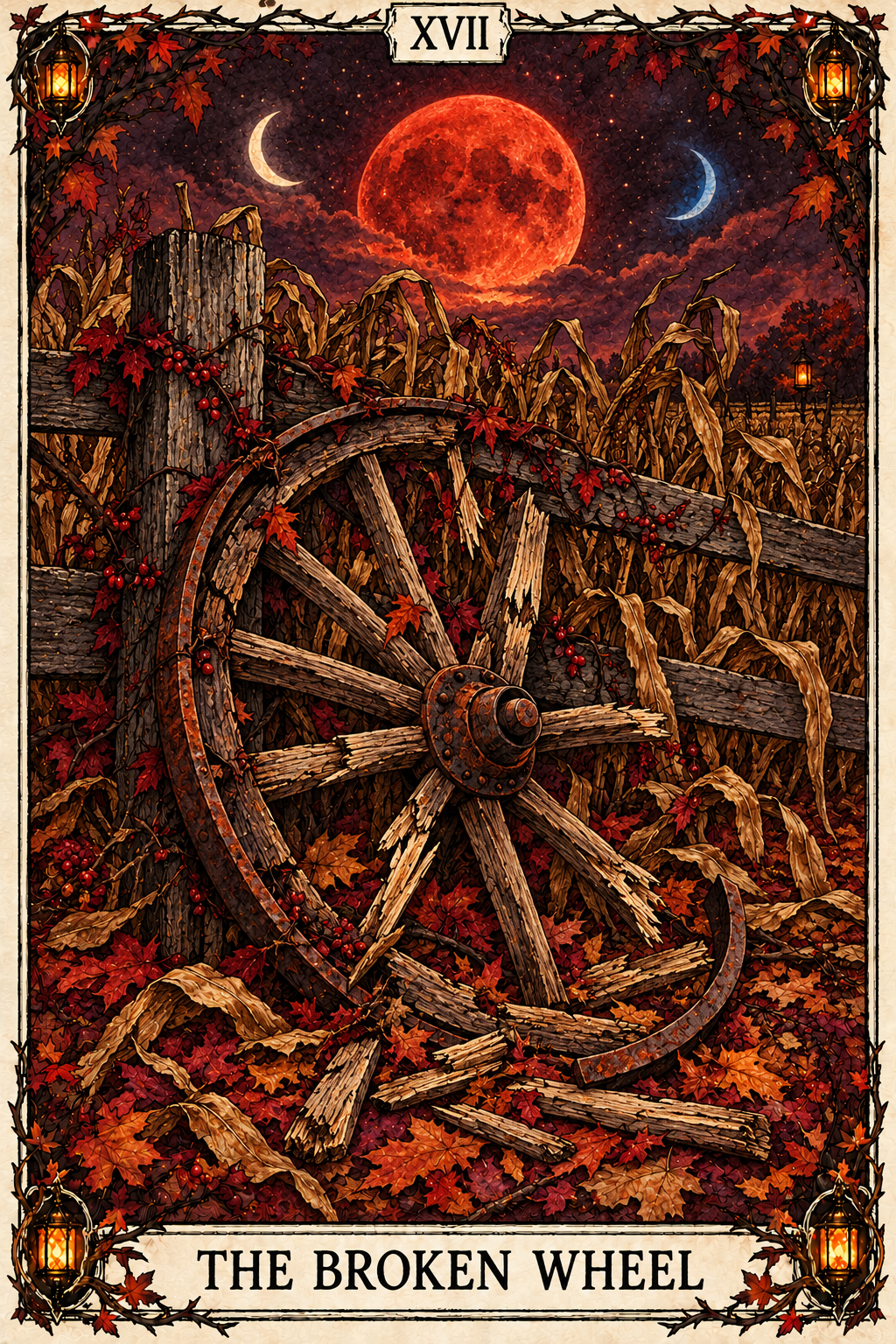
| XVII | The Broken Wheel | Change | A new approach, a recurring pattern interrupted. | Repetition without reflection. |
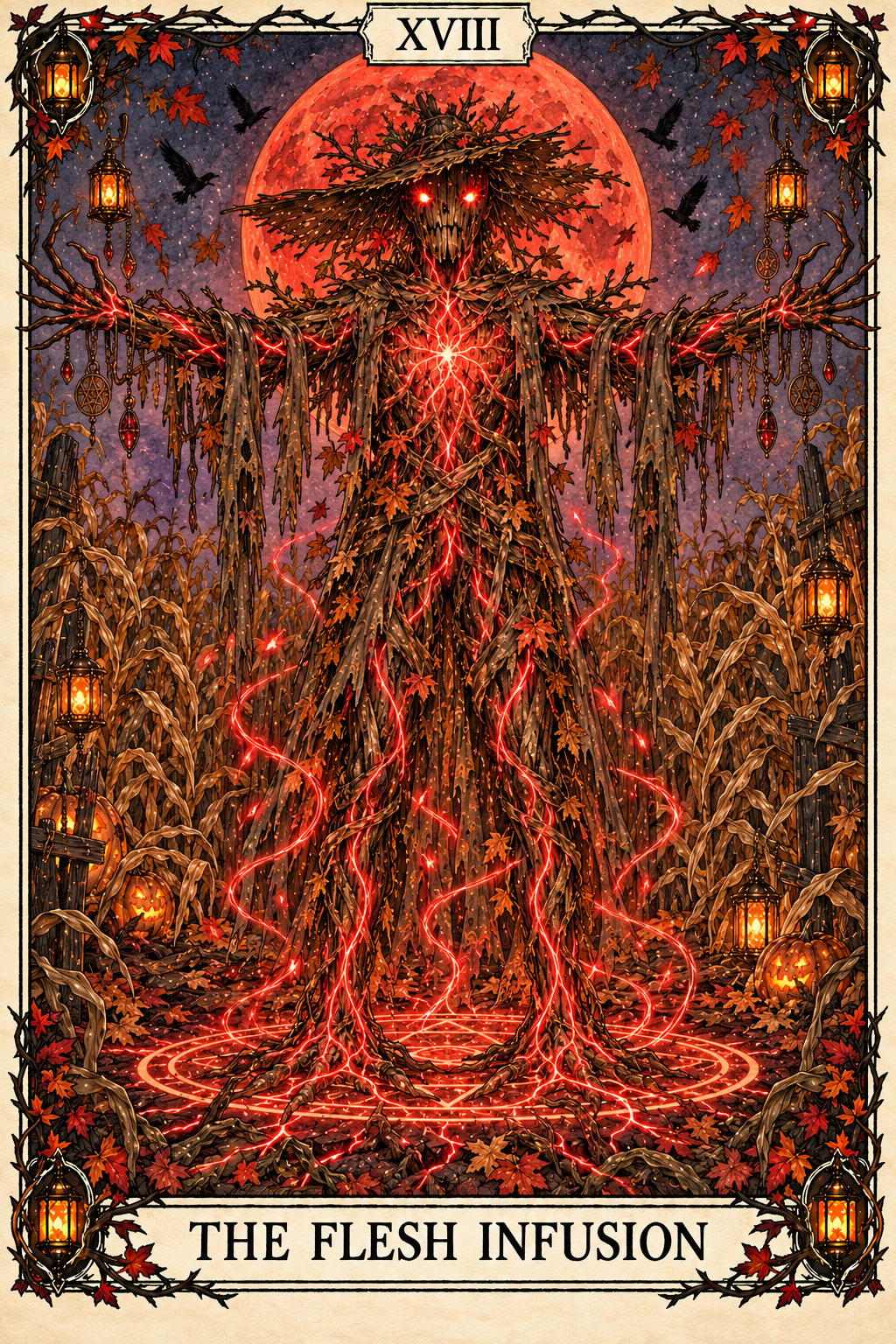
| XVIII | The Flesh Infusion | Embodiment | Renewal, bodily care, strength restored through tending. | Endurance overdrawn, warning signs ignored. |
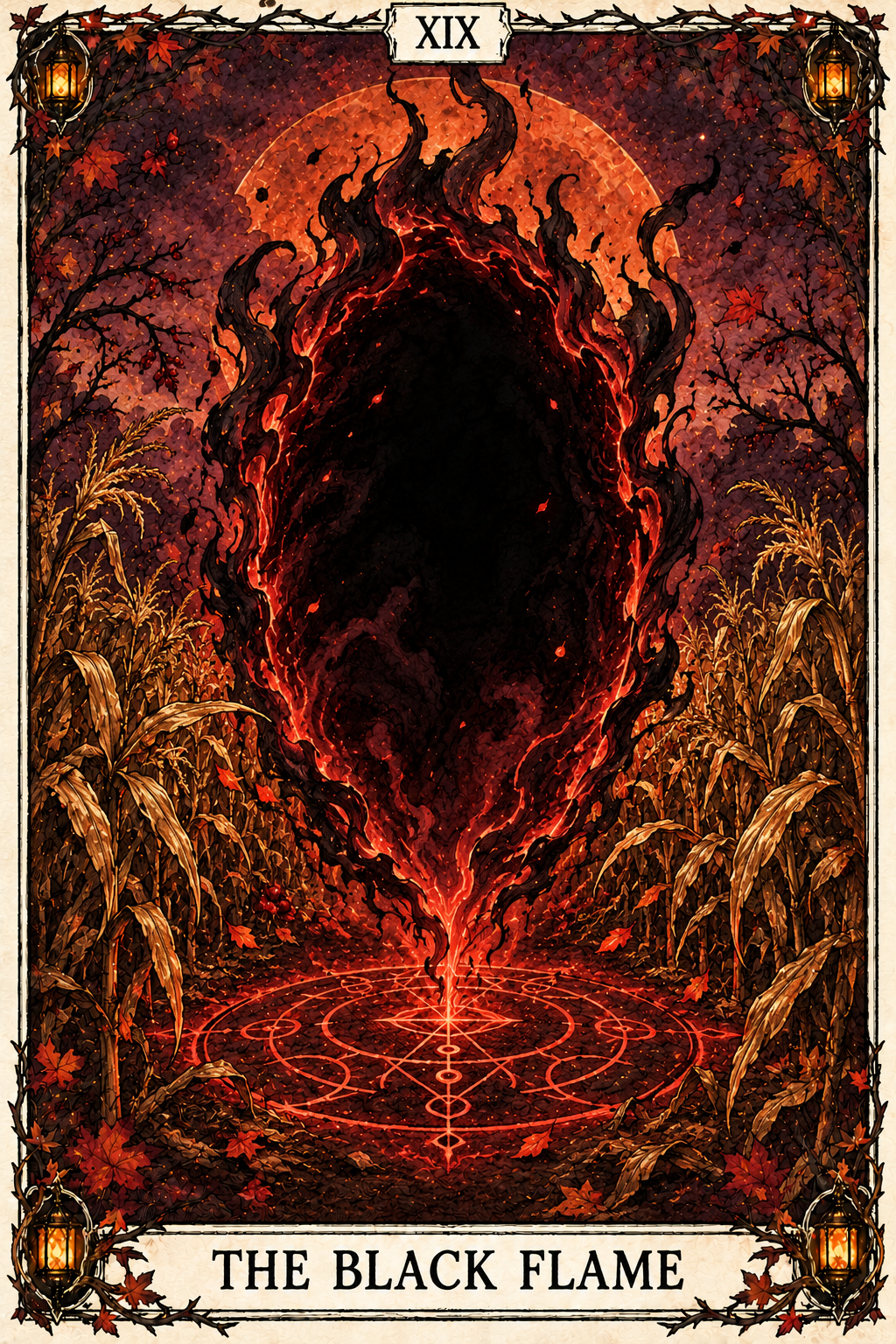
| XIX | The Black Flame | Conviction | Defiance grounded in principle, the self remaining intact. | Revenge consuming the responsibilities it once defended. |
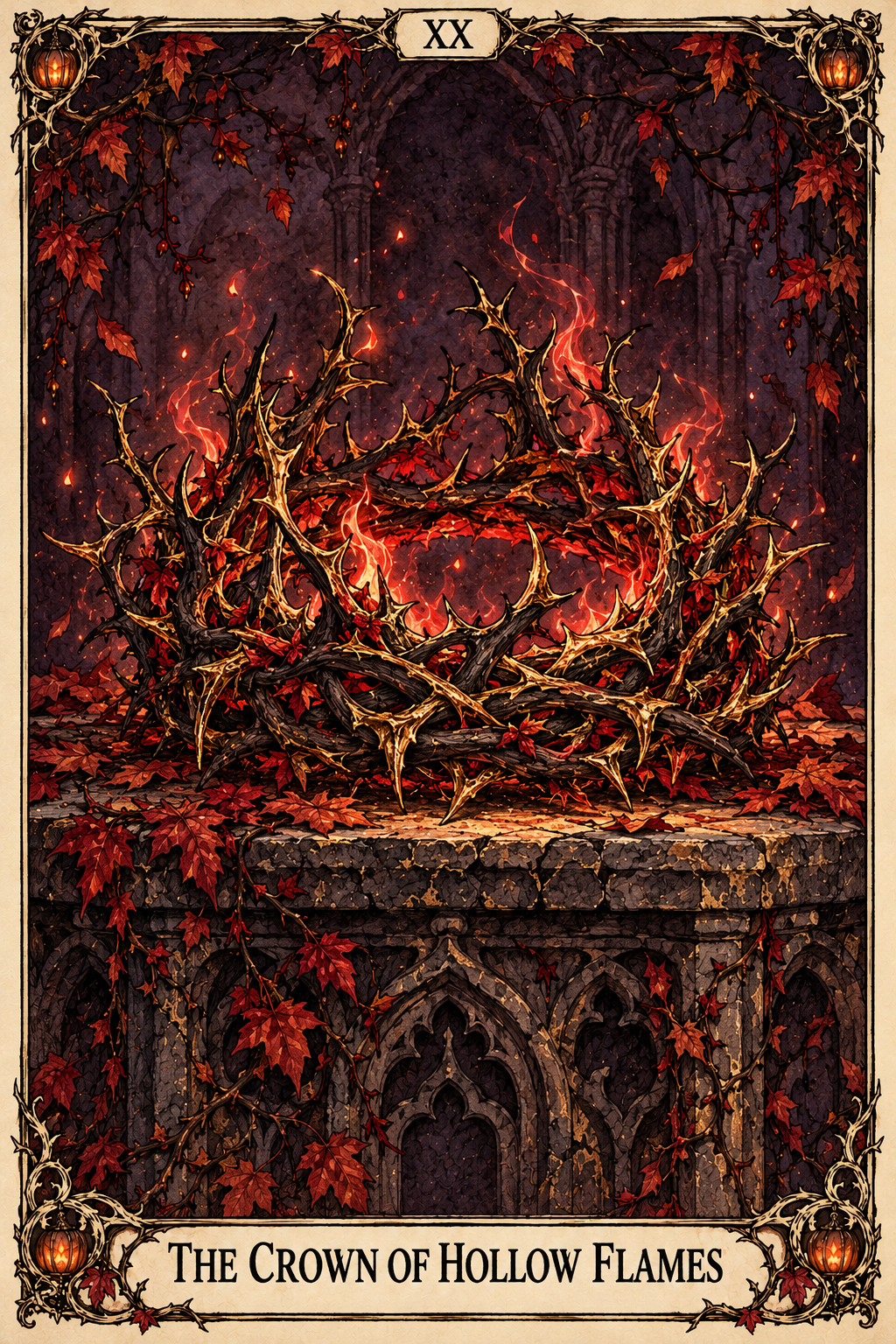
| XX | The Crown of Hollow Flames | Legacy | Ambition shared, leadership sustained by willing companions. | Achievement purchased through concealed costs. |
Classic and Veiled Influences
The following effects are expressly shared by the deck’s Classic and Veiled versions. Classic uses ordinary 5e saving throws. Veiled uses an EROSave when resisting a Desire effect; other saving throws remain unchanged.
For Classic, use the triggering feature’s named saving throw, or Wisdom when no saving throw is named. These effects do not introduce Arousal or Libido tracking.
| No. | Upright Influence | Reversed Influence |
|---|---|---|
| I | When you ask for recognition or assistance after making a meaningful contribution, gain advantage on that Persuasion check. | When you falsely claim another’s contribution as your own, make that Deception check with disadvantage. |
| II | Gain advantage on one saving throw against an effect that would control your actions. | When you threaten someone solely to establish superiority, make that Intimidation check with disadvantage. |
| III | Gain advantage on one saving throw against a magical transformation you do not accept. | When you sustain an unwanted persona to secure approval despite a meaningful personal cost, make the associated Deception or Performance check with disadvantage. |
| IV | Gain advantage on one ability check to complete a meaningful task freely chosen to help another creature. | When you knowingly conceal your inability to fulfill an obligation, make that Deception check with disadvantage. |
| V | Gain advantage on one Survival check to obtain food or shelter for your companions. | When you hide provisions you promised to share, make the associated Deception check with disadvantage. |
| VI | A willing companion within 30 feet may use their reaction to grant you advantage on a saving throw against being charmed or frightened. | When you attempt to persuade a companion to abandon a stated boundary for your reassurance, make that Persuasion check with disadvantage. |
| VII | Gain advantage on one saving throw against fear caused by a reminder of a loss named during the reading. | Make one saving throw against an effect promising to restore that loss with disadvantage. |
| VIII | Gain advantage on one ability check to overcome a meaningful obstacle to the goal named during the reading. | When you repeat a demonstrably failed approach without adaptation, make that ability check with disadvantage. |
| IX | After revealing a consequential truth to a willing listener, gain advantage on one Persuasion check in that conversation. | When you conceal your intentions to obtain someone’s trust, make that Deception check with disadvantage. |
| X | Gain advantage on one ability check or saving throw directly involved in protecting a vulnerable creature from immediate danger. | After dismissing a credible warning about that creature’s safety, make your next Perception or Survival check to locate the danger with disadvantage. |
| XI | Gain advantage on one Insight check to assess an enticing offer with an uncertain cost. | After knowingly accepting a magical bargain without learning its terms, make your first saving throw against an effect of that bargain with disadvantage. |
| XII | After accepting 10 minutes of freely offered care, gain advantage on your next saving throw against being frightened before the omen expires. | Make one saving throw against a magical effect that restricts you while presenting itself as protection with disadvantage. |
| XIII | Gain advantage on one saving throw against the source of a harmful commitment you have deliberately ended. | After knowingly renewing that commitment, make your next saving throw against its source with disadvantage. |
| XIV | After accepting hospitality and resting for 10 minutes, gain 1d4 temporary hit points. | When you insist that a provider exceed a stated limit, make the associated Persuasion check with disadvantage. |
| XV | Gain advantage on one Investigation check concerning the reading’s question. | When pursuing a secret through an approach you know exposes you to supernatural manipulation, make the resulting saving throw with disadvantage. |
| XVI | Gain advantage on one saving throw against an effect that would compel disclosure of private information. | When you conceal information necessary for another creature’s informed agreement, make that Deception check with disadvantage. |
| XVII | After failing an ability check, reroll it if a materially different approach permits another attempt. Use the new result; the omen does not erase consequences already resolved. | When repeating a failed approach without adaptation, make that ability check with disadvantage. |
| XVIII | After spending at least one Hit Die during a short rest, regain 1d4 additional hit points, up to your maximum. | When you knowingly push through a disclosed physical hazard despite an opportunity to rest or change approach, make the resulting Constitution saving throw with disadvantage. |
| XIX | Gain advantage on one saving throw against an effect that would compel betrayal of a principle named during the reading. | When you threaten someone to avenge a personal slight, make that Intimidation check with disadvantage. |
| XX | Gain advantage on one Persuasion check inviting willing participation in a shared undertaking named during the reading. | When you conceal that undertaking’s risks from prospective supporters, make the associated Deception check with disadvantage. |
Unveiled Influences
When the reading uses the complete Desire system, use this table instead of the Classic and Veiled table. Choosing to veil narration does not automatically replace an active Unveiled omen.
Arousal reductions have a minimum of 0. Libido recovery cannot exceed the querent’s normal maximum. Normal stage effects, escalation limits, Climax expenditure and Depletion remain in force.
| No. | Upright Influence | Reversed Influence |
|---|---|---|
| I | When another creature sincerely acknowledges your meaningful contribution, restore 1 Libido. | When you knowingly jeopardize a shared undertaking to claim recognition, gain 1 Arousal. |
| II | Gain advantage on one EROSave against an effect that would control your actions. | When you spend Libido through a feature used to impose control on another creature, spend 1 additional Libido, if available. |
| III | When you reject an imposed role and act according to your chosen identity despite meaningful risk, reduce Arousal by 1. | When you sustain an unwanted persona to secure approval despite meaningful personal cost, gain 1 Arousal. |
| IV | After completing a meaningful task freely chosen to help another creature, restore 1 Libido. | When you spend Libido to fulfill an obligation accepted solely from fear of rejection, spend 1 additional Libido, if available. |
| V | After sharing provisions during a short rest, restore 1 Libido in addition to any recovery that rest normally provides. | When you knowingly withhold promised provisions from a companion who needs them, gain 1 Arousal. |
| VI | When you would gain Arousal, a willing companion within 30 feet may use their reaction to reduce that increase by 1, to a minimum of 0. Other consequences remain. | When you knowingly pressure a companion to abandon a stated boundary for your reassurance, gain 1 Arousal. The companion is unaffected. |
| VII | After your next Climax resolves normally, dedicate its release to a loss named during the reading and gain 1d4 temporary hit points. | Make your next EROSave against an effect promising to restore that loss with disadvantage. |
| VIII | When spending Libido through a feature to overcome a meaningful obstacle to your stated goal, reduce that expenditure by 1, to a minimum of 0. | When you knowingly repeat a harmful, ineffective approach without adaptation, gain 1 Arousal. |
| IX | After freely revealing a consequential truth to a willing listener, reduce Arousal by 1. | When you knowingly conceal your intentions to obtain someone’s trust, gain 1 Arousal. |
| X | Gain advantage on one ability check or saving throw directly involved in protecting a vulnerable creature from immediate danger. | After dismissing a credible warning about that creature’s safety, make your next Perception or Survival check to locate the danger with disadvantage. |
| XI | Gain advantage on one EROSave against an enticing supernatural offer whose cost remains concealed. | When you knowingly accept a magical bargain without learning its terms, gain 1 Arousal. |
| XII | After accepting 10 minutes of freely offered care, reduce Arousal by 1. Care may include conversation, food, tending wounds or quiet company. | Make your next EROSave against an effect presenting restriction or confinement as care with disadvantage. |
| XIII | When you deliberately end a harmful commitment, reduce Arousal by 1. | When you knowingly renew that commitment, gain 1 Arousal. |
| XIV | After accepting hospitality and resting for 10 minutes, restore 1 Libido. | When you spend Libido to seek further gratification after disregarding a provider’s stated limit, spend 1 additional Libido, if available. |
| XV | After your next Climax resolves normally, gain advantage on one Investigation or Insight check concerning the reading’s question before the omen expires. | When you knowingly accept a supernatural Desire effect to obtain information despite its disclosed danger, gain 1 Arousal from the omen, in addition to the accepted effect. |
| XVI | Gain advantage on one EROSave against an effect that would compel disclosure of a private memory, feeling or desire. | When you knowingly conceal information necessary for another creature’s informed agreement, gain 1 Arousal. |
| XVII | After failing an EROSave, reroll it and use the new result. Describe how you change your response; resolve the final result once. | When you knowingly repeat a response that failed against the same Desire source without adaptation, make that EROSave with disadvantage. |
| XVIII | After spending at least one Hit Die during a short rest, restore 1 Libido in addition to any recovery that rest normally provides. | When you voluntarily spend your last Libido point, gain 1 Arousal after the expenditure and any associated Climax resolve. Apply Depletion normally. |
| XIX | After succeeding on an EROSave against an effect that would compel betrayal of a principle named during the reading, restore 1 Libido. | When you knowingly abandon a responsibility to pursue revenge for a personal slight, gain 1 Arousal. |
| XX | After your next Climax resolves while pursuing the shared undertaking named during the reading, one willing ally within 30 feet may reduce their Arousal by 1. | When you spend Libido to advance that undertaking while knowingly concealing its risks from supporters, spend 1 additional Libido, if available. |
The Lantern Child concerns hope and protection in every mode. Its influences remain entirely nonsexual.
Bringing a Fortune Into Play
When interpreting a card, the reader names an image, an opportunity and a warning connected to the querent’s question. These give the DM something concrete to echo in a later encounter without fixing its outcome. For The Vine’s Embrace, a reader might say: “You will be offered shelter. Look carefully at the door. A place of care allows you to leave.” That omen might return through a welcoming household, a protective patron or a sanctuary whose keeper fears losing its guests. The card’s influence resolves when its circumstances arise. Whether the querent accepts the shelter, investigates it or walks away remains their decision. The reading does not guarantee that an offer is false or that a particular person is dangerous. It gives longing a place within the unfolding adventure—and gives the player a chance to shape what follows.
Hollow Lantern Tarroka Set
“To read another’s longing is to let its echo pass through your own.”
The card back is complete, with paired red lanterns, black roses and a central crimson jewel. Its composition echoes the deck’s gothic autumn frame. The following proposed tool rules give the set practical uses and make magical readings affect the reader. They supplement the card influences already developed.
Tool Profile
| Property | Rule |
|---|---|
| Category | Divination tool; it may replace a gaming set proficiency granted by a background, with DM approval. |
| Suggested cost | 25 gp |
| Weight | ½ lb. |
| Contents | Twenty illustrated cards, a protective case and a reading cloth. |
| Proficiency | Hollow Lantern Tarroka Set |
| Magical status | The physical cards are mundane ritual instruments. Their supernatural readings use the optional rules below. |
A proficient character understands the cards’ symbolism, upright and reversed interpretations, traditional spreads and methods of conducting a reading. Proficiency does not grant spellcasting, reveal someone’s private thoughts or guarantee accurate predictions.
Ability Checks With the Set
When an ability check meaningfully uses the cards, a proficient reader adds their proficiency bonus. The DM selects the ability according to the task.
| Ability | Example Use | Suggested DC |
|---|---|---|
| Intelligence | Identify a card’s traditional symbolism or recognize an altered deck. | 10 |
| Intelligence | Compare a spread with records of an earlier prophecy or ritual. | 15 |
| Wisdom | Interpret a reading in light of circumstances the querent has disclosed. | 12 |
| Wisdom | Recognize contradictions between an interpretation and observed events. | 15 |
| Charisma | Present a compelling ceremonial reading before an audience. | 12 |
| Dexterity | Conceal a selected card or manipulate a draw. | Contested by the observer’s Wisdom (Perception) |
Manipulating a draw can deceive an audience, but a deliberately selected card cannot produce a magical omen. If both a skill and this tool proficiency apply, add proficiency only once. Expertise applies only when a feature actually grants it to the applicable skill or tool. The DM may grant advantage when the two proficiencies provide distinct, useful contributions.
Three Ways to Use the Cards
Interpretive Reading. Anyone can draw cards and discuss their meanings. A proficient reader can make a tool check when interpretation is uncertain and consequential. This creates no supernatural influence.
Ceremonial Reading. A proficient reader can conduct a public performance, devotional observance or private consultation. Resolve any uncertain outcome through an appropriate tool check. A successful performance does not prove a prophecy true.
Resonant Reading. A proficient reader can awaken the deck’s magical influences through the ritual below. This is the use that exposes the reader to Desire pressure.
Resonant Reading
Time: 10 minutes
Target: One willing querent within 5 feet
Requirement: Tool proficiency and a complete set
Limit: One attempt per reader per long rest; one accepted omen per querent per long rest
Duration: An accepted omen lasts until the querent finishes their next long rest.
The reader may read for themselves. Before drawing, the querent names a question concerning a goal, fear, relationship or unresolved choice. The reader then draws one random card and randomly determines its orientation.
Make a DC 12 Wisdom check using the Tarroka Set.
| Result | Outcome |
|---|---|
| Success | The card awakens. Explain its interpretation and influence; the querent may accept or decline the omen. |
| Success by 5 or more | The reader also recognizes one relevant opportunity or danger in circumstances already established by the DM. This supplies guidance, not otherwise inaccessible secrets. |
| Failure | The spread provides symbolism but no mechanical omen. The reader’s daily attempt is expended. |
A failed reading does not reverse a card, curse the querent or supply a false prophecy as established fact. After resolving the tool check, apply the reader’s resonance rules for the chosen mode—even if the querent declines the awakened omen.
The Reader’s Desire Identity
- Desire Identity — Revelation. The reader longs to give uncertainty a shape. The deck answers by letting another creature’s emotional pressure pass through the reader.
- Libido Identity — Channeling. In Unveiled Play, the reader can expend endurance to strengthen their interpretation.
- Arousal Identity — Accumulated Resonance. Pressure represents borrowed anticipation, grief, fascination or ambition. Its expression follows the drawn card.
- Climax Identity — Revelation Released. If the reading pushes the reader to the release threshold, the accumulated resonance breaks into a brief moment of clarity.
Reader Effects by Mode
| Mode | Effect on the Reader |
|---|---|
| Classic | After the reading attempt, make a DC 12 Wisdom saving throw. On failure, fascination with the spread imposes disadvantage on your next Wisdom (Perception) check before the end of your next turn. On success, there is no additional effect. |
| Veiled | After the reading attempt, make a DC 12 EROSave. On failure, become Stirred by the drawn card’s emotional current. Apply the normal Stirred effect; it ends when that effect is expended or after 10 minutes, whichever occurs first. On success, remain unaffected. The reading does not automatically cause Overwhelmed. |
| Unveiled | After the reading attempt, make a DC 12 EROSave. On failure, gain 1 Arousal. On success, gain none. Apply all normal Arousal stage effects, including additional escalation from a failed EROSave where applicable. |
These are individually defined effects. They do not establish a general conversion between saving throw penalties, Stirred, Arousal and Libido. A reader using Unveiled mechanics may keep the entire reading’s narration veiled.
Unveiled Feature: Deepen the Reading
Before making the Resonant Reading’s tool check, the reader may spend 1 Libido to gain advantage on that check. Doing so increases the subsequent resonance EROSave’s DC from 12 to 14, whether the tool check succeeds or fails. A reader with no Libido remaining cannot use this feature. The reader gains a stronger chance of awakening the omen while accepting greater exposure to its pressure.
Unveiled Release: Revelation Released
If the reader reaches Arousal 6 because of the reading’s resonance save, including normal stage escalation, use this release effect: Revelation Released. Resolve Climax normally: spend 1 Libido, reset Arousal to 0 and apply Depletion when appropriate. The reader then gains advantage on one Intelligence (Investigation) or Wisdom (Insight) check directly concerning the reading’s question before finishing their next long rest. This release does not reveal inaccessible secrets, restore Libido, activate the querent’s omen or turn a failed reading into a success.
Grounding After a Reading
After an Unveiled reading attempt, the reader may spend an additional 10 uninterrupted minutes gathering the cards, breathing and reflecting on which feelings belong to them. At the end of this grounding ritual, reduce the reader’s Arousal by 1, to a minimum of 0. This benefit is available once per long rest and only after their Resonant Reading attempt. It does not restore Libido or erase other consequences. A companion may assist through conversation, quiet company or practical care. No intimacy is required.
Reading Fortune at the Table
The reader interprets the card; the querent retains authority over their response. The DM connects the omen to an opportunity already present or reasonably approaching in the adventure. For example, a reader drawing The Crimson Chalice might sense exhaustion beneath a traveler’s ambition. Hospitality becomes a possible turning point for the querent, while the reader experiences the weight of that hunger through their own resonance save. The tool creates a reciprocal encounter: the querent carries the omen forward, and the reader must manage what passed through them.
When the Lanterns Burn Wrong
A good festival can conceal a bad night. Adventurers might hear rumors of missing adults, discover an unexplained purchase of lantern oil or see a carved pumpkin glow where no flame burns. Such incidents are optional story hooks, not the hidden purpose of the festival. The people of Lysoria deserve to return to their celebrations once a danger has passed.
If a campaign turns toward supernatural horror, the Corn Maze of Moons and the Whispering Orchard can lead into a darker adventure about stolen lives and a forbidden coronation. Its villains and revelations should remain with the Dungeon Master until the table uncovers them.


You must be logged in to post a comment.