
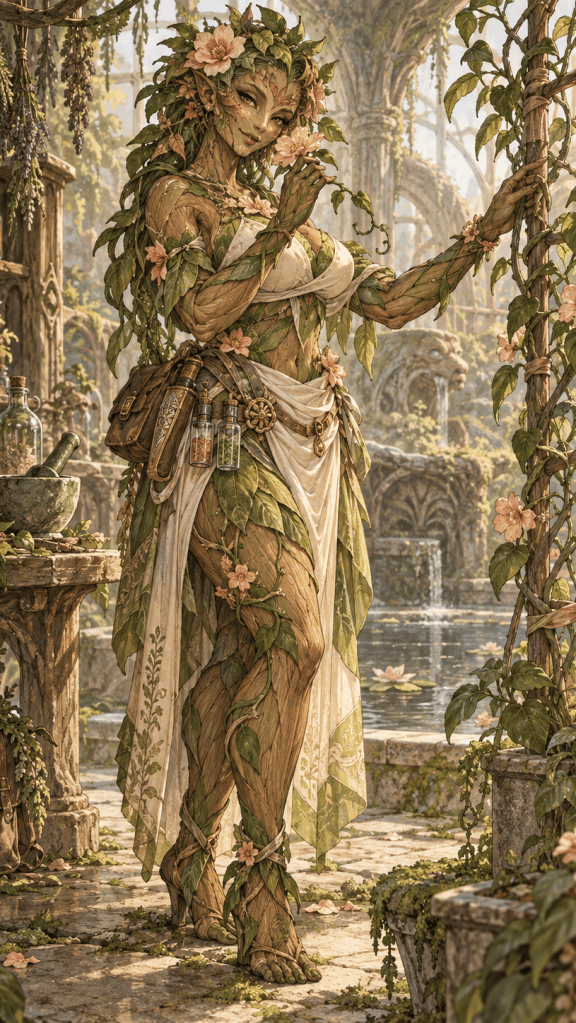
Woodstruck
The forest has never felt silent to you.
You feel the slow strength beneath bark, the tension of branches bearing weight, the warmth held within sunlit timber, and the deep-rooted patience of ancient trees. Rough bark beneath your palms, fragrant sap, rain-darkened wood, exposed roots, and the swaying embrace of a high canopy may stir in you a fascination others reserve for living bodies.
Perhaps you were raised by foresters, apprenticed to a woodcarver, gathered rare resins, maintained a sacred grove, climbed trees to harvest fruit and medicines, or wandered from forest to forest seeking trees whose age and beauty could be felt simply by standing near them.
Your intimacy with wood became practical knowledge. You learned how to climb without damaging bark, distinguish healthy timber from hidden rot, read the direction of growth, recognize tools by their cuts, and shape fallen wood according to its natural grain. You understand that a living forest is not an inexhaustible storehouse. Every harvest alters what remains.
Some Woodstruck prefer timber polished by loving hands. Others are drawn only to living trees: rooted, weathered, and patient. To rest against an ancient trunk may feel comforting; to climb into its crown may feel like being held between earth and sky.
Skill Proficiencies: Athletics, Nature
Tool Proficiencies: Woodcarver’s tools
Languages: Sylvan or one other language of your choice
Equipment: A set of woodcarver’s tools, 50 feet of hempen rope, a climbing harness, several packets of tree seeds, a stoppered vial of fragrant resin, a polished piece of wood from a personally significant tree, a set of traveler’s clothes, and a pouch containing 10 gp
Feature: By Bark and Grain
You can identify common trees and mundane woods by examining their bark, leaves, scent, grain, color, weight, or sap. You can usually recognize obvious signs of disease, infestation, fire damage, lightning, drought, deliberate felling, or internal decay.
When examining a worked wooden object, you can often determine whether it was carved, split, bent, turned, joined, or repaired, and recognize familiar regional techniques. Tool marks may reveal what kind of implement shaped the wood, though not necessarily who wielded it.
In an ordinary healthy woodland, you can locate suitable fallen material for a small fire, basic repairs, carving, or temporary shelter without needlessly harming living trees. This feature does not guarantee rare timber, reveal supernatural properties, identify an exact tree of origin, or replace an ability check in dangerous conditions.
Foresters, arborists, woodcarvers, carpenters, resin gatherers, orchard keepers, druids, and wardens of sacred groves recognize your knowledge. They will generally share ordinary information about local forests, dangerous trees, sustainable harvesting customs, climbing routes, and craftspeople who work with unusual woods.
Suggested Characteristics
Those who are Woodstruck experience trees as more than scenery or material. Some cherish forests as living communities, some pursue perfect grain with obsessive devotion, and others long for the physical exhilaration of bark beneath their hands and branches moving beneath their weight.
| d8 | Personality Trait |
|---|---|
| 1 | I greet remarkable trees as though meeting dignitaries. |
| 2 | I instinctively press my palm against bark to feel its texture and warmth. |
| 3 | I identify unfamiliar woods by scent before examining their grain. |
| 4 | I climb whenever I need privacy, perspective, or peace. |
| 5 | I collect small pieces of naturally shed bark, resin, and fallen wood. |
| 6 | I become quietly angry when useful timber is wasted or living trees are damaged carelessly. |
| 7 | I describe old trees with the affection others use for former lovers. |
| 8 | I sleep most comfortably with my back resting against a broad trunk. |
| d6 | Ideal |
|---|---|
| 1 | Stewardship. Take only what the forest can surrender without lasting harm. (Good) |
| 2 | Endurance. A worthy life should grow slowly, survive hardship, and remain deeply rooted. (Lawful) |
| 3 | Wildness. Forests should twist, spread, and renew themselves without mortal command. (Chaotic) |
| 4 | Craft. Wood reveals its finest form when the carver listens to the grain. (Any) |
| 5 | Reverence. Ancient living things deserve respect regardless of whether they can speak. (Good) |
| 6 | Possession. Rare timber is wasted upon those incapable of appreciating it. (Evil) |
| d6 | Bond |
|---|---|
| 1 | An ancient tree sheltered me during the worst night of my life, and I have sworn to protect it. |
| 2 | I carry a piece of wood cut from my childhood home after it was destroyed. |
| 3 | My mentor disappeared while searching for a grove believed to walk beneath the moon. |
| 4 | I planted a tree over someone I loved and return whenever my travels permit. |
| 5 | A logging company is destroying a forest whose trees contain irreplaceable history. |
| 6 | I seek the craftsperson who shaped a wooden relic without leaving a single visible tool mark. |
| d6 | Flaw |
|---|---|
| 1 | I become distracted by unusual bark, grain, or resin even when danger is near. |
| 2 | I treat damage to trees as more serious than harm to buildings or possessions. |
| 3 | I have taken rare wood from a protected grove and concealed where it came from. |
| 4 | I climb higher than caution permits simply to feel a tree moving beneath me. |
| 5 | I distrust people who cannot distinguish living stewardship from careless exploitation. |
| 6 | I once carved my mark into an ancient tree and have regretted it ever since. |
 Whispers of Erosia
You must be logged in to post a comment.