
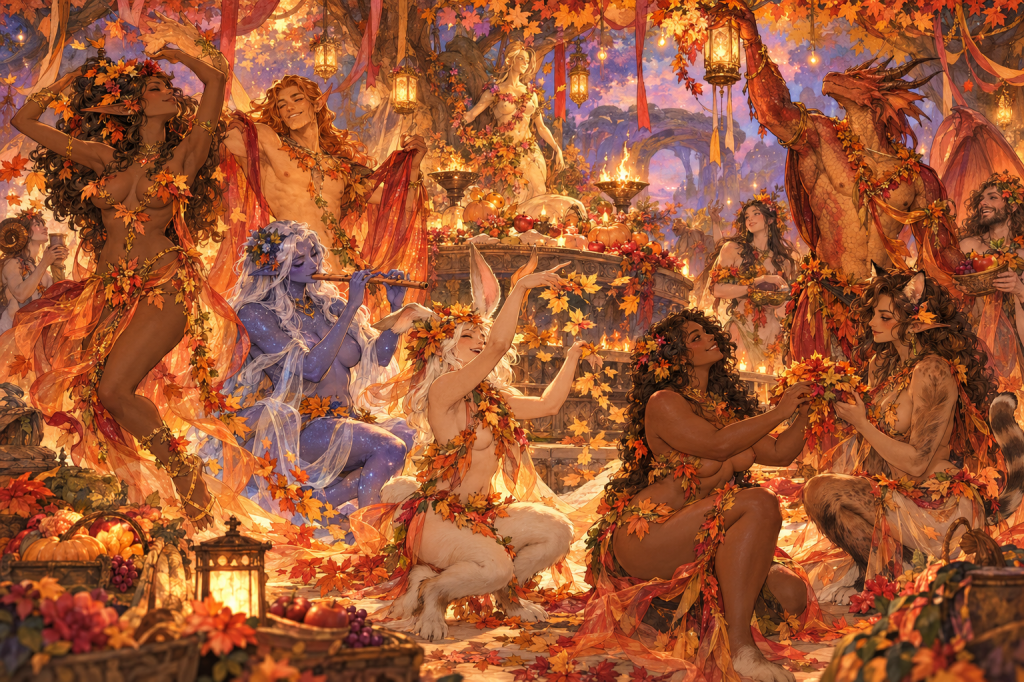
The Unveiled Harvest — Naturist Traditions of Autumn Vigil
When the leaves fall, Erosia does not hide the living body from the turning year.
Across Erosia, Autumn Vigil marks a passage between harvested abundance and the approaching cold. Some communities observe that passage through naturist customs: warm baths, painted skin, communal dances and rites of renewal. These are local traditions, not a universal requirement of the season. Nudity may be ordinary, spiritual, celebratory or sensual, but is never automatically an invitation to intimacy.
These celebrations complement the broader Autumn in Erosia guide and the 31 Days of Events adventure calendar.
Eight Traditions of the Autumn Vigil
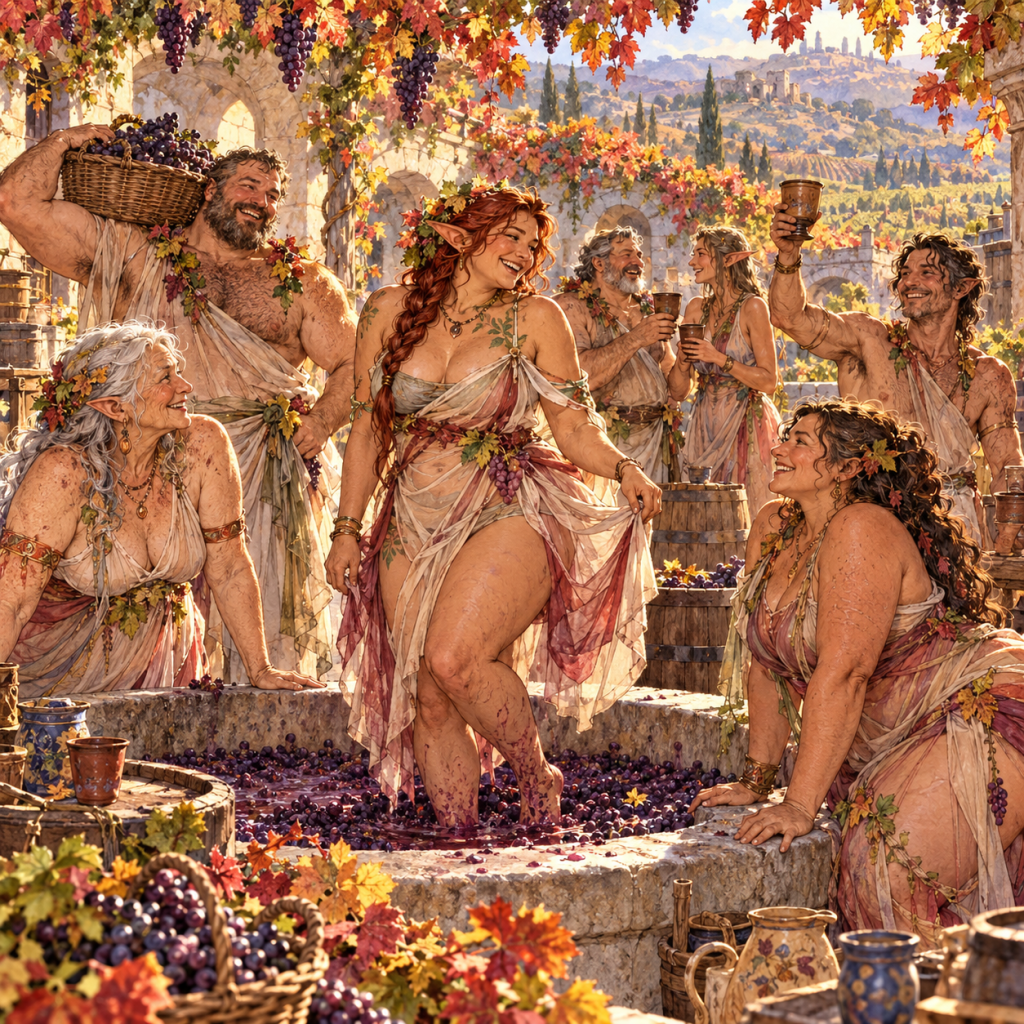
The Barefoot Vintage
Where it is observed: Vineyards and orchards after the final pressing.
In the last warmth before First Frost, vintners invite neighbors to tread the final grapes in shallow stone basins. Participants may wear harvest wraps, practical clothing or nothing at all; wreaths of vine and painted leaves are common among celebrants. The first cup is raised to those whose labor filled the cellar, and the final cup is set aside for the household that may need it most in winter.
Adventure hook: A cask pressed during the rite begins yielding wine that recalls memories no drinker lived. One memory seems to show a theft that has not yet happened.

The Emberwater Vigil
Where it is observed: Bathhouses, mineral springs and sheltered coastal pools.
Bathkeepers warm the pools as the autumn air cools. Participants wash away the dust of the harvest, then set a fallen leaf upon the water to acknowledge something they are ready to release. At Amarosa’s Rosewater Bathhouse, the rite is a communal act of rest and renewal, not a requirement to reveal the body or share a private confession.
Adventure hook: The leaves refuse to drift toward the drains. Instead, they arrange themselves into a message naming a person long believed dead.
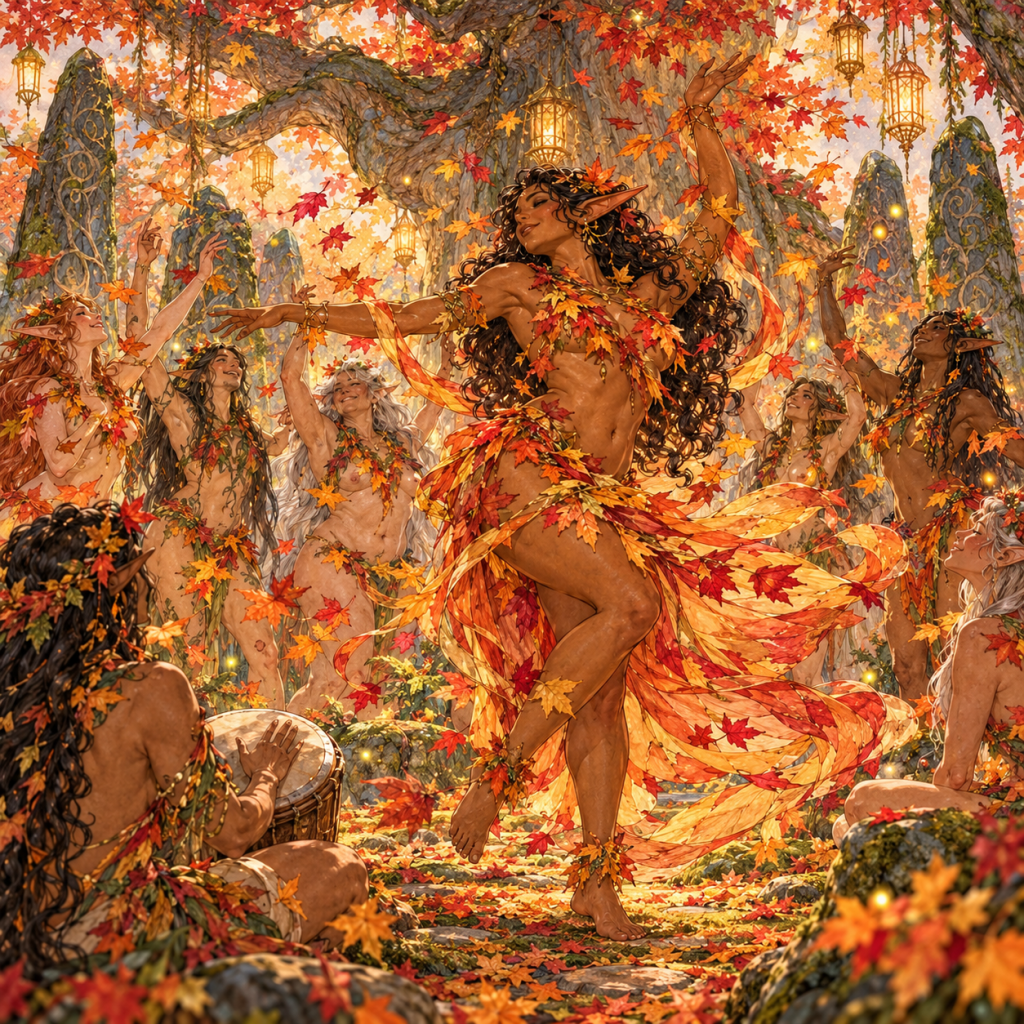
The Dance of Falling Leaves
Where it is observed: Greenward groves and woodland communities.
Greenward celebrants gather beneath changing boughs wearing leaf crowns, ribbons, body paint or ordinary garments. Their circular dance follows the wind rather than a strict rhythm. Each dancer releases a leaf bearing a whispered hope, allowing it to fall without chasing where it lands.
Adventure hook: One ancient tree refuses to shed its leaves, and the dancers begin dreaming the same warning about something hidden beneath its roots.
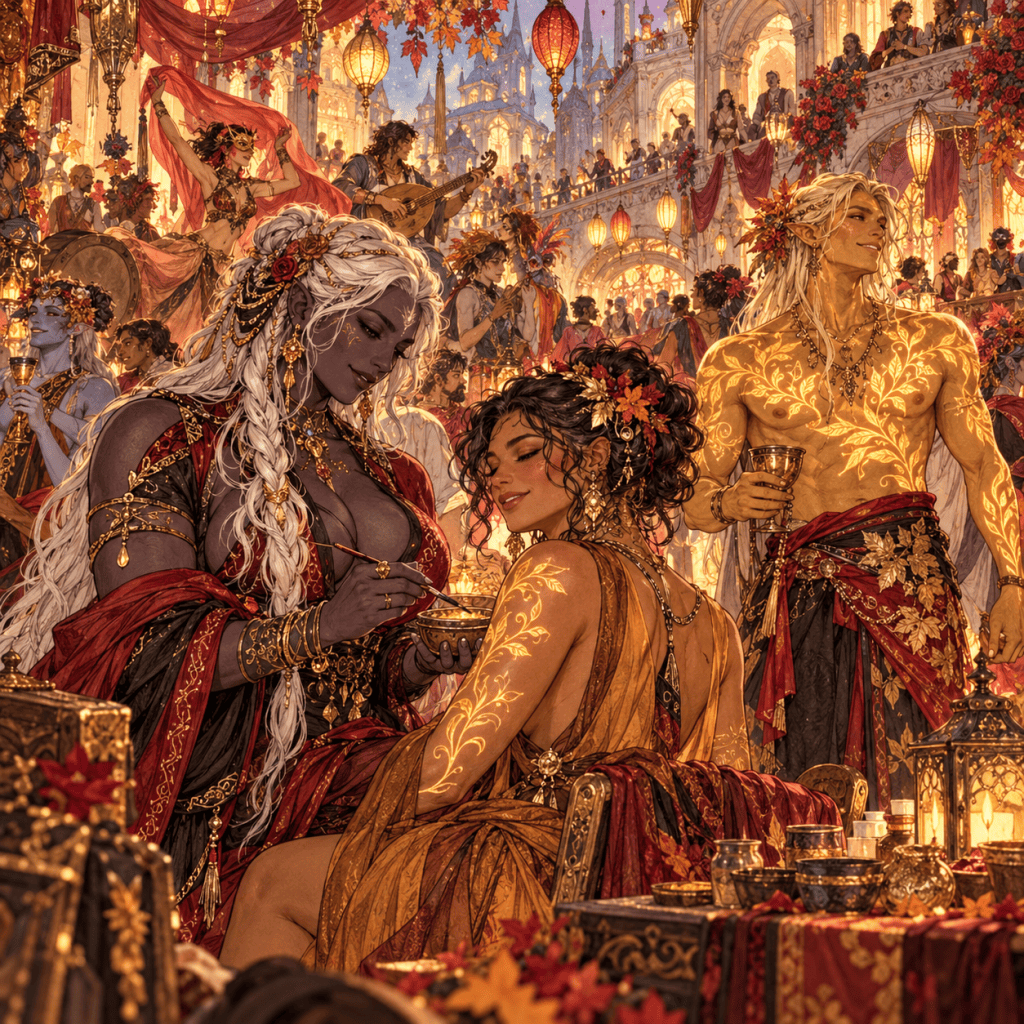
The Lanternskin Revel
Where it is observed: Amarosa’s Roseglass Ward and other artists’ quarters.
During the Vigil, artists paint willing participants with amber lanternlight motifs, vines, constellations and harvest flowers. Bare skin is one canvas among many: painted cloaks, masks and hands are equally welcome. The procession celebrates chosen self-expression and the many ways a person may wish to be seen.
Adventure hook: An enchanted pattern leaves its wearer and runs across the cobblestones, leading toward a shuttered workshop whose owner vanished years ago.
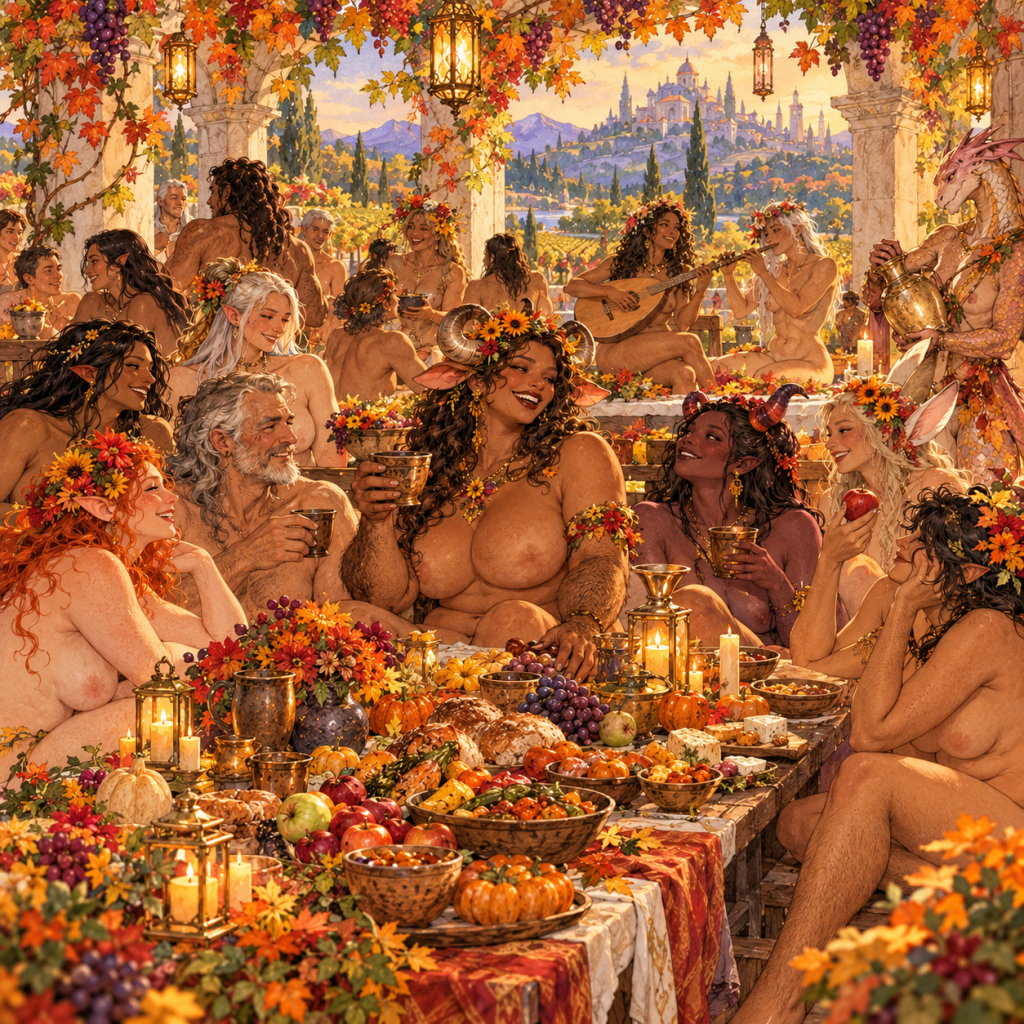
The Feast Without Finery
Where it is observed: Communal halls, farmsteads and civic courtyards.
For one harvest meal, families, travelers and magistrates are invited to set aside badges of rank, ceremonial jewelry and other signs of station. Some communities express this through naturist dining; others favor simple linen or borrowed work clothes. The custom is meaningful only when each person freely chooses how to participate. Every guest is asked to bring something to share, even if it is only a story or an hour of labor.
Adventure hook: A masked guest offers to settle a decades-old grievance before the final candle dies, but refuses to reveal why this may be their last opportunity.
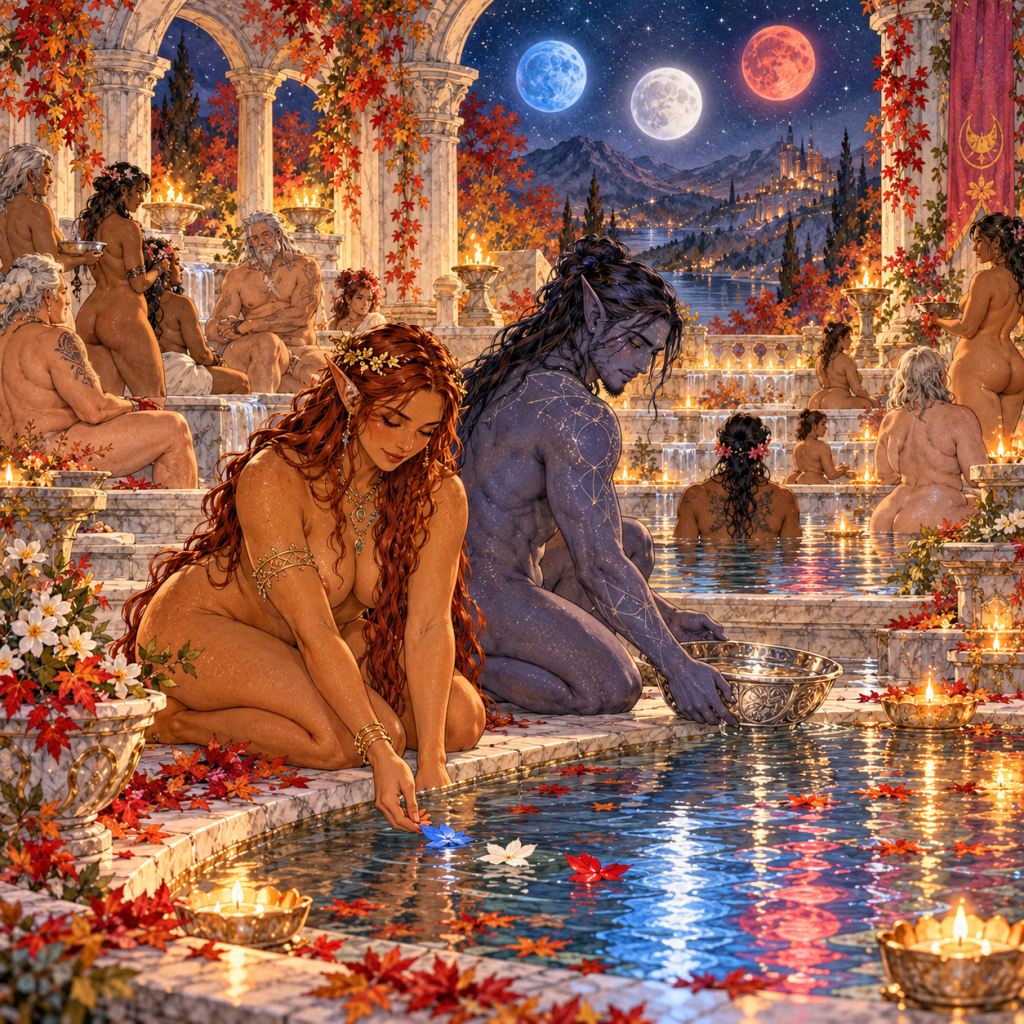
The Three-Moon Unveiling
Where it is observed: Sacred pools and moon-facing terraces.
A quiet night rite observes Azure, Pearl and Crimson as the sky permits. Three offerings of water or petals mark remembrance, acceptance and renewal. Some worshippers approach the pool unadorned, while others retain the clothing or coverings in which they feel most at ease. The ceremony concerns honesty before oneself, not exposure for an audience.
Adventure hook: The water reflects three different futures for one pilgrim, and each reflection shows a different person standing beside them.
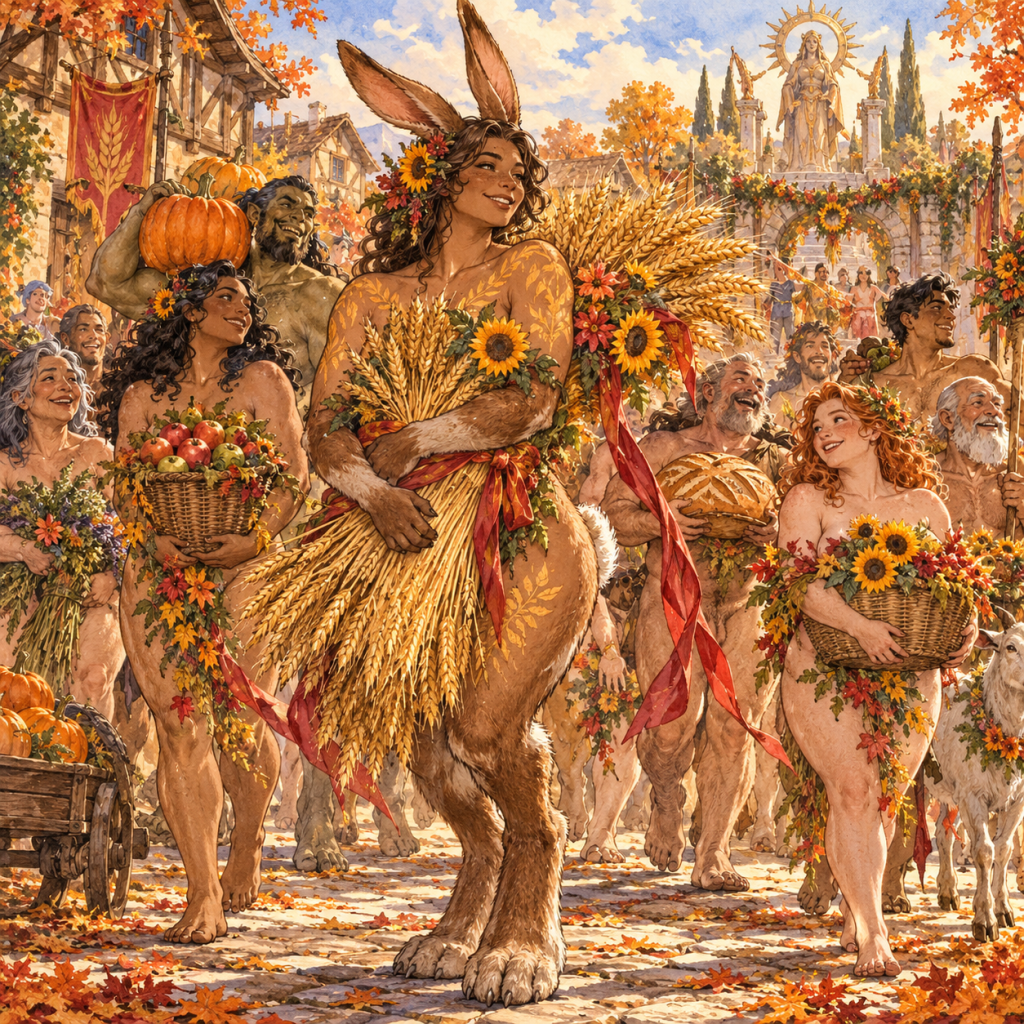
The Golden Sheaf Gathering
Where it is observed: Agricultural villages and Talyssan shrines.
The last sheaf of grain is carried from the fields beneath sunflowers and ribbons. Celebrants mark their arms with flour, ocher or golden paint and bless the seed that must survive winter. The sheaf is divided: one portion for communal bread, one for animal fodder and one reserved for planting.
Adventure hook: The sheaf begins sprouting after sunset, despite the cold. Its roots point toward a forgotten storehouse sealed after an earlier famine.
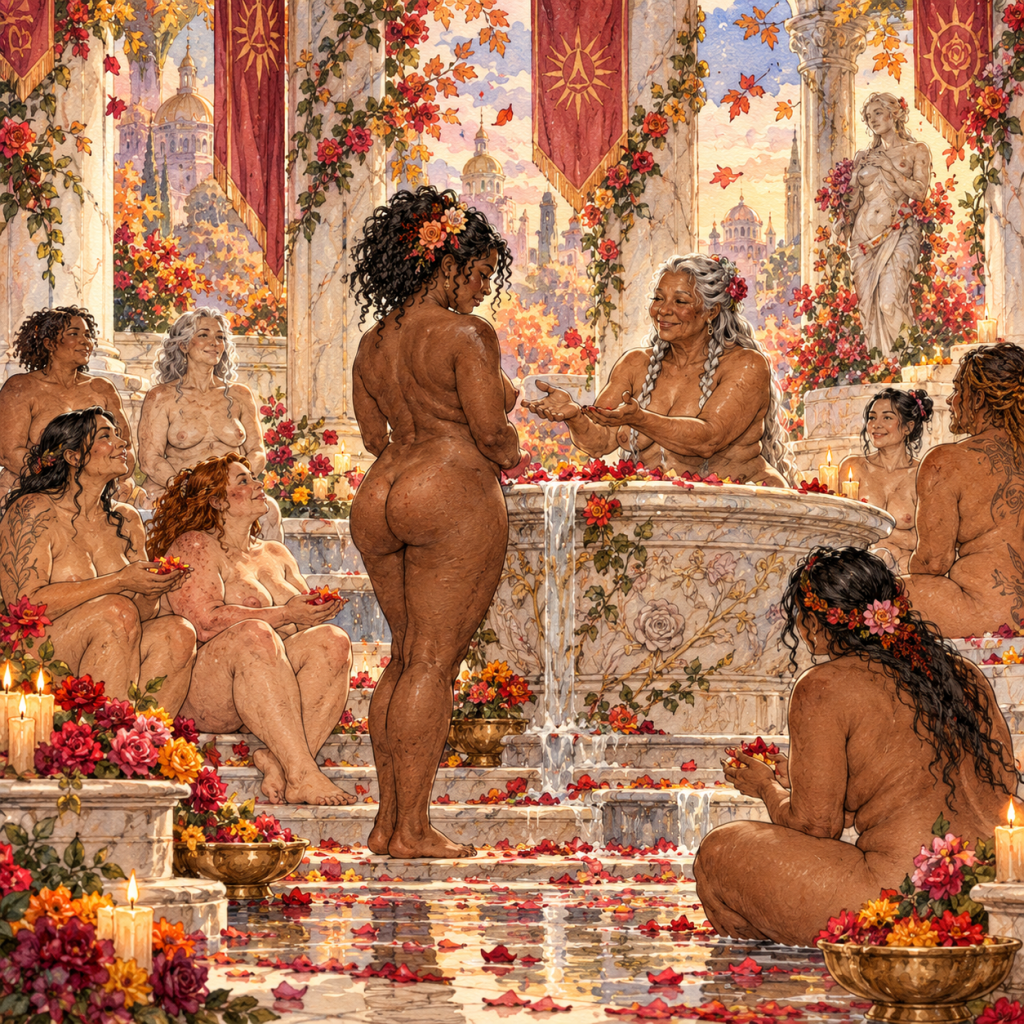
The Rite of the Unadorned Bloom
Where it is observed: Temple of Eternal Petals, Amarosa.
Worshippers of Velyssara approach the altar without the honors by which society usually defines them. Some leave behind jewelry and finery; others choose ritual nudity, a simple wrap or an ordinary robe. Priests bless the living body as it is, while attendants ensure that the rite never becomes a test of courage, beauty or willingness to be touched.
Adventure hook: A sacred mirror shows one participant crowned with blossoms that have not bloomed in generations, drawing the attention of rival historians and temple keepers.
Amarosa: The Festival of the Fallen Veil
In Amarosa, several Autumn Vigil customs are celebrated together over three days in a gathering commonly called the Festival of the Fallen Veil. This is a city tradition, not the official calendar for all of Erosia. The celebration moves between public baths, the Roseglass Ward and the living sanctuary of the Temple of Eternal Petals.
First Day — Water and Release
The Rosewater Bathhouse and neighborhood springs welcome residents and travelers for the Emberwater Vigil. Bathkeepers prepare pools and quiet areas, and participants send their leaves onto the water before an evening of modest shared meals and conversation.
Second Day — Color and Celebration
The Roseglass Ward fills with lantern-painted dancers, harvest musicians, mask-makers and late-season food stalls. The Lanternskin Revel winds between courtyards and gardens. Visitors who would rather keep their garments on may join the procession with decorated sleeves, masks or painted hands.
Third Day — The Unadorned Bloom
At the Temple of Eternal Petals, celebrants gather for prayers of gratitude and renewal under Velyssara’s care. The rite offers a chance to set aside social titles and carefully chosen appearances; no one must undress, be admired, disclose a desire or accept another person’s touch.

Culture, Consent and the Table
Greenward Elf groves may regard seasonal naturism as an everyday relationship with wind and forest, while city-dwellers may encounter it in public bathing, art or formal worship. Farming communities may treat the Feast Without Finery as an exercise in shared labor rather than religious unveiling. Customs differ by community, faith and individual comfort.
In Veiled Play, describe autumn paint, wreaths, lamplight, warmth and ritual symbolism without emphasizing bodies. In Unveiled Play, groups may portray voluntary naturism more directly; nudity alone never triggers Arousal, an Erosave or an assumption of attraction. Any Mechanics of Desire arise only from a mutually welcomed, explicitly sensual encounter rather than from ordinary participation in a festival.
Optional festival favor: After joining a community rite and contributing a meaningful act of care, a character can add 1d4 to one Charisma (Persuasion), Wisdom (Insight) or Wisdom (Medicine) check made before their next long rest. A character may earn the favor while clothed, wrapped or unadorned; the reward represents communal goodwill rather than bodily exposure.
Explore the Season
Discover Lysoria’s Festival of Lanterns for a distinct rural observance, or use the 31 Days of Events for ready-to-play seasonal adventures.


You must be logged in to post a comment.