
Object of Affection
Some people see possessions. You see personalities expressed through weight, contour, texture, balance, and wear.
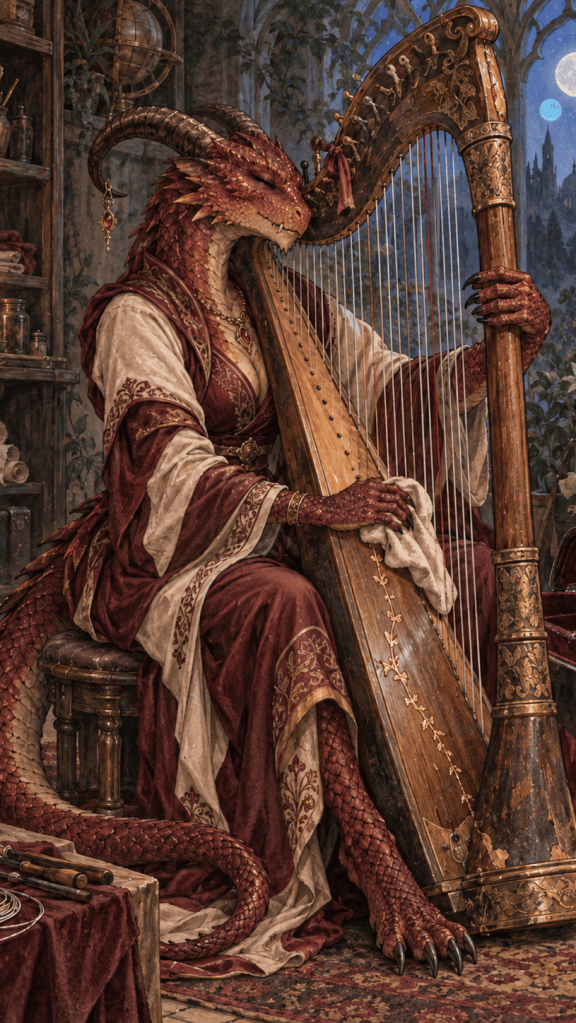
A lovingly carved chair, a sword polished by generations of hands, an ornate musical instrument, or a delicate porcelain vessel can stir feelings in you more intense than their owners would ever understand. You form powerful attachments to particular objects, cherishing their physical presence, histories, imperfections, and the private rituals of touching, cleaning, carrying, or restoring them.
Work with your GM to determine how this fascination shaped your life. Perhaps you apprenticed to an antiquarian, appraiser, restorer, museum curator, or relic keeper. You might have traveled between noble collections, temple treasuries, archaeological sites, and estate auctions, always searching for objects whose craftsmanship or history stirred something within you. Perhaps one extraordinary artifact became the central affection of your life.
Your attachment may be romantic, sensual, devotional, or emotionally intimate. Whatever form it takes, you do not consider the object interchangeable with another of similar appearance. Its particular history, materials, blemishes, repairs, and physical presence are precisely what make it beloved.
Skill Proficiencies: History, Investigation
Tool Proficiencies: One type of artisan’s tools used for appraisal or restoration
Languages: One of your choice
Equipment: Your chosen artisan’s tools, a soft polishing cloth, a magnifying lens, a small bottle of preservation oil, an illustrated catalog of makers’ marks, a protective case containing one cherished object of little monetary value, a set of common clothes, and a pouch containing 10 gp
Feature: Material Biography
You are practiced at reading the physical history preserved within crafted objects. After carefully examining an item, you can usually recognize obvious signs of age, prolonged use, repair, alteration, deliberate imitation, or unusual craftsmanship. When an object bears a maker’s mark or belongs to a style you know, you can often recall its general region, period, or artistic tradition.
This examination does not reveal magical properties, exact monetary value, secret functions, or facts that left no physical evidence.
Antiquarians, appraisers, restorers, collectors, curators, relic keepers, and skilled craftspeople recognize you as someone who understands the care of meaningful objects. They will generally share ordinary information about local collections, reputable dealers, restoration services, auctions, and the known histories of notable artifacts.
Suggested Characteristics
Those who develop intense attachments to objects rarely consider them lifeless or interchangeable. Some fall in love with craftsmanship, others with history, and some with a single treasured thing whose familiar weight provides comfort no person has ever replicated.
| d8 | Personality Trait |
|---|---|
| 1 | I always ask permission before handling an object that clearly matters to someone. |
| 2 | I can describe the texture, balance, and scent of my favorite possession in extraordinary detail. |
| 3 | I become offended when people mistreat beautifully crafted things. |
| 4 | I give names to objects whose personalities seem particularly strong. |
| 5 | I cannot resist examining repairs, maker’s marks, hinges, and signs of wear. |
| 6 | Cleaning and maintaining a cherished object is one of my most intimate rituals. |
| 7 | I remember objects more clearly than I remember the people who owned them. |
| 8 | When something exquisite catches my attention, I forget that other people are speaking. |
| d6 | Ideal |
|---|---|
| 1 | Preservation. Beautiful and meaningful things deserve to survive the people who made them. (Lawful) |
| 2 | Affection. Love is no less sincere merely because others do not understand its object. (Any) |
| 3 | Craft. Every worthy object carries something of the hands and spirit that shaped it. (Good) |
| 4 | Beauty. To treasure a beautiful thing is to recognize what the careless overlook. (Any) |
| 5 | History. Objects remember through scratches, repairs, stains, and wear. (Any) |
| 6 | Possession. If something truly belongs with me, no law or collector should keep us apart. (Chaotic) |
| d6 | Bond |
|---|---|
| 1 | I carry one beloved object whose loss would devastate me. |
| 2 | I am searching for a masterpiece that disappeared from a private collection years ago. |
| 3 | My mentor taught me that restoration is an act of listening, not erasure. |
| 4 | I promised to return a stolen relic to the place where it was first created. |
| 5 | Someone destroyed an object I loved, and I have never forgiven them. |
| 6 | I possess one fragment of a greater artifact and am determined to make it whole again. |
| d6 | Flaw |
|---|---|
| 1 | I become jealous when someone else handles an object to which I am attached. |
| 2 | I have spent money meant for necessities on preservation supplies and rare acquisitions. |
| 3 | I sometimes value an irreplaceable artifact more highly than the safety of the people around it. |
| 4 | I find it almost impossible to leave a neglected treasure behind. |
| 5 | I have stolen an object because I believed its owner did not appreciate it properly. |
| 6 | Damage to a cherished possession can send me into grief or fury wildly disproportionate to its monetary value. |
 Whispers of Erosia
You must be logged in to post a comment.