
There are moments in a project when you finish a page, and there are moments when you finish a chapter. Then there are moments when you look back at months of notes, rewrites, abandoned ideas, art direction, mechanics, divine relationships and far too many titles and realize that something that once existed only as a rough list has finally become part of the world.
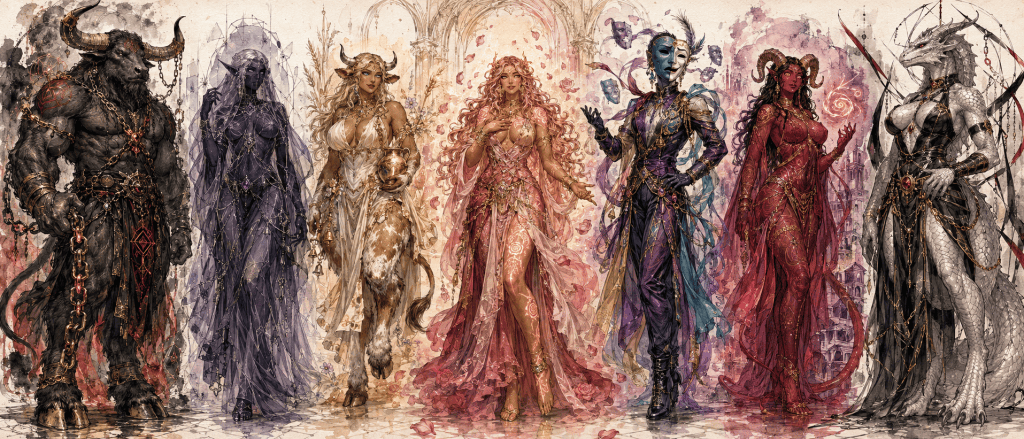
The pantheon of Whispers of Erosia — Second Bloom Edition is complete. Velyssara and the fourteen deities who surround her have all been written, shaped, revised and given a place within the world. That sentence feels much larger to me than it probably looks.
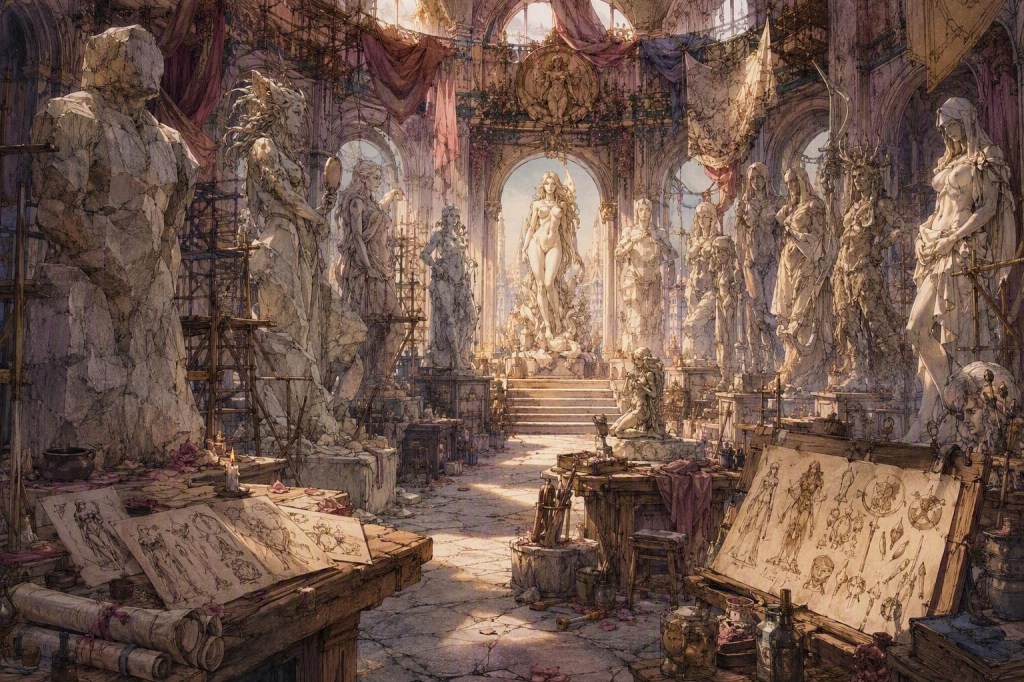
They Started as Fetishes
One of the things I have tried to be more open about during the Second Bloom rewrite is where Erosia actually came from. The gods were not originally conceived as carefully constructed theological figures. They were kink and fetish archetypes.
Bondage, voyeurism, exhibition, fertility, pain, submission, primal desire, transformation, overflow, fantasy, pursuit, indulgence and uncommon desire were all there at the beginning. They were deliberately unsubtle because that was the point.
The earliest version of Erosia asked a very simple question: What if sexuality was not merely something characters did in a fantasy world, but something the fantasy world itself was built around? What if desire shaped religion, magic, culture, politics, art and even the relationships between gods and mortals?
Second Bloom forced me to return to that original idea and ask a much harder question: What does each of those desires actually mean? That question changed nearly everything.
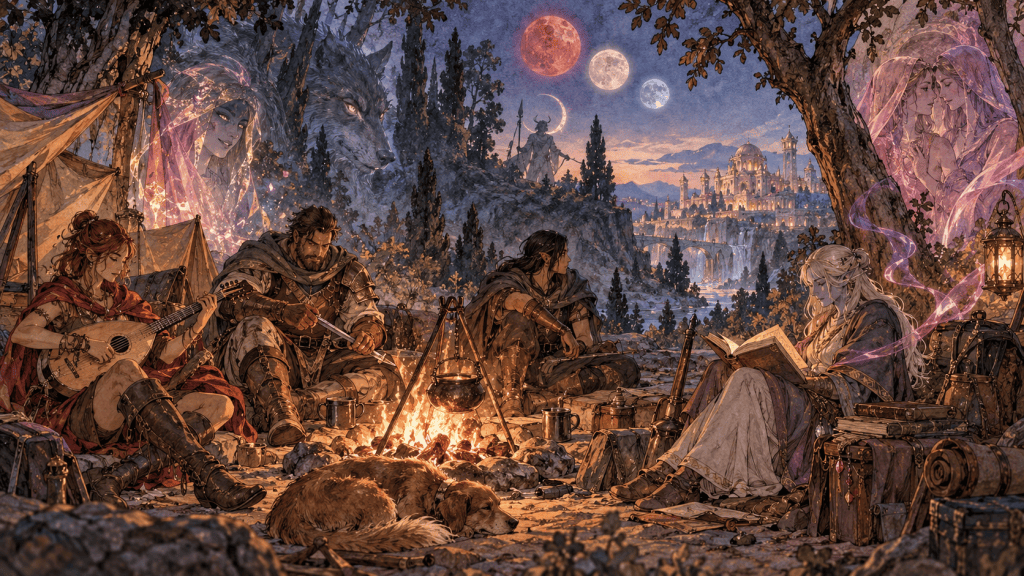
From Fetish to Philosophy
A fetish alone is not enough to sustain a deity. A god needs a philosophy, a worshiper needs a reason to pray, a temple needs something to teach, and a rite needs to mean something beyond the act being performed.
An adventurer encountering that faith also needs something they can engage with, question, accept, reject, misunderstand or eventually carry with them. Once I started looking at the pantheon through that lens, the gods stopped being categories and started becoming people, powers and ideas.
Aratheia became nourishment, abundance, comfort and the sacred act of giving from oneself. Cyrillith became performance, persona, expression and the strange truths people discover when they are allowed to become someone else for a while.
Delavira became anticipation, distance and the exquisite gravity between wanting and receiving. Eshthara became dreams, trance, fantasy and the desires that surface when waking certainty begins to soften.
Mirellune became restraint, structure, obedience and the paradoxical freedom that can exist inside boundaries willingly chosen. Nyzun became pain given meaning through trust, endurance, ritual and consent.
Rhaziel became pursuit, the tension of the chase and the difference between hunting someone and being invited to hunt them. Solynth became surrender without erasure, gentleness, yielding and the strength required to place trust into another person’s hands.
Sylithra became release, openness, vulnerability and the refusal to hold everything inside forever. Talyss became fertility not simply as reproduction, but as abundance, creation, pregnancy, growth and life’s insistence upon becoming more.
Threxira became the body as canvas through marking, piercing, tattooing, transformation and chosen metamorphosis. Ulvexa became instinct, primal hunger, ferality and the wild self that civilization can influence but never completely erase.
Velzhari became visibility, beauty, admiration, reputation, self-expression and the sacred decision to be seen. Zenthira became private desire, uncommon longing, confession, vulnerability and the truths people struggle to say aloud.
Above them all remains Velyssara, Goddess of Lust, Sex and Life, the divine heart from which Erosia’s theology of desire ultimately blooms. Together they became fifteen different answers to the same question: What can desire reveal about us?
The Gods Are Not Distant
One of the most important ideas that grew out of this work is that divinity in Erosia cannot belong only to the traditionally divine classes. Oathsworn, Erosia’s paladin tradition, and the Anointed, its clerics, still hold the most direct divine relationships. They receive healing, blessings, sacred magic and power through their connection to the gods.
However, I never wanted that to imply that everyone else lives outside the divine story. In Erosia, the gods are real, and there is very little room to pretend otherwise.
They walk the world. They influence events, enter mortal lives, intervene, observe, join, select and sometimes simply appear where they are least expected. They choose champions, empower unlikely people and involve themselves in the lives of those who may never cast a divine spell.
A fighter can earn the attention of Ulvexa. A bard can become fascinating to Cyrillith. A rogue can find Rhaziel watching from the edge of the road. A scholar can become important to Zenthira because of one confession they were never meant to hear.
NPCs are part of that relationship as well. Priests do not own the gods, and the gods do not restrict themselves to people who have chosen divine classes.
That distinction matters to me because it makes the pantheon part of the world instead of a spell list. Divine presence should be cultural, social and personal before it is ever mechanical.
One Important Thing Changed Along the Way
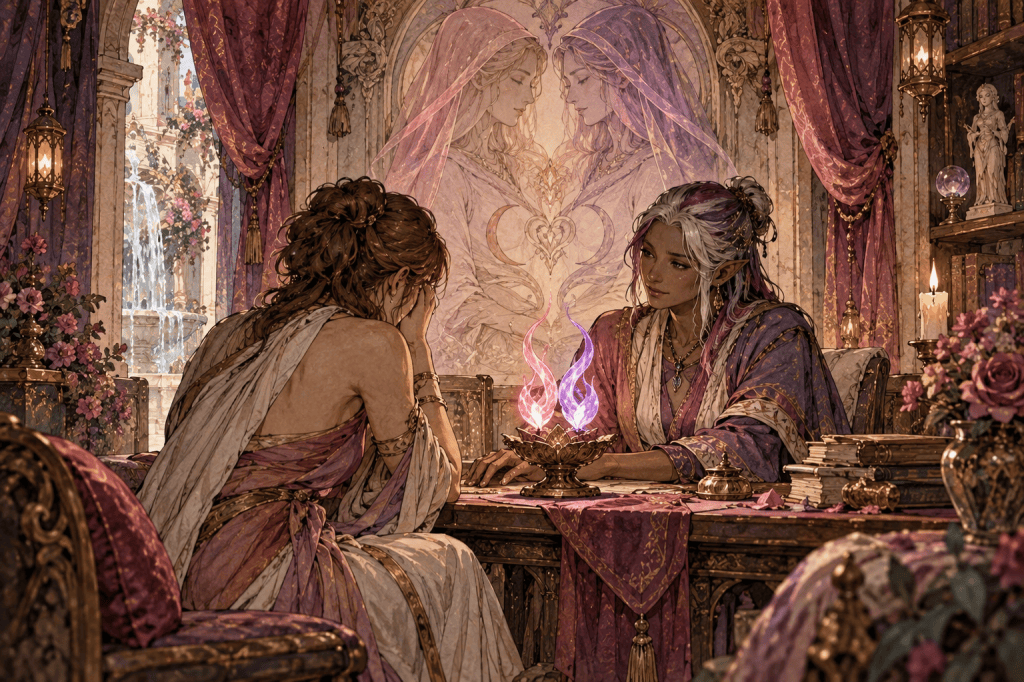
Writing Zenthira helped crystallize something I had been circling for a long time. Erosia no longer treats “taboo” as an internal moral category for consensual adult sexuality.
That language belonged to an earlier version of the setting and did not fit what Second Bloom had become. Erosia certainly has unusual desires, private desires, strange desires, deeply specific desires and desires that someone may hesitate to confess because they fear ridicule, rejection or simply being misunderstood.
Unusual does not automatically mean immoral. The meaningful boundary in Erosia is consent, capacity and the freedom to choose.
That is a far more interesting foundation for the setting than dividing desire into “normal” and “forbidden.” It also gives Zenthira a much stronger role because she is no longer defined by transgression for its own sake. She becomes the goddess of what remains unspoken, private, difficult to admit and deeply personal.
They Are Not Just Lore Entries
Another major goal with the Second Bloom pantheon was making sure these gods actually mattered at the table. Each deity now has worship practices, clergy, temples, sacred rites, private rites, divine relationships, signs of divine favor, mechanical interactions, miracles, theology, adventure hooks, relics and sacred objects.
The Core Guide’s pantheon chapter now treats the gods as complete structures of worship rather than short descriptive entries, giving each one room for doctrine, play hooks and mechanical expression.
You should be able to walk into a temple in Erosia and know whose house you entered before anyone tells you. The scent should be different, the music should be different, the architecture should be different, and the clergy should behave differently because their faith actually teaches something different.
A Hall of Reflection dedicated to Velzhari should not feel anything like one of Mirellune’s sanctums. A shrine to Solynth should ask something different of a visitor than a hunting rite beneath Rhaziel’s moons.
A ritual of Talyss should carry a very different emotional weight from a confession whispered beneath Zenthira’s veil. That distinction is where a collection of fetish gods finally became a pantheon.
The Art Changed Them Too
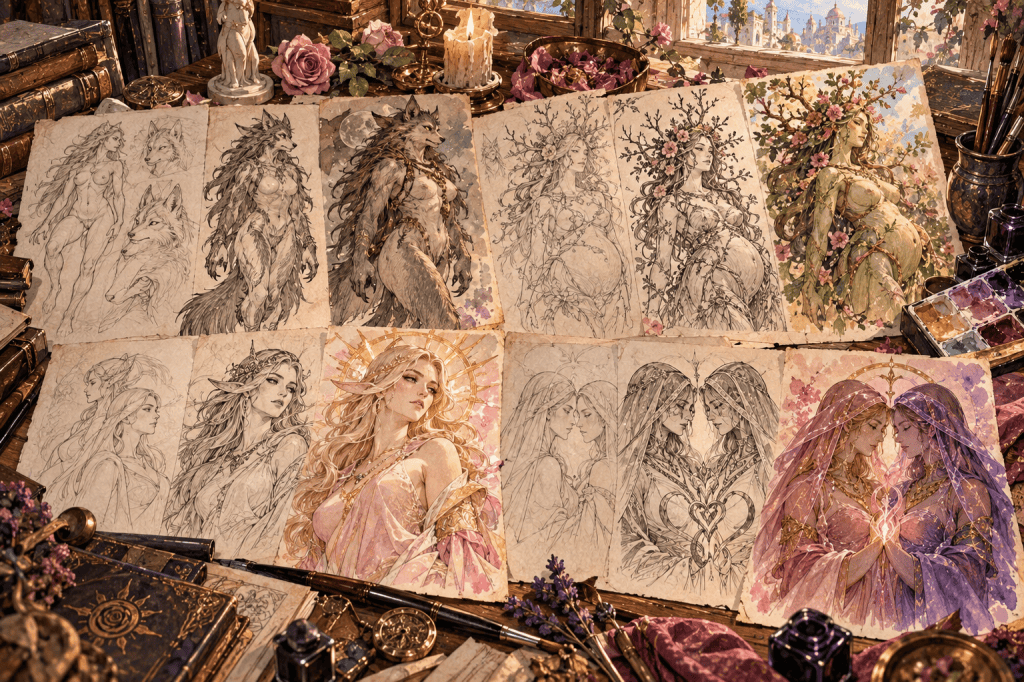
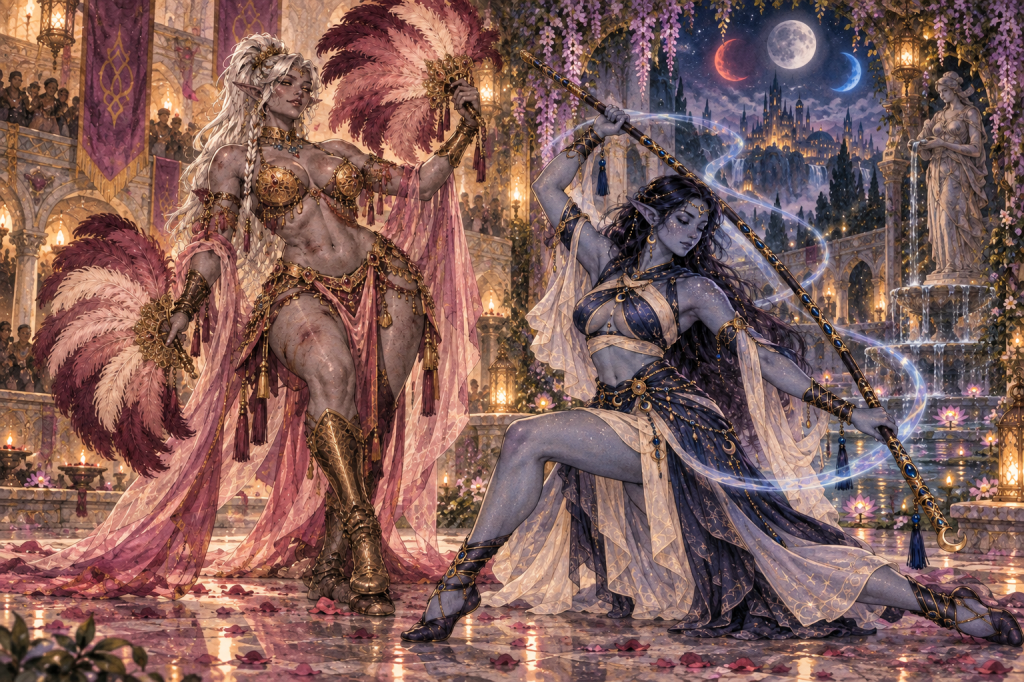
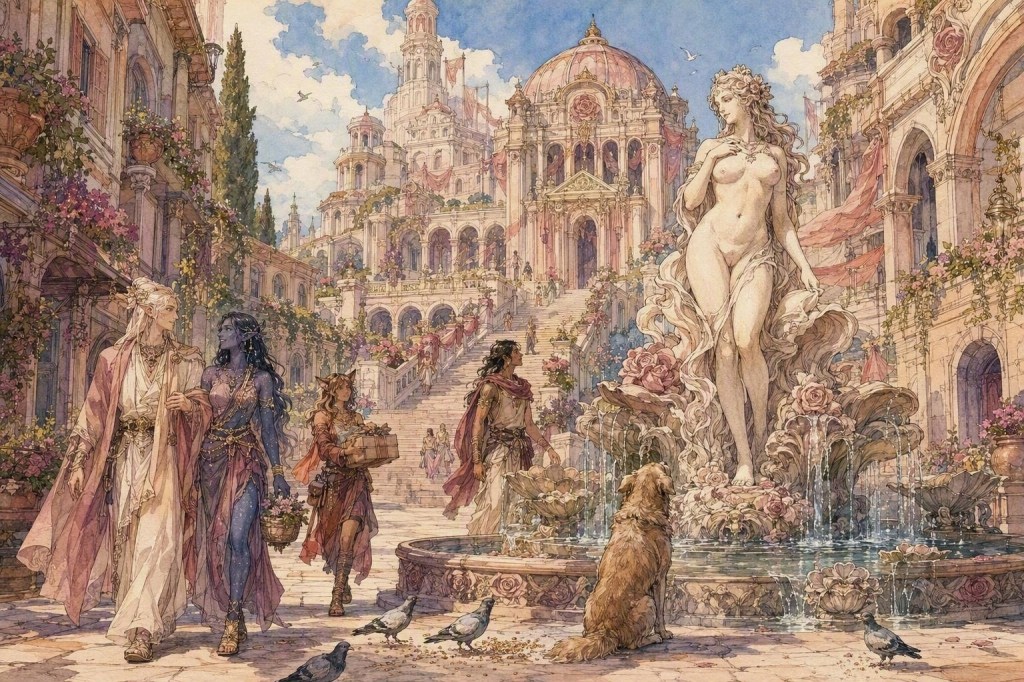
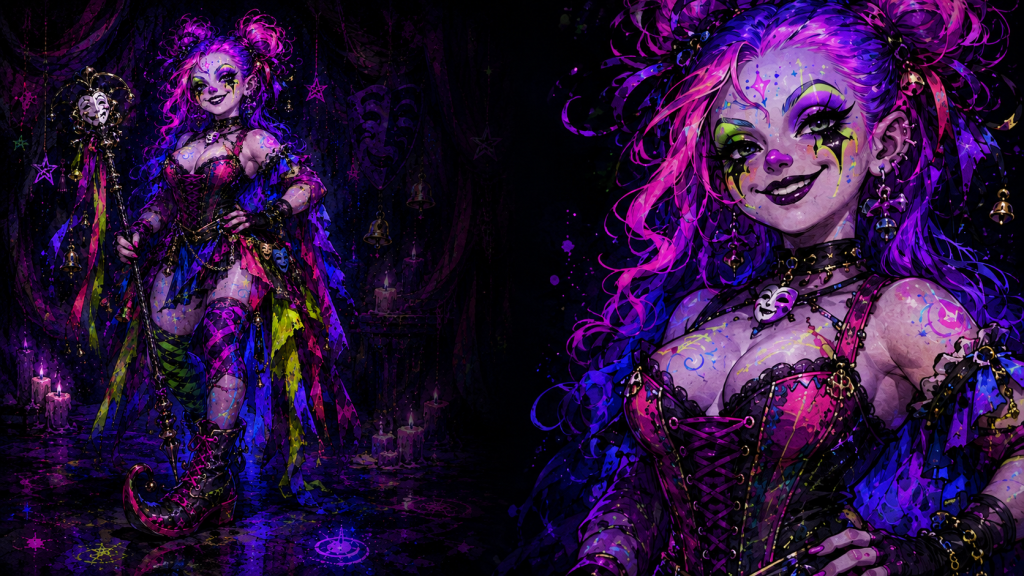
This process has also been enormously visual. Second Bloom now has a much more coherent artistic identity, and working through the gods forced me to decide what divine presence actually looks like in Erosia.
Some gods became stranger. Some became quieter. Some became more beautiful, and some became significantly more unsettling.
Velzhari gained her luminous mirrors, pink-champagne radiance and almost impossible perfection. Delavira emerged from distance, restraint and shadow. Zenthira became two identical women beneath layered veils, a single goddess whose manifestation makes intimacy feel like a secret being shared.
Ulvexa stopped being merely “wolf themed” and became something truly feral. Mirellune became visual discipline and polished restraint, while Talyss grew increasingly organic, abundant and alive.
Each visual decision fed back into the writing, and the writing then changed the next image. That process has become one of the most rewarding parts of building Second Bloom.
There Is Still More to Do With the Gods
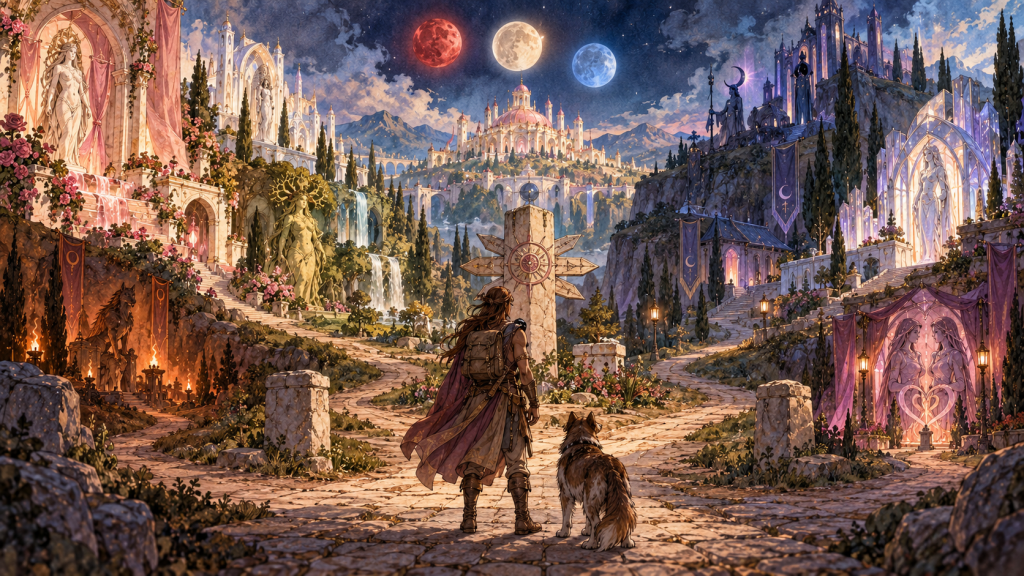
Calling the pantheon complete does not mean I am finished with the gods forever. At some point I will turn back toward them and deepen the systems surrounding divine attention.
Their boon mechanics need another pass. Their sacred objects and relics will continue to grow, especially as more of the setting becomes playable and those objects have a clearer place in campaigns.
I also want to build a divine alignment and reputation system that tracks how a character’s actions affect their standing with individual deities. That does not mean a traditional good-versus-evil alignment chart. I am much more interested in whether a character’s choices bring them closer to or farther from a deity’s philosophy.
A character who repeatedly embodies pursuit, patience and invited tension may draw Rhaziel’s attention even without ever praying to him. Someone who chooses visibility, public expression and fearless self-presentation may slowly rise in Velzhari’s esteem.
The reverse should also be true. A deity may become distant, disappointed, amused or actively interested when a character repeatedly acts against that god’s values.
That opens another question I am especially interested in exploring: What does it mean to be unchosen?
Some characters will doubt the gods. Some will distrust divine influence. Some may deliberately reject every offer of patronage, blessing or attention placed before them.
If the gods choose champions, there should also be meaning in refusing to become one. I want “unchosen” to feel like a real path rather than the absence of a mechanic.
And Yes, This Took Forever
I severely underestimated this chapter. Repeatedly.
I would finish one deity and think the next one should go faster, but it rarely did. Once one deity became deeper, every deity beside them needed to stand at the same level.
A two-paragraph concept became several pages. A fetish became a philosophy, a holy symbol needed symbolism, a temple needed architecture, clergy needed identities, rites needed purposes and relationships between gods needed to reveal something meaningful about both of them.
Then the mechanics had to make those ideas usable at a table, and the artwork had to actually look like the deity I had just described. Occasionally I would discover halfway through the process that an idea I had been carrying since the earliest version of Erosia simply did not belong in Second Bloom anymore.
So it changed. I was not trying to preserve the old pantheon exactly as it had been.
I was trying to discover what it had been attempting to become.
What Comes Next
Now the gods can finally get out of the way long enough for me to work on the people who live beneath them. Player options are next, and subclasses are going to be a major part of that work.
This is where a lot of the philosophy developed during the pantheon rewrite finally has to survive contact with character mechanics. I do not want a Mirellune-aligned subclass to simply be “the bondage subclass,” or a Rhaziel-aligned subclass to simply gain hunting powers because Rhaziel is associated with pursuit.
The mechanics need to express the idea beneath the desire. A Mirellune-aligned path should understand restraint as structure and chosen discipline. A Rhaziel-aligned path should understand pressure, pursuit and the thrill of distance closing.
A Velzhari-aligned path should understand presence, visibility and being witnessed. A Zenthiran path should understand private truth, confession and the power of something finally spoken.
That is the next challenge, and there are a lot of subclasses waiting for me.
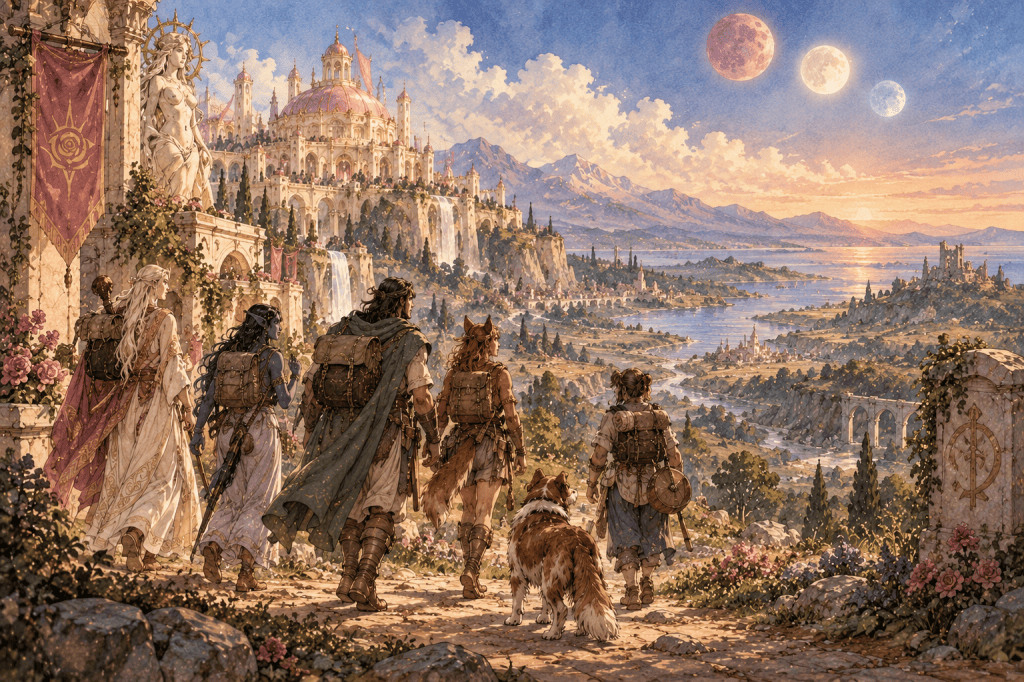
The Pantheon Is Complete
There will still be editing, mechanical revisions, new relics, expanded boons and divine systems developed later. Names may shift, relationships may deepen and the gods will continue changing as the world around them becomes more complete.
Still, the creative work of asking who the gods of Erosia are has finally reached a point where I can answer that question. They have names, faces, temples, philosophies, contradictions, followers, rivals and relationships with the mortals beneath them.
They stopped feeling like entries on my development checklist and started feeling like gods.
I am really excited about how this is taking shape. To me, this feels like more than just a reskin of D&D.
D&D will always be at the core because it has been such a huge influence in my life, but Erosia is my world, and I want it to be yours as well.

 Whispers of Erosia
Leave a comment