
The last couple of days have been spent somewhere between a temple courtyard, a burlesque stage, and an arena full of screaming spectators.
Which, admittedly, is a very Erosian place to be.
Today I’m opening the curtain on two new subclass previews for Whispers of Erosia — Second Bloom Edition, along with a bonus one-shot built specifically to put one of them through its paces.
Now in Public Preview
Stillheart — Temple Dancer: Way of the Turning Staff
Warbound — Burlesque Brawler
Bonus One-Shot — The Velvet Circuit
All three are works in progress. They are being released because we’ve reached the point where these ideas need something more valuable than another editing pass:
They need tables.
They need players finding combinations I didn’t anticipate, GMs asking awkward rules questions, characters doing ridiculous things with the mechanics, and somebody inevitably discovering that a feature I thought was perfectly reasonable can be weaponized into absolute nonsense.
That’s what playtesting is for.
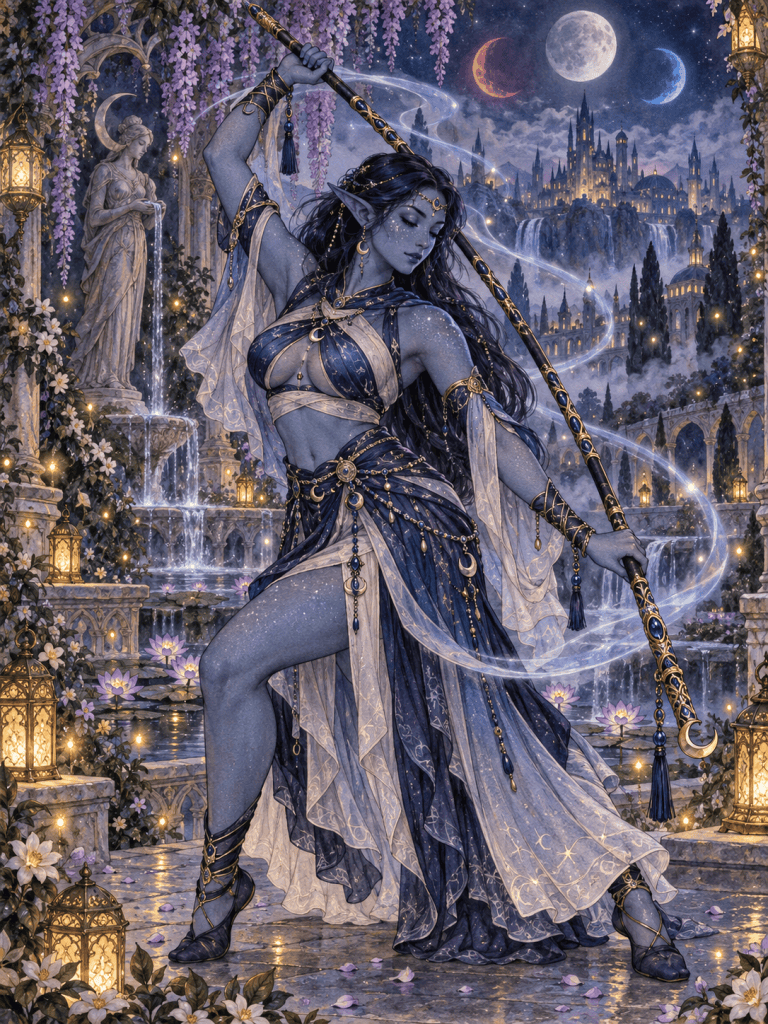
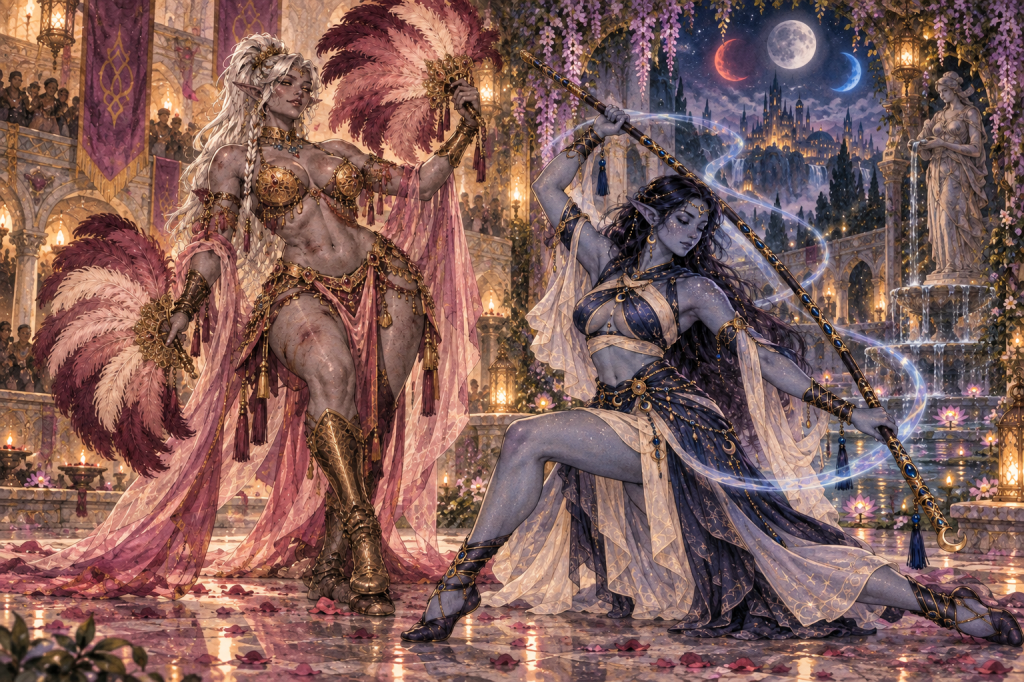
Temple Dancer — Way of the Turning Staff
“The staff does not stop the blow. It teaches the blow where to go.”
The Temple Dancer is the first Stillheart tradition I’ve developed for Second Bloom.
The inspiration began with temple dance and staff forms—particularly the flowing movement of Taido, Tate, Kenbu, and bo-staff performance—and evolved into a martial tradition built around continuous movement, redirection, acrobatics, and battlefield geometry.
A Temple Dancer doesn’t simply stand opposite an enemy and trade attacks.
They turn the battlefield.
The staff becomes an axis around which the fight moves. Attacks are redirected. Retreat becomes approach. Defensive movement creates new angles. Vaults, pivots and sweeping staff forms continually change where the Stillheart—and everyone around them—stands.
Most importantly, the subclass remains a Stillheart.
It builds directly upon Martial Arts, Ki, the Stillheart’s Redirection progression, Unarmored Movement, Harmony Techniques and the Desire Cycle rather than introducing a second subsystem. Strip away the optional Desire mechanics and it remains a functional 5e-compatible staff-dancing martial artist; bring those mechanics back in, and Arousal and Climax begin changing the rhythm and positioning of the dance.
That distinction has become increasingly important to me while designing these subclasses.
I don’t want to make a Monk with sexy flavor text.
I want to make something that could only have developed in Erosia.
Warbound — Burlesque Brawler
And then things got considerably louder.
Claim attention → escalate the performance → build pressure → force mistakes → exploit the opening → bring down the house.
The Burlesque Brawler takes the Warbound’s martial discipline and turns performance itself into a weapon.
Reinforced fans. Gloves. Veils. Sashes. Chairs. Canes. Breakaway costume layers.
And an absolutely unreasonable amount of confidence.
The central idea is simple:
The performance is not decoration laid over the combat. The performance is the combat.
A Burlesque Brawler controls attention.
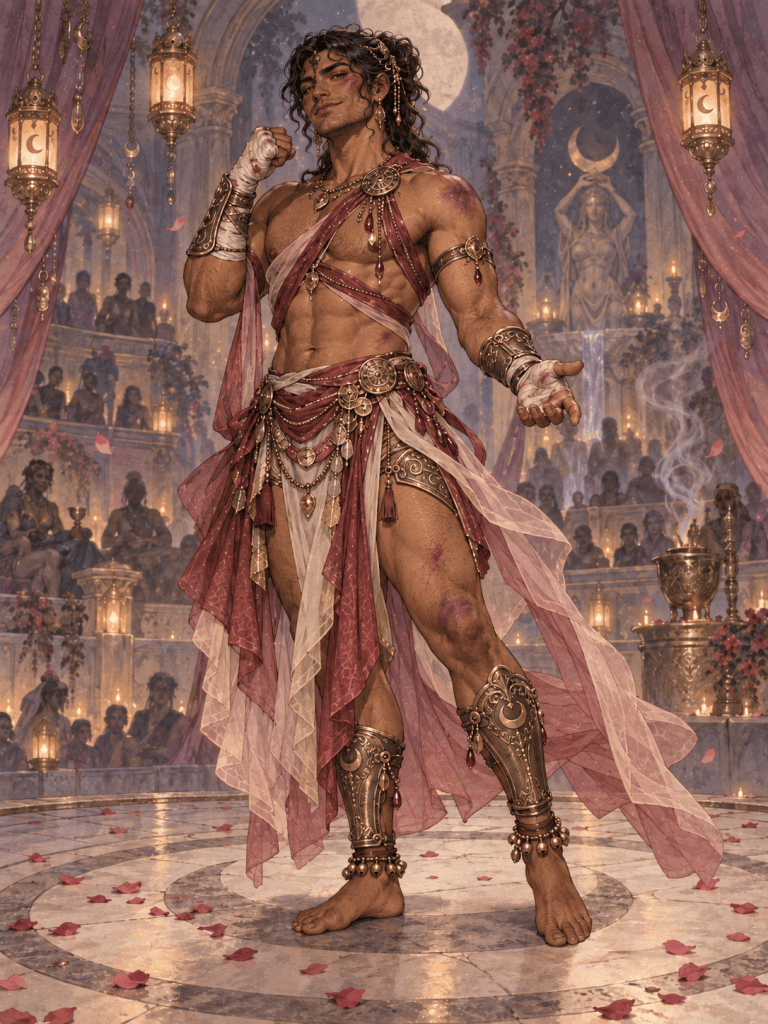
Opening a fan can conceal timing. A discarded layer marks another escalation in the routine. Fan Dance of Defiance pressures an opponent’s next attack. Eyes on Me makes ignoring the performer dangerous. Misdirection turns resistance into movement. Leave Them Breathless asks the Brawler whether Libido is better spent pressing the tempo now or saved for what comes later.
And eventually the entire routine reaches its final beat:
Bring Down the House.
At 18th level, the Warbound’s Last Measure becomes a genuine Showstopper, turning all the attention and pressure accumulated during the encounter into a battlefield-wide finale—followed, naturally, by an Encore.
This is probably the stranger of the two subclasses mechanically, which is exactly why I want people playing it.
Does escalating through costume layers feel tactical rather than gimmicky?
Does Focused Audience actually create interesting decisions?
Does repeated disadvantage create pressure without creating lockdown?
Does Libido create a meaningful endurance decision?
And, most importantly:
Does playing a Burlesque Brawler actually feel like putting on a show?
That’s what I want to find out.
Bonus Playtest Adventure: The Velvet Circuit
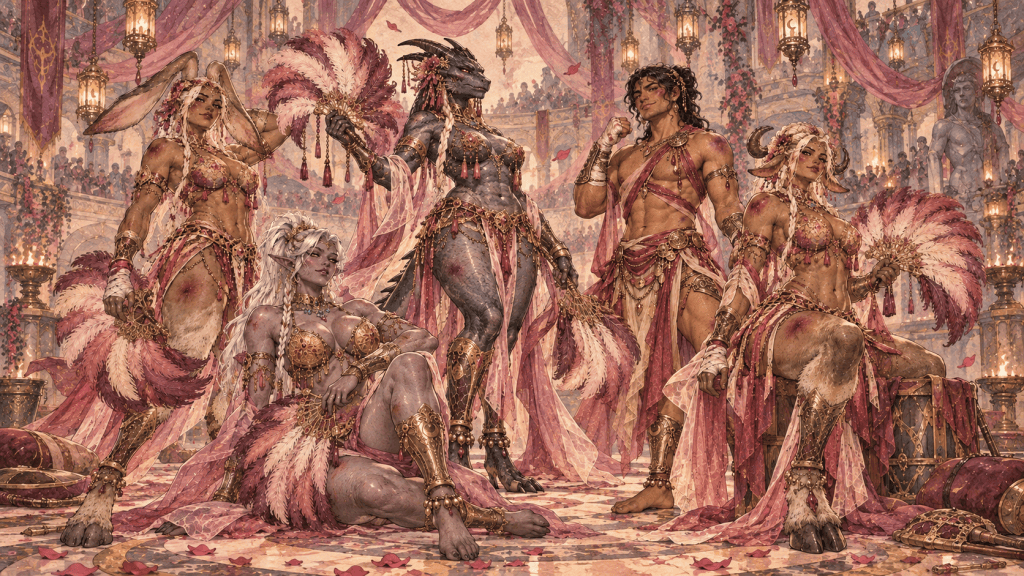
Of course, releasing a Burlesque Brawler and then telling everyone to figure out how to test it seemed a little unfair. So I built an arena. The Velvet Circuit is a 5e-compatible one-shot for 4–6 characters of levels 5–7, designed for roughly 4–6 hours of play.
The Velvet Circuit is a traveling Erosian tradition where martial skill, athletic spectacle, theatrical seduction and crowdcraft have become one competitive art. Tonight, its premier company—the Five Petals—has opened the floor to challengers. At first, that’s exactly what the evening promises to be.
An extravagant series of exhibition bouts. Then somebody gets hurt. A harmless prop isn’t harmless. Safety equipment has been altered. And suddenly the question isn’t merely whether the characters can defeat the Five Petals. It’s whether they can discover who is trying to turn a performance into a massacre without destroying the Circuit in the process.
The adventure introduces a Crowd Track running independently from hit points, meaning a party can win the fight and lose the room—or get beaten spectacularly and walk away as the beloved heroes of the evening. Signature flourishes, reversals, theatrical risks and protecting fellow performers can move the audience, while repetition and cheap cruelty can turn them against you.
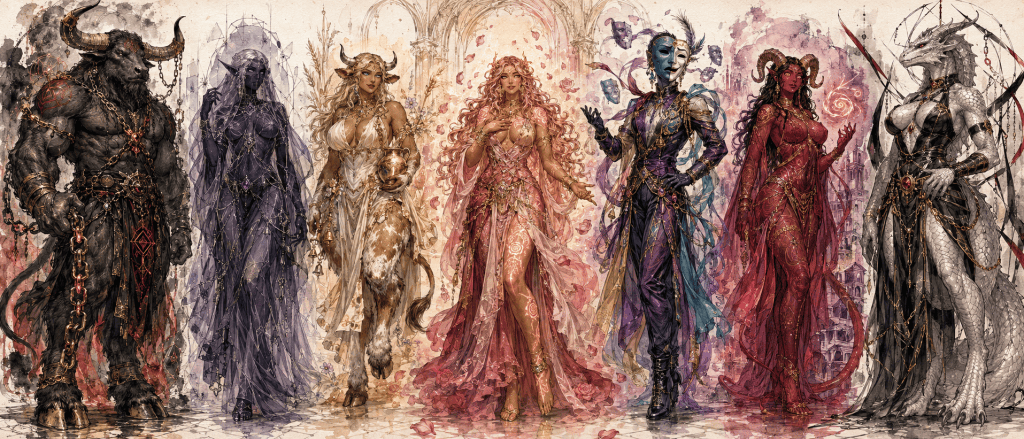
It also means the Five Petals aren’t just five bags of hit points. They’re performers. The Ringmistress controls attention through misdirection. The High Hare turns mobility into spectacle. The Gilded Horn makes grappling an event. The Silver Veil weaponizes floorwork and reversals. Moonhand plays the audience almost as aggressively as he plays his opponents.
And because this is Erosia, the adventure supports both Veiled and Unveiled play. Desire participation remains optional, and Crowd and Arousal deliberately remain separate systems: winning the room doesn’t automatically mean affecting the person standing opposite you.
That makes The Velvet Circuit more than a bonus adventure.
It’s a laboratory.
Go break the Burlesque Brawler in it.
Please.
That’s why it’s there.
Welcome to the Public Preview
These aren’t finished products. They’re public playtest drafts. Numbers may change. Wording will change. Features may get tightened, simplified, strengthened, weakened, renamed, or—in the proud tradition of game design—thrown screaming into the abyss because somebody found a combination I somehow missed.
That’s part of building Second Bloom in the open.
I’m especially interested in whether each subclass has a recognizable play rhythm, whether the Mechanics of Desire actually create meaningful decisions rather than decorative bookkeeping, and whether these subclasses feel unmistakably Erosian rather than familiar 5e archetypes wearing prettier clothes.
If you play them, I want to hear what happened at your table.
Tell me what worked. Tell me what dragged. Tell me what confused you. And absolutely tell me what you broke.
Step Beyond the Veil
The Temple Dancer — Way of the Turning Staff, Burlesque Brawler, and bonus adventure The Velvet Circuit are part of the continuing development of Whispers of Erosia — Second Bloom Edition.
If you’d like access to the playtest material, new subclasses, adventures, lore drops, items, spells, bestiary material, and the strange things that emerge while I continue building this world, join me on Patreon:
🌹 Subscribe to Velvet Veil Press on Patreon
Come play with the unfinished machinery.
The Veil is still being woven.
And right now, you get to put your hands on the threads.


 Whispers of Erosia
Leave a comment