

Have you ever been sitting in bed, waking up and slowly nursing a cup of coffee when something hits you unexpectedly? One moment, you are writing up details on devils and infernal contracts, trying to decide what a fiend might actually collect as payment; the next, you realize you may have accidentally explained the name of your entire campaign setting.
That was pretty much my morning. I had been working on Imps and the broader nature of Devils in Erosia, trying to answer a fairly simple question: If Devils are born from unresolved emotional energy and can bargain with mortals, what exactly do they gain from those bargains?
I did not want the answer to simply be souls. Souls matter in Erosia, but “sign here and I own you when you die” felt too familiar, too detached from the emotional cosmology I had already been building and, frankly, too easy; the payment needed to be smaller, more intimate and more connected to the person making the bargain.
It needed to represent a tiny piece of emotional resonance — something that could be given, collected or redirected without reducing a person to less than themselves. Then I needed a name for it, and that was the point where the whole thing snapped into focus.
Sometimes the Random Name Turns Out to Be the Right One
Here is the behind-the-scenes truth: Whispers of Erosia originally came from a random name generator. There was no grand cosmological design hidden inside it; I was trying names, “Whispers of Erosia” appeared, and something about it felt right.
It sounded intimate, mysterious and slightly dangerous, which fit the setting I wanted to build. I kept it, and over time Erosia grew around that name — desire became one of the central ideas of the world, the gods developed around different expressions of longing and identity, magic became tied to emotion and resonance, and entire peoples emerged whose origins were connected to those same forces.
The name always felt right, but until now it did not mean anything specific inside the setting. Now it does, and the more I look at it, the more it feels as if the world had been waiting for me to notice what was already there: a Whisper is the smallest meaningful fragment of emotional resonance that becomes distinct when feeling crosses into consequence.
That gives the title literal meaning and mechanical meaning, but it also gives it a place inside the cosmology itself. What had been a name I liked has become a description of how Erosia works.
Desire Influences Everything
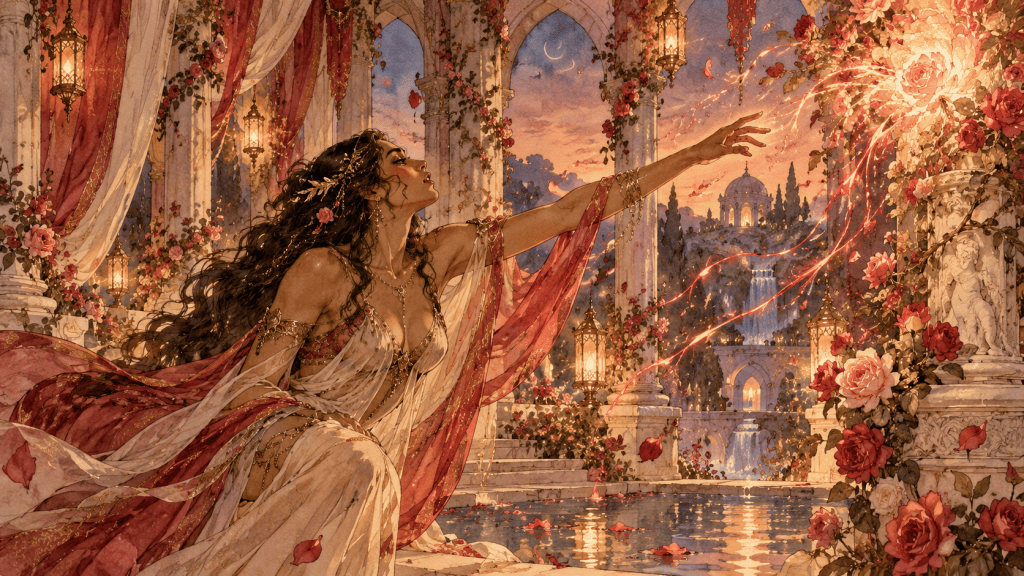
One of the phrases I have used repeatedly while developing Erosia is that desire influences everything. Desire does not simply mean lust; it is the urge to reach beyond what already exists — to love, protect, possess, become, belong, understand, forgive, avenge, surrender, endure or bring someone home.
It is the quiet pressure that says what exists now does not have to be all that ever exists. That idea already runs through nearly every part of Erosia, even when I had not yet named the underlying force clearly enough.
The Mechanics of Desire explore emotional and sensual pressure at the table, while Magical Resonance explains how emotion, conviction, memory and purpose help mortals connect to the Veil. Gelkin can arise where gathered feeling becomes substantial enough to awaken into personhood; Devils manifest from unresolved emotional energy, Graceborn carry divine blessing through bloodlines, and Hollow-Souled inherit the consequences of infernal dealings made generations before them.
Those ideas were always related thematically. Whispers give them a shared metaphysical language, which means the setting is no longer simply saying that emotion matters — it now has an internal explanation for how and why that can become literally true.
So, What Is a Whisper?
A Whisper is not a piece of your soul, and surrendering one does not make you less capable of feeling. You do not lose your ability to love because a Whisper of desire was released, and you do not stop grieving because part of that grief became spiritually consequential.
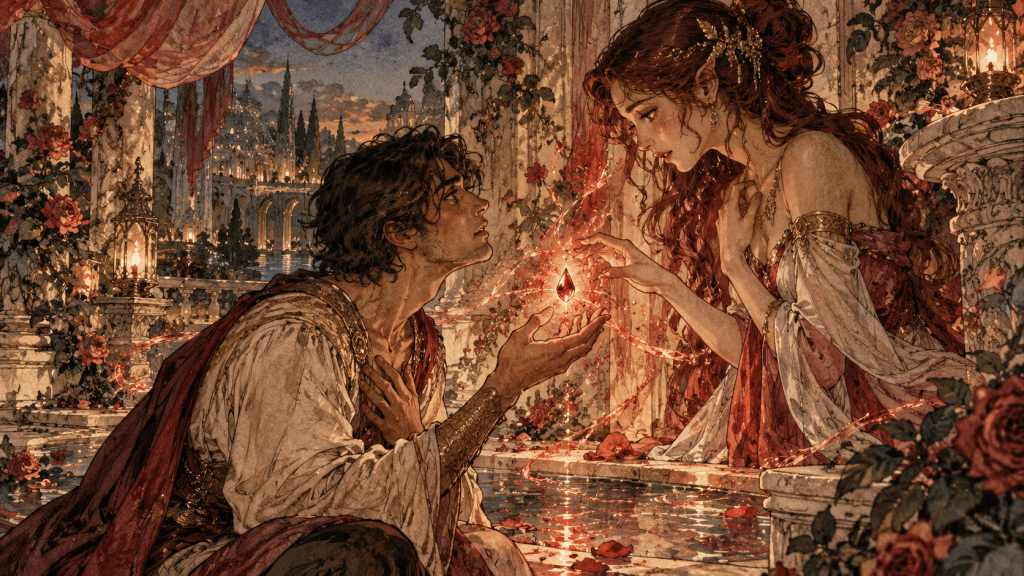
A Whisper is better understood as the resonance produced when something deeply felt becomes meaningful enough to cross into action. A confession you have avoided for years might release one when you finally speak; a vow kept despite terrible personal cost may do the same, as could forgiveness finally offered, vengeance completed or a future willingly surrendered to protect someone you love.
Most Whispers never become physical objects, and most people will live their entire lives without knowingly seeing one. They simply return to Erosia — settling into memory, place, relationship, ritual, magic and the Veil itself.
Under the right circumstances, however, that resonance can be captured or condensed. A manifested Whisper might appear as a tiny crystal, a glasslike tear or a translucent shard whose color and texture reflect the emotion that produced it; that is where infernal bargains suddenly become much more interesting.
Devils Have Figured Out How to Collect Them
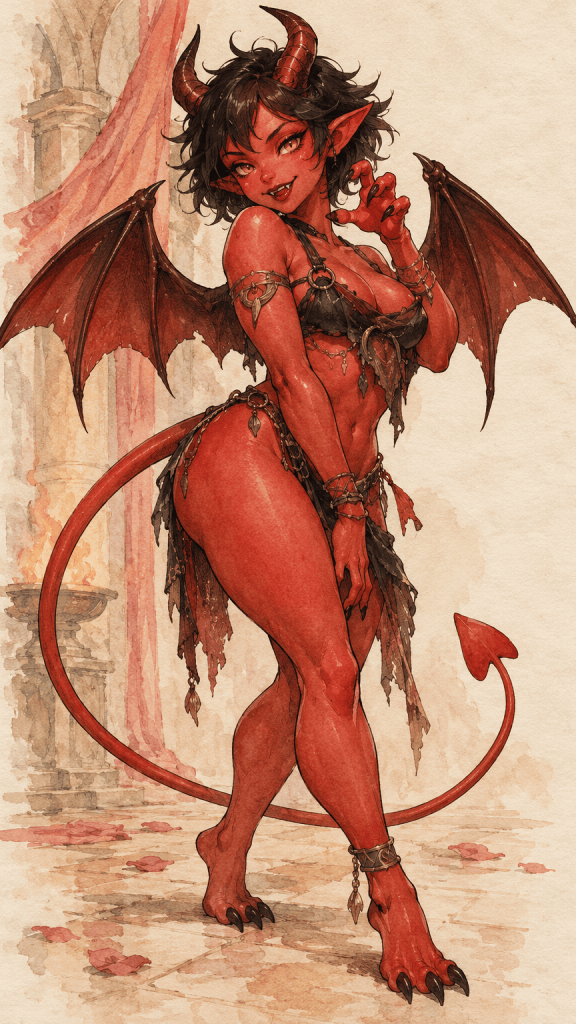
Devils in Erosia are born from unresolved emotional energy, and Imps are among the smallest manifestations of that process. An Imp might arise from one person, one relationship, one household or one emotional wound that simply refused to resolve, which helps explain why their size and power can vary so sharply from greater Devils.
Their colors now carry meaning as well. A Red Imp represents unresolved desire, a Green Imp emerges from envy, a Blue Imp carries sorrow, an Orange Imp reflects unresolved anger or rage, and a Black Imp is born from grief that has become fixed rather than allowed to change.
That color represents the emotion that gave the Imp substance, but it does not dictate the creature’s entire personality. A Red Imp can grieve, a Black Imp can laugh and a Green Imp can fall in love; origin influences identity in Erosia, but it does not imprison it.
The important discovery is that Devils do not have to wait for unresolved emotion to accumulate naturally. They can bargain for the emotional resonance created when a mortal fulfills a deeply felt desire, promise or need — and that is where the idea of the Pathos-Toll came from.
The Pathos-Toll
An infernal contract can promise all kinds of things: knowledge, access, courage, protection, opportunity or some carefully defined supernatural assistance. In exchange, the contract establishes a Pathos-Toll, the amount of emotional resonance the Devil is permitted to collect when the agreed condition is fulfilled.
That payment may transfer directly to the Devil, or it may briefly crystallize as one or more Whispers. Either way, the Devil is not normally collecting a soul; it is collecting the emotional consequence produced by the bargain itself, an idea that now ties infernal bargains directly into Erosia’s broader Pact Magic.
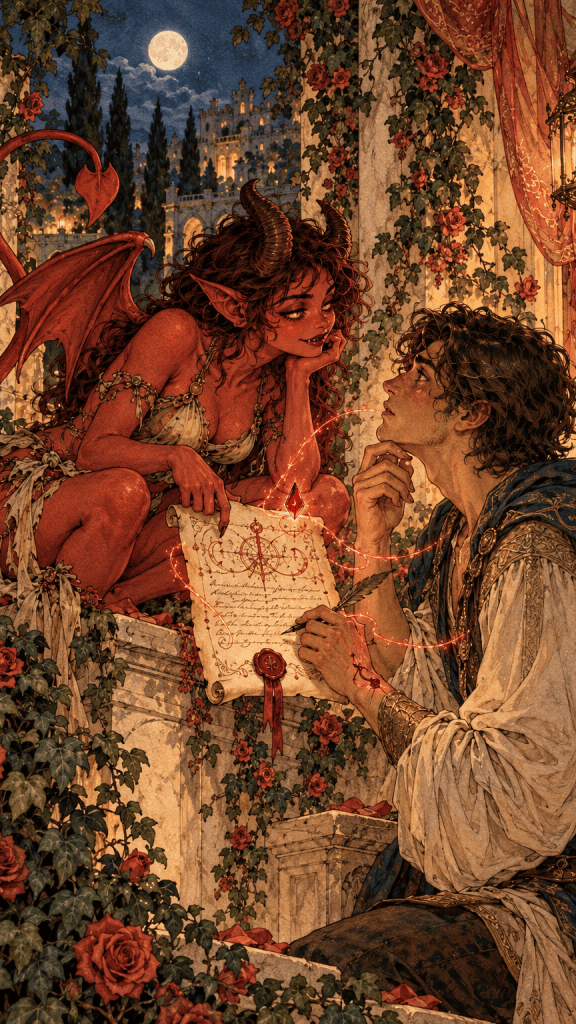
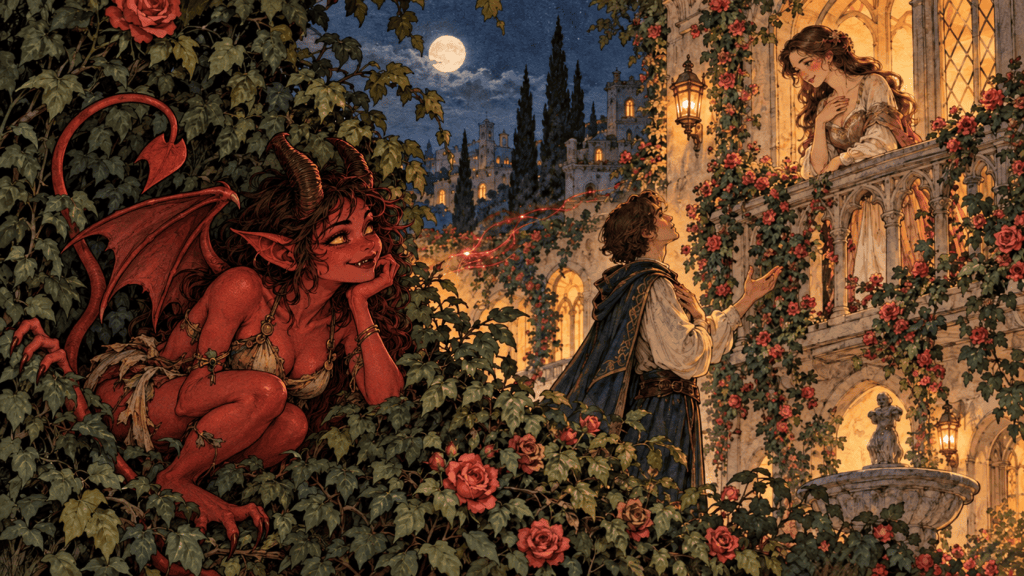
Imagine a Red Imp approached by an adult who desperately wants to speak to someone they are attracted to but cannot find the courage. The Imp might offer an opportunity to meet that person and enough supernatural confidence to finally speak honestly; it cannot guarantee affection, and it certainly cannot manufacture consent, but it can fulfill exactly what it promised.
Once that person follows through and finally speaks the desire that had been trapped inside them, the agreement is complete. A small crimson Whisper might form, the Imp receives its Pathos-Toll and the infernal contract leaves behind a subtle mark — not something visible to ordinary sight, but something detectable to those capable of sensing fiendish auras.
That makes Erosian Devils much more interesting to me because they now have a genuine incentive to keep their bargains. A Devil that constantly lies about what it can provide would be terrible at collecting Whispers; the danger is not always that it cheats you, but that it becomes very good at helping you get exactly what you asked for.
Devils Do Not Grow Up — They Promote
This also helped answer another question I had been circling: Why are some Devils small while others become enormously powerful? Age alone felt uninteresting, and simply saying “greater Devils are stronger” did not explain anything about how infernal beings actually function inside Erosia.
The answer is emotional mass. Devils do not simply mature because centuries pass; they Promote as they accumulate compatible emotional resonance, which means a Red Imp grows most effectively by collecting Whispers tied to desire while another Devil may gather envy, grief, anger or whatever emotion shaped its original manifestation.
Over time, enough compatible Whispers increase the Devil’s emotional mass until its current form can no longer contain what it has become. At that point, it Promotes into something greater — and while I have not yet designed the full infernal hierarchy, the rule underneath it is now clear.
Devils are manifestations of unresolved emotion; infernal bargains allow them to gather additional resonance, Whispers make that resonance tangible and enough accumulated emotional power can eventually change what the Devil is capable of becoming. The individual Devil and Imp entries are being rebuilt around this idea as the Bestiary continues to expand.
This Also Fixed the Hollow-Souled
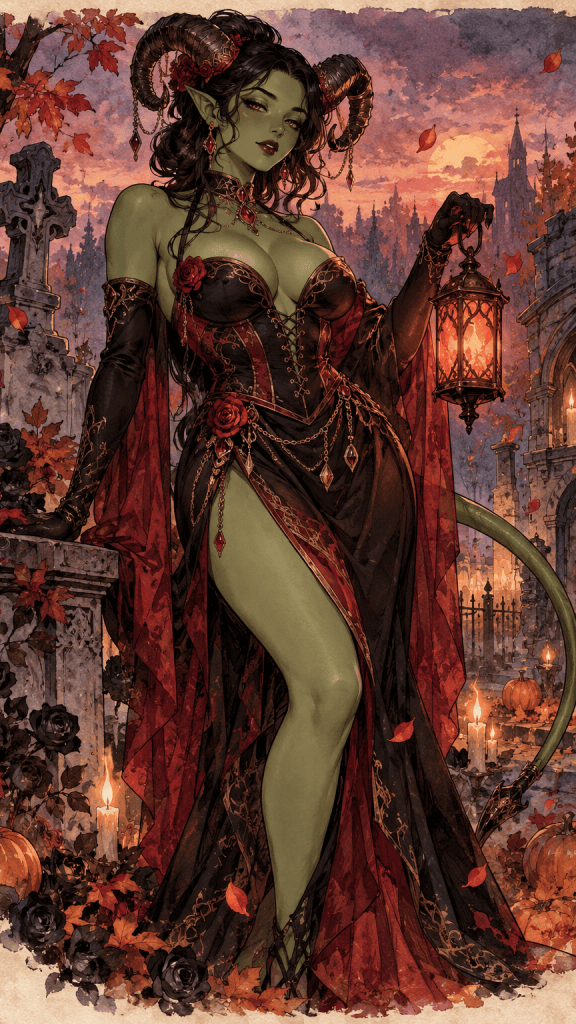
Once that system clicked, I looked at the Hollow-Souled and realized another part of the setting had just become clearer. Hollow-Souled are descendants of people whose bloodlines were affected by infernal bargains; they are not people missing pieces of their souls, and they are not simply descendants of Demons.
A single bargain might leave behind only a faint metaphysical scar, but repeated contracts and Pathos-Tolls can do something deeper. Over generations, a family line can become increasingly receptive to infernal resonance — the blood learns how to open, and eventually the consequences of those bargains become inheritable.
That means the Hollow-Souled are not carrying guilt for something an ancestor did. They are carrying a metaphysical consequence, an echo of repeated agreements that changed how their lineage interacts with infernal power.
It also finally let me clean up another distinction that had become muddy in earlier drafts: Devils and Demons are not the same thing. Devils are manifestations of unresolved emotional energy, while Demons belong to the separate metamorphic progression of Gelkin → Chrysalis → Demon; both connect to the emotional metaphysics of Erosia, but they arrive there through entirely different processes.
Then I Started Looking at the Gods
Once I knew what Devils did with Whispers, the next question was unavoidable: What does the divine do with emotional resonance? The answer could not simply be “the same thing, but nicer,” because that would flatten the cosmology and erase an important distinction between infernal law and sacred devotion.
So divine interaction works differently. A Devil says, Pay what is owed, because the Pathos-Toll belongs to the contract; the sacred says, Give only what you choose, because Divine Magic in Erosia is rooted in consent, devotion and voluntary sacrifice rather than collection.
Someone may willingly offer a Whisper through compassion, remembrance, grief, love or faith. That resonance might strengthen a rite or deepen a miracle, but it is not an account being collected by a celestial creditor; the offering matters because it is freely given.
That distinction fits Erosia particularly well because so much of the setting already treats choice as sacred. Desire matters because it is chosen, devotion matters because it is offered and sacrifice only means something when a person had the ability to refuse; the theology surrounding Velyssara now has a much clearer metaphysical foundation beneath it.
And Then Resurrection Became Something Else Entirely
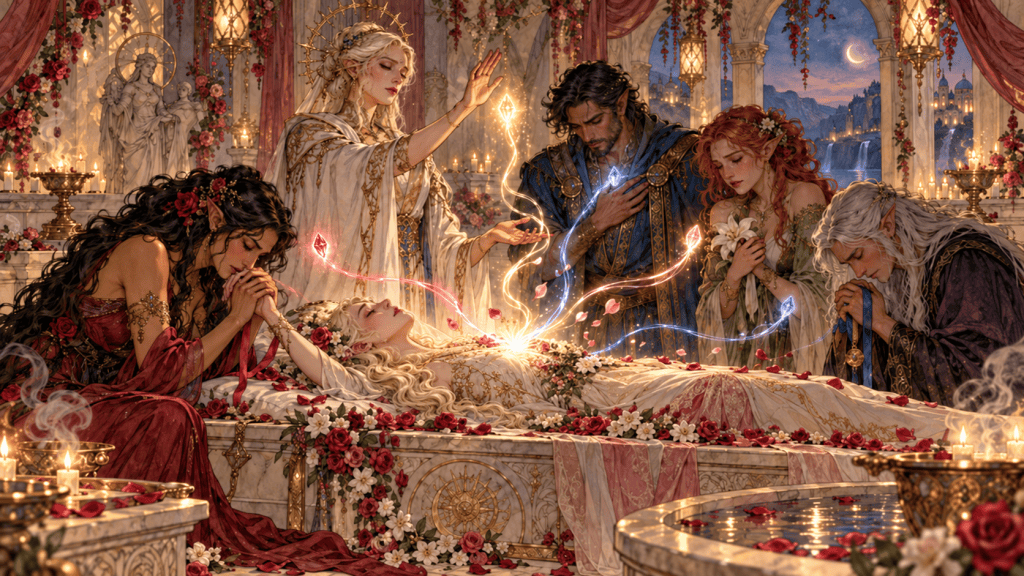
This is probably the part I am most excited to explore next, because once Whispers became real, resurrection stopped looking like a purely mechanical transaction. Spells such as revivify, raise dead and resurrection already involve enormous magical power and expensive material components, but in Erosia they now have room for something more personal.
A companion might offer grief; a lover might offer hope or the future they still wanted to share, a parent might offer a memory and a priest might offer years of devotion distilled into one desperate act of faith. Somewhere beyond the boundary of death, the person being called back might answer with the most important Whisper in the entire ritual — the desire to return.
I have deliberately not written the final mechanics for this yet because I do not want it reduced to something like “three Whispers equals 300 gold pieces worth of diamonds.” That would take an emotionally powerful idea and turn it into an exchange rate, which is exactly what I do not want; the Cosmology of Erosia now establishes the principle, while the actual resurrection rules still deserve their own design pass.
The rules need to serve the idea, not replace it. Maybe Whispers strengthen the ritual, maybe they help overcome complications or repeated deaths, or maybe they give the people around the fallen character a meaningful way to participate in calling them home; whatever the final system becomes, resurrection in Erosia now has the opportunity to feel personal in a way it never did before.
The spell opens the road, but the people who loved you may help you find it — and that is a much more interesting place for me to begin designing from than another price list. That is the direction I want resurrection in Erosia to take.
Whispers Are Not Another Resource Bar
There is one design rule I want to make clear from the beginning: You are not going to track Whispers every time your character experiences an emotion. That sounds exhausting, and it would completely miss the point; Whispers exist first as a truth of the setting, not another bar sitting beside hit points, spell slots or Libido.
Most emotional resonance simply disperses into Erosia, and a Whisper only becomes mechanically distinct when a spell, feature, ritual, infernal bargain, creature ability or other specific rule says that it does. That lets Whispers matter in Classic, Veiled and Unveiled play without turning emotional storytelling into bookkeeping.
I want players to understand that what their characters feel can matter to the world. I do not want them balancing an emotional checkbook every time they have a meaningful conversation, and that distinction will guide the mechanics as this idea continues to develop.
The Name Finally Means Something
That brings me back to the cup of coffee and the strange way this entire idea appeared. For years, Whispers of Erosia was simply the name of the world I was building — it sounded right, so I kept writing until the setting grew large enough to deserve it; apparently, the world was waiting for me to catch up.
The title now describes something real inside Erosia. Every act of love, desire, grief, anger, devotion, envy, hope and longing can leave a trace when it becomes consequential; some of those traces become magic, some become bargains, some become blessings, some become monsters and some may even help call the dead home.
Most simply pass quietly back into the world from which they came, carrying the memory that something mattered enough to change what happened next. That is a Whisper, and suddenly Whispers of Erosia means exactly what it should have meant all along.
Meanwhile, Erosia Has Been Growing
This revelation also happened in the middle of what has already been a pretty significant stretch of development. I have been making huge updates across the website, cleaning up old material, refining systems and tightening the connective tissue between pages that were written months or even years apart; what started as isolated pieces of lore is becoming a much more connected world.
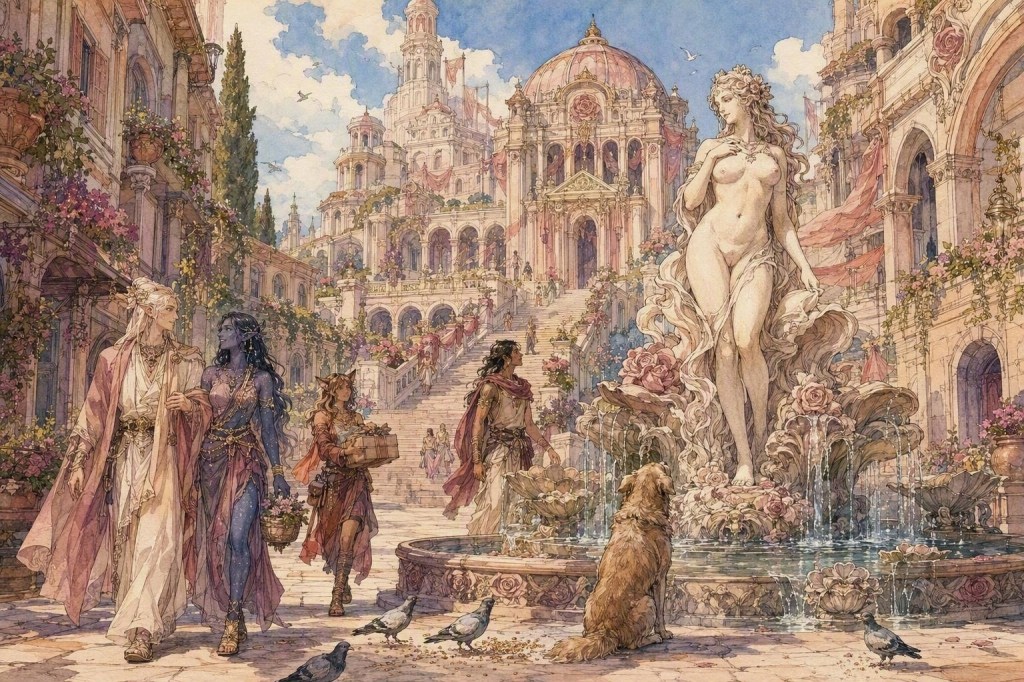
Amarosa has been getting a lot of that attention. I have been refining the city, expanding its districts and locations, and making sure there are more things for both players and DMs to actually do, investigate and interact with at the table instead of simply reading descriptions about a place and moving on.
The broader world has been growing right alongside it. Classes, peoples, magic, factions, divine lore, the Bestiary and the overall structure of the setting are all getting another pass as the Second Bloom Edition continues to take shape; I am trying to make sure every new piece does more than exist on its own and instead connects back into the larger whole.
If you have not checked out the Velvet Veil Press Patreon lately, there are also two new Veiled Treats waiting there. Those smaller releases give me a chance to explore Erosia from another direction while the larger work continues across the Tome, and they have become a fun way to add encounters, ideas and flavor without waiting for a major book update.
There is a lot moving right now, and some of it is happening much faster than I expected. This morning I was supposed to be working on Imps and infernal contracts; instead, I think I finally found the missing piece that explains why the setting has always felt like it was circling the same idea — not every desire becomes a miracle and not every emotion becomes a monster, but sometimes all that remains is a Whisper, and now the name of the world finally tells you exactly what kind of place Erosia is.



Leave a comment